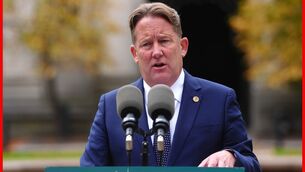
Prison officers lock up deal to end overtime row
In a landmark decision, the 3,200 members of the Prison Officers’ Association (POA) voted by 70% to accept a deal, which will save the Prison Service an estimated 30 million a year.
Under the new annualised hours system, prison officers will work, on average, seven hours overtime a week. In return, each will get a one-off lump sum of E13,750 and earn a salary of E48,000 to E70,000.
Justice Minister Michael McDowell welcomed an end to the overtime system, which cost the Prison Service E60m in 2003 and E45m in 2004.
He said the savings from the deal would be pumped back into reviving rehabilitation services.
“These new working arrangements will put the Prison Service into a position to deliver positive and rehabilitative prisoner regimes.”
Prison rehabilitation services will also receive a multi-million euro cash injection following yesterday’s resolution. Prison authorities yesterday said meetings were already under way to determine how resources could be diverted back into rehabilitation programmes.
“The Connect project and all other programmes were all conditional on staff being freed up,” said a spokesman for the Prison Service.
“Now that they are, we would like to have the primary focus on rehabilitation programmes.”
He said the biggest savings would come from the restructured prisoner escort service, where up to two-thirds of the staff could be redirected into workshops and other projects.
The POA national executive yesterday welcomed the vote.
“This is a positive outcome for prison officers and their families, after a long and difficult process,” said POA president Gabriel Keaveny.
“This proposal will provide predictable working hours, guaranteed income as well as removing the threat of privatisation.”
He said two institutions, Shelton Abbey and Loughan House, would stay within Prison Service.
The vote was a dramatic turnaround among POA members who last April voted almost 70% against the deal.
The deal was “tweaked” in negotiations with Mr McDowell, which doubled to around 10% the number of officers who could opt out of overtime altogether.