MG4 Urban review: Is this affordable electric car worth its €23,000 price tag?
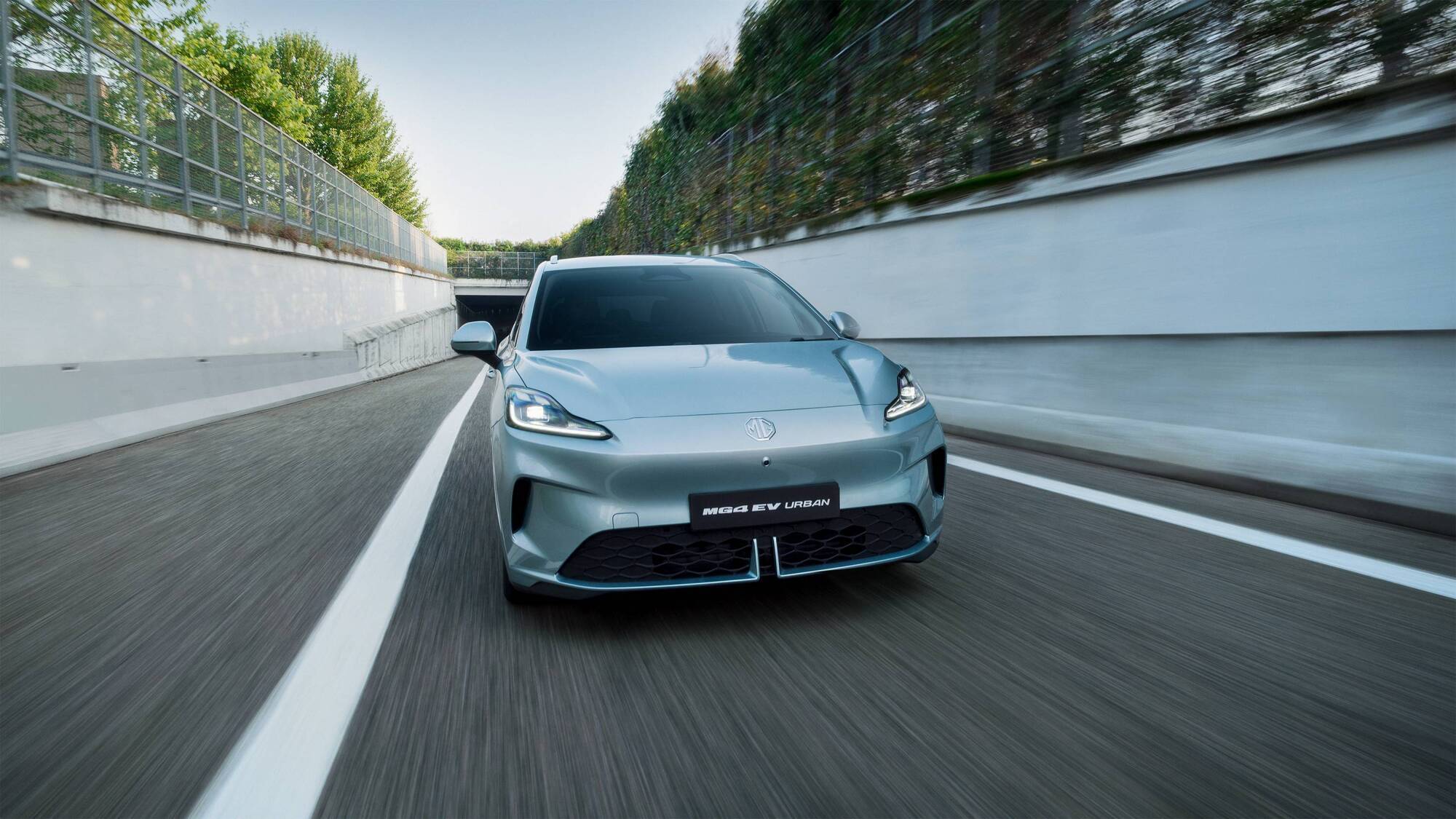
The MG4 Urban is a cheaper, roomier electric car with a 340km range and a starting price below €23,000. We put the new MG through its paces.
|
MG4 URBAN |
|
|---|---|
|
|
★★★★☆ |
|
|
from €22,995 |
|
|
It’s a low-cost EV and rather good too |
|
|
Less than its MG4 sibling at 345km but bang on for the target urbanite market |
|
|
Ridiculous for the price |
|
|
Surprisingly good in almost every way |
I have not liked too many MGs. Some, certainly, but a majority of them lack driving dynamism and their designs have the generic look typical of Chinese manufacturers.
“Chinese,” I hear you say. “I thought MG was a British brand.”
Well, yes, MG was British to a fault (many faults), but then BMW bought it and only had eyes for the Mini, which it successfully repurposed.
But it sold off most of the other bits of the Rover Group, including MG.
The marque ended up in Chinese hands (it was bought by the Shanghai Automotive Industry Company in 2007) and in 2011 the MG6 was launched in Europe, beginning a new era for the brand.
What followed was a range of unremarkable electric and hybrid cars, few of which were designed for European roads, and most certainly not for Ireland’s.
The resulting reviews will not have sent MG in to raptures.
Apart from the headline Cyberster coupe, the other notable exception to the company’s bland portfolio was the MG4, a small, swift runabout that was aimed at the supermini market and urban dwellers. It was really good to drive, especially after the company in Europe ditched the Chinese-made Continental rubber it had used.
But now, confusingly, there’s a new MG4 that’s completely different from the original. It’s got a slightly different name, too: It’s called the MG4 Urban.
This is a bigger, taller, and more practical car than its sibling, and it’s considerably cheaper. That is partly because it is built on a less-sophisticated platform and utilises a range of smaller battery packs to power its electric motor.
Read More
While the original car was rear-wheel drive, this one is a front driver and has a torsion-beam suspension arrangement at the rear, rather than the independent, all-round system we loved.
These changes might not make the car more appealing to the buyer who likes a well-sorted suspension layout for more surefooted handling, but MG’s thinking here is that this car is going to spend most of its time in a city environment. Hence the ‘Urban’ handle.
Hence, too, the smaller battery packs, which will provide excellent accompaniment for the city slicker and not those who have to slog their way to Derry every other day.
All these factors have allowed MG to produce a car that’s considerably cheaper than its namesake, with a starting price from €5 shy of €23,000 and, with the cost of living, that is going to be a big attraction for punters.
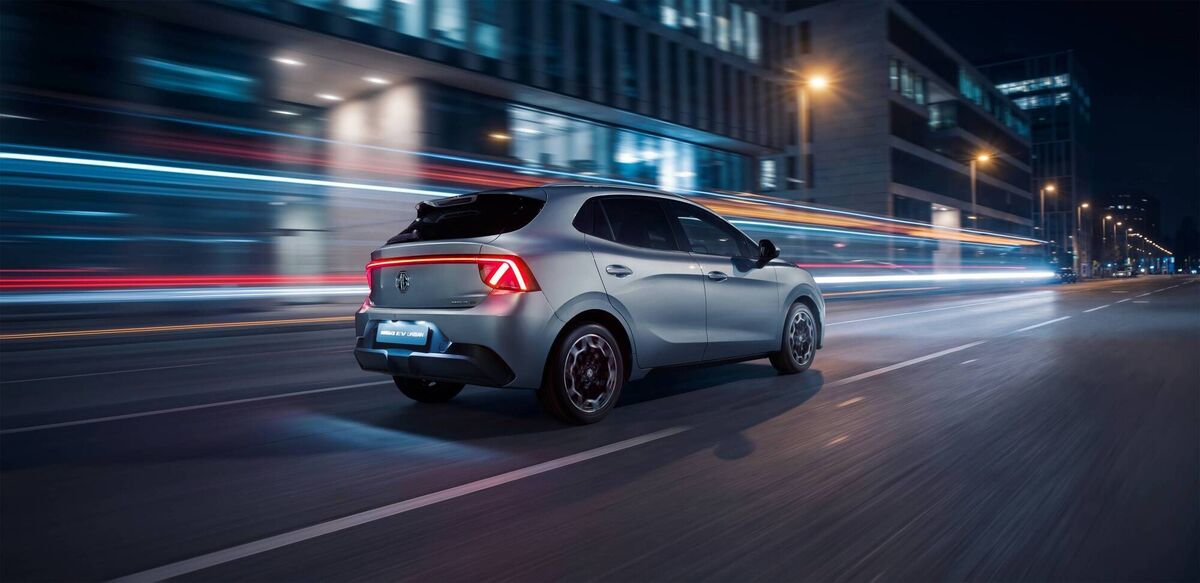
MG says it has drawn design influence from its headline act, the Cyberster coupe, and if you’ve got a good imagination you might see similarities.
There are parallels in the shape of the front splitter and the wheel arches, and the headlight patterns are familiar, but, otherwise, the resemblances are few.
The MG4 Urban just doesn’t look much like the MG4. It doesn’t look much like its sibling, either. Gone are design details like the ‘ducktail’ rear spoiler (there’s a much smaller version here) and the faux rear diffuser. It is tall, and sort of dorky-looking, and when it hooves in to view you get a déjà vu sort of feeling.
The Urban is something of a throwback to mini-MPVs of yore — tall and with short overhangs — but the UK-based MG design team have rounded the look out to give it some sort of a modern feel, but I have the sense that in a couple of years it might just look very old school.
It does not boast classic, timeless good looks — just good enough for now — and it may not age well. In fact, it might age very quickly.
That won’t concern most buyers, however, as the bottom-line pricing is the car’s singular selling point. Looks don’t matter so much when the cost is €23,000.
Taking as read that the MG4 Urban’s suspension is nothing like as sophisticated as its sister car’s, you might expect the handling to be poor, but it’s not.
There is little evidence of torque steer or even understeer from the driven front wheels and, on B-roads, where it is expected to spend little of its time, the MG4 Urban actually comports itself rather well.
It takes corners with little lean, and its ride is sufficiently good that passengers will not be discommoded.
Around town it soaks up bumps and potholes with disdain and is very easy to manoeuvre around high-rise car parks.
The reversing camera and parking sensors make it a doddle to fit into even the tightest parking spots.
I was nearly shocked by how capable the car is, and especially so given that it lacks so much by comparison with its sibling.
Smaller batteries mean less range than the other MG4 — around 340km as against 435 — but for the urbanites that are the target market this should not be an issue. You just won’t be making that trip to Derry anytime soon.
The 9.6-second, 0-100 km/h time was a bit smarter than I expected, and you can actually hustle this along quite briskly.
Decor is OK rather than outstanding — what did you expect for this money? — and, as is usual for Chinese products, the cabin is dominated by the giant, 12.8” central infotainment screen.
This is not quite as distracting as many others from the same quarter and is easily navigated and used.
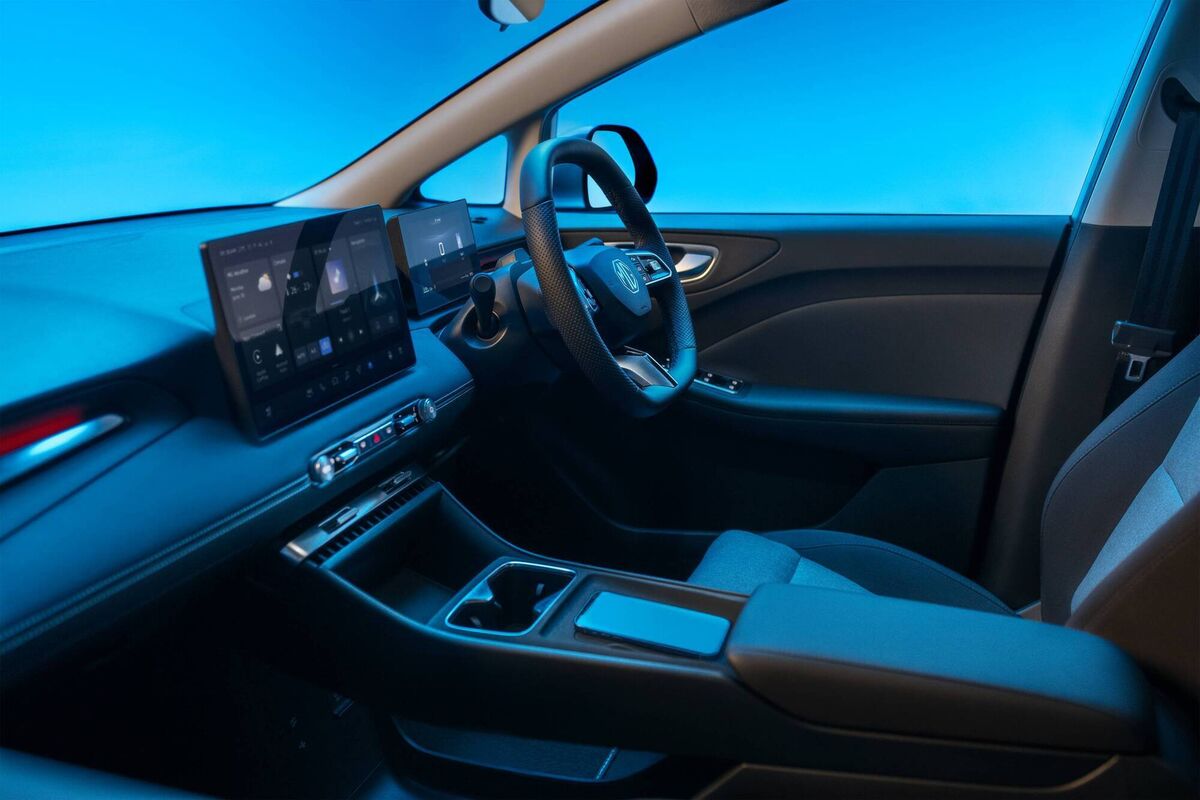
The interior space, however, is going to be a major selling point: It’s huge, and the amount of legroom freed up for rear-seat passengers is impressive. So, too, is the boot, which is substantial.
I had expected a cheap-as-chips motor with few redeeming features. It turned out to be quite the opposite, and MG are to be complimented for making something so good and yet so affordable.
On this evidence, it is no wonder that the Europeans are so worried about the Chinese invasion and why they are doing so much to try and stem it.