I flew to Zadar for 48 hours of me time in the ancient Croatian city
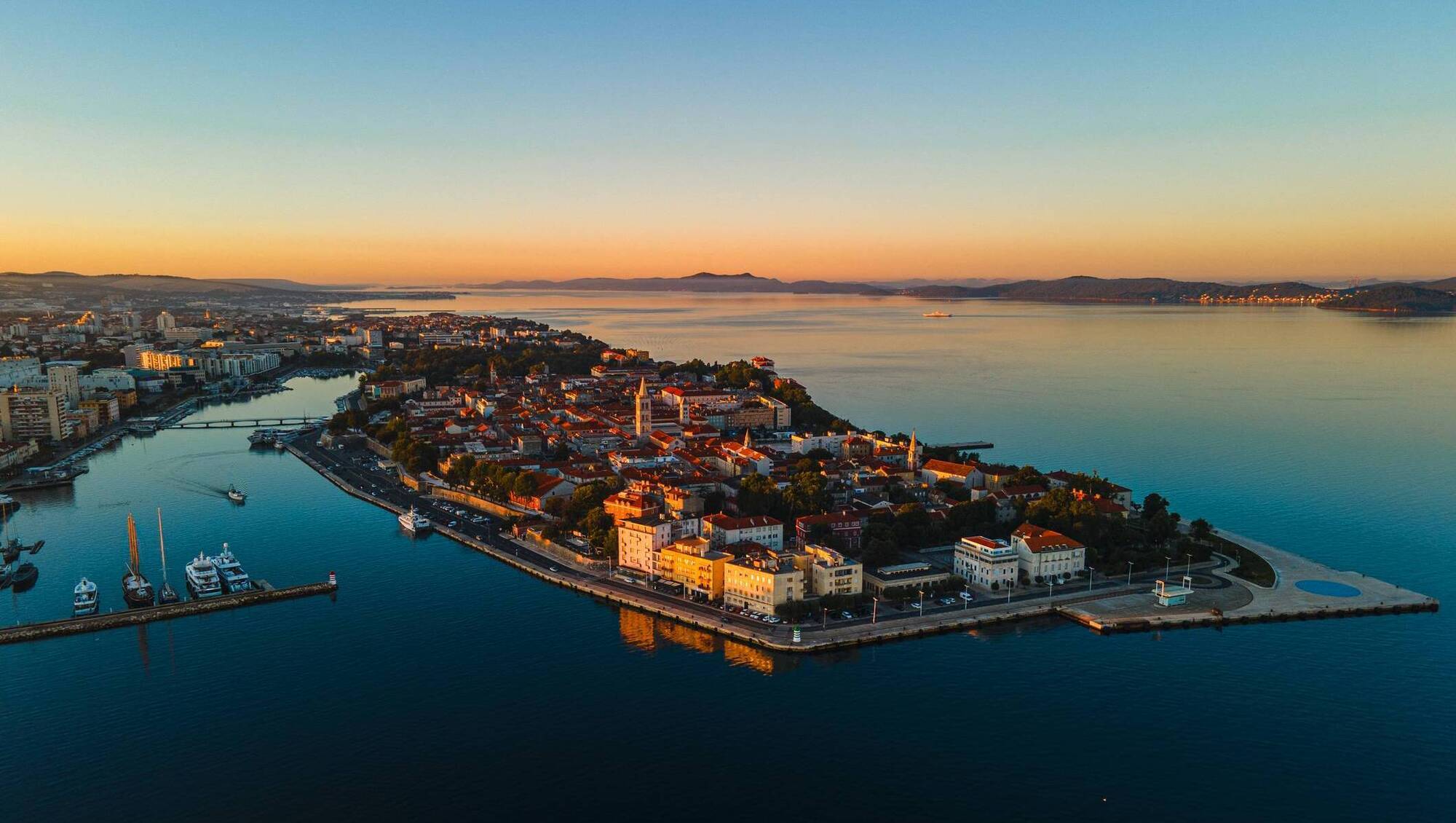
The beautiful sunrise over Zadar and the Adriatic Sea
The stone streets of the Old Town have been worn by centuries of footsteps. Small children trailing behind their mothers, peering at the crumbling remnants of Roman columns, at the displays of local lace, at hydras and sheep skulls carved into the walls. Students with palettes clipped to their belts and watercolour books tucked under their arms, hiding pages and pages of architectural sketches. Waiters skirting between people as they cross to the outdoor tables, holding bowls of squid-ink risotto that absorb the ardent sunlight above their heads. A young girl with a backpack looking up at the sky, where swallows and seagulls fight for dominance.
Those streets are so polished that they have become slippery. They watch as you slide around, and seem to say, ‘you’re walking like a fish out of water. Go to the sea’. The city of Zadar is surrounded by the hungry Adriatic. It’s as though she’s slowly devouring the spotted Dalmatian coastline, breaking off the crumbling pieces of land so that the place is freckled with islands. It’s hard to resist her pull.
There are so many islands to choose from. I’m tempted by Ist, which looks like a butterfly, and Kornati, which has its own national park. But ferries are infrequent and I’m travelling on limited time, so I opt for the choice that will allow me to explore as much as possible in four hours: A boat tour.
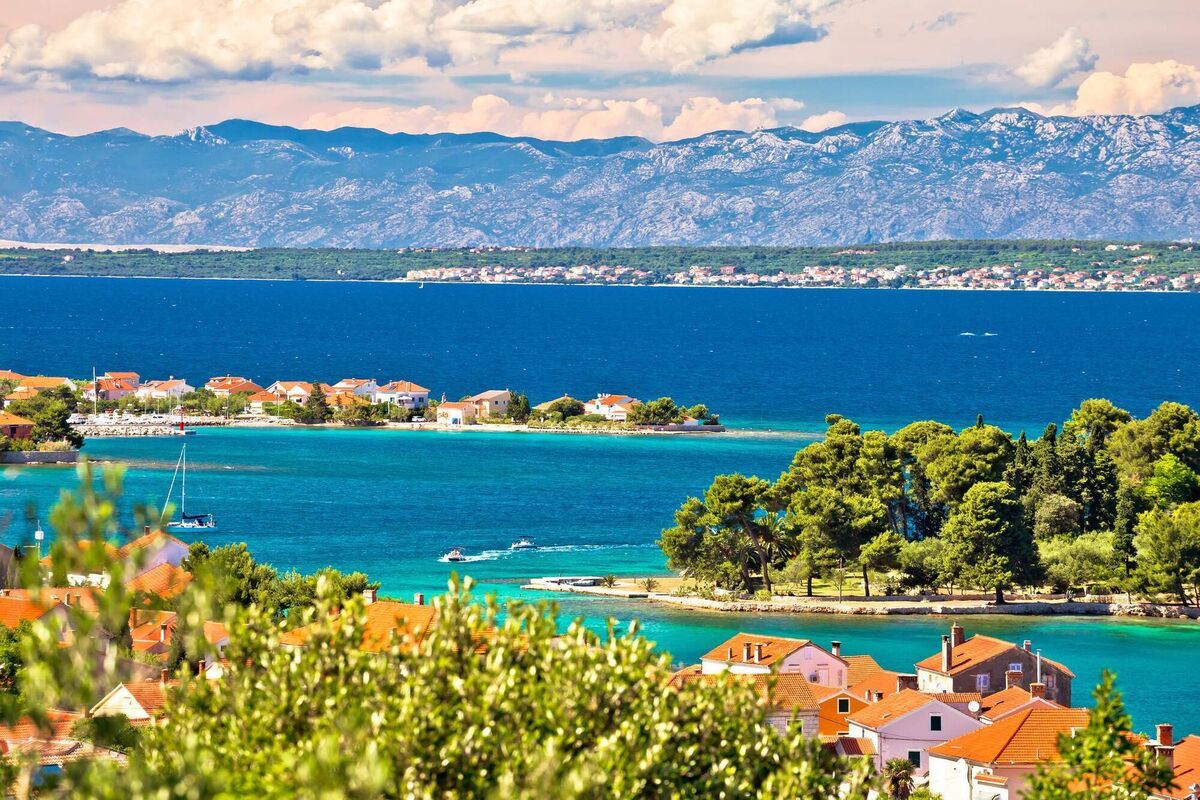
I arrive at the seaside gas station, our meeting place, and am greeted by our skipper: Ivan. There are about eight others on the tour. Ivan turns up the music and pushes the throttle, and soon we are zooming away from the crowds, the ocean turning from turquoise to navy as we leave the shallows behind.
Our first stop is a secluded cove, where pine trees dip their cones into the salt water and our glasses get filled with homemade wine from Ivan’s neighbour. We’re swimming and jumping and then dripping all over the boat as we head to our second stop, a small town called Kali. Here we’re plopped back on land and told to return in an hour. Some feast at the local canteen, others head towards the beach; I venture up into the hills in search of an understanding of life on an island.
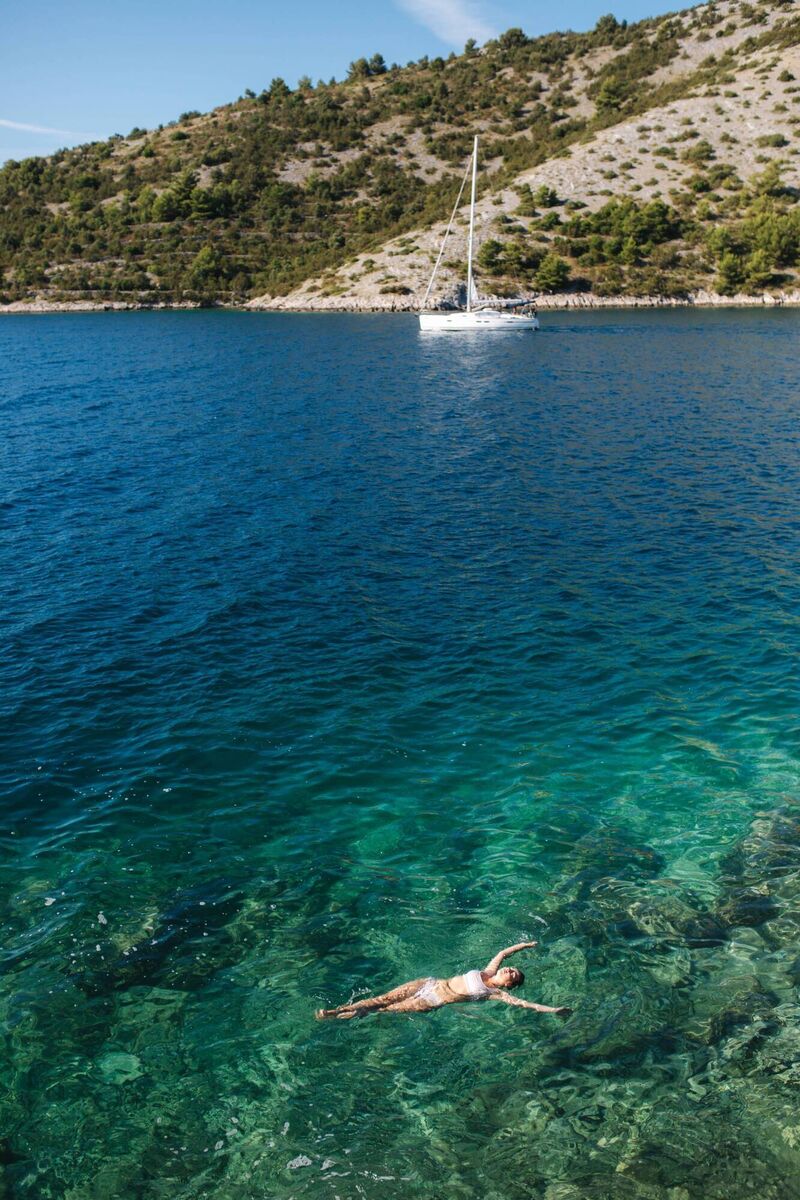
The streets are narrow and seem directionless. Empty bottles are placed under drainpipes to catch drips. Small vegetable patches nestle between houses. Shy green grapes hide among the vines, casting welcome shadows. Our third stop is an island so small you can walk its perimeter in under 30 minutes. The coast is rocky and I dive beneath the waves, finding myself in the midst of a school of fish, and then another school, and then another, like I’m back touring colleges. A starfish. A squid!
For our fourth stop, we have a choice: Town or swim.
Swim, we all agree. The ocean, she calls us.
When we reach the mainland again, I’m salty, I’m happy, but most of all, I’m hungry.
Squeezing through some back alleys, I arrive at Konoba Tovar, an unassuming spot with a handful of outdoor tables, all full. A couple asks if I want to join them. I’m on holiday, so I say yes to everything.
The restaurant is clearly off the tourist map; most people here are Croatian. A group of men is bunched like those village grapes around a small table, their bar stools doubling as counter space, as platters and platters of fried fish arrive; the waiter finding space between the full-to-the-brim glasses of white wine.
My tablemates ask for what they’re having, while I opt for the mussels and a salad. Soon, our table is overflowing, looking like someone has scooped up a portion of the ocean floor and slid the contents into bowls. My mussels sit in a wading pool of clear broth, their shells riddled with barnacles.
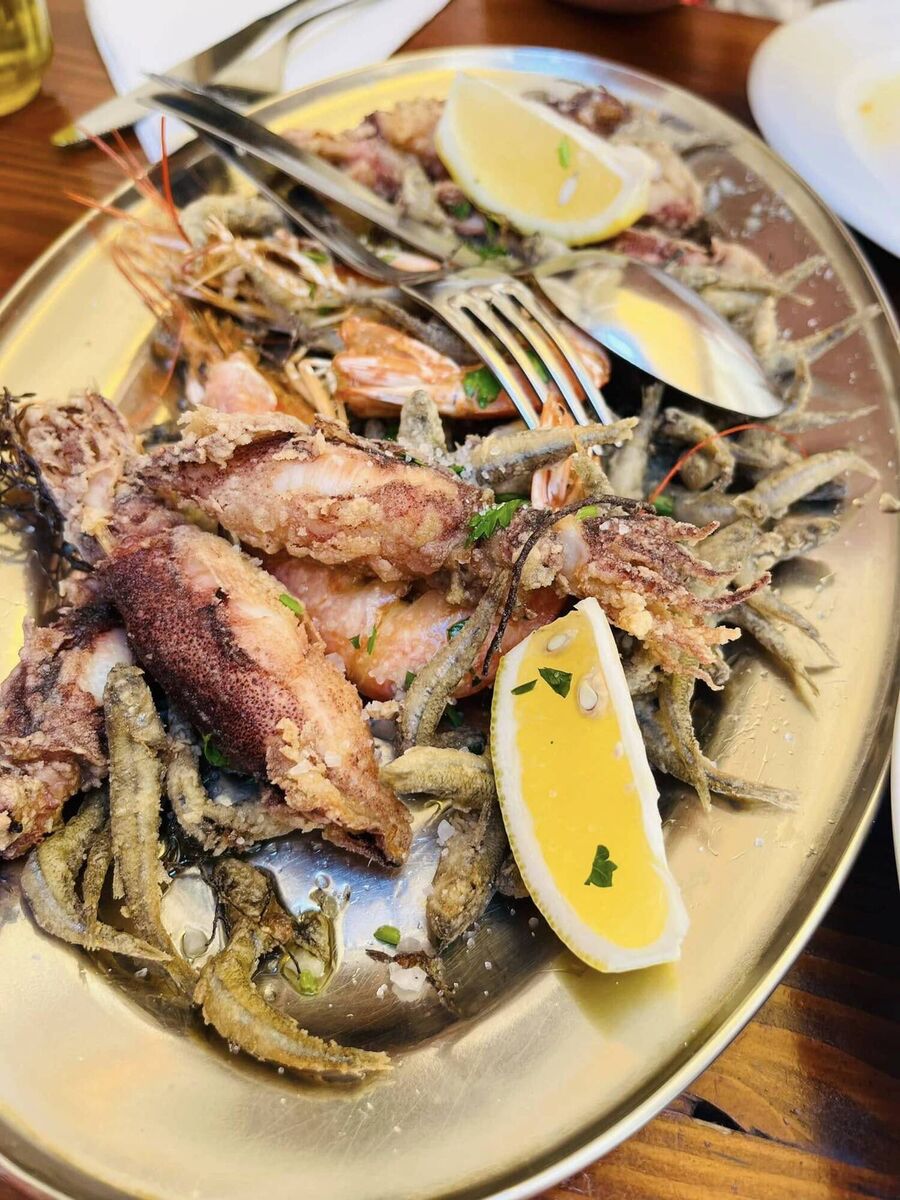
They’re plump and sweet, and I pull most of the beards out myself — without minding. Even my curly lettuce salad looks like a piece of coral. From a small window, I see the cook working away. He looks up at me, and I grin, and he grins, too. I like it here.
At 8am the following day, I find myself on a 35- minute bus ride towards my next adventure. Today, I won’t be leaving the land, I’ll be going inside it.
Our tour guide, Marijan, hands bright blue jumpsuits and helmets equipped with headlamps to the 15 lucky people who’ll embark on this once-a-day tour. You’ll only have to pay the €28 if you make it out, he grins.
We squeeze in through the tiny gap — we had to send our waist measurements beforehand so he could bring the right size of jumpsuit, and surreptitiously make sure we would fit through — and enter into a different world.
Modrič Cave is a completely untouched fissure into the ground. The soothingly cool air is speared by hundreds of stalagmites and stalactites, like the crooked teeth of some ancient beast. I navigate the chasms of the jaw, looking in awe at a frozen drop of water that hovers above me — which, as time passes, carves the way for growth. Marijan demonstrates how to contort our bodies to pass through the atomic openings that break up the chambers. “It’s a girl,” he cries as I pop out through the hole.
The group’s laughter cavorts around the crevices of the cave. Once we reach as far as we can go, we take a seat, turn off our headlamps, and sit in limbo for a few moments. I hold a hand in front of my face and see nothing but inky blackness. It’s a peculiar, wonderful sensation. And when we reach daylight half an hour later, we all blink and look around in confusion, having forgotten, for a moment, that the rest of the world is still out there.
I return to Zadar in the afternoon and fill the time until dinner by meandering down the coast of the city. It’s a fantastic walk with plenty to see: A multi-level diving board that’s populated by local young boys, who shriek and laugh and cheer when someone manages a flip from the top level; espressos, Aperol spritzes, and glass bottles of Coke at a beach bar; towels lined up like squares of chocolate; a group of shirtless elderly men huddled around a deck of cards.
The road tilts upwards and the sea becomes shaded by cliffs, punctured by small coves where people gather to paddle and sunbathe. Farther down, I see people free-climbing up the cliffs, their hands gripping at indents in the white stone. A breeze carries with it the smell of coconut, and I pass under a monumental fig tree, its fruits splattered on the ground like a Jackson Pollock. The 45-minute walk is a perfect encapsulation of Croatian summer.
Back in the Old Town, I search for a suitable spot for dinner. Halfway down a quiet street, I pause as the voice of NorahJones floats through an open door. Yes, this is the place.
I walk in to find a small restaurant with the most magnificent hidden courtyard that I’ve ever seen; a ceiling of vines overlooking candlelit tables, with red trumpet flowers poking eagerly through the foliage like they’re about to start emitting music. Everything is enclosed by crumbling brick walls.
I order the seafood stew and a glass of house white, which arrives swiftly, the glass misted with condensation. The stew is a mosaic of creatures bathing in a thick tomato broth; with minute clams, mussels, a scallop in its ruffled shell, a belly slice of a local white fish that’s absurdly tender, and prawns with sultry antennae that are practically writing in cursive across my plate. It’s a family-owned place, one brother in the kitchen, one clearing my licked-clean plate. They send me off with a thimble of Croatian cherry liqueur.
I end my evening with the sun, following her as she sinks to sleep beneath the ocean, impossibly flat where it meets the sky. But the water at my feet is as lively as ever, and the waves rumble in and out of the Sea Organ: An installation that turns the movement of the water into notes of music. The sound is both mesmerising and melancholy.
I watch the sun stain the sky orange and listen to the song of the waves with what seems like most of the city; the transition from day to night is meaningful here.
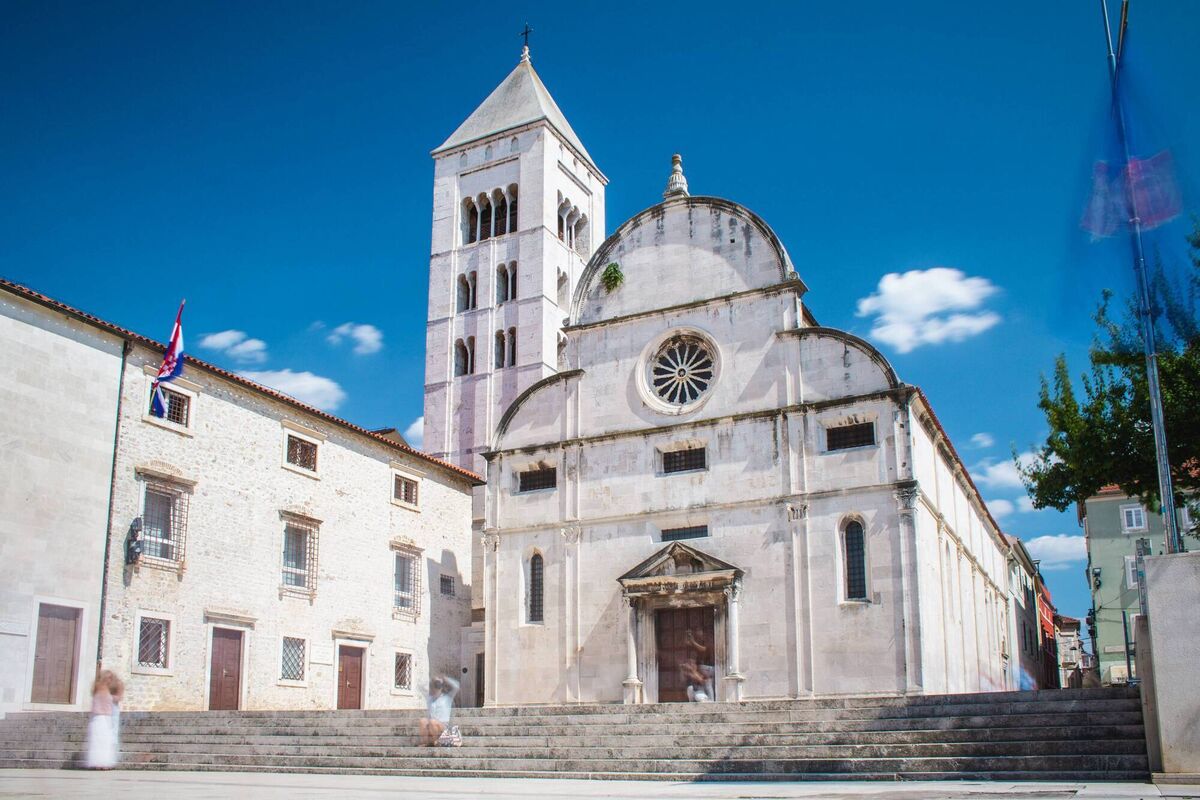
Looking behind me, I see a tiny fig tree that sprouts from the wall of a church tower. I think of time, and growth; the boys that jump from the diving board, the old men that play cards. The young fig tree, the towering one. The relics of life that are retained in stone, now studied by children and artists. And I think of the beauty of being alive.
- Direct flights to Zadar from Cork and Dublin depart twice weekly.
- You can reach Zadar from Split by car (one and a half hours) or by bus (three hours).
CONNECT WITH US TODAY



Be the first to know the latest news and updates