I remember my father buying me a Milka chocolate bar when we were on holidays in France in the early 1990s. The purple wrapper. The picture of a dairy cow with a bell around its neck on an Alpine mountain. It was special because you couldn’t get this brand back in Ireland.
Afterwards, I associated this chocolate with an exotic place, a treasured memory from a family holiday abroad. Now, this chocolate bar is readily available in every supermarket and corner shop in the country. It’s lost its appeal to me.
In fact, this bar speaks to a much broader truth. Holidays on the European continent have lost their magic because our world has become homogenised. Too many things and places look and feel the same. The thrill of the unusual is harder and harder to find.
According to a recent survey by Belfast-based Hastings Hotels, fewer people plan to travel abroad for their summer holiday this year than last year. A fifth of Irish people intend to avoid foreign trips due to the threat of travel disruption and ongoing uncertainty over the war in the Middle East.
Good. We travel too much anyway, and perhaps we need to venture abroad less in order to reclaim the magic of it.

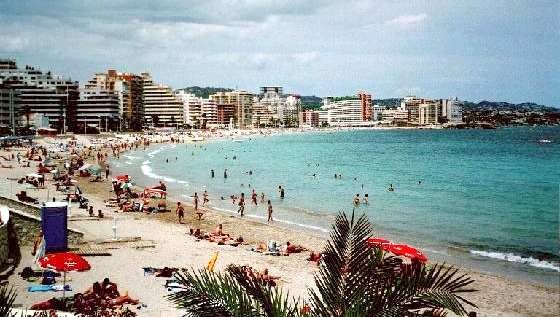
Holidays to Europe were, simply put, better in the past. The reasons for this are twofold. We travelled less which meant we were more naive and therefore more open to surprise. Secondly, Europe was less unified than now, which meant that its constituent countries were more unique.
In the ’80s and ’90s, a week in the south of Spain required the joyful chaos of negotiating pesetas, whereas nowadays the euro has made travel seamless but dull. Who remembers balking at the initial shock of being charged 12,000 lira for a margherita pizza?
Globalisation has contributed to an increasingly monotonous food culture across borders. This has led to a culinary sameness that tourists of the past thankfully avoided.
While coffee chains like Starbucks have increasingly conquered most street corners in western Europe, Italy remained the last bastion of resistance until Milan succumbed in 2018. Now, there are more than 50 across the country, slowly eroding the uniqueness of its streets.
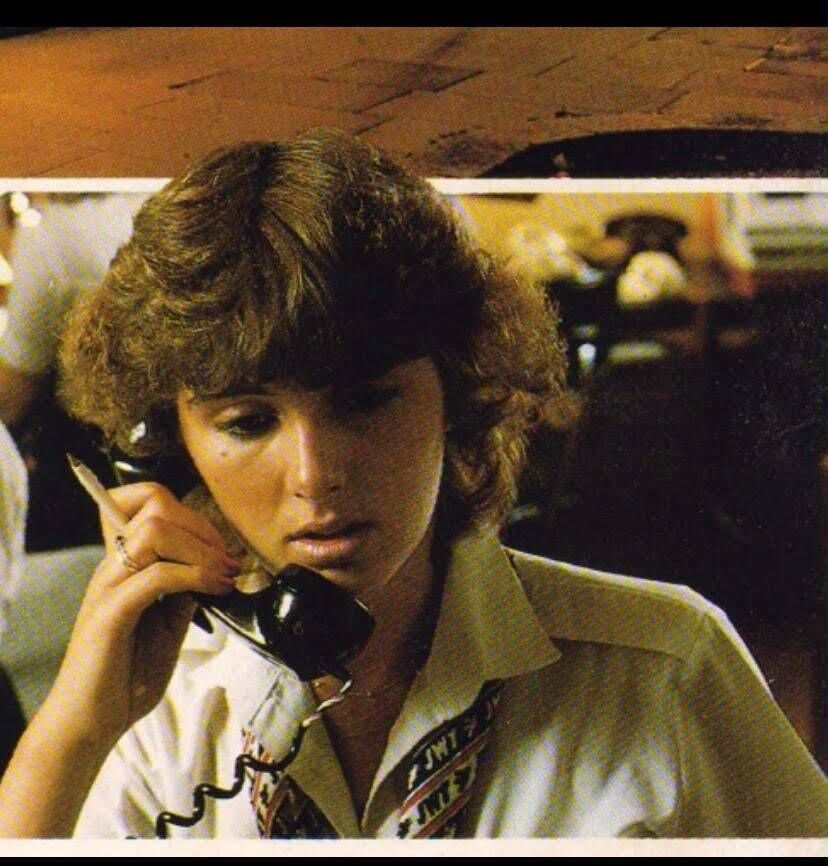
Barbara Scully, comedy storyteller, writer, and broadcaster, worked as an agent for Joe Walsh Tours (JWT), beginning in 1979. This was one of the leading travel companies in Ireland at that time.
She argues that it isn’t globalisation that has made holidays less interesting nowadays. Instead, it is the fact that we are more sophisticated and less easily surprised.
“I don’t think that it’s globalisation as much as the fact that Ireland was in the dark ages,” she says. “It took us a long time to catch up with everywhere else. I mean, I remember growing up in the ’70s and having a pizza for the first time, at a friend’s house. And being absolutely like, ‘What the f**k is this? A pizza!?’ I remember going home and telling my mother about it!”
In 1983, just over half a million foreign holidays were taken by Irish people. Last year, we took nine million holidays abroad. That’s a 1,664% increase in foreign vacationing over a 40-year period.
We have shifted from being an insular people to being exceptionally well travelled. We may not be wet behind the ears any more, but a bit of childlike wonder is missing from our holidaying culture now as a result.
What is striking is just how different the method of booking a holiday was in the past compared to today.
Nowadays, and I’m guilty of this myself, people will forensically examine the photographs and reviews of a hotel or resort on sites like Tripadvisor before committing to a particular booking. There isn’t a corner of a resort that hasn’t been put under the microscope before we even arrive in the country.
This pathology for knowing everything in advance has eradicated all element of chance and surprise when it comes to holidaying abroad.
But what was it like in the pre-internet ’80s?
“People bought holidays out of a brochure,” explains Scully. “It was the job of the travel agent to go through the brochure and advise you as to where to go.”
As a travel agent with JWT, Scully would go on regular ‘educationals’ to Spain to look at resort hotels so that she could advise her clients reliably.
“JW Tours sent you down to Tenerife and you would have to go and look at the resorts we offered and look at all the accommodation. And you would have your own notes. So it wasn’t as archaic as you might think. If your travel agent was good, they would advise you well.”
The evolution of telecommunications has closed the gap between home and abroad. This has had the unfortunate effect of making holiday destinations seem closer and closer to home.
While the removal of mobile phone roaming charges seems great on the face of it, have we lost the joy of separation? Does the constant and easy availability of messaging those back home really allow you to ‘be away’?
Conversely, going ‘out foreign’ in the ’70s and ’80s was a much bigger deal. You were cut off for the week, with maybe a postcard or an expensive long distance landline call your only respite.

There was a serious buzz in jetting off to the Canaries. “A jumbo jet used to go down to Gran Canaria every weekend,” recalls Scully. “As far as I know, it had a capacity of about 550 on board… it was huge. It was phenomenal, so exciting.
“Once the aircraft got to cruising altitude, the cockpit door was opened and the air hostesses would come down and invite the kids to go up and say hello to the captain. That has totally changed now.”
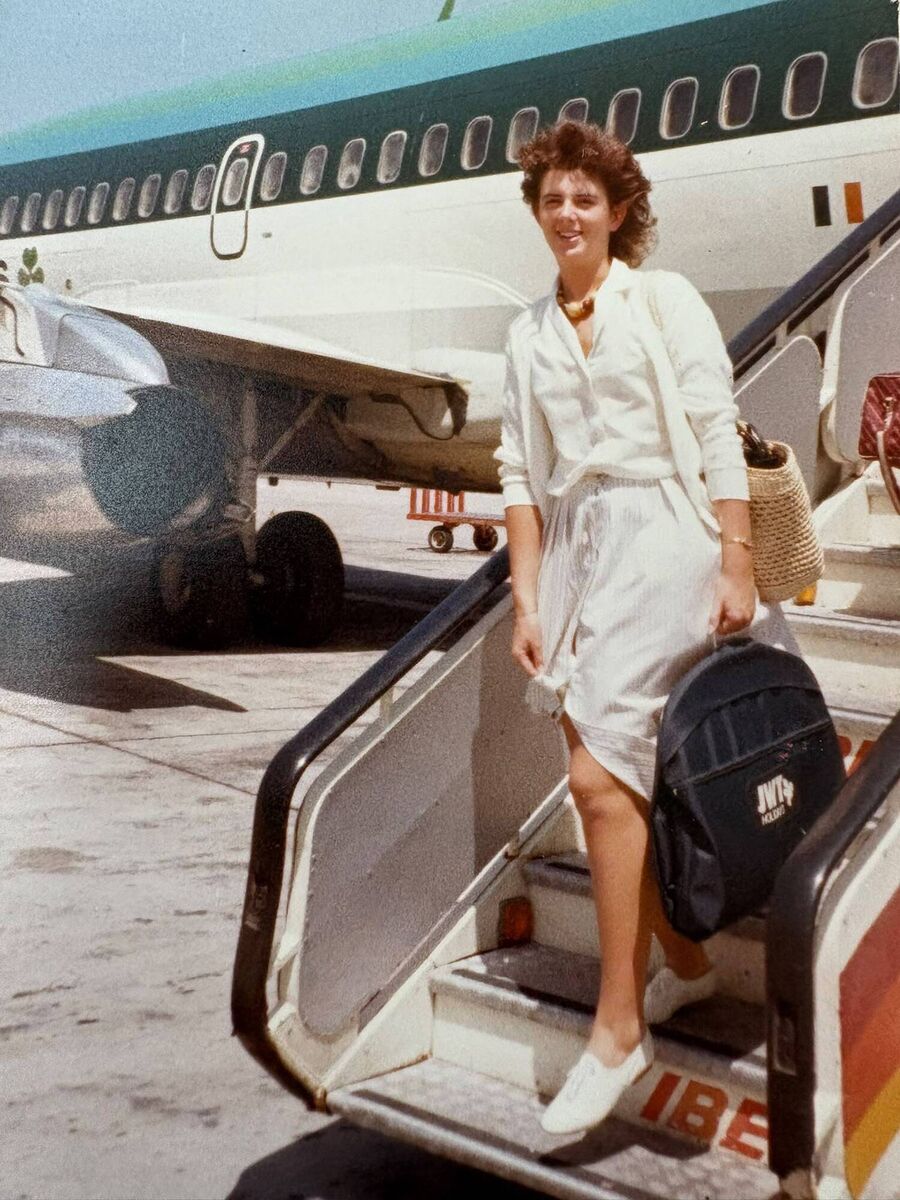
The sense of occasion when it came to foreign travel is perhaps best illustrated by the tradition of the arrival photo. Scully remembers this well.
“You arrived in the airport and there was a photographer at the bottom of the steps [of the airplane],” she remembers. “They would take your photograph as you arrived. And then it would be for sale at the airport when you returned a week or two later.”
Irish people are so much more worldly now because we travel so much. But does an abundance of travel make being away less special? Is there something to be said for rekindling the innocence of being a fish out of water?
Scully remembers many Irish people being confused about their geography back in the ’80s.
“A lot of people hadn’t a breeze where they were,” she says. “I worked [as a rep] in Gran Canaria, which has Las Palmas Airport. You would get people arriving off the plane and they thought they were in Mallorca, because Mallorca’s airport and capital is Palma. It happened every season.”
One particular anecdote from her days working in the Canaries sticks with her.
“We used to sell excursions and one of the excursions we sold was to the Gambia in West Africa. You’d see people looking at each other going, ‘West Africa? How long does that take to get there?’ And we’d be like, ‘An hour or so’. They had no idea they were in the Atlantic. They thought they were in the Mediterranean!”
What a joy to feel so removed from home that you could be that lost.
We presume that technological improvements make everything better, and that the world becoming a smaller, more connected place is necessarily a good thing. But perhaps it has made it increasingly difficult to disrupt our lives with the jolt of the new and the unusual, and be somewhere outside of our comfort zones.
This was so much easier in the past, and that’s why the challenge with modern holidaying is to try and rekindle the naivety of old-fashioned travel.
CONNECT WITH US TODAY
Be the first to know the latest news and updates