I hiked across Menorca to reveal the mysteries of the Spanish island
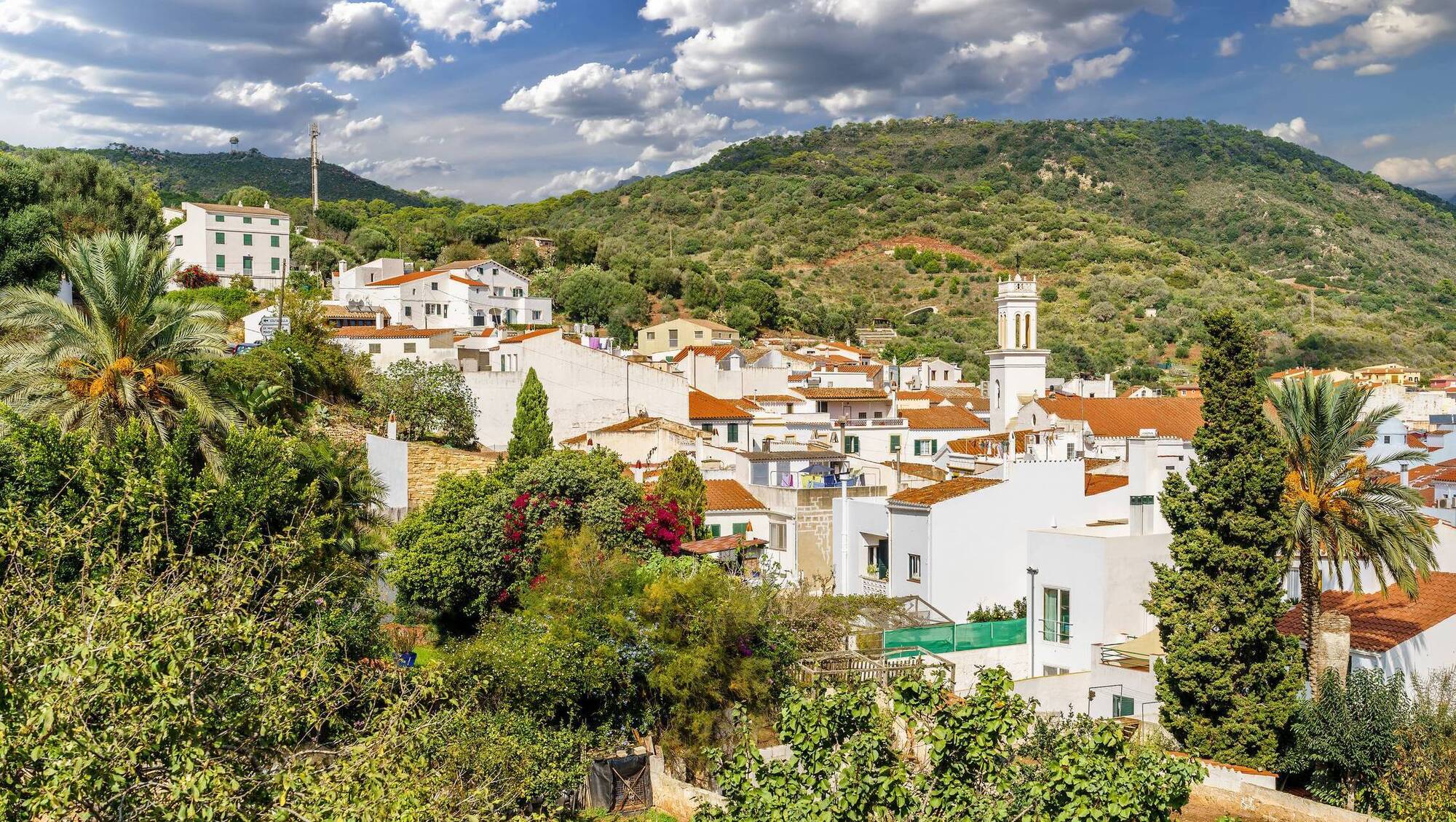
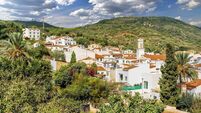
Ferreries nestles into the hills, Menorca
“You know this city is where Mayonnaise sauce originated,” I announce to my five walking companions as we stroll around the historical centre of Mahón, capital of Menorca, on a cool spring evening. They’re all French, so they’re dubious of my claim, but it was the Napoleonic troops that discovered the local Salsa Mahonese (Mahón sauce), brought it back to France and re-christened it Sauce Mayonnaise.
I’m the only Irishman in a group of six 50-somethings, all giddy with excitement for the unknown journey of adventure that awaits us. Travelling light, we all have small rucksacks that will carry everything we need for the next week of walking the length of this boomerang-shaped Balearic island; the lesser-hyped neighbour of Mallorca and Ibiza.
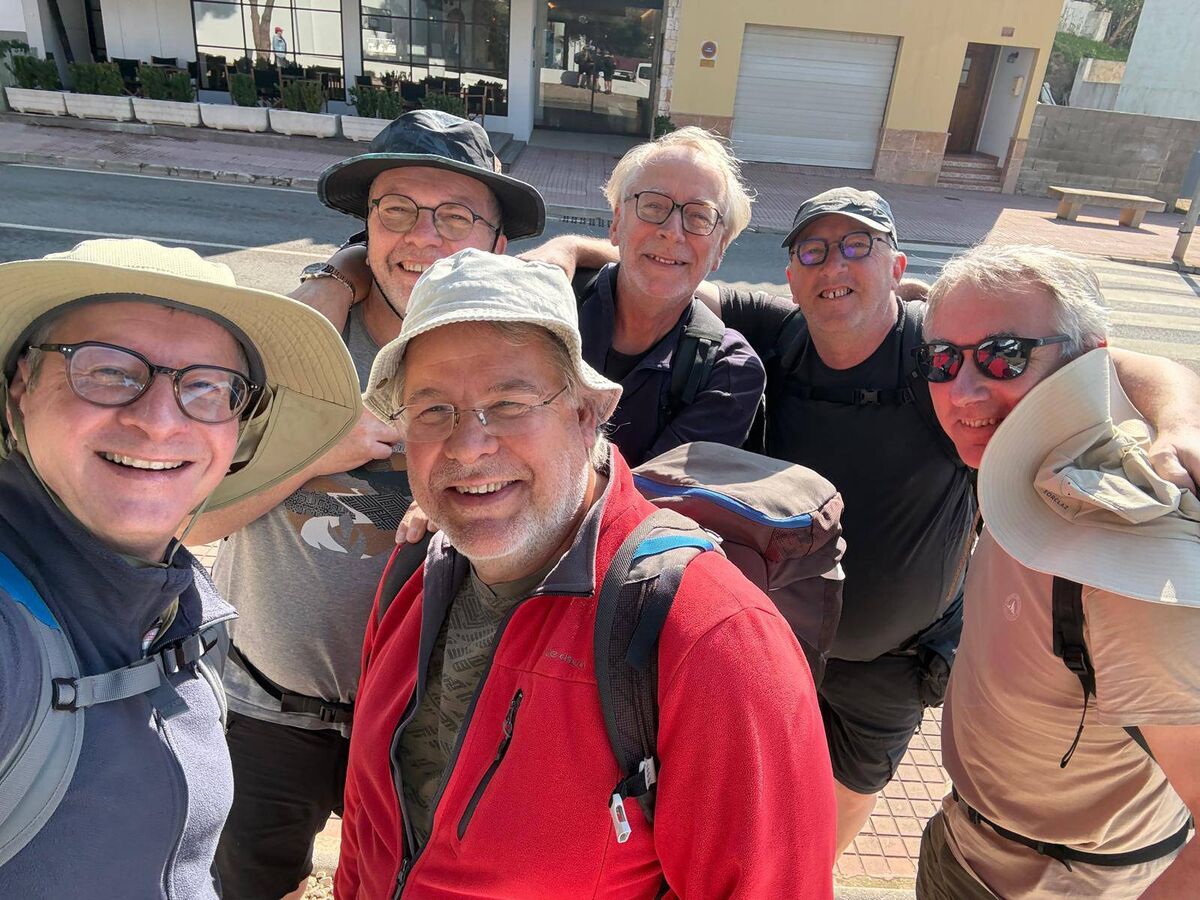
Once our hungry group hits upon a suitable spot for dinner, we immediately see the benefits of arriving in Menorca just before Easter time. Everyone is in preparation mode and many places have only just opened for the season. We have Café Nou, its charming hosts and its delicious food, all to ourselves.
Next morning, we’re up bright and early for the 20km walk to Alaior. It’s a mild morning with blue skies and no wind and the trail takes us along country lanes bounded by dry stone walls that remind me of the Aran Islands.
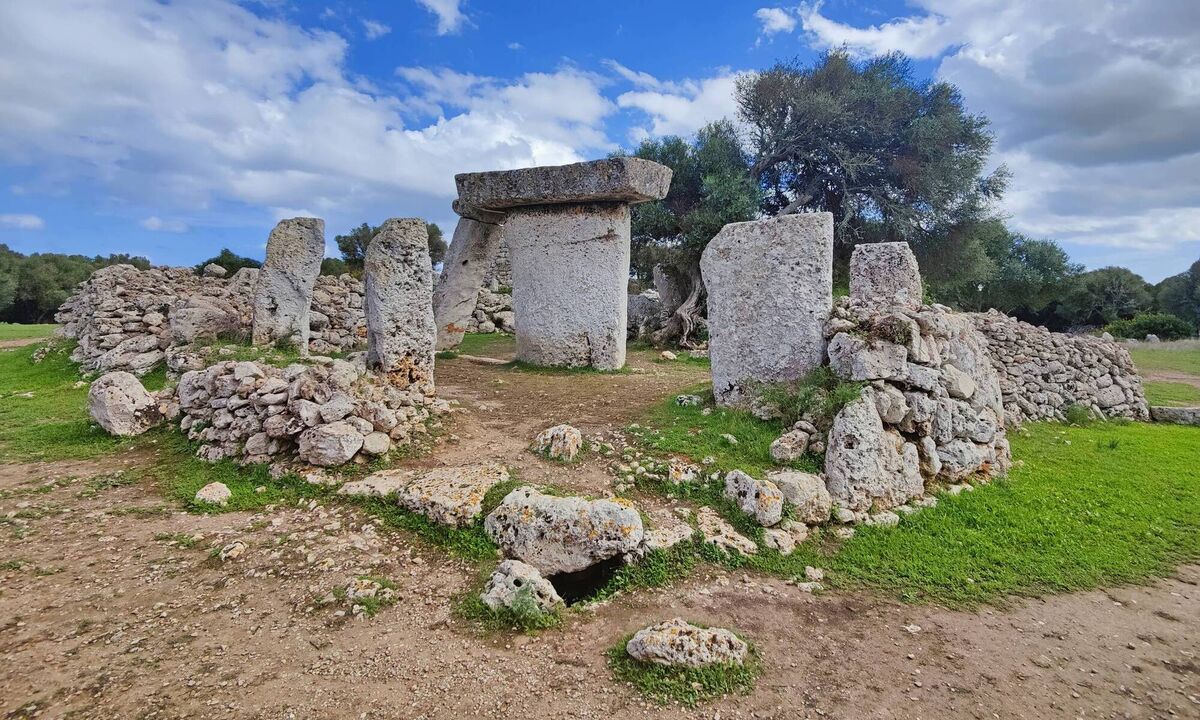
The walking involves very little climbing or descending. Just before the halfway point, we come across a huge prehistoric Talayotic site. There’s a quiet reverential energy about the place that tingles to the bone.
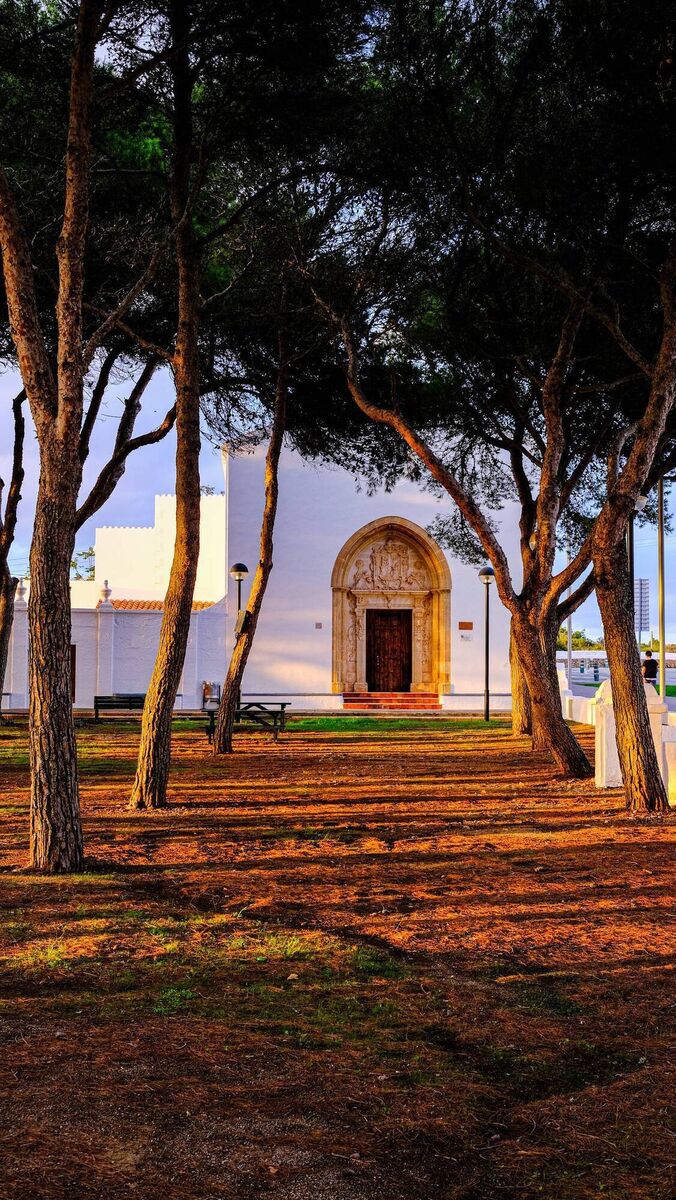
The Talayots were the dominant culture from approximately 1,600BC to 120BC. The Talatí de Dalt is one of the biggest Unesco World Heritage Talayotic settlements on the island and includes a circular central home, a ring fort atop the highest point in the settlement, and a huge T-shaped dolmen-type Talayot. Nobody knows to this day what the precise function of Talayots was but Menorca is the only place in the world where you’ll see them.
We continue along quiet country lanes and the occasional minor road — a mixture of serious discussions, chatter, and good-nature banter keeping our spirits afloat under the warm Mediterranean sun. At the 15km mark, I can really feel it in my legs. But the great thing about walking from place to place with everything on your back is that even if you feel like stopping for the day, you can’t. Barring some kind of emergency, you’ve no choice but to keep going.
The sight of the pretty village of Alaior materialising out of the green countryside gives me a psychological lift that somehow powers my legs for the final climb of around 4km, so that I’m the first to arrive at the accommodation. After a well-earned round of patatas bravas and beers on the beautiful little square, Plaça de la Constitució, we check into our hotel. There’s nobody there but once we confirm who we are from the booking, they email codes to gain access to the building and to our rooms. With a huge terrace outside our room with views over the orange-tiled rooftops of the town, roommate Christophe and I seem to have hit the jackpot.
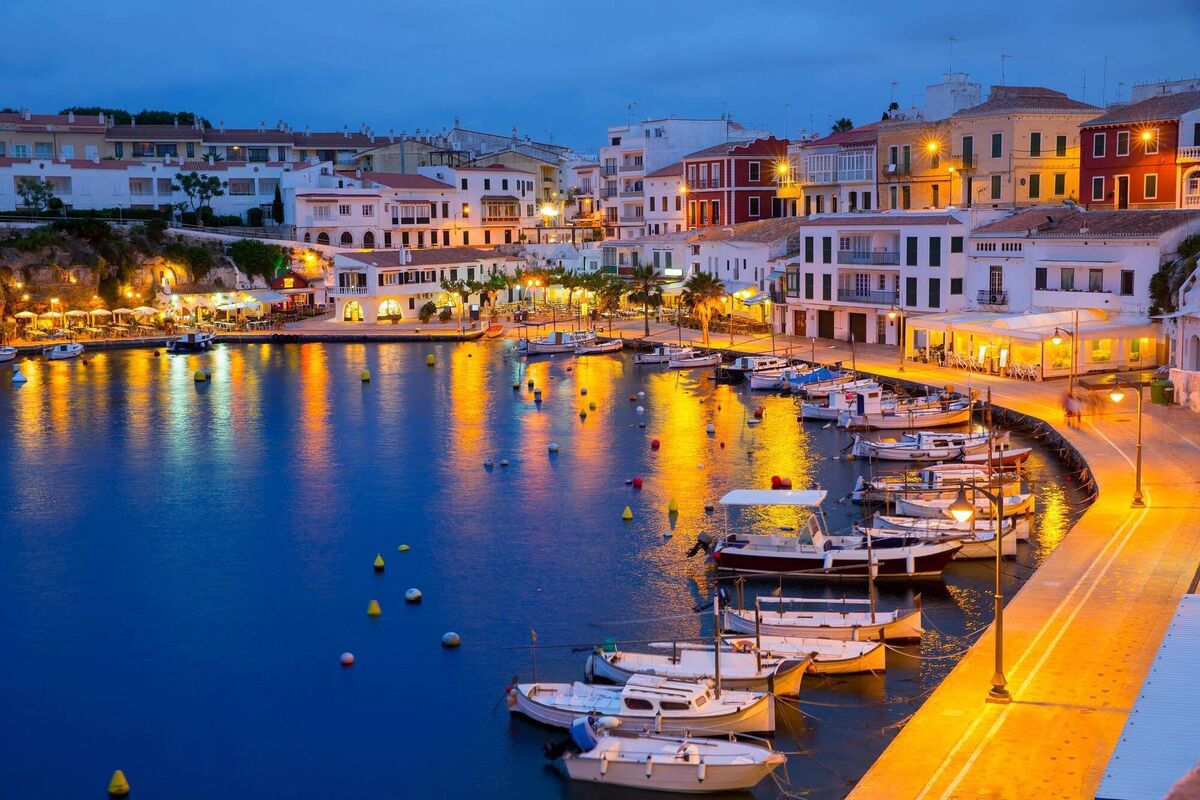
We don't venture far for our evening meal — going for the large Casino Restaurant on Plaça de la Constitució. Bingo is in full noisy swing when we arrive and it turns out that the term Casino usually refers to a social gathering place or multifunctional centre rather than somewhere to lose your money. In this case, it’s a social centre for retirees and we learn that the Spanish have probably the best word to describe retirement — la Jubilación.
After eating, a quick walk around reveals a very quiet out-of-season village. When we choose a bar a little off the centre, it’s big and empty with a wood fired stove going in the middle, and we’re outnumbered by the friendly staff for whom we seem to be the very first foreign tourists of the season.
The next morning starts cold, before quickly warming as our weary legs trudge along roads lined with ancient oaks and olives, past barking dogs and clucking hens, red kites and other huge rapacious birds soaring above us in the blue sky.
From an aeroplane window, Menorca looks fairly flat, but today we find ourselves right in the middle of its significant folds. Our trusty walking guide book brings us up a tough climb to the island’s highest point — an 358m hilltop called El Toro. The café in the middle of the cloisters on top is closed, disappointingly, but we only have to retrace our steps back down and walk another 2km and we’re in Es Mercadal.
The outskirts where our hotel is have a distinct air of tumbleweed about them but the boutique hotel is very nice, complete with an honesty bar, and the town centre we had bypassed on our way in turns out to be very charming. C’an Bep feels like locals central, with a relaxed vibe and great value food of every kind. I go for an open sandwich of sobrassada (the Balearics’ softer version of chorizo) and cheese. Their tasty tripe goes down a treat with some of our number, the patatas bravas are great and the beer quenches the thirst and seems to magically repair tired muscles.
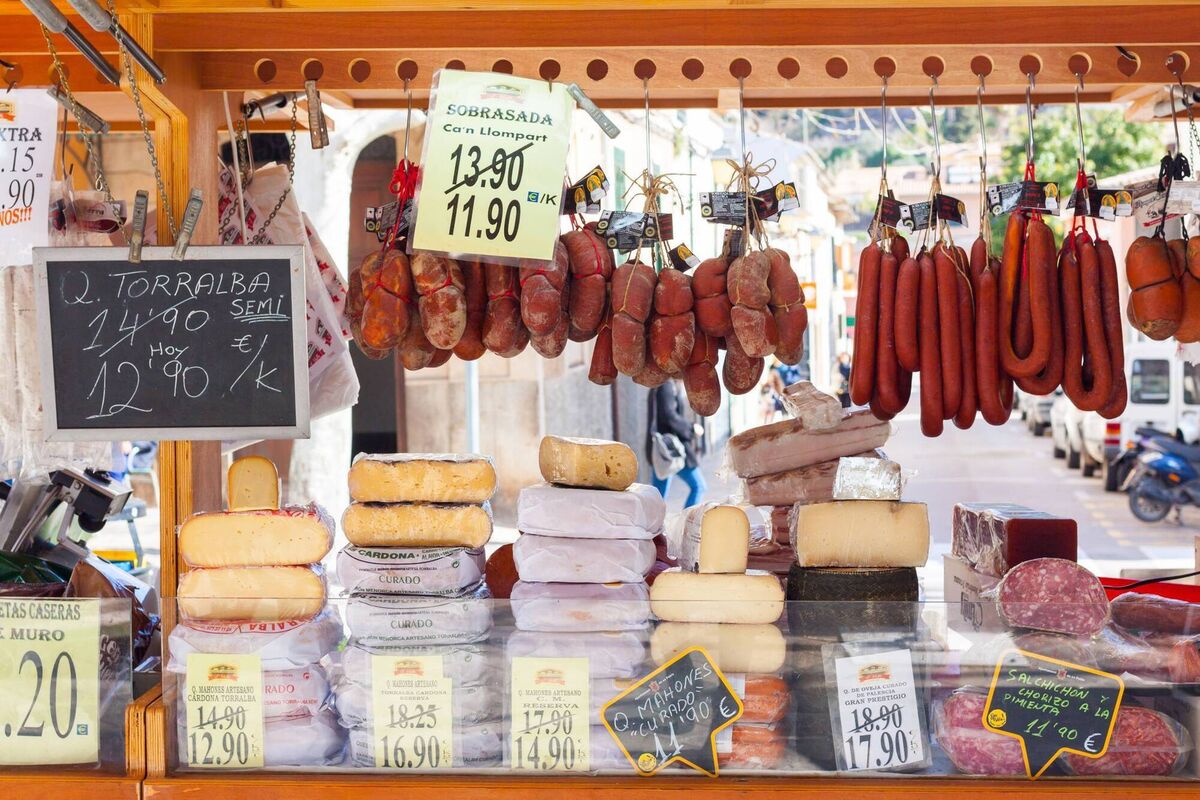
After a lovely Menorcan breakfast (including their thinly sliced cinnamon-infused black pudding, Cuixot Menorca), the next day’s trek of 22km is the longest walk on the warmest day. More beautiful green countryside on a route that goes around in a long loop north of Es Mercadal and back down south for a steep descent into Ferreries — another pretty town, all the more alluring in its pre-summer calm.
The next day, after passing through dramatic limestone caves, shady forests, and sunny open plains, we come across another large Talayotic village — Torretrencada. We have the place entirely to ourselves, using the huge stone Talayot for shade while we have a quick drink and snack before continuing our walk along a paved road all the way into Ciutadella.
Menorca’s second city feels much more fun and chic, contrasting with the more functional Mahón. It’s altogether prettier too and more Spanish in feel, with its winding streets and ancient colonnaded walkways between charming squares and stupendous monuments, including an enormous cathedral.
Our accommodation is in a typical whitewashed building with a rooftop offering great views and clothes-drying opportunity, but its claim to be a ‘boutique hotel’ was a long stretch. It was certainly a very nice B&B, with a tasty Menorcan breakfast prepared for you just ‘off-stage’ by two employees/owners.
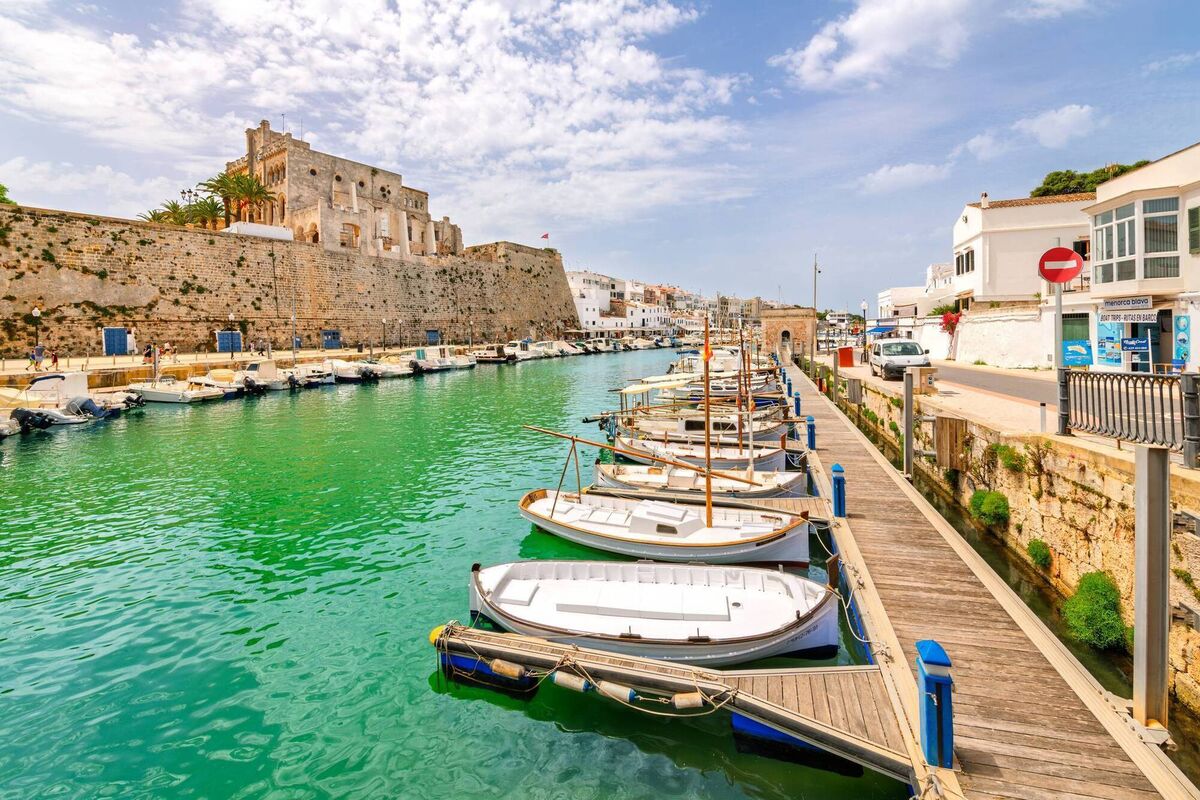
The following day brings unseasonably vicious winds, so we end up seeing very little of the looped coastal walk we had planned to do. After a windblown 10km round trip back into town, our journey becomes a culinary one. Ciutadella is the most expensive place to eat out that we’ve seen yet. The previous night, we had paid an eye-watering €50 each for dinner with wine at the slightly fussy Ulisses Restaurant, but Es Mercat (also right beside the fish market) turns out to be a real gem, offering superb quality lunch for the price and managed by an amiable Frenchman, Thomas, from the town of Troyes.
The bus journey back to Mahón costs €5.75 and it takes us just over an hour to make a journey that had taken us four days on foot. It was fascinating to see it all from a different perspective and leaves you with no shortage of pride to gaze upon the trek we had taken through Menorcan hill and dale and past so many ancient sites.
Walking gives you a knowledge of a place on a level of intimacy that no other activity can match. Going in pre-season has huge advantages too. Menorca isn’t anywhere near as busy as its Balearic neighbours Mallorca and Ibiza but it does get very busy in summer when its population of 102,000 welcomes almost 2m visitors. When you visit the island before it all kicks off, you see it at its best. Everywhere, people were pleasant and welcoming and food and accommodation were affordable and excellent.
Most rewarding of all, we found ourselves walking deep into Menorca’s mysterious past; something that you’ll only truly discover by placing one booted foot in front of another on the soil and stones of Menorca and walking its backbone from one end to the other.
- Vueling Airlines (vueling.com) flies daily from Dublin to Menorca, via Barcelona, all year round from €138 return;
- See the official website menorca.es for tourist information, including accommodation, or spain.info;
- We used Paddy Dillon’s ‘Walking in Menorca’ guide book, which gives excellent accurate directions.


CONNECT WITH US TODAY



Be the first to know the latest news and updates