On a Clare day ...
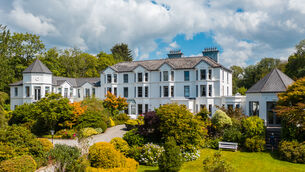
That sounds a bit autocratic but I recently spent the most wonderful afternoon on a Farm Heritage walk close to Kilnaboy. I was over for the launch of the Burren Ecotourism Network at Gregans Castle. There is always a warm welcome, lots of blazing turf fires — no sacrifice to stay there. The food — cooked by chef Mickael Viljanen and his team — is terrific.
I hadn’t properly done my homework before I arrived, no proper walking shoes — the best I could find in my hastily packed case was a pair of Uggs. The adventure began when we all piled into the coach, it was the most beautiful day, the stony Burren landscape was utterly awe inspiring and all the more thrilling because the sun shone brilliantly yet there was a sultry mysterious haze in the distance.
As we meandered our way past the ancient stone walls, Brian Farrell, our coach driver pointed out Cahermore fort nestled in the hazels and the Wedge Tomb at Glen Insheen near where local man Paddy Nolan found the gold collar in 1932, now in the National Museum in Dublin.
There seems to be an archaeological monument of note virtually every quarter of a mile — we passed the Poulnabrone dolmen, a fine portal tomb, dating back to 3,800BC.!
Apparently there are more archaeological sites per square kilometre in Co Clare than in any other part of Europe. Earth and stone forts, mounds, mass rocks, wedge tombs, passage graves, penitential stations, fulachta fiadh and holy wells with a cure for everything from eye problems to diabetes.
Brian points out John Davern’s farm — he’s the farmer who not only produces the milk for Ben Johnston cheese at the Aillwee Caves — but also has Caherconnell stone fort and the school of archaeology on his farm.
A few minutes later he’s talking about Poulawak cairn, circa 3300BC and then we’re passing the ruins of Lemenagh Castle with its 15th century tower house and 17th century mansion built by the O’Briens.
By now we were close to Kilnaboy Church, which has a Síle na Gig over the entrance door and a double transept cross inset on the gable which would appear to indicate that it once held a relic of the true cross of Christ, no less.
A few minutes further along we come down to earth with a bump — we arrive at Father Ted’s house — a fine house standing majestically in a huge green field, a rare sight in this lunar landscape. Apparently this house was originally owned by a Scottish landlord. We were met by current owners Pat McCormack and his wife Cheryl.
Pat is one of a group of eight Burren farmers who have come together to provide Farm Heritage Tours on their land. “We have inherited an ancient system that links us directly to pre-historic Burren farmers. We practise a tried and true tradition dictated by the landscape and are passionate about our role in its conservation. By coming on one of our walks you will learn how nature, culture and farming have shaped the Burren as you see it today.”
Pat’s American wife Cheryl serves afternoon tea by appointment in their house, the exterior of which was Father Ted’s parochial house in the TV series. The table was laden with cakes, biscuits and scones, clotted cream and homemade raspberry jam.
We all tucked in and then Pat took us on a tour of the farm.
Through this scheme farmers who are guardians of these beautiful landscapes will be able to capitalise on their inheritance.
We got a better view of Mullaghmore and Murphy’s Fort, and the clarity of the light was extraordinary. Pat does a bit of tillage and also keeps a few horses and some cattle. There’s been no shed built on that farm for over 100 years. In the Burren cattle go up into the hills in winter and come down to the lowlands in summer, and the average rainfall is between sixty and ninety inches.
In Clare, instead of asking how many acres you have, people ask — how many can your farm feed?
Pat spoke with passion about his deep love of his farm and the Burren landscape. “At the end of February, when the blue grass (ceannbhán) appears on the hills, you know winter is over. The light changes, and it’s like a bulb switching on from within, suddenly you feel fully alive, and soon you’ll find the gentians and the early purple orchid.” !
Michael Killeen talked about Forts and explained how they equate to today’s homesteads. At the time of Christ, 10,000 people lived in the Burren, it’s the most densely populated archaeological site in Europe.
For those who are interested in landscape Harry and Maria’s farm next door is also a rich experience, with no less than six archaeological sites on their organic farm.
There are also sheep here, too, and a well-stocked vegetable garden, Belted Galloway cattle and goats. Their daughter Michelle makes a delicious goats cheese named Alalla after their farm. The dairy is protected by a little St Bridget’s cross from rushes.
Pat, Michael, Harry, and the five other farmers who are part of this project are acutely aware that earth, water and landscape are their greatest resource and are grateful for the rich heritage they inherited.
The Farm Heritage Walks are just one element of the Burren Eco Tourism, a network of Burren-based businesses who promote “responsible travel to natural areas that conserve the environment and improve the well being of local people.” There are 18 other experiences to choose from — food, farming, accommodation, outdoor activities, culture and heritage are all integral parts of the network. All the businesses involved are committed to conservation, sustainability and local produce.
An inspired idea that will hopefully serve as a template for other areas. www.burrenecotourism.combrian@burrencoaches.com


CONNECT WITH US TODAY



Be the first to know the latest news and updates