From long division to seanfhocail — Former teacher's new book aims to jog adult's memories
Allergic to algebra or scared of seanfhocail? A new book might help with your fading memories of primary school, writes Noel Baker
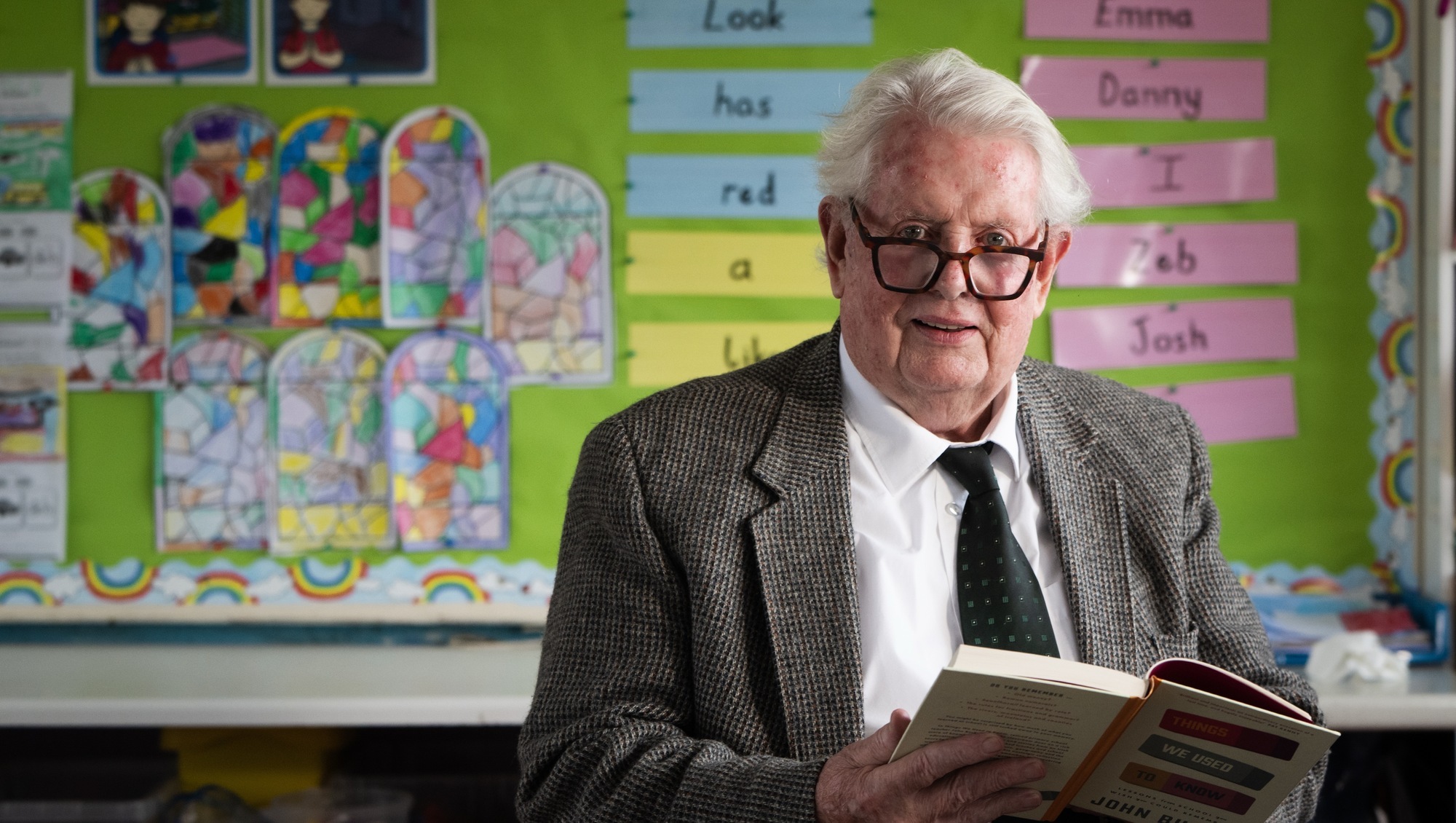
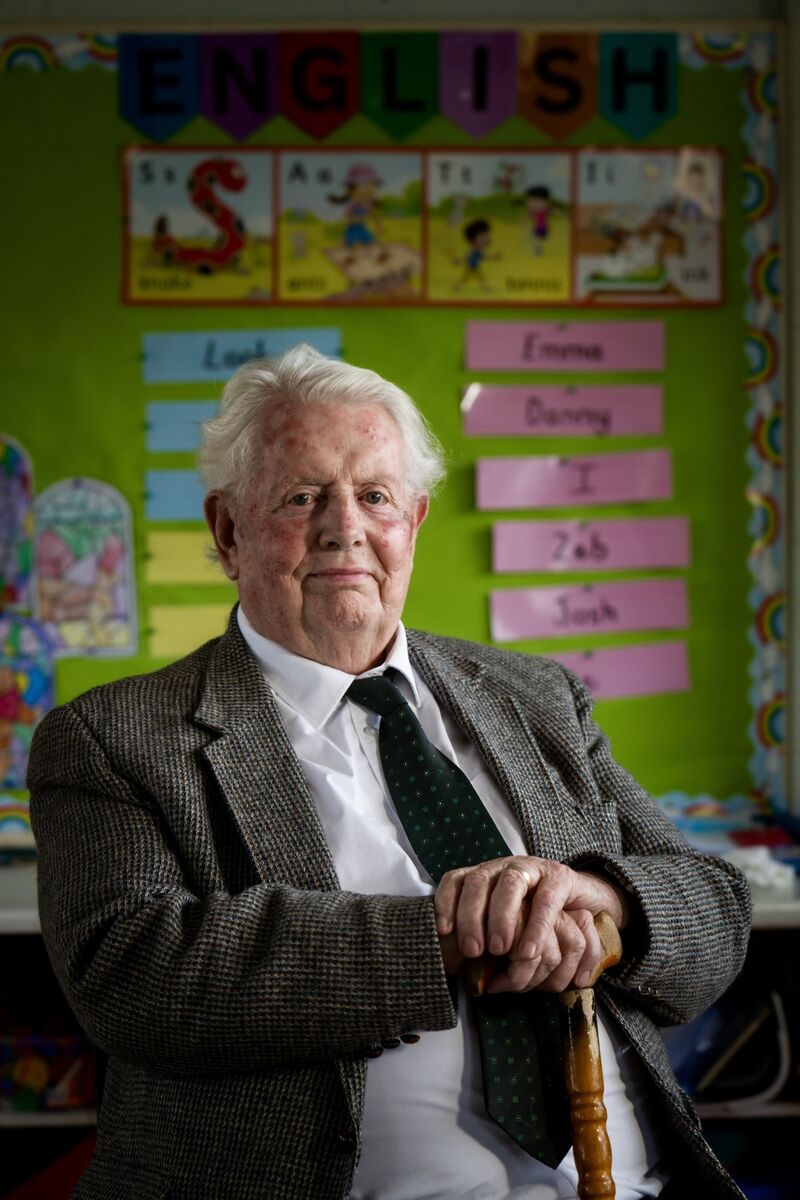
John Burke in the infants’ classroom at Passage East National School, where he taught for more than three decades. Picture Chani Anderson

John Burke in the infants’ classroom at Passage East National School, where he taught for more than three decades. Picture Chani Anderson

OK parents, the following scenario may well sound familiar. You’re pottering around the kitchen or watching TV of an evening and a child will pipe up from the kitchen table. “Can you help me with my long division?” To which the response usually is: “Em ... Er ... Uh ... ”
Many of us have been there and if you haven’t, you may be in future. Thankfully, in a new book former primary school teacher and principal John Burke has gathered together some educational highlights which we all learned during our time in the small desks, only for much of that information to subsequently fall out of our heads as everyday life got in the way.

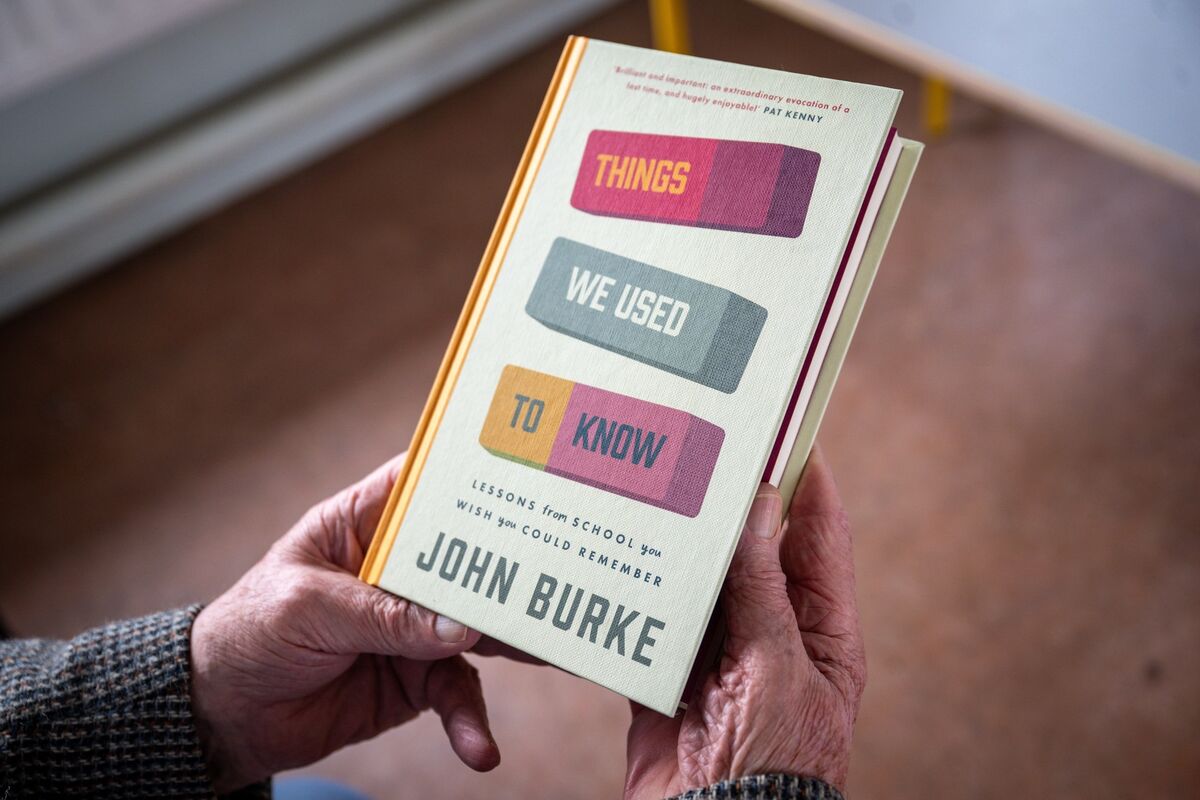
Things We Used To Know contains the aforementioned long division, as well as fractions and algebra, through seanfhocail, poetry, the Plantations, a quick tour of the nature table, and much more. It’s all delightfully concise and acts as a retro-primer of the building blocks of our own education and — hopefully — that of future generations. John was born in 1946 and started school way back in 1950. When he talks about his career he has a distinct twinkle in his eyes. The writing lark isn’t a new departure — he previously contributed words to the top-selling Irelandopedia, Historopedia and more with his daughter, Kathi, a successful artist and illustrator.

But this time, he says, he set out to capture not just the actual nuggets of knowledge that were so fundamental to primary teaching, but also a sense of how we learned them in the first place.

“‘Why now’ is because I can still remember it all so clearly,” he says of the process of putting the book together.

Most people of my father’s generation, and certainly my grandfather’s, what they had was a primary school education, and people were conscious of that. And I feel they got a very good education when they left.

He says he was “in awe” of older generations whose recall of essential education put to shame the idea that they had “only” attended primary school.

“Say I was in the hurling club, [where] I was secretary for years,” he explains. “You’re meeting elderly people who had, in modern terms, a lesser education than I had, but they were far smarter than me. Say we bought a field to develop into a hurling field, working out the finances and so on. And I’d have my pad, and I’d be writing down figures. The older men would have it worked out in their head, and I was constantly coming across that.”

It could have been complex maths on the hoof, “copperplate, beautiful” handwriting, or being able to recite all 20 verses of an Irish poem, but this older generation, John maintains, had the power of memory and were able to apply it to everyday life.

Such is the potted but diverse nature of the book, it begs the question: If John managed to fit in this amount of material, what did he leave out?

“I honestly was working from my own memory an awful lot of the time,” he laughs. “I would always check up on things, make sure I had it right, but I wasn’t consciously leaving things out.

“The basic thing with primary schools, and I keep coming across this: every school is different. I’m hoping that people will read [the book] and have great conversations about parts of it because they say ‘that never happened in my school’.

“The teachers were all different. That’s another thing I loved, and I still love it because it still happens in primary. If a teacher has a passion, if a teacher has a gift — musical or sporting or whatever it happens to be — they have the freedom to bring that in to everything that they do in the school and in their lessons.”

 John Burke: Past pupils still call me 'Sir' or 'Mr Burke' Picture: Chani Anderson
John Burke: Past pupils still call me 'Sir' or 'Mr Burke' Picture: Chani Anderson

John spent the vast majority of his time as a teacher, some 38 years, in the beautiful village of Passage East in Co Waterford, not that far from where he was born in Dunmore East, having spent a year in a school in Macroom and another in Rathfarnham, where he first fell in love with his calling. But if teachers can help make a childhood, they can also do the opposite. John recalls his own father having a bad time at school due to a “brute” of a teacher there, meaning that John’s older brothers were despatched to primary school in Waterford City rather than face similar treatment. By the time John was of school age, that teacher had gone, replaced by a gaeilgeoir from Coolea imbued with that grá for teaching. “You’re talking about the right man in the right place at the right time,” John adds. “He was just great.”

John’s book could be extremely timely. The ubiquity of the smartphone means that everything is at our fingertips, but how much of that information is actually staying in our heads? When you find yourself unplugging the Alexa for fear your children will simply ask it for the answers to their homework, it’s a world away from the experiences of previous generations.

“It does worry me,” John says, before referring to an age-old remedy. “Somebody put the word out that there was something wrong with learning by rote, and everybody was giving that the thumbs down. ‘Oh, that’s just an awful thing to do, getting children to learn things by rote’, but it depends on what you mean.

“You have to develop your memories, like a muscle. You need to develop it, and you can develop that by learning songs, by learning poems, by learning stories, whatever. I think that’s a very, very necessary thing, and people don’t look at it as they feel it’s not important. Why should the children be standing up and all saying the same poem together in chorus?’ It’s a memory exercise, and I used to love that.”

This love of learning is hugely apparent when speaking with John, who sees few issues with the primary school curriculum, but has concerns about how the experience of schooling changes at secondary level.

You should be giving the children the desire to find out more, desire to know more, rather than say ‘you have to learn this, you have to know that in the exam’.

That said, he does agree with state examinations — and given the way AI can be utilised for homework and continuous assessment exercises, maybe there’s little choice but to stick with them. But John does believe the approach at second level shouldn’t “frighten” students about the prospect of not knowing things, and instead provide the skills to enjoy learning for its own sake.
“But then, it’s easy for me to say because in secondary school it’s different to what I had because you’ve got a large number of children in a room for, what, 40 minutes?

“I remember doing a piece on Daniel O’Connell one time, and I took it as a compliment rather than a reflection of my age. One of the children said at the end of the lesson, he said, ‘Mr, Burke, did you know Daniel O’Connell?’ So that’s what I want to hear, that they feel they knew him themselves, you know, but how do you do that in secondary school? I’m really not qualified to say.”

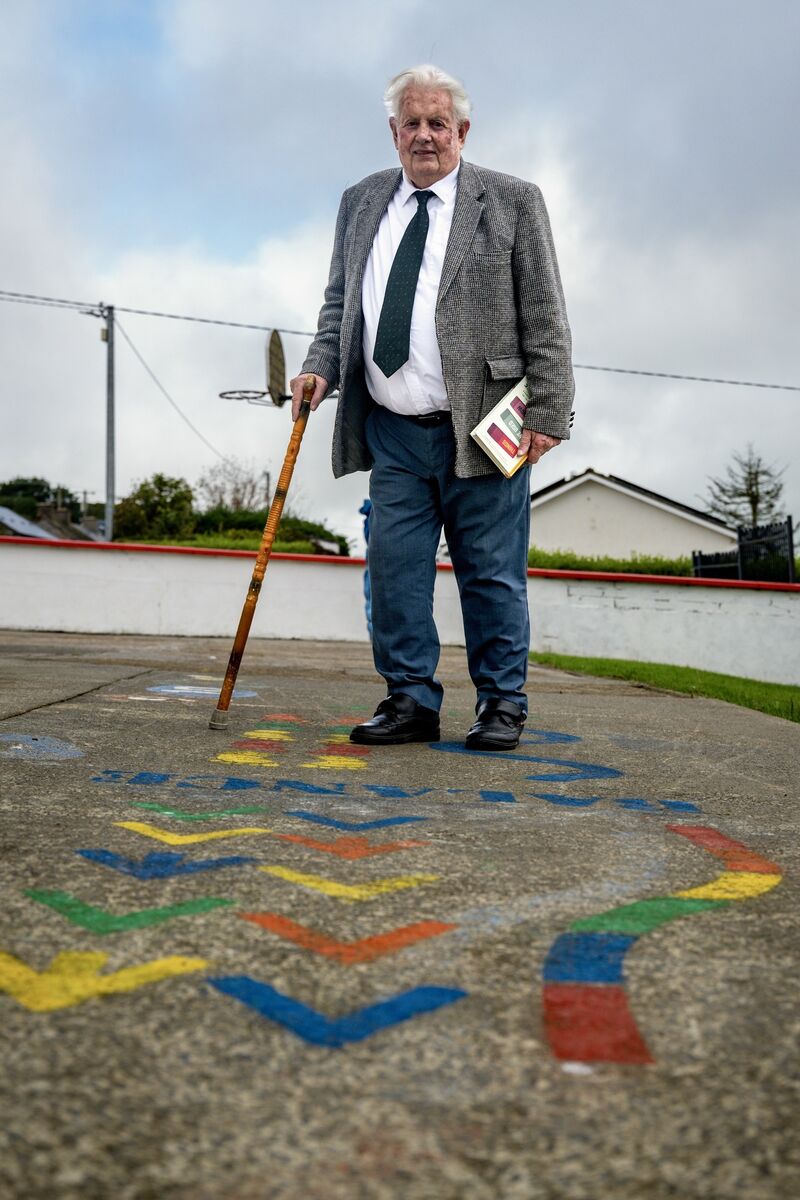
John Burke leans on his cane on a hopscotch track in the playground at Passage East National School, where he taught for more than three decades. Picture: Chani Anderson

John finished teaching in January 2009. His wife passed away nearly four years ago but Kathi has since moved back to Waterford and it appears retirement suits him.

It’s fair to say he’s kept himself busy. He’s not sure if there could be another book in the series — “Even More Lessons From School You Wish You Could Remember”. He also has few regrets, although he wishes the supports for children with special or extra educational needs had been available long before they were. It’s simply another facet of the strange spell cast by those primary school years — a period so short in our lives, yet so fundamental to who we are and who we become, our own private memory reel even if we’ve forgotten some of what went up on the blackboard.

Then again, there are always reminders of a career in teaching, not least when John bumps into past pupils.

“I’m still ‘sir’,” he says with a laugh. “‘Yes, sir’. Or ‘Mr Burke’. They don’t call me John. Well, one or two do. You stay in the same school in the same small community for long enough, you know everybody. I mean, the reason — not the reason, I was ready to retire — a little girl came up to me in the infant playground, and she said, ‘Mr Burke, my granny said you taught her’.

So when I had already taught the grannies, I think it was time for me to go.

Author and retired teacher John Burke holds his new book, 'Things We Used to Know'. Picture: Chani Anderson

  • ‘Things We Used To Know’, published by Gill Books, is out now.

More in this section

Lifestyle

Newsletter

Eat better, live well and stay inspired with the Irish Examiner’s food, health, entertainment, travel and lifestyle coverage. Delivered to your inbox every Friday morning.

Cookie Policy Privacy Policy Brand Safety FAQ Help Contact Us Terms and Conditions

© Examiner Echo Group Limited