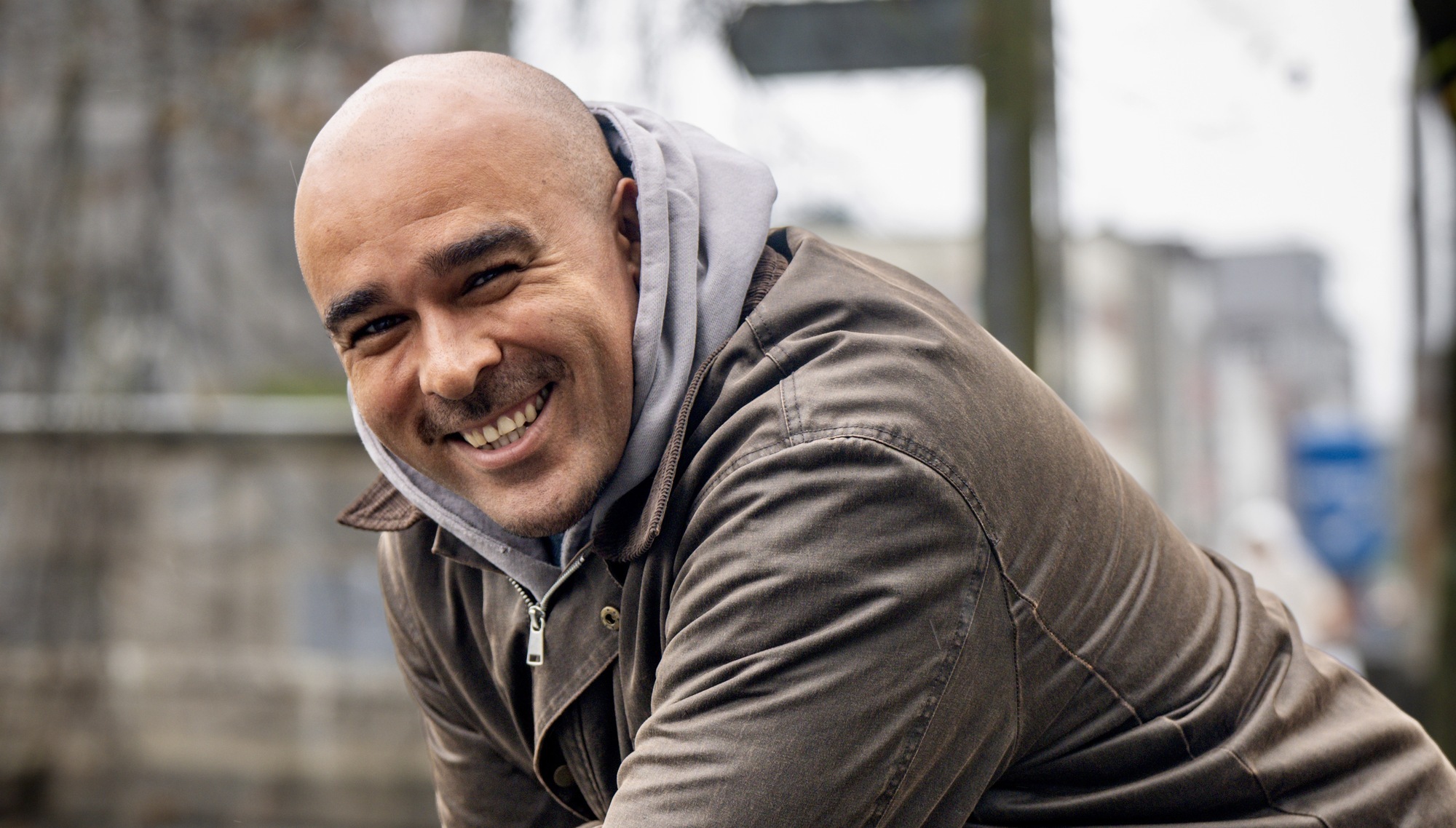
On a Friday afternoon earlier this month, some Leesiders will have witnessed a familiar sight: Simon Zebo putting the boot down.
Granted, the touchline in this instance was the south river and the destination wasn’t the try line, but when he does arrive on Sullivan’s Quay — cheerfully and apologetically late after getting his dates muddled up — he’s as unflustered as if scooting in for a try. “I’m a disaster,” he grins, with a disarming shrug of the shoulders.
The 36-year-old unpicked plenty of defences over his career with Munster, Racing 92 of Paris and Ireland, so the door code to the Sober Lane pub — run by his business partner — was never going to be an obstacle. Nailed first time from memory, we’re in and seated as the rain starts tumbling down outside.
The reason for the sit down is the imminent publication of his autobiography. Written with Gerry Thornley, Zeebs captures the essence of its subject: Playful, reflective, occasionally waspish, insightful and maybe more than anything, hugely grateful. Simon Zebo hasn’t had everything his own way over his career, but he’s certainly made the most of a pretty blessed existence. You could read it in his face, except there are no lines. The man who once had a Z shaved into his hair currently has a baby-smooth pate and an almost permanent grin. At one point he remarks that his only wrinkles are near his eyes — “that’s from smiling”.
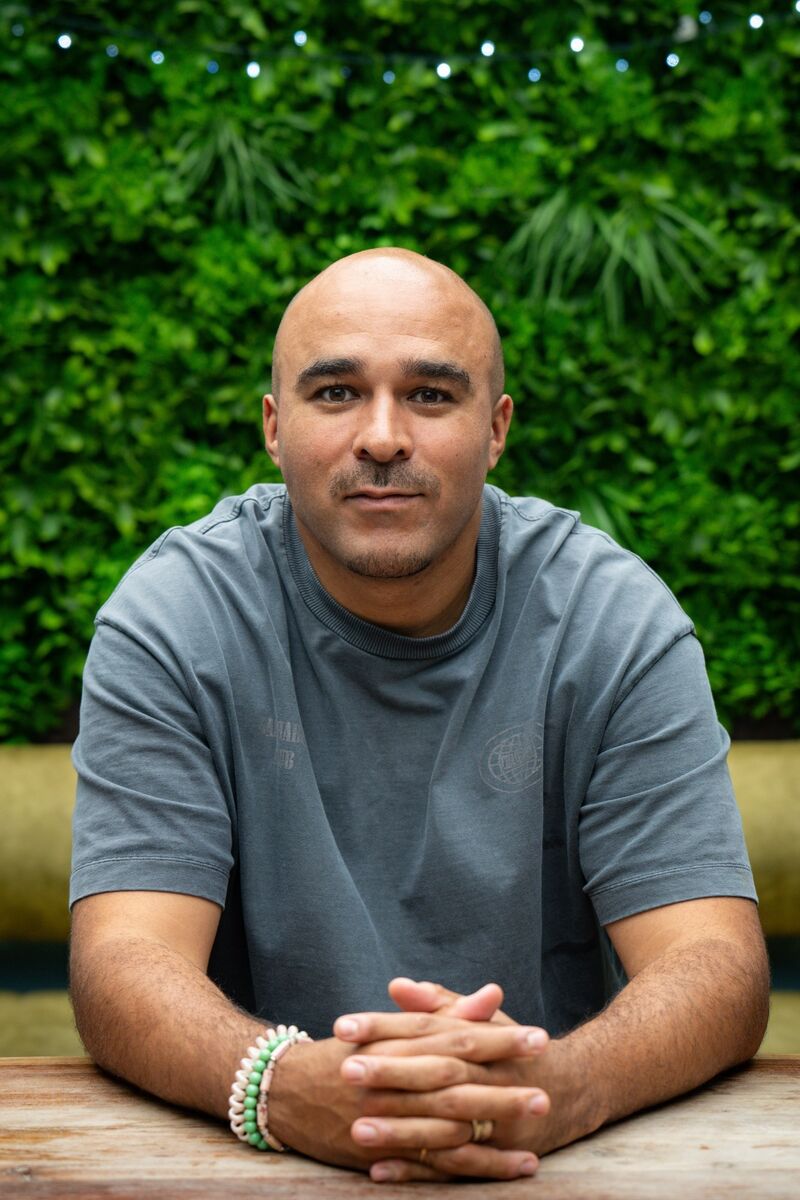
He is terrific company, something reflected in the book. Zeebs tracks Simon’s path from hurling with the Rockies and soccer with Avondale through the Big Bang of rugby with Presentation College (aka Pres) in Cork City and on to Munster and beyond. There was one extra dimension to his journey — his skin colour. In his book, he gives an extensive family history and it’s obvious that the sporting genes came from both sides. John Geary, Simon’s maternal grandfather, was a title-winning boxer and while Martinique, birthplace of Simon’s Dad, Arthur, may not have been the proverbial hurling stronghold, there was sporting pedigree in abundance there too, with Arthur an accomplished athlete growing up and almost, but for injury, an Olympian.
How Simon’s mum, Lynda, met Arthur is likened in the book to a scene from Hollywood. Having finished her Leaving Cert in Ursuline College in Cork Lynda was rewarded with a trip to Paris with a friend. Lost in the city of light one day, the pair turned around to find Arthur, in a pair of white shorts, asking them if they needed some assistance. Romance flourished, with Arthur pitching up in Cork some time later. It was certainly an uncommon relationship in the Cork of the early 1980s — no wonder Simon describes his dad as “a ballsy fecker”.
On-field racism
“As one of the few black kids in Cork, and the only one in the entire country with the name Zebo, from a young age I identified with my father’s side of the family,” Simon writes in Zeebs. “But my grandfather [John] was the one who always made me feel as Irish as the next person, no matter that some people would say, ‘But you’re not from Ireland’.” He experienced some on-field racism during his younger days, but argues that those incidents simply fuelled his resilience — or as he puts it:
going through those shit times makes you tougher in the long run
“I think the support that I had from the home — that’s where it kind of stems from,” he says. “It had just allowed me to have that resilience because I always had people to bounce anything off of at home. I always had a pair of listening ears to get things off my chest, and that instilled a lot of confidence in me and my mental toughness.”
That said, he admits there were “loads of times” he envisaged himself exacting retribution, while adding “there are so many times where you’d have to bite your tongue”.
In a recent Instagram post Arthur delighted in his relationship with Lynda and wrote “No one gave us a chance but just look at us now”. It chimes with a line in Zeebs where Simon writes: “How times have changed, thankfully for the better.”
Yet the blight of racism is still present here, not least online and bleeding into real life. “It can be tough,” Simon muses of the broader context of where society is at present. “It’s always an easy dig. That’s what I found. When people who are maybe a little bit less successful or a little bit jealous of certain things you have, whether it’s representing your country, they might go after things.
“How can I piss this guy off, or how can I hurt this guy? And a lot of the times, if you’re of a certain skin colour or you’re a bit darker than the others, they’ll go to that because they know that hurts.
“And there’s a lot of ignorance around, but I think it’s the way of the world. It’s the world we live in. It’s a sad thing, you know, it hasn’t gone away. I think in all walks of life, in all parts of the globe, these things exist. So it’s not just specific to here. But I think, for the most part, especially here in Ireland, people are incredibly supportive.
It’s a small minority that tend to leave a bad taste.
Simon had natural sporting ability by the bucketload but it was that inner resilience that propelled him through patches of bad form, injuries and the rest. The mantra was “no Plan B” — and he’s stuck to it.
“I’d have confidence in myself to have been a high achiever,” he says, “no matter the field, whether it was I don’t know in the hospitality industry or selling houses or anything. I’m a big believer in not half-assing anything, and I say it to my kids all the time.”
What this meant in practice was a pathway from Pres through Cork Con to Munster and then Ireland. He may have hung out with some mates on College Road the night before his Munster debut but he was switched on and fully engaged, even if his play was imbued with old school, off-the-cuff flair. Maybe it was best encapsulated in a Six Nations match against Wales when a pass from Jamie Heaslip was falling behind him, only for the Corkman to perform a glorious ‘click and collect’ manoeuvre, flicking the ball into his hands using the outside of his boot before running clear, the move eventually ending with Cian Healy getting the touchdown. To this day people still think he was the one who scored the try.
If you leave the big hits to one side, maybe rugby is the closest thing to a sporting game of tag you’re likely to find. Simon doesn’t disagree. “I love the feeling of beating
defenders,” he says. “Of physically being faster than someone or stronger than someone or, you know, outthinking someone. You kind of get all of those in the art of the one-on-one, or scoring a try.”
His points haul — almost exactly two per game across both spells with Munster and also with Ireland — attest to his finishing ability as either fullback or winger, and in the main his coaches loved it. But maybe not everyone.
A personality clash
In his book Simon describes his relationship with former Ireland coach Joe Schmidt as “a personality clash” and adds: “I felt his eyes were on me at all times, and that they were always critical eyes.”
He doesn’t eviscerate the former Ireland boss, far from it, but ultimately the relationship was sufficiently fractured that it made Simon’s move in summer 2018 to Racing 92 in Paris — and the associated exile from the Irish set-up — a “way easier” decision to make.
“I just probably didn’t enjoy it as much as I should have, you know,” he says of that period in the Irish squad. “And I don’t want to speak for anybody else, but that was the vibe, not just with me, you know, it was with players who were playing, players who weren’t playing. But it probably hit me a bit more.”
He stresses that he is not bitter or holding on to any grudges, yet given the persistently clubbable nature of rugby (there are a lot of boozy traditions and initiations outlined in the book), it says much that the pair have not reconciled even now.
“I just haven’t seen him and I don’t think there was any fallout,” he says. “Like, where we don’t want to see each other. But as I said in the book, I just think it was a big clash of personalities.
“I know how Joe operates. I know how I operate. I know what he likes to see in players, who he deems cocky or brash or not his type of player. I know exactly what he doesn’t like, and yeah, I’d consider myself to slip a little bit into that category. But then on the other side, me and Joe got on well at times.
“I know the level. I know I can excel at that level. I’ve played for the Lions, I’ve played a level above. There’s no problem. It’s just different styles and a little bit of a clash of personality and it could have been so much different. Maybe if I changed a bit, or if I was received differently.”
The sport, as Simon saw it, was to take pictures of the game as it was unfolding, and use his instinct to then ‘react on the fly”. As he outlines: “A lot of players, especially in Ireland, love the structure of being told what to do, when to do it, where you can do a certain thing, and they’re kind of like babies. That creativity can be taken away from them and I just wouldn’t be one of those players. That’s why maybe France worked out so well for me and not for some other players because that’s more of the style they like to play over there.”
In some ways it’s a curious mix: The grafting and the bit of messing, the ability to take instruction and do the hard yards while also playing on intuition. As he writes in the book:
when things are easy, that can be dangerous for me, and that would be true of my whole career
For all that, he believes that bar some spells where he may have put on some extra weight he was never someone at any risk of blowing his chance. The highlights reel is extensive, taking in the World Cup, the historic defeat of the All Blacks in Chicago and togging out for the Lions. The stint in Paris — the city where his parents met all those years before — opened up a new dimension. Returning to Munster felt like closing a chapter. But there have also been low points. The book references the shocking death of Ulster prospect Nevin Spence — along with his father and brother — in a farming accident in 2012, not long after he and Simon had paired up at a training camp.
Then there is the epic and sudden loss of Munster coach Anthony ‘Axel’ Foley in 2016. His funeral united the rugby fraternity far and wide in grief and it added further perspective on how sport can sit just outside the most important things in life. Simon admits that professional rugby can be “a bubble” and sometimes you need to step outside it.
“People come and go, which is a theme in my life,” he says. “And you know, having that support network, that resilience, people around you, that tough mindset to be able to get through all these things is very important. That’s a lesson hopefully, my kids will learn as well: the more important things in life, appreciate what you have, always.”
As it goes, Simon’s transition into a life post-retirement has been suitably serene. Even though he declares “if I’m all on rugby 24/7, all the time, I will lose my mind”, he’s glided his way into the ‘coat and scarf’ set on TV, providing analysis on big matches for Premier Sports and RTÉ. Zeebs contains some real insights into the game, further proof that he was actually listening in all those team meetings, and he seems a relaxed on-screen presence.
“I just really enjoy it,” he says. “It’ll be people’s first time watching a game, or it could be someone super experienced and knowledgeable in the game, so you have to find that balance, and I enjoy trying to be able to cater for all, be able to entertain, have fun, give serious insights.
“I don’t see it as like, oh, how can I go up a ladder or do this or that. No, just the ambition is to stay in the game like this as long as I’m enjoying it.”
As for coaching, “for the most part, no. Unless someone I really liked was in charge, like a Ronan O’Gara, and he said, ‘Would you be interested in doing something?’ Then, maybe, but no, I see it as being too time-consuming, and I’m kind of just after getting my weekends back to an extent.
“It’s just too intense,” he continues. “Personality-wise, the stage my kids are at in their life... I wouldn’t like to bring that intensity now back home and have them be walking on eggshells.”
What is on the agenda, in addition to more TV work and his whiskey business, are more trips to Martinique and a stint on a new London-based recorded-as-live show by sports media and production company Buzz 16, chatting rugby. There is a very clear sense that Simon is exactly where he wants to be and doing exactly what he wants to do.
“There’s no need for me to make my schedule any busier than it already is,” he says, sounding every bit the man at ease — the Blackrock boy he still is, at home with his wife and four children, his buddies still around, the playing fields of his youth just the boot of a ball away.
As they say in those parts, how bad.
- Zeebs is published by Eriu
- Simon Zebo will be signing books today at Eason Patrick St, Cork from noon. He will be at O’Mahony’s Bookshop, Limerick on October 17 and Ennis Bookshop on November 12
CONNECT WITH US TODAY



Be the first to know the latest news and updates