'I was nine when I knelt for a funeral cortege — 35 years later I learned it was for Seán Ó Riada'
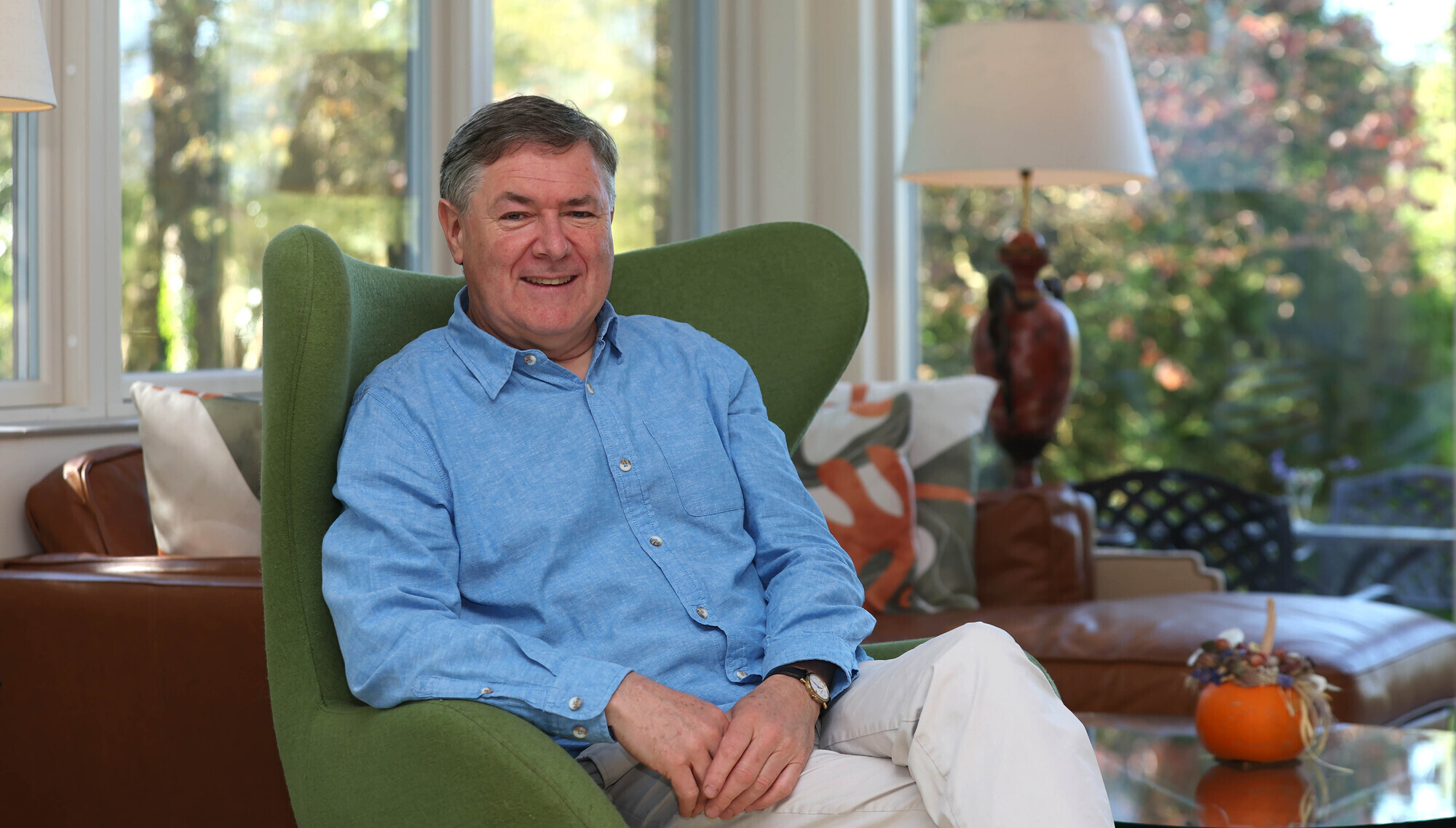
Poet John FitzGerald at his home in Lissarda, Co Cork. Pictures: Jim Coughlan
October 1971, De La Salle boys’ national school, Macroom. I was nine. The headmaster, Brother Stanislaus — figure of terror who wielded the strap and stalked the halls — came into our classroom, spoke in Irish to our teacher, Brother Paul, and left the room.
Brother Paul told us to form an orderly line. Going out to the schoolyard, we thought: Maybe a dignitary coming, the bishop, monsignor. Or maybe we were going to the church for confession — that happened once a month.
We were led to the pavement outside, told to line up on both sides of the gate. We knew something was up, this hadn’t happened before. All standing against the wall, Brother Stanislaus gave the instruction to kneel down, all of us in short trousers.
I remember the roughness of the stone under my knees.
Kind of a sombre mood. Usually when released from the classroom, even to go to confession, there was a sense of excitement. We were very obedient in those days. There might have been some caffling, elbowing the fellow next to you.

We were kneeling for quite a while, facing across the street. I remember Brother Paul striding back and forth in his black soutane, not trying to control us, we were very docile. He was nervous, I’d say. There was a sense of anticipation, but nobody said why we were kneeling there. I thought maybe we’ll start praying, some kind of vigil, some new devotional practice I hadn’t heard of yet.
It grew more and more silent... for no apparent reason, we all just grew silent. And then, without warning, from our right, the lovely low sound of purring engines. Very black, very shiny cars began appearing. This funeral cortege motored up Cork Street towards us.
Read More
When the drivers saw the brothers and us, the engine speed dropped and the gears dropped. The brothers standing to attention, blessing themselves. Seeing that, we blessed ourselves too. The cars pulled up right next to us, slowed to a crawl. I remember clouds reflected in the glass, shops’ reflections in the cars’ side windows.
And then I saw faces, small bodies towards the front of the main vehicle — a beautiful old car — boys and girls looking out at us. And in the back, a beautiful dark-haired woman full of grief, black lace mantilla in front of her face, her face very pale, striking and beautiful, she was.
The cars moved on. We were very quickly ushered back into class, business as normal resuming very quickly without much fuss. We weren’t told what had happened or who this was.

We wouldn’t have been aware of Seán Ó Riada — that this great figure had died and would be buried in Coolea. I never thought or wondered about it again ‘til years later, in my 40s. I acquired the Seán Ó Riada archive from the family, and I came across a note in a letter mentioning "the show of sympathy and respect from the boys of Macroom NS".
And only then I realised whose funeral that was, why we were brought out to kneel on the pavement. A memory that had been dormant for 35 years became so clear. It was an extraordinary moment because I hadn’t realised I’d forgotten.
It was a moment of awakening, a reminder of how formative that experience was without my even having processed it.
Something else: In sixth class, we’d learned . And from the beginning, whenever I’d think of the poem and the woman who spoke the words of it — Eibhlín Dubh Ní Chonaill, grieving for her dead husband — the face I pictured, I realised only in my 30s, was Ruth Ní Riada.

That I could remember such a historical event, something that mattered, that I was able to preserve it through my childhood, adolescence, right into my adult years, was astonishing to me. I was astonished it was still there, like finding a half-crown in the pocket of my coat.
When I was working in UCC, gradually gaining an understanding of Seán Ó Riada’s importance, the realisation came: That this is my connection, my meeting, with Seán Ó Riada.
I started to publish poetry in my 50s. One of the first poems I wrote was , dedicated to another young boy I had shared that experience with: Peadar Ó Riada, one of the children in the car that day.
- John FitzGerald will be at the West Cork Literary Festival reading from his new poetry collection, . He is one of the poets on the Gallery Goes circuit, alongside Eiléan Ní Chuilleanáin and Annemarie Ní Churreáin. They will be in Marino Church, Bantry, at 7pm on Monday, July 13. The Festival runs from July 10 to 17: Visit westcorkmusic.ie/literary-festival.