Siobhan McClean: 'I am both Irish and Zimbabwean, to embrace that is to embrace myself'
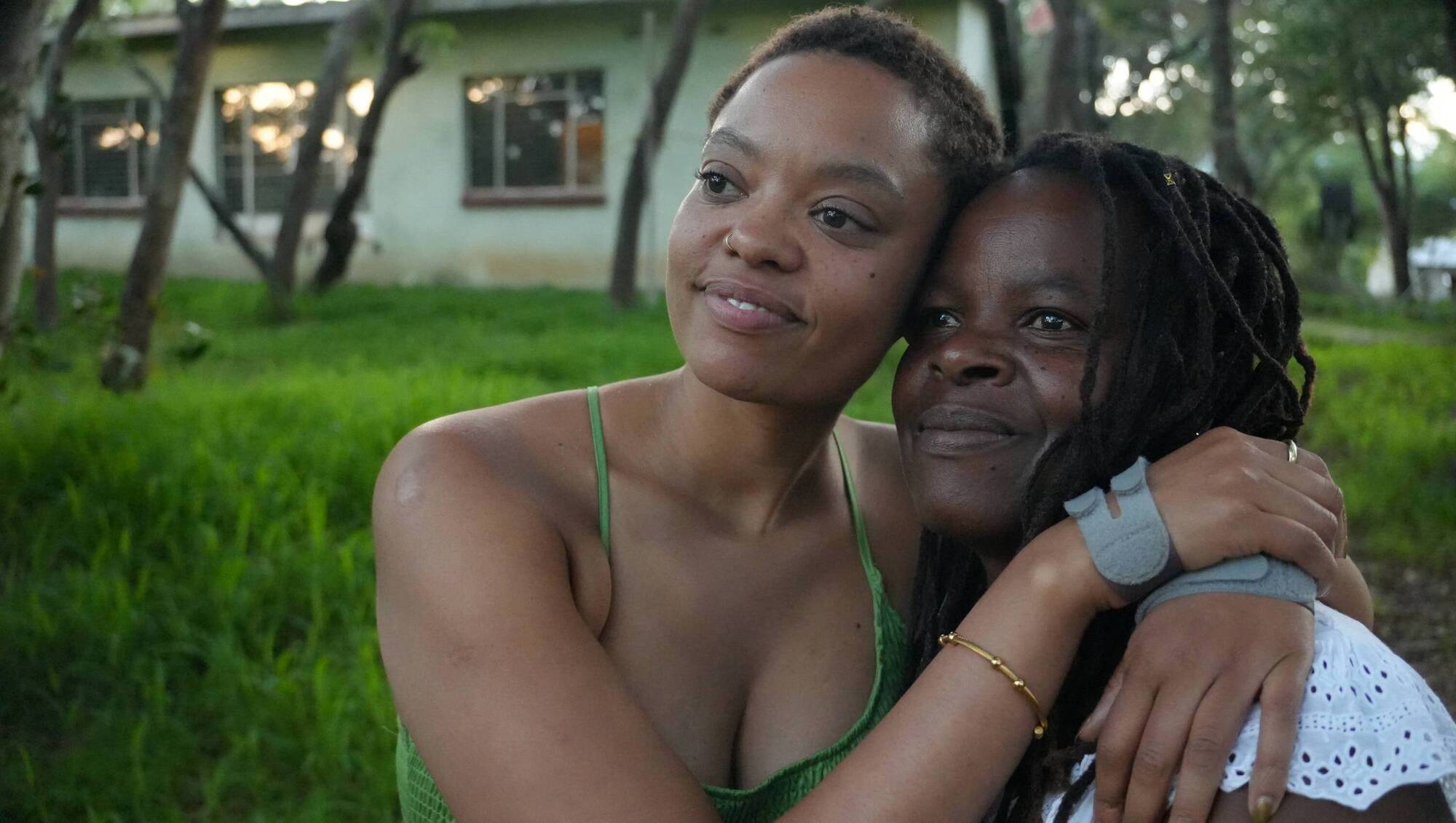
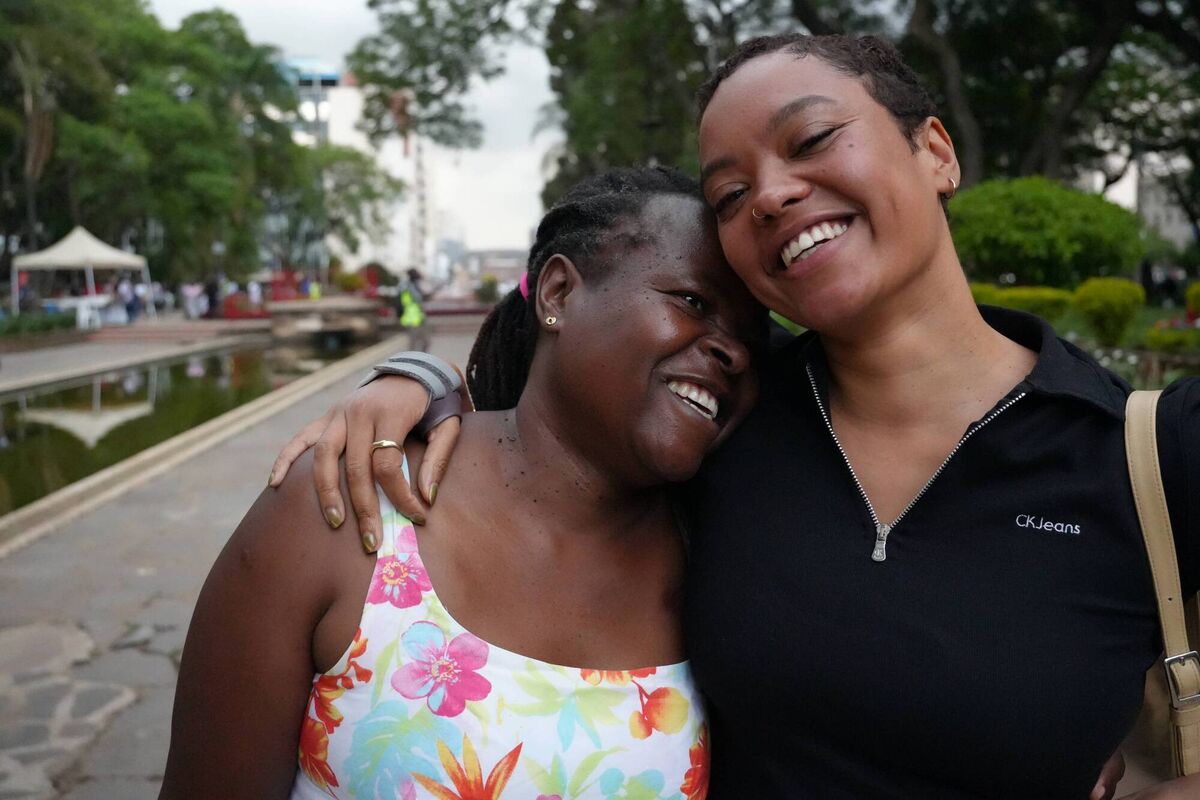
Siobhán McClean and her mother Tambu in Mutare, Zimbabwe
, RTÉ’s new programme in which parents bring their Irish children back to their homeland, opens with a startling statistic. Over a million people in Ireland, that’s one in five of us, were born in another country. One of that million-strong cohort is singer-songwriter Siobhán McClean, aka Shiv.
Thirty-year-old McClean was born in Mutare, eastern Zimbabwe. Her mother, Tambu, a nurse, is Zimbabwean, while her father, Diarmuid, a doctor, is Irish. The two met when they worked as colleagues in a small rural hospital in the Mutare region, subsequently married, had three children — Munya, Chiedza and Siobhán — and settled in Mutare.
Zimbabwe, which gained its independence from Britain in 1980, was relatively stable until the turn of the millennium, when it underwent a severe shift into a period of extreme political, social, and economic turmoil. That, coupled with the fact that Tambu wanted her children to have a sense of what it meant to be Irish, resulted in the McCleans deciding to relocate to Ireland.
“It was a shock because it was different, but it didn’t feel necessarily like a bad shock,” McClean tells me over Zoom from Hong Kong, where’s she’s just finished a music residency. When the family arrived in Athy, Co Kildare, and moved in with her uncle, she was five, and remembers that time as an exciting one of discovery and newness — new place, new people, new school — while the drastic change was buffered by the “sense of familiarity” that came with having her mother, brother, and sister with her (her dad came later) to navigate it all.
They were, she thinks, the first family in Athy “of non-white background”, and the novelty of that worked in their favour. “We were warmly welcomed and felt like part of the community,” she recalls now. “It really felt like people wanted to help and wanted to help make us feel at home.” Their uniqueness afforded them a sort of “celebrity status” — “everyone knew who we were, everyone was curious about us, but it was it was a warm curiosity.”
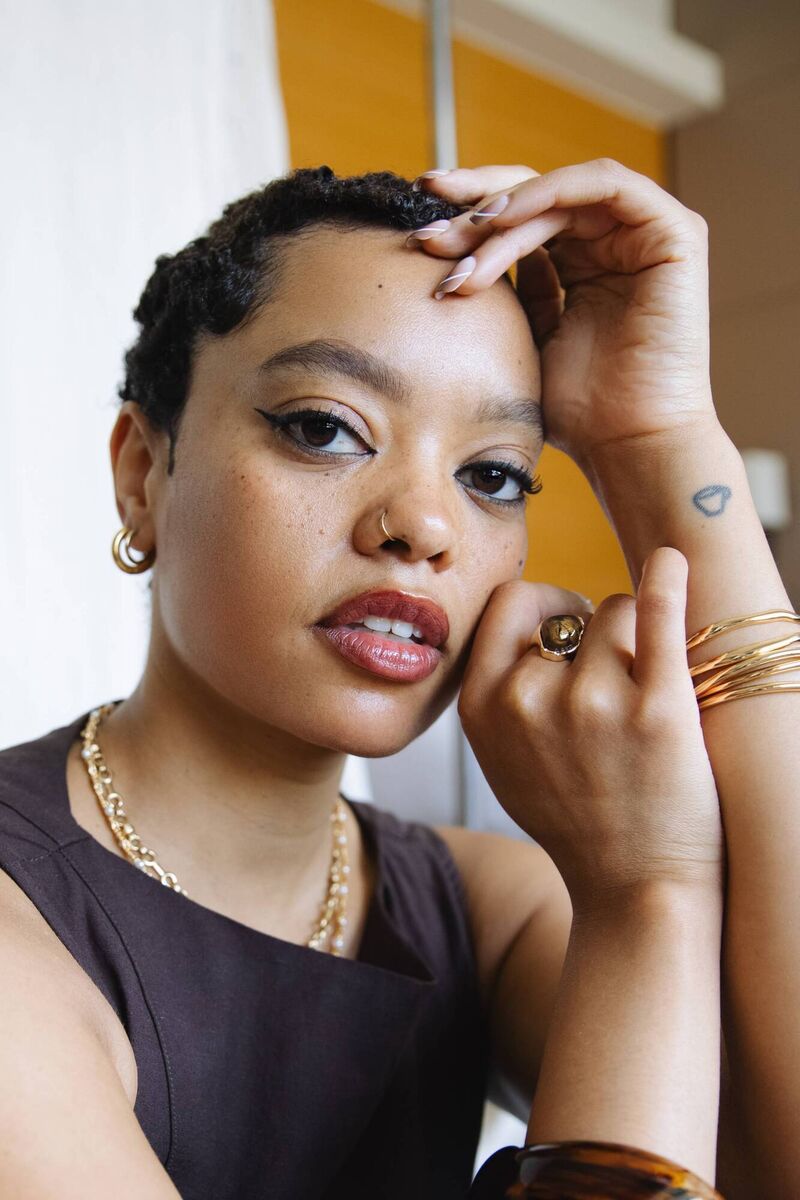
Siobhán and Tambu made the journey back to Zimbabwe last December, visiting Harare, the capital, and Highfield, a township on its outskirts where Tambu grew up and where many of her relations still live; elder sister Chiedza’s farm in Chikwaka, and finally on to Mutare to see the hospital in which Siobhán was born, and visit the McCleans’ old home.
It was Siobhan’s first visit to Zimbabwe as an adult — she was last there in her teens,15 years ago — and she brought with her a hope of reconnecting with the Zimbabwean part of herself. She admits that, for a long time, she neglected her “Zimbabwean-ness” in an effort to fit in, “because so many people would look at me and not presume that I was Irish by their standards”.
That resulted in her becoming “a caricature of an Irish person” — hamming up her Irish accent; “over quoting” Irish TV shows — as she tried to overcompensate and “be more Irish than maybe I really am”.
Being biracial and having roots in two nations has thrown up complex questions around identity, home, and belonging for McClean, and lately, because “things are a little bit weird” in Ireland, she has begun “to feel a bit more of a disconnect with being Irish”.
There is, she says, a “loud minority” that will look at her and never really accept her as Irish. “I think knowing that and feeling that more culturally, it made me desire to reconnect with the Zimbabwean side,” she says. “Because the truth of the matter is I’m half and half. I’m never going to be fully one or the other. I am both, and to embrace that is to embrace myself, really.”
She feels the programme, in highlighting stories like hers, is important, and comes at a time when people need to allow “a new version of Irishness to exist”, one that’s not necessarily represented in the way that people expect. “I think it’s beautiful that we can mix, and learn from each other, and we can incorporate aspects of other cultures as our own, and grow within them and with them, rather than try and tread the same path and reject any other version of Irishness that isn’t what’s expected.”
One of the most impactful parts of the trip for McClean was the fact that she got to do it with her mother. “It brought us a lot closer together and… being able to experience something that meant so much to me, with her, was really special.”
In Harare, McClean collaborated with local artist Nyasha Tembe whom she’d reached out to when she knew she’d be making the trip, and in their time together, she wrote and recorded a song she’s titled Kumba, which means ‘home’ in Shona, one of Zimbabwe’s official languages.
“I wrote it about the experience of coming home, and what it felt like. It was a pleasure to be able to work with a local talent and to be able to write in my mother tongue, which I haven’t done, and sing in Shona. That was a beautiful experience.”
Music was very much part of the household vibe when McClean was growing up. Her dad was “always listening to music” and his tastes varied from Pink Floyd and Cream to Amy Winehouse. “He was also a big fan of Destiny’s Child,” adds McClean, laughing. “Eclectic is the word.”
The family hadn’t a car for the first year they were in Ireland so Tambu would walk the trio to school, “and we’d be wrecking her head, scrapping”.
In an attempt to put a lid on the mischief-making, Tambu taught them “a repertoire of music that we sang in harmony. We’d be walking from activity to activity, singing together, and that whetted my musical appetite.”
She was in choirs in school, and had an inspiring music teacher who encouraged her “to pursue the enjoyment of music”. Then, too shy to make a speech as maid of honour at her sister’s wedding, McClean instead wrote her a song and performed it.
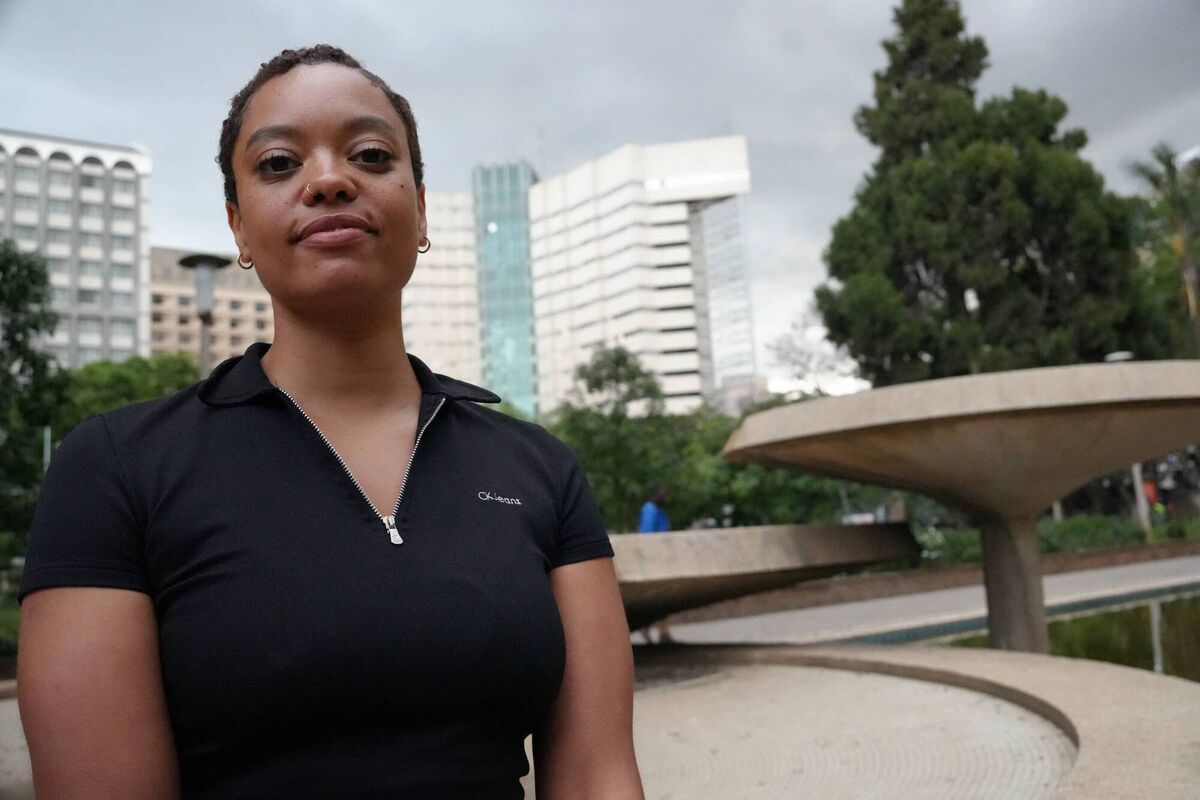
“I could sing in front of people, but I couldn’t talk.” She posted it to YouTube, “one thing led to another” and in 2024, she released an album, the defiance of a sadgirl.
One of her career highlights to date has been playing support to Lana Del Rey in the 3Arena in 2023. “I’d just broken up with my boyfriend and moved country… and I was in bed crying about my life. Then my manager rang me and was like, ‘Hey, are you free tomorrow?’” She was, and describes opening for the Video Games singer as a “surreal experience”, and a bucket-list one, although her own influences are more soul-oriented, she says, namechecking Erykah Badu, Cleo Sol, and Olivia Dean.
Music is a universal language and a uniting one, and McClean, who has a degree in psychology, frequently gets messages from people telling her how a song of hers marked a special moment for them, or moved them, or comforted them, or, perhaps most poignantly, made them feel like they were at home.
“Being able to have something that felt so true and natural from my soul, and knowing that someone out there can understand it in their own way and take it into their own lives — that’s magical. The fact that you can connect without being in the same room as someone, that’s really special.”
Reconnecting with Zimbabwe was special too — “being able to reconnect with family and to create a song with a local artist was so lovely. And being able to go back to my childhood home was so meaningful”. But despite its richness, the experience didn’t deliver all the answers McClean had hoped for.
She left the trip “feeling simultaneously empty and full”. Full, “because of all those experiences”, but empty “because I think part of me was hoping to find the missing key or to feel like, ‘oh, I finally found a place that I belong’.
“But I think the nature of my existence, specifically being Black and Irish, but then also being of dual ethnicity, means that I’ll never really fully find somewhere that’s mine. I’m never going to walk into a room and immediately feel like I belong.”
McClean is not, she stresses, being self-pitying. A realisation she’s come to, one she’s come to multiple times before, but which deepened on this trip, is that “home really isn’t somewhere that’s external to you”.
“I’m lucky in a sense that I’ve had this experience of never really fitting in anywhere, because it’s meant that I really have to find that sense of belonging within myself. I know it sounds all woo-woo and airy-fairy, but it’s the truth, for me, anyway,” she says. “Learning to feel home within yourself rather than trying to seek it out externally is the key.”
- Shiv features in the first episode of BackStory, which airs June 8 on at 8.30pm on RTÉ One and RTÉ Player

CONNECT WITH US TODAY



Be the first to know the latest news and updates