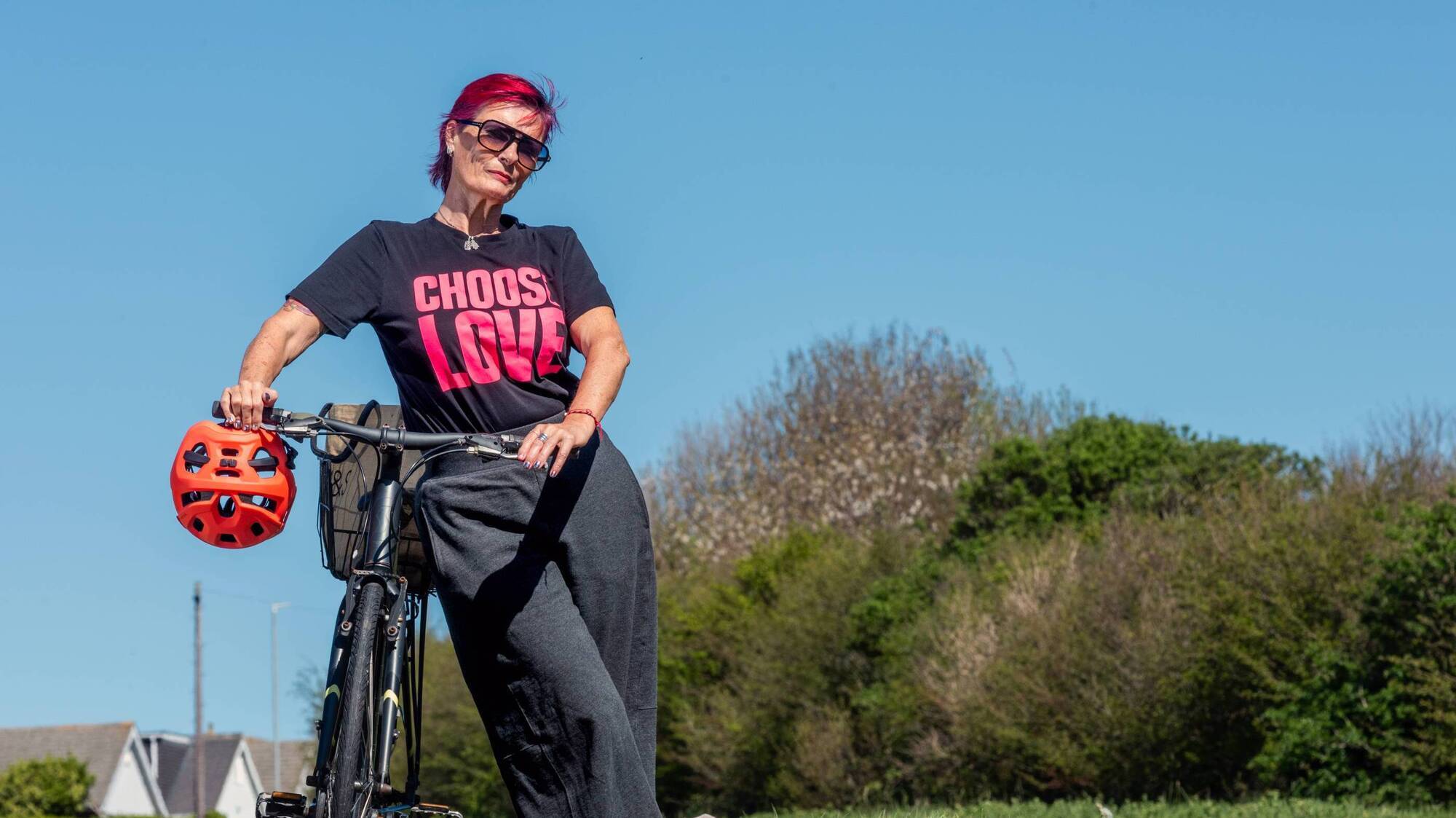
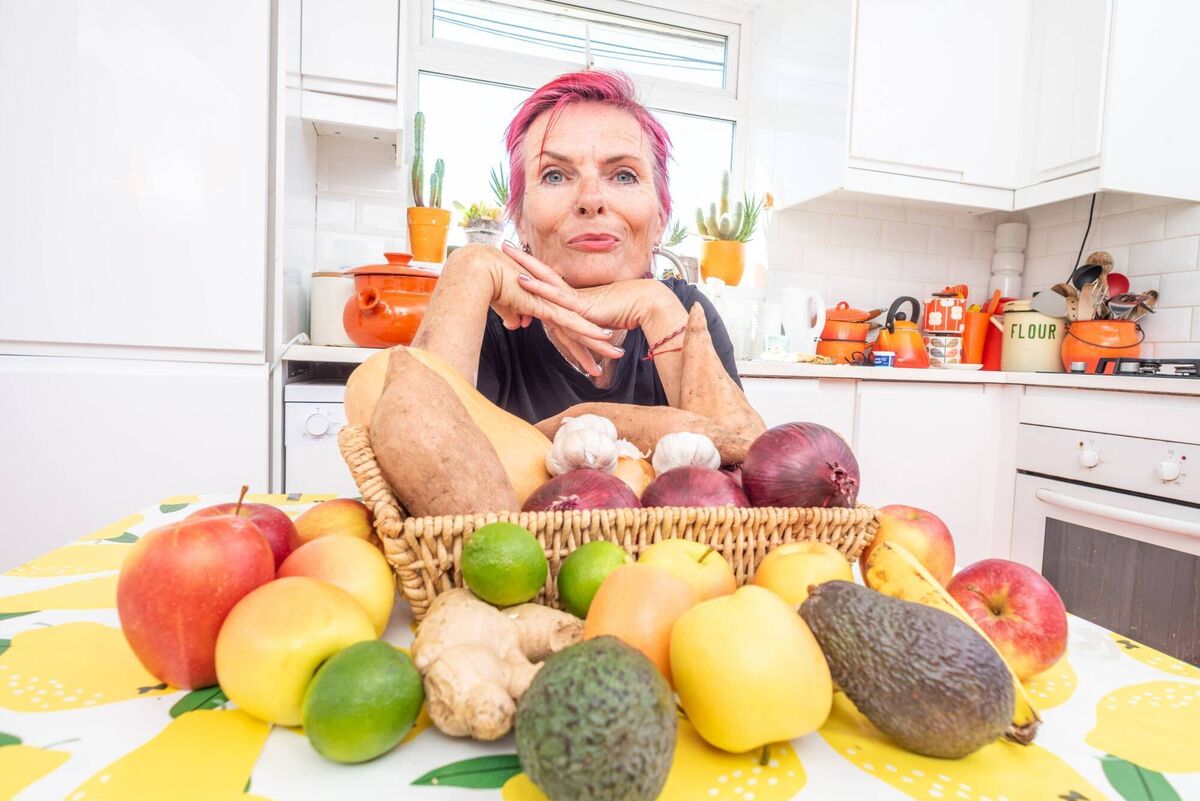
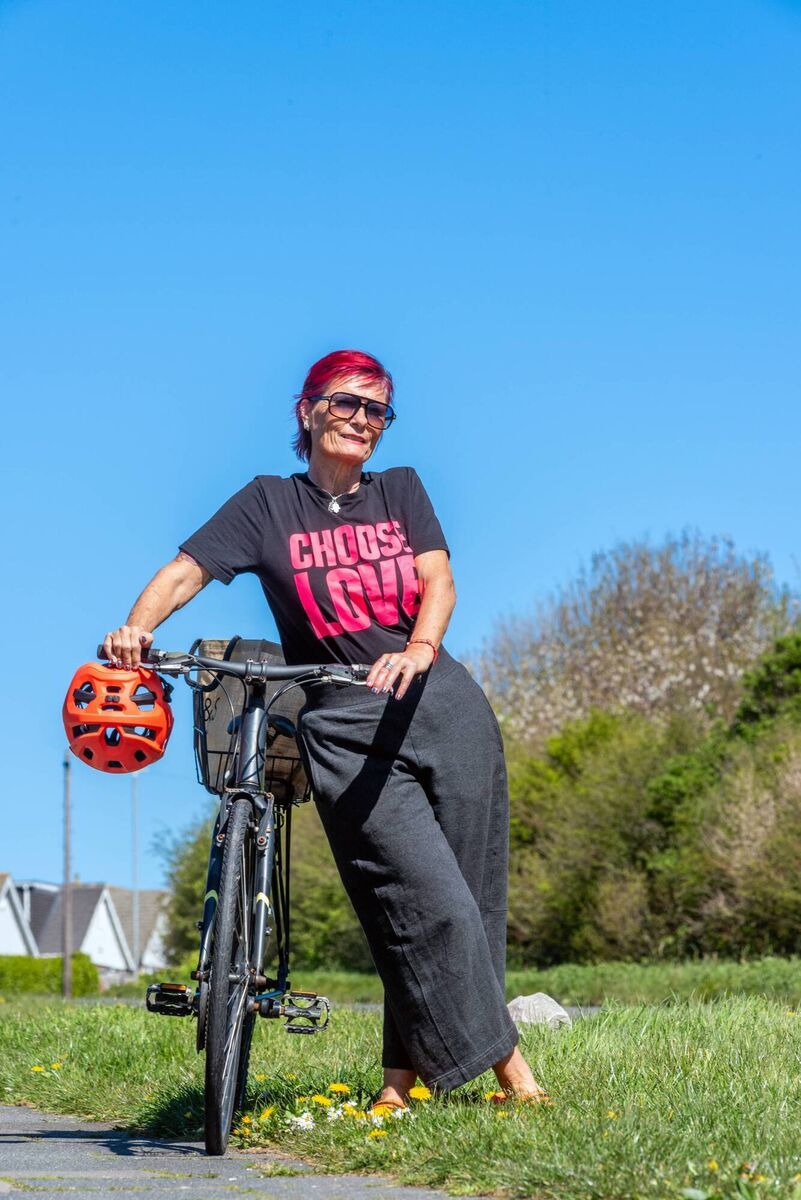
When I was asked to write about things I do in daily life in terms of sustainability, all I could think of — apart from a long-term love of charity shops — was eating plant-based and using a bicycle to get around. Not even because of sustainability, I just love animals and hate sitting in traffic.
The very words “vegan” and “cyclist” seem to massively trigger people. Like you’re part of an extremist cult hellbent on — what? Elevating yourself to the tallest peak of the moral high ground? Making other people feel bad? Being a joyless fun-sponge, a member of what sacked politician Suella Braverman called the “tofu-eating wokerati”?
All of the above. Which is why saying you like to eat plant-based and ride a bike is less rigid, less identity politics.
I have a car, I fly regularly, I use Amazon, I will revert to eating vegetarian if travelling somewhere that doesn’t do plant-based (if it’s egg noodles or nothing, I will not choose nothing).
It’s a spectrum. I know vegans who think having a dog is wrong, and I know people who think eating fish is vegetarian. My partner is a carnivore, as are my children. They know where meat and dairy come from. Now more than ever, we have awareness and access to information. We know about factory farming.
CLIMATE & SUSTAINABILITY HUB
I’m with comedian Sara Pascoe, who says: “I love not eating animals, but I realise not everyone cares.”
The angry vegan trope, while understandable, is unhelpful.
I stopped eating all animal products around 12 years ago, having been vegetarian since my teens. Going plant-based was easy. What used to be hugely restrictive is today supermarket mainstream. Around the world, Michelin-starred vegan restaurants are gaining ground, and where I live — Brighton — has vegan fish and chip shops, vegan kebab shops, vegan ice cream shops, vegan pubs, vegan fine dining.

London has 178 fully vegan restaurants, and the Happy Cow app lists Dublin as having 447 places to eat with plant-based options. Cork has 88.
A 2025 Irish Vegan Society survey shows how 7% of Irish people are vegetarian, 5% are dairy-free, and 3% are plant-based or vegan.
Traditionally, motivation has either been personal (the numerous health benefits of a plant-based diet are well documented) or ethical (animals are generally not raised on Old McDonald’s Farm, and as Paul McCartney famously put it: “If abattoirs had glass walls, we’d all be vegetarian”).
But even if we aren’t motivated by either of those reasons, not wanting to go extinct is a powerful driver. Eating fewer animal products has an immediate positive environmental impact. A major 2023 study from Oxford University involving the dietary data of 55,000 people showed how a plant-based diet has 30% of the environmental impact of a meaty diet.
Animal agriculture produces 22% of all greenhouse gas emissions — more than all transportation combined, including flying — particularly methane (80% more warming than carbon dioxide) and nitrous oxide (300 times more heat trapping than carbon dioxide). Water consumption in animal farming and fish farming is “devastating” compared with plant production.
Also, the protein argument doesn’t really stand up. Basically, per thousand calories, the creation of beef results in 36.44kg of greenhouse gases, while the creation of tofu creates 1.17kg — yet their protein content isn’t that different (around 200g per kilo of beef, around 150g per kilo of tofu).
Despite the inarguable maths, lots of things put people off changing from animal to plant based diets, even partially.
Attachment to tradition, culture, identity are probably the main ones. And the word “tofu”. (Other plant protein sources do exist. Although once you’ve got the hang of the world’s most versatile ingredient, from nuggets to cheesecake, you’ll never go back.)
“When people make visible lifestyle choices that are linked to values like environmental concerns or animal welfare, it can unintentionally — or maybe intentionally, in certain cases — stir discomfort in other people,” says psychologist Malie Coyne.

“It can make us think our identity and lifestyle is under threat. Choices around food or transport are deeply tied to our daily lives, our culture, so when someone does something differently, it can feel like a challenge to one’s own way of living.
“We compare ourselves to others to see how we stack up. This is completely normal. There can also be a moral discomfort and defensiveness, where difficult questions are raised around sustainability or ethics.
“Rather than sit with the discomfort ourselves — because we may be uncomfortable about our own food choices or the fuel we’re burning when we drive — we may instead dismiss the person as preachy or judgy. It’s easier to put them in a box — vegans and cyclists, I don’t like you, go away, I don’t want to hear it.
“Change feels threatening — both cycling and plant-based eating are associated with wider societal shifts, and change can feel unsettling when they impact our habits or identity.
“It can quickly become quite tribal — us versus them. People grouping others into categories and reacting to the stereotype rather than the individual. Reducing people to a single type is an unhelpful narrative.
“In many cases, people are simply trying to live in a way that works for them.”
On a practical level, when you want to make changes, there’s the where-do-I-start conundrum. Gradually is the answer. It’s not an overnight thing.
One of the most unexpected aspects is how eating plant-based makes cooking really engaging and interesting — instead of sleep-walking through the same old dinners, you are experimenting with flavours, textures, combinations. Your whole food repertoire undergoes a reboot.
Again, this takes time. I remember loved ones gamely choking down some culinary disasters in my early days of purely plant-based cooking. These days my (carnivore) dinner guests lick their plates clean. Plant-based food is not all salads and lentils — think rich, umami, fresh, flavoursome, gooey, creamy, unctuous. The skinny vegan is a myth if you like baking.

Everything you need to know is online, from the recipes of Michelin-starred French chef Alexis Gauthier to the banging flavours of the Veganezer to the Happy Pear and DeliciouslyElla, who all have delicious, doable, straightforward recipes. What I found really useful was learning how to “veganise” recipes I liked. Try not to swap ultra-processed animal products for ultra-processed plant products, though — the latter may be better for the environment but they are not better for you.
And if you are desperately missing cheese, just have some.
So you’re going to give it a go. You’re all set — you’ve got your ingredients, checked out a few recipes. Here’s a tip: If you are cooking for loved ones, don’t announce it as anything except “dinner”. Don’t even mention it. Stealth is the way, especially with kids, fussy eaters, or traditionalists. Don’t make a song and dance, just make yummy food. Let the cooking do the talking.
Not everyone will be onboard. Expect words like awkward, difficult, fussy.
Expect deliberate incomprehension. Don’t take any of it personally, Just produce something mouth-watering and share it around.
Malie Coyne suggests that when you are doing something as fundamental as changing what you eat, talking about it from personal experience is a good way forward.
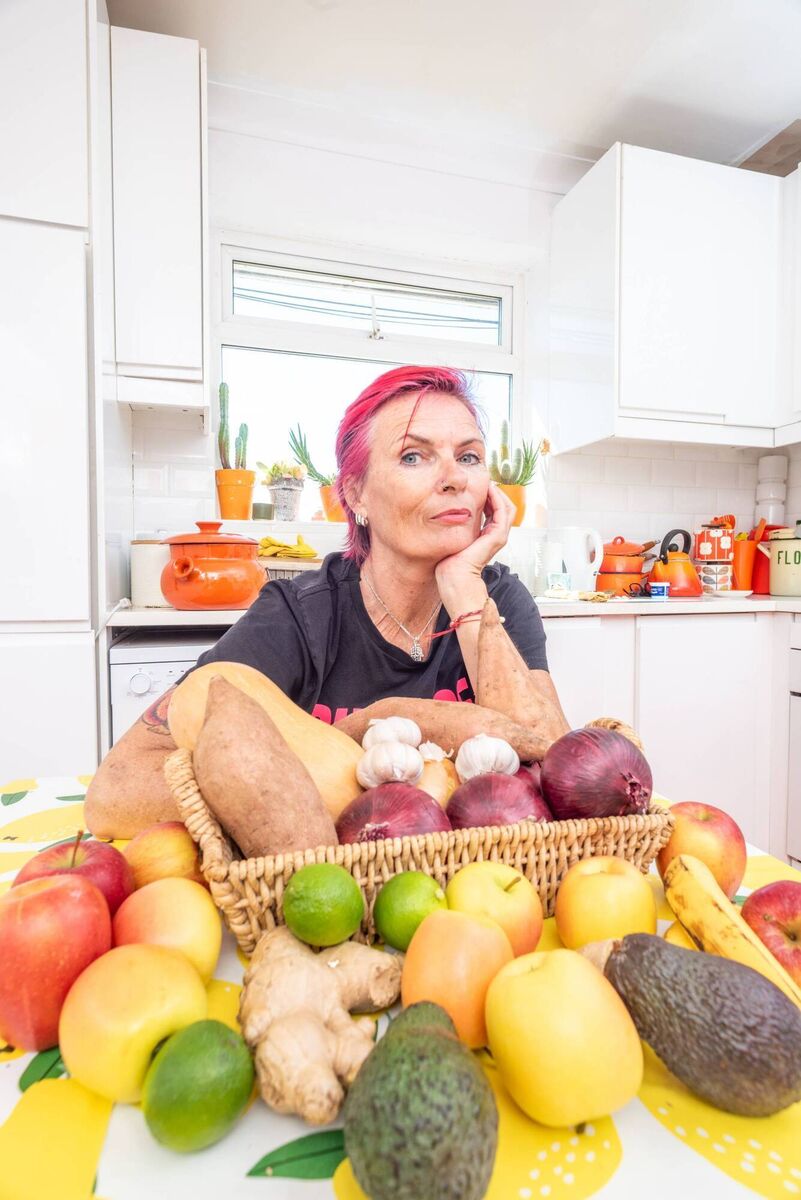
“Lead with curiosity rather than conviction — keep the focus on your personal experience rather than a universal truth,” she says.
Make it about addition, not restriction.
“People often feel less threatened when it’s framed as something added, rather than taken away. So instead of ‘all meat is bad’, you could say: ‘I’ve found some great plant-based….’”
She adds: “Reduce the sense of divide. Reflect, ask your friends for feedback — am I sounding annoying? Avoid moral superiority — even well-intentioned language can come across as lacking humility. Have openness. Read the room.
“And know that if you get a strong reaction, it’s not about you — it’s about the other person’s discomfort rather than what you have said. You don’t have to convince people. This is hard if you care about animal welfare, [but] preaching will never work if you make people feel bad. People don’t come on board out of shame.”
(Even if you are inwardly appalled at people’s indifference, keep it to yourself. This is hard. But 40 years of not eating animals has taught me one thing – seducing people with tasty food works better than bombarding them with horrific footage.)

I realise that this has all been about food rather than cycling, but this is because food is so much more important, on every level. There’s not as much to say about cycling other than it’s a great way to get from A to B where the benefits include fresh air, exercise, zero petrol costs, no traffic jams, and free parking when you arrive. And in towns and cities, it’s far faster than driving.
I got my first bike with my Communion money in the seventies, and taught my kids to cycle on hired bikes in Amsterdam’s Vondelpark. It’s practical, straightforward, efficient — and green.
I recently did a six-month no car experiment, and found that as well as saving loads of cash and getting fitter cycling, my shopping habits changed: Instead of doing a big weekly shop, I did little and often. Whatever would fit on the back of my bike meant more mindful shopping.
Having said that, cycling in wind and rain is not much fun.
Obviously, using bikes as transport depends on where you live. If you are up a mountain 20km from the nearest shop, it may not work as well as if you live in town. Or if you are ferrying children around (unless they cycle too). Again, it does not have to be all-or-nothing — an EU-wide study found how swapping your car for a bike even one day a week makes a significant impact in overall emissions.
Cycling emits around 21g of carbon dioxide per kilometre — basically from you huffing and puffing if the road isn’t flat, which means that emissions from electric bikes are lower, as there is less effort from you (although from your own cardio health perspective, huffing and puffing is good).
Driving creates almost five times more emissions than cycling, at around 124g of carbon dioxide per kilometre.
As with not eating animal products, cycling can make people angry. Cycle lanes seem to drive non-cyclists mad, as a waste of road space and money.
Drivers versus cyclists is an ongoing culture war, which seems a bit daft, given that most cyclists are also drivers (although not all drivers are cyclists — maybe that’s it). Not all cyclists cycle responsibly either, which can be stressful for drivers. Bike lights, hi-vis, and a helmet are essential for cycling, as is not cutting up cars or pavement cycling.
The most important thing is sharing the space — not being a dick, whether you’re enclosed on four wheels or balancing on two.
Unless you’re a climate change denier, you’ll be invested in doing your bit for sustainability. We all have different levels of investment, energy, commitment — we do what we can do.
The important thing is to do it, whatever it is.

Cancel anytime
CONNECT WITH US TODAY
Be the first to know the latest news and updates