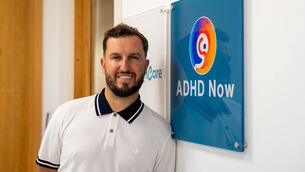
Biohacking: 'I spend €88,000 a year to be my best physical self'

Dedicated biohacker Leon Kurita-Goudock is committed to reversing the aging process
“I’m all about taking control of my life rather than just letting life happen to me," explains 37-year-old Leon Kurita-Goudlock, a biohacker, originally from Los Angeles.
"I choose to go above and beyond, to always operate as the best version of myself.”
The father-of-one spends up to €87,860 a year on biohacking treatments, a practice that involves making changes to your lifestyle to ‘boost’ your biology for improved health. And this level of clean living comes in different extremes.
Leon, for example, uses prescription medicine, peptides and hormones that includes intermittent fasting, heavy workout sessions, and blood tests.
“I also do full body scans such as full body MRIs or low dose CT scans, along with echocardiograms and other tests to make sure my internal organs are all functioning properly,” he explains.
“Twice a year, I do a series of colonics, followed by rectal screenings to ensure my bowels and colon are always in tip top shape.
"Multiple times per year, these include things such as ice baths, cryotherapy, red light therapy, infrared sauna, ozone therapy, hyperbaric oxygen therapy, blood/plasma washing, vitamin and NAD+ IV drips, compression therapy and UV blood irradiation.
"I also use a wide range of peptides along with TRT, all of which I self-inject (and all of which come from pharmacies and doctors here in the west, as opposed to the back alley of a gym or a black-market website).
“Biohacking is essentially health optimisation," explains nutritionist and clinic director Kim Pearson. She runs RoseBar longevity clinic in Six Senses Ibiza, where people can do anything from optimising the fundamentals of good health like nutrition, sleep and light exposure, through to more technologically advanced practices such as using hyperbaric chambers, ozone therapy and functional health testing.
“It has become increasingly popular in recent years, however in reality, nutritionists and other health practitioners were focused on many of these strategies for health optimisation long before ‘biohacking’ became a thing.”
Former Hollyoaks actress, Davinia Taylor has spoken widely about how biohacking changed her life. The mother of four boys struggled with a dependency on alcohol, post-natal depression, losing her mother to cancer and a struggle to regain her pre-baby body.
A genetic test kickstarted her journey towards what she calls her "peak performance". Now she’s written a book on the topic (Hack Your Hormones) and has released a line of supplements.
"The great thing about biohacking," Davinia explains to her one million followers on Instagram, "is that you really just get to know yourself – your genetics, your DNA, your habits, what stresses you, what doesn’t stress you – and you adapt your life accordingly.
"There’s no fixed rules to it. And I think there’s a lot of stuff out there that I’ve tried that other people wouldn’t […] because that’s how I'm wired.”
Perhaps our traditional health system does take too narrow a view on what should be included when we talk about wellness.
Imagine a world where patients had a personal health programme instead of a one-size-fits-all. After all, our bodies and immune responses are different.
But there’s a fine line between an extreme obsession with health a la Gwyneth’s vagina 'facials', and simply being more in tune with yourself.
“Many people accept symptoms like low energy, gut issues like bloating or inconsistent bowel movements, hormonal imbalances, headaches and chronic pain as a part of life and something they have to put up with,” explains Pearson.
“This is not the case. Your body is always striving to heal and achieve a state of harmony and balance. We just need to support it in doing so.
"Many of our clients who we support in optimising their health experience better energy levels, brighter, clearer skin, better sleep, improved mood and clarity of mind, reduced stiffness/pain and fat loss,” the nutritionist points out.
“Unfortunately we live in a world where it takes work to be healthy. Our lifestyles and environment do a lot to work against us. The food that’s easily accessible and readily available is mostly highly processed and nutrient-devoid.
So is biohacking safe?
“There’s nothing inherently unsafe about biohacking,” points out Kim Pearson, “however there’s a saying that goes ‘a little knowledge is a dangerous thing’. I’d advise anyone embarking on biohacking to tread carefully and question everything you hear or read.
"Seek second opinions on the ideas that seem questionable. If you’re ever in doubt, seek the advice of a qualified practitioner before trying something yourself. It’s also important to remember that different things work for different people.
"Just because someone you follow on Instagram eats one meal a day and that works for them, it doesn’t mean that’s right for you.
"The difference between biohackers and qualified, experienced experts is that biohackers have developed a good understanding of what works for them.
"A qualified expert, like an experienced nutritionist or functional medicine doctor, has worked with a wide range of different people and will know that there is no one-size-fits-all all.
"Trying to fit into a mould of what worked for someone else is no good if that’s not what works for you. I have also seen the tendency for people to become obsessed with optimising their health.

"Our bodies are the vehicles through which we experience life. It’s our job to take care of them so that we can experience the richness of life fully – enjoying the good times and having the strength and resilience to weather the challenges.
"It’s very hard to bring your best self to life when you’re not truly well. However, becoming too preoccupied with our health means we can lose sight of this. After all, life is for living.”
The reasons why some go to the extremes vary. But for Leon, it’s also personal.
“I was always into health, fitness, sports, and eating relatively healthy, but after both of my parents’ health situations took a turn for the worst, and I saw them both decline and eventually pass away, my 'why' was solidified.
"I never want what I saw happen to them to happen to me, and I never want to put my wife and daughter through any of that pain either.
"Many may immediately read all this and think, 'this guy is nuts,' but I challenge you to look yourself in the mirror and ask – am I in the best shape of my life? Is my body fat percentage optimal? Do I still have all the hair on my head? Do I feel positive when I think about my life?
"And then I challenge you all to go get an in depth blood test from your doctor, and begin rethinking your mental framework around health.”
I use a Whoop. I keep an eye on my sleep and recovery to ensure I’m getting an optimal amount of rest. Whoop has a journal function that allows you to track your habits and behaviours to get a detailed insight into the factors that support your sleep and recovery, and those that hinder it.
I don’t get obsessed about it. It just helps me stay focused on consistently implementing the habits and behaviours that support me. When I do stay up late or have a glass of wine or two, it’s a conscious decision rather than a mindless, regular habit.
I have worn continuous glucose monitors for periods of time so I have a very clear understanding of how different foods impact my blood sugar levels. I know that, due to my genetics, I am particularly sensitive to carbohydrates.
I tend to stick to a pretty low-carb diet most of the time. Using a glucose monitor periodically helps me get even clearer on the foods that spike my blood sugar and those that don’t.
DNA testing is great as you only ever have to do it once.
Daylight. Most of us have a dysfunctional relationship with light. We get too much of the wrong types of light from our screens and indoor lighting and not enough daylight.
Work with your circadian clock. Get daily light first thing in the morning and avoid light from screens in the evening. If you can’t avoid them completely, use blue light-blocking glasses.
- Future Beauty Show returns to the RDS, March 2-3, 2024, this one-of-a-kind beauty show is for those who are curious about aesthetic treatments, tweakments, cosmetic dentistry and the clinical and scientific solutions for issues that concern women.

CONNECT WITH US TODAY



Be the first to know the latest news and updates