Suzanne Harrington on the eye-opening nature of watching old TV shows and movies
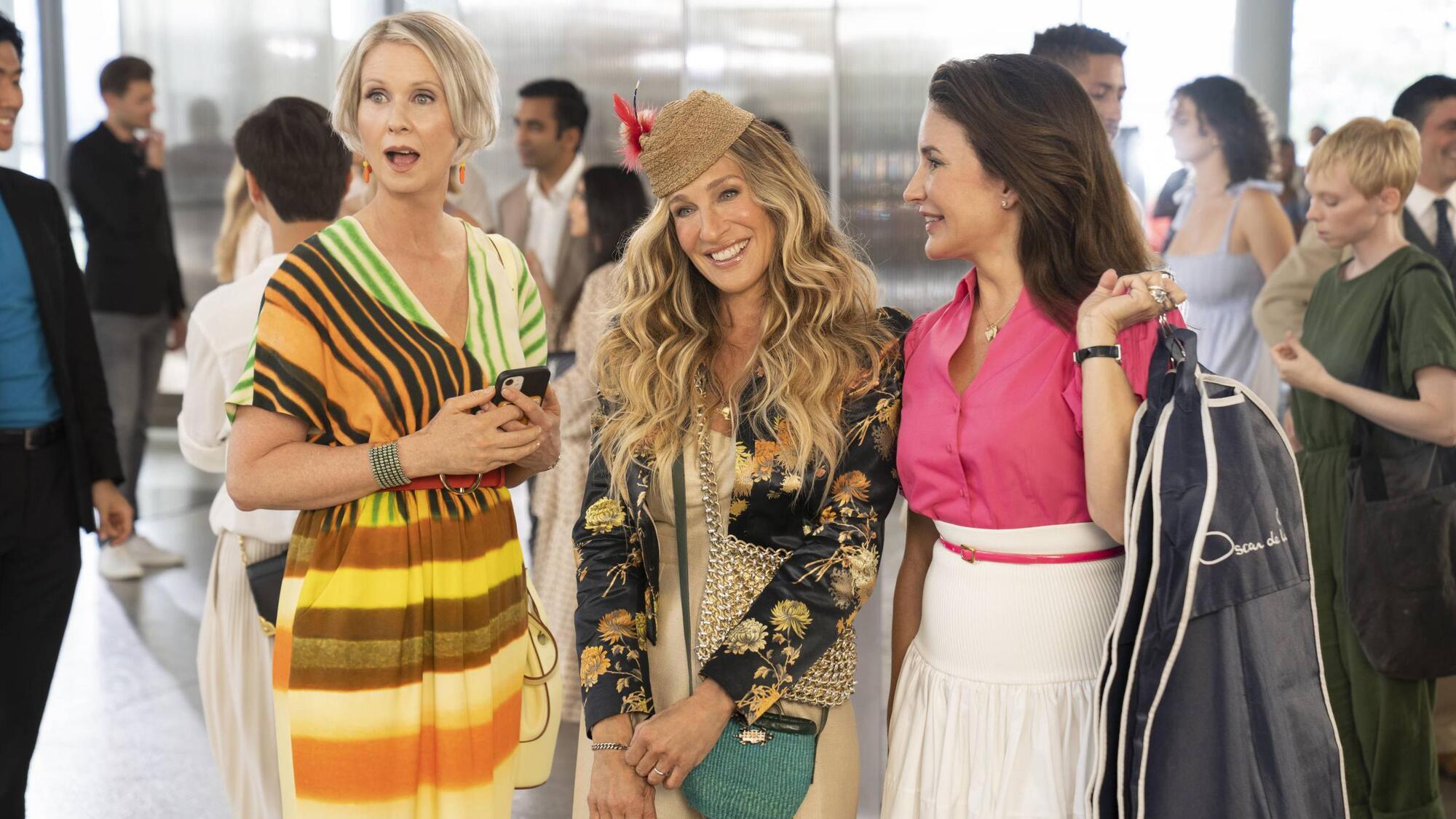
Sex & The City, like a slew of its 90s stablemates, has not aged well.
Sometimes you just get old-shamed, no matter how modern you think you might be. Like when you binge-watch reruns of Sex & The City with your Gen Zedder, who looks increasingly non-plussed as each episode plays out.
“Why are they so obsessed with men? Why does she keep going back to that toxic relationship? Why aren’t there any black people? Why is the gay character just a prop?”, and “Oh my God, that’s so racist/transphobic/homophobic, how did you not see it?”
Her summation is crushing: “So in the 90s you and your friends watched four rich white women in New York whose entire lives centred around high heels and man-sex. And you called this feminist?” Before you can even draw breath to defend your terrible choices, she adds: “And they even shamed the ginger one for having pubic hair!”
Sex & The City, like a slew of its 90s stablemates, has not aged well. In this, it is far from unique. Aside from its two terrible cash-in films, the series is loaded with problems. Like the episode where Carrie — a sex columnist, remember — disputes the existence of bisexuality (“it’s just a layover on the way to Gaytown”), and Samantha dismisses transsexuals as “trannies”. Charlotte thinks the food in an upmarket hotel in Mexico will poison her, and when Samantha gets into a relationship with another woman, every lesbian cliché is trotted out, from candlelit baths to talking about feelings.
Stanford and Anthony embody every gay stereotype, as does Harry with every Jewish one. There are no black or brown characters. The woke version, And Just Like That (2021), tried so hard to compensate for past cringes that it made us wince — Woke Charlotte had us squirming in our seats.
When it comes to film and TV, there’s a difference between being dated (big hair, shoulder pads, a gripping story) and ageing badly (big hair, shoulder pads, rape jokes). Unless it’s a timeless classic, preferably not involving any humans at all — like The Lion King, that cinematic tour de force on the cyclical nature of life and death that a three-year-old could understand — chances are that not all of your old favourites will have endured the passage of time.
They may be problematic to an extent that they simply would not be made at all today, unless drastically revised. These problem areas are nothing new — they are either -ist or -phobic or both — but as society becomes more nuanced and evolved, what once passed as a gag is now more likely to induce gagging, in every sense.
With Twilight (2008), the epic vampire series which once captivated us, we can now see how it involves a man sneaking into the bedroom of a sleeping teenage girl for months on end, without her knowledge or consent. Is this creepy? Yes it is. Just as fairy tales — the basis for so many fantasy films and series — are often built on creepy. A favourite trope is the non-consensual kissing of an unconscious girl (Sleeping Beauty, Snow White) or the rescue of a powerless girl (Rapunzel, Red Riding Hood, Cinderella). This powerless girl trope, once a great favourite of misogynistic director Alfred Hitchcock, is still prevalent in horror and slasher genres, but mainstream movies have generally moved on; studios such as Disney now offer younger viewers more empowered female heroines like Belle, Moana, and the Frozen sisters.
Yet watching once-innocuous teen and young adult movies from even 20 years ago can be eye- widening; as ever, it is female characters whose denigration is most normalised, with black and LGBTQ characters a close second. Sexism, racism, homophobia, transphobia — they’re all there.
Fatphobia in movies used to be accepted and acceptable, an automatic response to non-conforming bodies. The fat-as-horror of Shallow Hal (2001), with Gwyneth Paltrow in a fat suit, presents her as the most repugnant option imaginable; she is the butt of rhino jokes. In Jurassic Park (1993), the fat guy is the bad guy; other fat-as-evil tropes include Ursula the Sea Witch from The Little Mermaid, the Queen of Hearts from Alice in Wonderland, LeFou in Sleeping Beauty, Jabba the Hutt in Star Wars, and Harry Potter’s Uncle Vernon. Fat on film equals evil, stupid, lazy, ugly.
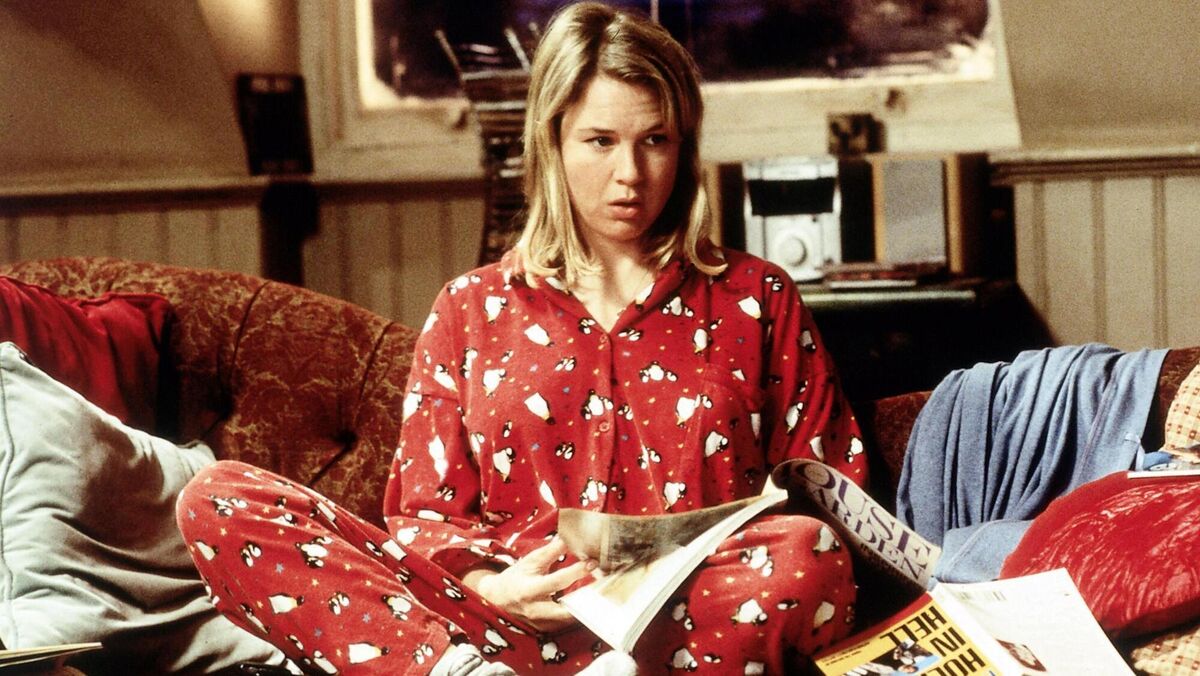
Fat-as-unfuckable in female characters has a long, uncomfortable history. In Bridget Jones’ Diary (2001), the average-sized Renee Zellwegger is presented as problematically fat and obsessed by calories; another average-sized woman in another average rom-com, Martine McCutcheon in Love, Actually (2003) is fat-shamed by Hugh Grant and another female character. In Miss Congeniality (2000), there’s a joke about pizza and beer being too calorific for a female character, but it’s OK because she’ll throw it up later. Because bulimia is hilarious.
The ‘Fat Monica’ storyline (2000) in Friends also played fat for laughs — laughing at, not with. All the cliches — Monica gorging, Monia with chocolate on her face, sugar on her fingers. And the episode which imagines that she never did lose weight, and remains a 30-year-old virgin, because fat women don’t have sex. Oh dear. Where to even start? Imagine that script today, in an era of Beanie Feldstein, Rebel Wilson, Gabourey Sidibe, and Melissa McCarthy.
So many rom-coms and teen movies of recent yesteryear involve stalking, creepy behaviour, and non-consensual sexual stuff. Teen rom-com She’s All That (1999) has a sexual assault that gets played for laughs as well as a female lead presented as unattractive to the male characters until she gets a makeover. Yawn. Pretty Woman (1990) has a similar Eliza Doolittle feel, except with a sex worker.
In Never Been Kissed (1999) an older male authority figure — a school teacher — gets creepy with a student, telling her how hot she is; even the beloved classic Back To The Future (1985) has sexual assault in it, and an incest theme. There’s Something About Mary (1998) helped normalise stalking, embedding the ‘boys will be boys’ trope, while the female characters of pretty much every James Bond movie in the pre-Judi Dench era are strictly decorative — disposable, killable, one-dimensional.
And then there’s the -phobic stuff. Both Soapdish (1991) and Ace Ventura (1994) feature male vomiting when a female character is revealed to be trans. What would Laverne Cox say? Boat Trip (2003) works on the premise of two straight guys accidentally going on a gay cruise — quelle horreur — while Basic Instinct (1992) scores a double on both misogyny and homophobia with its basic premise presenting bi-sexual women as psychos; even 30 years ago, it drew protests outside cinemas across the US. It would not be green-lighted today.
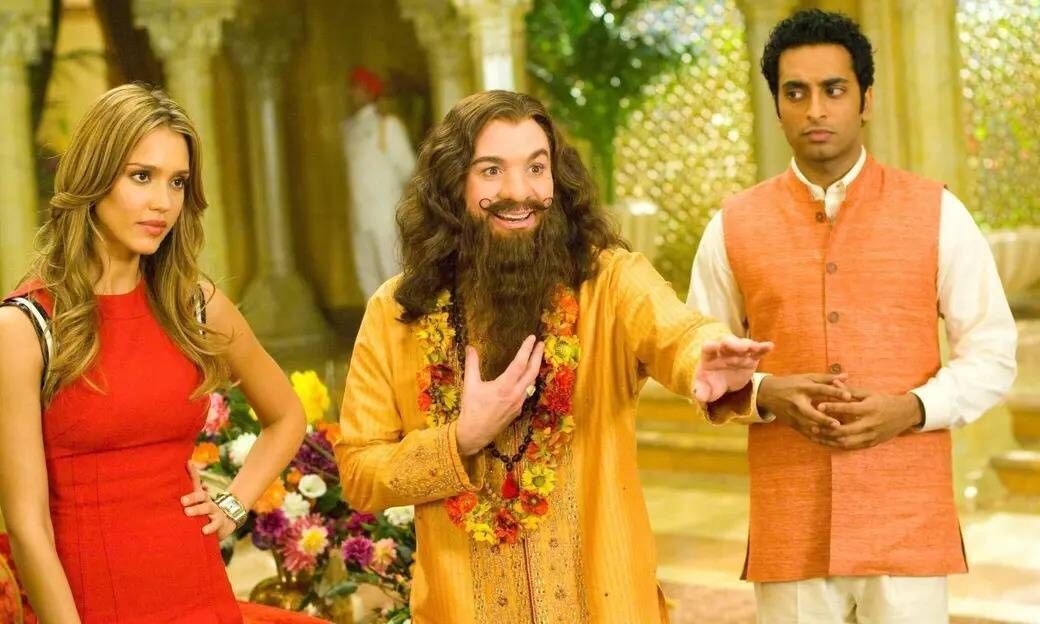
Nor would The Love Guru (2008), in which Mike Myers is almost hilariously offensive as he plays — yes — an Indian guru, complete with comedy Indian accent and made-up Hindi words. Indiana Jones & The Temple of Doom (1984) goes further, presenting Hinduism as barbarism, while Falling Down (1993) sees Michael Douglas go fragile-white-man crazy in a revenge odyssey involving Korean shopkeepers and Latino gangs. From Peter Pan to Pocahontas to pretty much every Hollywood production portraying Middle Eastern ‘jihadis’, black ‘ghetto’ characters, and Latin ‘gangbangers’, the problem of racist portrayal has not been addressed the way the other -isms and -phobias have. They are still around. Film and TV reflect society, and society will always have some way to go.
CONNECT WITH US TODAY



Be the first to know the latest news and updates