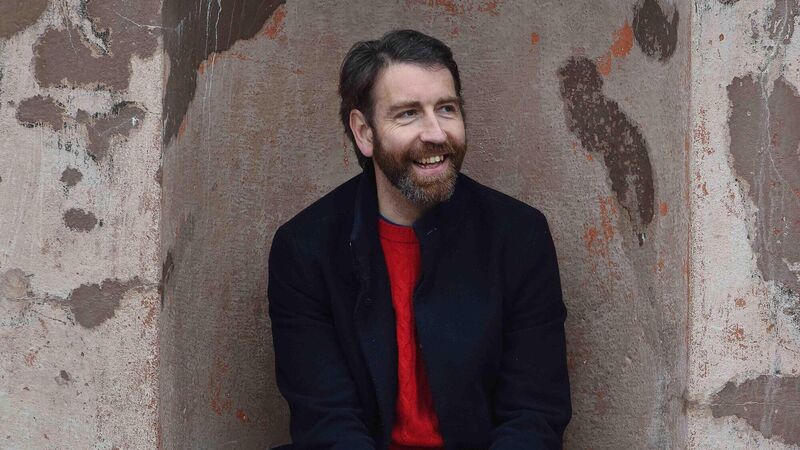
Colm O’Regan is a hypocrite.
No, really. The clue is in the title of his new book, Climate Worrier: A Hypocrite’s Guide to Saving the Planet.
As a philosophy graduate and recovering socialist, it’s a relief to discuss such a meaty topic in such an honest way, with someone who also enjoys some of the trappings of capitalism.
Son of a “tasty” Dripsey farmer, the comic wrote this book mid-pandemic when he was “mulling over” a lot of things including his impact on the environment.
He became very aware that his daughters, Lily and Ruby, were faced with this problem that was, by and large, created by previous generations.
CLIMATE & SUSTAINABILITY HUB
He was fatigued by people saying the problem was with “the system” but also aware that he had “inconsistent views and carbon coming out of every orifice”.
“I wanted, in my absolutely tiny, insignificant way, to talk about these things from a personal point of view without giving loads of advice. Even just to chip in by changing the tone of the conversation.”
He is very much aware that he is speaking from a unique position of stability and contentment.
“There are some hard choices and truths and some people get affected more than others.
"Can we at least chat about the challenges in a way that isn’t always shouting at each other?”
His advice is to forget the virtue signalling: “You can do little bits without telling the world about it — the ‘thanks, I’ve saved my bit of the planet, I’ll take my award now’. It’s not about that.”
For someone who has “seen things” — castration, insemination, bullocks shifting a Ford Orion — his tone throughout the book is patient and playful, teasing out some very serious issues in a fun way.
“Writing a humorous book in this area is not saying the problem is not serious. It’s just saying there are other ways to talk about our reactions, our challenges, our failures.”
Growing up on a farm of 42 acres in county Cork, Colm has fond memories of tending to the cattle and the pigs with his beloved Dada, an out and out character by all accounts.
While he may not have known the animals on his family’s farm by name, he certainly knew them by personality.
Herein lies the rub.
Do the farmers treat the cattle well? Yes. Do they kill them for meat? Also, yes.
One might think the jig is up for the carnivores, but no, says Colm, that’s where the “cognitive dissonance” comes in.
“Coming from a farm, I have dealt with what is involved in the meat that gets to my table.
"I’m not fooled by beautiful pictures of meat in the supermarket aisles with a smiling farmer. I’ve never been to a slaughterhouse but I know what happens.”

Armed with more awareness of the environmental cost of the meat industry, Colm and his family have taken the moderate option — not cutting it out fully but reducing their intake.
“The input of energy that goes into the animal — it’s more efficient to grow plant food.”
The way we talk about conscious consumerism is a constant dilemma, Colm acknowledges, however, there is more room for discussion around these topics.
“It’s easier to make sacrifices when stuff is explained and we can have a mature discussion.
I mean, we don’t need a revolution but my feeling is we will get far more done through collaboration and community than just shouting at each other on Twitter.
"I want people to feel they’re not alone.”
Fuel combustion emissions are huge polluters of the environment, Colm acknowledges, and this summer, he and his family made a concerted effort to use alternative methods of transport, including trains, buses, and bicycles.
“This sounds like woo woo stuff (because when it comes to food, our transport, our energy, there are things that are unavoidable) but it’s about (and I hate the word) mindful eating, mindful transport, mindful energy.”
We can all effect positive change in our own small way, says Colm.
He has started buying vegetables directly from the farmer. He even convinces his daughter to eat a bit of mango instead of a piece of chocolate during our call (what sorcery is this?).
Slowing down and taking stock of what we do have is something that Colm has begun to appreciate.
He has re-discovered some of the old trades — the cobbler and the tailor to name two — to fix things as opposed to buying new ones.
He is reminded of his Dada who loved nothing more than getting a great bargain in the charity shop and asking everyone to guess how much it was (“You had to guess really high so he could surprise you with how little it cost”).
While he knows he’s not setting any style trends, he has become more aware of the damage caused by the fast fashion industry.
There are grey areas to consider, however, and Colm points out that sustainable clothes can be more expensive and perhaps inaccessible for some. He wants to assert that he is not trying to provide a solution here, more of a gentle nudge — perhaps another way to deal with this is to wear the clothes you do have instead of adding more to the mix, he offers.
Even sustainability bloggers, we agree, can be guilty of bombarding their followers with things they ought to buy to be more environmentally friendly. Colm has a whole section in his book dedicated to the absurdity of “unboxing” but manages to avoid the scathing judgemental commentary that often accompanies these videos.
“Buying something and wearing it once, that’s not a necessity, that’s a choice.”
There’s no point in telling people to spend more money to save the planet, says Colm, as the cost of living has thrust many of us into hard times where we can barely afford the rent or the mortgage, let alone a keep cup and a recycled rain mac.

“The hardest thing we have to realise is apart from fulfilling our basic — needs food, shelter, security, love, heat, energy — we need to do less.
"It’s not my responsibility to keep the economy going to buy stuff I don’t need.”
Very aware of his privilege as a middle-aged white man, Colm describes himself as “mid 40s peak Dad” and feels his demographic has a responsibility to the younger generations to leave the world a better place.
“We should be kings of sustainability — we should be walking around going ‘these trousers will do me out’.
"There are certain things you can do that you are more in control of your life because you are stepping outside of the system.”
One example of this is his decision to buy secondhand and support Irish businesses.
When he needed a new laptop, he decided to go with a refurbished model from Kildare-based computer reseller, Green IT.
This isn’t the first time Colm has bought pre-loved items.
He’s mentioned meeting “modern-day peddlers” in car parks and railway stations to get a good deal on a dolly. And selling all sorts of stuff online to puzzled spouses, bemused that their other half has bought “a pile of dirt to fill a hole”.
Again, he is aware that meeting strangers in remote destinations may not be particularly safe for everyone, and points to his privilege.
We often leave the protesting up to the people who are objecting to things out of necessity, says Colm but it’s when we are happy that we should be helping out.
If we can do it without the “the look” akin to the earnest yet judgemental stare of Greta Thunberg — that’s the sweet spot, Colm tells me.
He has a theory that “most people are not assholes” who don’t love “slapping the shite out of the natural world”.
If he hopes to achieve anything, it’s that people will worry less.
“It’s the reason the book is written purely from my point of view — it’s showing the real human emotions you go through as a flawed person and even acknowledging that maybe we don’t have to beat ourselves up as much. That makes you more ready to try.”
Colm’s daughters, Lily and Ruby want their dad back. They’ve been very patient with his phone call but there are many things to be discussed — like what looks like a chocolate button down the side of the couch — and why he said “childish” as if it’s a bad thing.
Is he a converted activist? More of a “tactivist”, actually.
When grappling with such heavy subjects, people want to be able to laugh, says Colm. If they read his book, they will at least do that.
- Climate Worrier: A Hypocrite’s Guide to Saving the Planet (Vibes and Scribes, €14.50)

Subscribe to access all of the Irish Examiner.
Try unlimited access from only €1.50 a week
Already a subscriber? Sign in
CONNECT WITH US TODAY
Be the first to know the latest news and updates