The true cost of returning clothes and penalties for repeat offenders
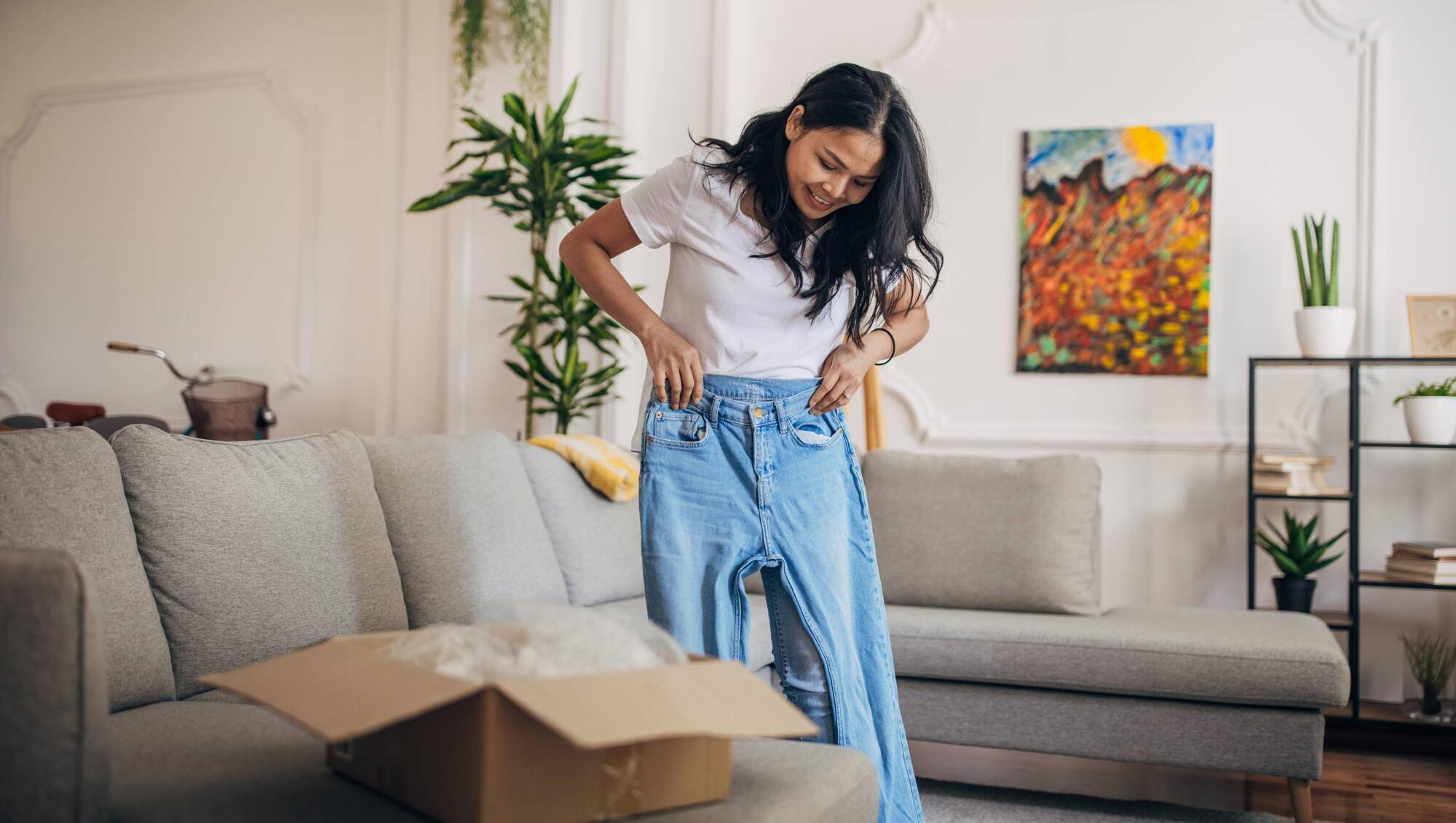
Buying the same item in several different sizes, in the knowledge that you will return the ones that don't fit is known in the retail sphere as "bracketing".
The keep or return trend is sweeping social media where fashion lovers video their latest shopping āhaulā and ask followers for advice on whether to return, exchange or keep them. So far, so innocent. The trend caught my eye for a number of reasons.
While my Covid-imposed incarceration forced me to re-acquaint myself with the same four walls, it also saw me familiarising myself with the stock of my favourite fashion e-commerce sites. Despite my reduced wages, the lack of social exchange motivated me to buy bundles of clothes just to feel something. The adrenalin rush, plus the frequent but distanced contact with the postman became slightly addictive, and it was difficult to wean myself off buying purely for the sake of it. Another one of my reasons for wanting new clothes was more practical. My body was bigger in the aftermath of the pandemic, it literally didnāt fit into most of my clothes.
While information about what happens to customer returns or stock that is deemed to be āout of seasonā is slowly filtering into our consciousness, it isnāt common knowledge. Burberry came under fire in 2018 when it was revealed the luxury brand burned more than ā¬32 million worth of stock including perfume, bags, and clothing. The reason? Not because the items were damaged but to retain a sense of exclusivity, and for tax reasons. Rather than send these items to discounters, at the end of the season, they became ādeadstockā to be incinerated.
My newfound love of online shopping was certainly not unique, as KPMGās survey, Me, my life, my wallet compiled insights from over 18,000 customers worldwide, including Ireland. The research found that 68% of Irish consumers do more online shopping now than before the pandemic. Bracketing is a trend which has risen in popularity as people are buying items of clothing in several different sizes, and returning the one that doesnāt fit.
The buy or return trend can be problematic, says sustainability expert and owner of Gaff Interiors, Jo Linehan.Ā

āThere's a difference between ordering something and genuinely needing to return it because it doesn't suit and purposefully buying a dozen items at a time in the knowledge that most of them will be returned.āĀ
Itās a lack of awareness that perpetuates this trend, says Linehan, as consumers are not necessarily cognisant that the clothes they return may end up in landfill. Some brands, even the bigger high street chains are trying to incorporate sustainability into their policies, and to be less wasteful. I contacted H&M who said:Ā
"H&M customers can return online purchases in-store, however, we encourage electrical and HOME products are returned through our online return services. If customers return online purchases to a store which stocks that product, it will be re-sold in that store. If customers return online purchases to a store where that product is not stocked, the products will be transferred to a nearby store which does stock that product, where it will be resold."
Itās essential to bridge the information gap, Linehan says, and to let people know that āreturning may not be as clear-cut as it appears.ā So, why are these items ending up in landfill, when they are clearly not damaged? Some companies simply donāt have the technology to differentiate flaws and shipping them to the dump is cheaper than re-distributing them to other outlets. āBut the robots will take over the worldā, they said. Not the ones working in distribution centres, apparently.

A 2020 investigation into Amazon returns by Canadian news corporation, CBC News, returned 12 household items to Amazon, outfitted with a clandestine GPS tracking device. The investigation reported that 4 items were re-sold, 1 was dumped in landfill, 1 was found at a product destruction facility, and the rest remained in the warehouse. The revealing thing, however, was not where the inventory ended up but rather how far it travelled. In some cases, it was transported almost 1000km, racking up a pretty significant carbon footprint for the sake of one small item.
Under EU law, a customer is entitled to a refund for a purchase made online, by phone, through the post or from a door-to-door salesperson within 14 days. While many retailers previously offered free returns, some retailers are now charging a few. In May of this year, Zara (part of the Inditex group) introduced a fee of ā¬1.95 for returns. Other retailers that charge for returns include Next, Urban Outfitters, and Sports Direct. Fast fashion behemoth Boohoo also introduced a fee, citing the surge in returning clothes to be a factor.
While buyerās remorse may be a very legitimate reason for returning clothes, some retailers have noted influencers and bloggers wearing items once for a photoshoot and promptly returning, which several outfits have described as a form of fraud.
Back in 2019, the online retailer housing many household names in fashion threatened to impose sanctions on serial returners when returns reached an "unprecedented" height. The company released a statement at the time saying:Ā
"If we notice an unusual pattern of returns activity that doesn't sit right: eg we suspect someone is actually wearing their purchases and then returning them or ordering and returning loads - way, waaay more than even the most loyal Asos customer would order - then we might have to deactivate the account and any associated accounts."
They cited the environment as a reason why they would impose sanctions, (one customer who prefers not to be named told me she was banned for three months after returning several items at a time) saying:
"We also need to make sure our returns remain sustainable for us and for the environment, so if we notice an unusual pattern, we might investigate and take action.

I contacted ASOS this week to see if they were willing to discuss their returns policy, and whether they would deactivate an account that was perceived to be returning too many items. A spokesperson told me that as long as the item is in a re-sellable condition within the time frame state, a refund will be issued.Ā
āFree returns are a core part of the ASOS offer and help to make shopping with us as easy and convenient as possible. To ensure customers can find the products they'll love with the confidence that if the fit isn't quite right, or they change their mind about an item, they can request a refund within 28 days of delivery or collection. As long as an item is in its original condition, weāll provide a full refund by the way of the original payment method for free ā and we have no plans to change this approach.āĀ
The spokesperson also directed me toward some of the fine print which says:
"Free returns are subject to fair use, meaning if we notice an unusual pattern of returns we may take further action, for example, if we suspect a customer is wearing purchases before returning them, or suspect fraudulent activity, we may deactivate a customer's account and any associated accounts.
The policy also states that this measure is not "designed to penalise customers," but rather as a way to create a "frictionless experience for the customer."
Ā While most retailers are loath to release information about internal policies, a 2021 study by Springer revealed that over 50% of items sold are returned. This is indirectly harming the environment, says Jo Linehan.
āIf an item is returned and dumped in a landfill, not only is that a pollutant, but everything invested in creating that item has also been wasted, from the materials and the labour to the carbon footprint of the piece's manufacturing and shipping.ā The onus is on us to make smarter decisions about our purchases, says Linehan.
āThe more we know about how a supply chain works, the better choices we can make for our wardrobes, wallets, and the planet.ā