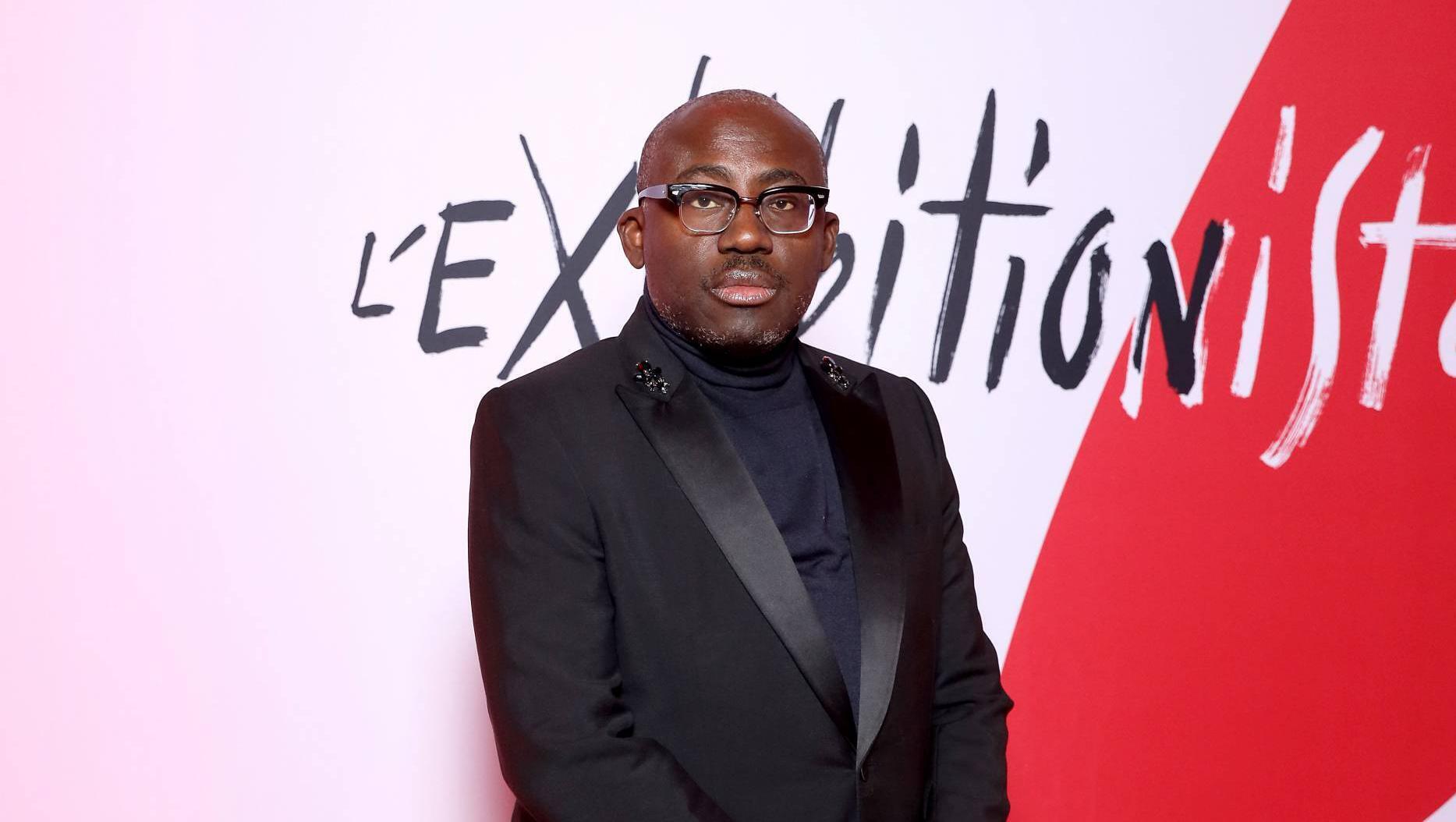
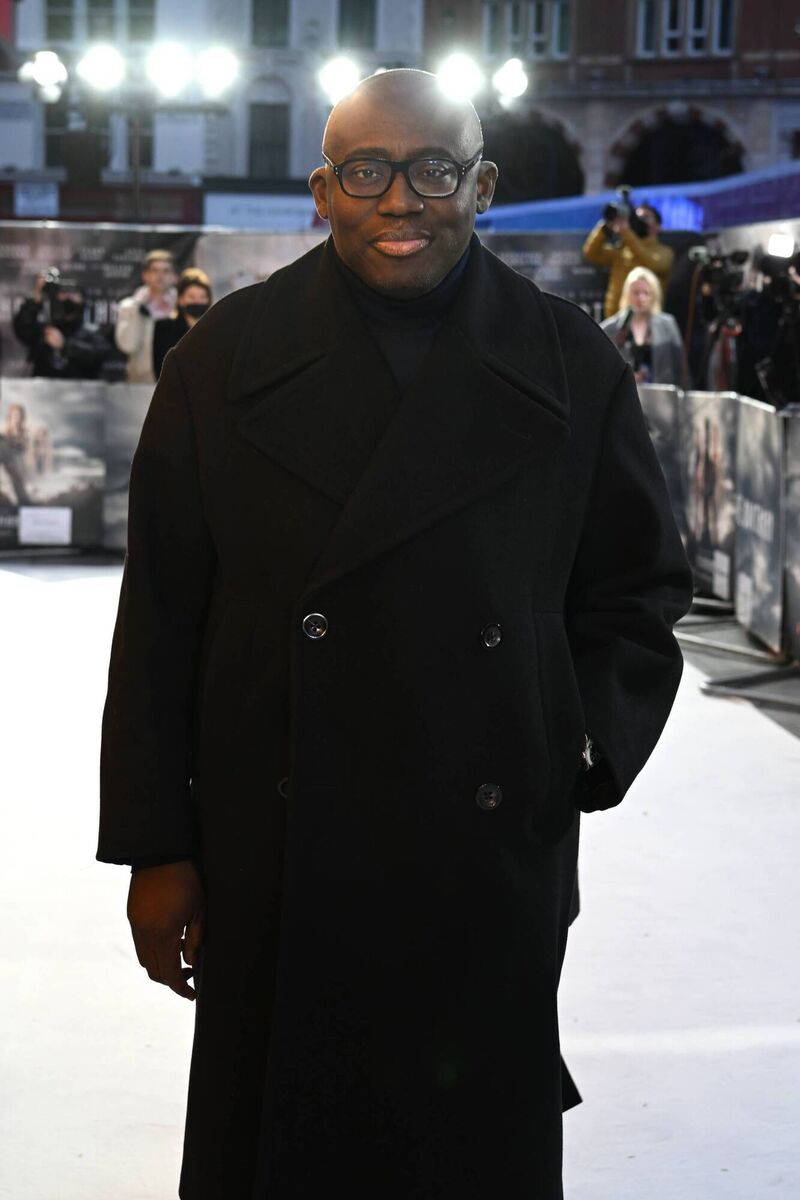
Two summers ago during lockdown, Edward Enninful was walking his dog in Hyde Park with a friend, who asked him about his forthcoming memoir, A Visible Man.
The editor-in-chief of British Vogue replied it would be about “a boy from Ghana making his way in a racist, classist industry” — fashion — but his friend, who had also grown up in an African household in London, reminded Enninful of how others saw him.
“You move with leaders and tastemakers; you’re surrounded by the most powerful, amazing women,” said the friend. “We don’t see a struggling black person. Make sure you give us power and success. We need that.”
The friend was Idris Elba, and he was right — Enninful’s story is exceptional and inspirational.
The memoir — beautifully written and compelling — depicts the story of a shy, studious boy from a conservative, high-achieving family whose talent and drive propelled him from nowhere to the top of the fashion world.
He has worked with everyone — Calvin Klein, Dolce & Gabbana, legendary photographers like Nick Knight and Steven Meisel. His friends are household names — Kate Moss, Naomi Campbell, Rhianna, Roland Mouret, Philip Treacy, the late Alexander McQueen. Madonna comes to his parties. Meghan Markle, Beyonce, Oprah, all revere him.
Enninful’s trajectory from a council house in west London’s Ladbroke Grove to the most coveted magazine job this side of Anna Wintour is all the more remarkable for what he is currently doing at Vogue.
He has taken fashion’s foremost glossy and opened it up for all — as a gay, black refugee, he is using his platform to promote diversity and inclusion, and to implement a radical overhaul from the posh white girl demographic of Alexandra Shulman’s 25-year reign at the magazine.
Since he took over in 2017, Enniful has been busy disrupting expectations of what the establishment of fashion mags should look like.
He commissioned Meghan Markle to guest edit a September issue; during the pandemic, when old people were dying disproportionately of Covid, he put 86-year-old Judi Dench on the cover; the following month the cover stars were frontline keyworkers. He commissioned landscapes by artists like David Hockney, inviting readers to post their own landscapes on social media, when we were all stuck indoors.
After the murder of George Floyd, he put social justice activists on the cover, unstyled and wearing their own clothes. (Unheard of in fancy magazineland). He has commissioned writers like Zadie Smith and Salman Rushdie, and filmmaker Steve McQueen. And he put Oprah Winfrey, dripping in diamonds, on the cover, to counteract the idea that black women were “not seen as capable of embodying ‘luxury’”. Turns out they are.
As former editor, Shulman wrote sniffy columns elsewhere about “the new breed of editor-in-chief”, Enninful led a change that has meant Naomi Campbell or Alek Wek are no longer token black models in a fashion show or magazine spread: “Model scouts are finally realising it is worth their time to go to Lagos as well as Tallinn.”
He is all about the soft power of fashion, its ability to “shape conversations and empower individuals and communities… fashion is a language in and of itself… one that is global, that has the emotional empathy and authenticity to truly connect with people.” Yet on his first day back to the Mayfair office of Vogue post-lockdown, having just appeared on the cover of Time magazine in the US and completed a cover shoot with Beyoncé (who thanked him “for all you stand for”), he was stopped entering Vogue House by a white security guard, who pointed him towards the loading bay for deliveries.
“I’m the fucking editor of this magazine,” he told the guard, incredulous at being racially profiled in his own workplace. When he posted what happened on social media, he was gaslighted: “Maybe you should have been wearing a suit?” The pain of racism, he says, is never too far away.
Edward Enninful was born in Ghana in 1972, one of six siblings. Although he describes himself as working class — technically accurate, given his propensity for working 18-hour days — he is the son of a former major in the Ghanaian army, and a dress maker who made clothes for the Ghanaian political elite.
All set to attend one of the most prestigious boys’ secondary schools in Africa, a coup meant the family had to flee for their lives to England, where they began again from scratch.
He and his siblings “stood out like peppercorns in a bag of rice”, whereas “in Ghana we had the luxury of never thinking in terms of black and white”. London felt like “a more consequential form of Disneyland — picturesque, foreign, surreal”. His authoritarian father wanted him to be a lawyer, and so he put his head down and studied.
But London in the 80s was at odds with the path his father wished to direct him on, the city’s street life fuelling Enninful’s growing obsession with style and music.
He devoured magazines like Blitz, Smash Hits, Vogue, and hung out around Portobello Market and Kings Road. Aged 16, reading a style mag on the tube, a stylist approached him and asked if he had ever done any modelling. This was the day his life changed.

Enniful went on to spend the next 34 years — and counting — working in fashion. His modelling, along with Barry and Nick Kamen, and a school girl called Kate Moss, got him involved with a new, cutting-edge magazine called i-D, and west London’s coolest stylists and photographers — Judy Blame, Ray Petri, Mark Lebon.
He began his magazine career writing, but realised he preferred the visual language of styling; so intense was his talent and work ethic that he was appointed fashion director of i-D when he was still only 18.
Two years later he was invited to New York, to style Calvin Klein adverts. While at i-D he was used to subsisting on sandwiches from the garage, but now “the dinners and the parties were getting fancier and more frequent”.
He got more styling work at Vogue Italia, “the holy grail”, and Vogue Japan, Jil Sanders, Prada, Milan Fashion Week, Paris Fashion Week, London Fashion Week. He was making a name for himself. He was hot, and getting hotter.
Enninful worked relentlessly. “Fashion shows, shoots, rejections, aggressions (both micro- and macro-), overnight flights and going straight to the studio, fittings, consultancies, making deadlines in the face of health and relationship and family sacrifices,” he remembers.
“I overachieved where others rested, ignored weekends, rarely took holidays, and replied to every single email straight away.” (A tip he learned from Anna Wintour).
His work life has been filled with joy, but also “felt like a ceaseless struggle”. He doesn’t gloss over the terrible relationship he had with his authoritarian father, resulting in semi-estrangement from his family.
He writes candidly about imposter syndrome, depression, a fourteen-year stint at Alcoholics Anonymous, post-traumatic stress disorder, and health issues where he almost lost his eyesight.
He is a serious man, on a serious mission; complacency is not in his vocabulary. His life, he says, has been driven “by an all-consuming addiction to forward motion”. Only when he was made an OBE did his father acknowledge his son’s achievements — he describes a glorious scene where, at a post-OBE party organised for him by Naomi Campbell at Claridges, he sees his dad dancing.
“There was Major Crosby Enninful, busting major moves… with military precision and focus,” writes his son. “Madonna was shimmying up next to him, but he didn’t even register it. I had never seen him dance like that before.”
He counts the thawing of relations between himself and his father as an achievement. Now happily married to Alec Maxwell, his partner of 20 years, Enniful says he wrote his memoir not for self-aggrandising reasons (he hardly needs to do that) but in the hope of inspiring a younger generation.
“We need young people coming into the world as empowered as they can possibly be,” he writes. “They are the ones who will help us all get somewhere better… more than anything, I have written this book for them.”
A Visible Man by Edward Enninful (Bloomsbury) will be published on September 6.
Looking for a thoughtful gift?
Irish Examiner Gift subscriptions are now available.
Already a subscriber? Sign in
CONNECT WITH US TODAY
Be the first to know the latest news and updates