Pete the Vet: What about the pets of Ukrainian refugees?
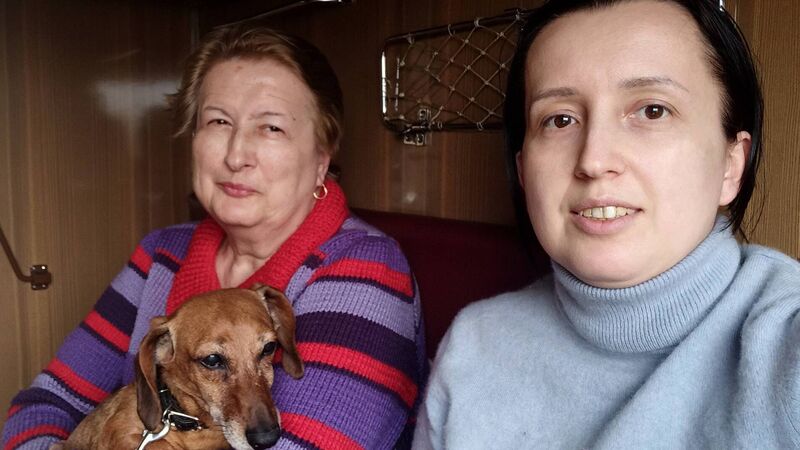
Pete the Vet: Ukrainian vet, Tetiana. She had to flee her home with her Dachshund, Basya,and her mother.
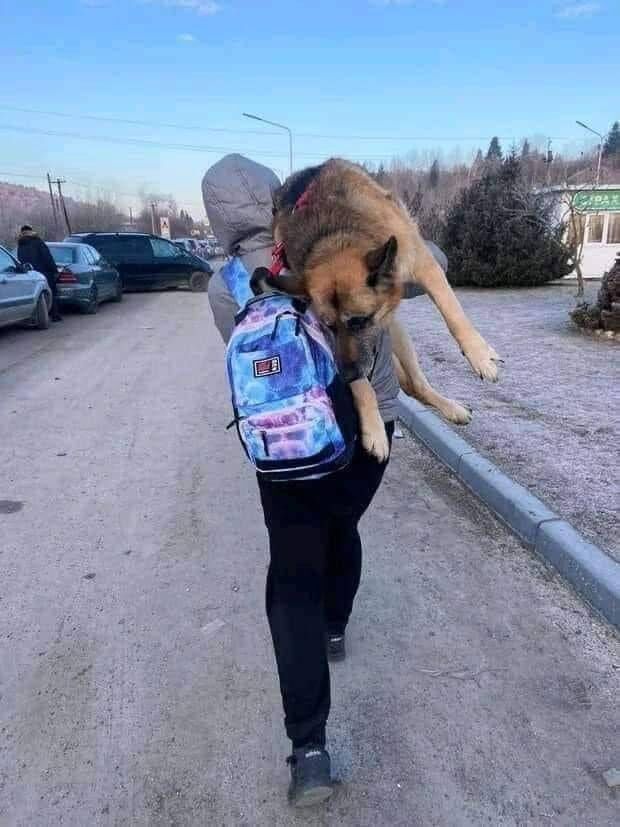
The images and stories are shocking. Ukrainian men are not allowed to leave their country, obliged under martial law to stay and defend their homeland. Meanwhile, women, children and the elderly have been fleeing in their millions, seeking safety in other countries. They travel mostly on foot, taking only their most valued possessions. And for many, those possessions include their pet animals. Refugees don’t see their pets as possessions: they are family members who could no more be left behind than children.
From cats in the type of carrier cages that Irish people use to take their pets to the vet, to dogs being carried through busy crowds in their owners' arms, the inclusion of innocent animals in the Ukrainian war emphasises the fact that the victims in these situations are completely blameless. The wide open eyes, the trembling bodies, the obvious fear: these are so apparent in the refugees’ pets. They can have no understanding of why they have been taken from the comfort of their homes and normal routines. Their ordeal means that they now live life on the road, moving from place to place every day, with no security, no regular diet, none of life’s reassuring daily habits.
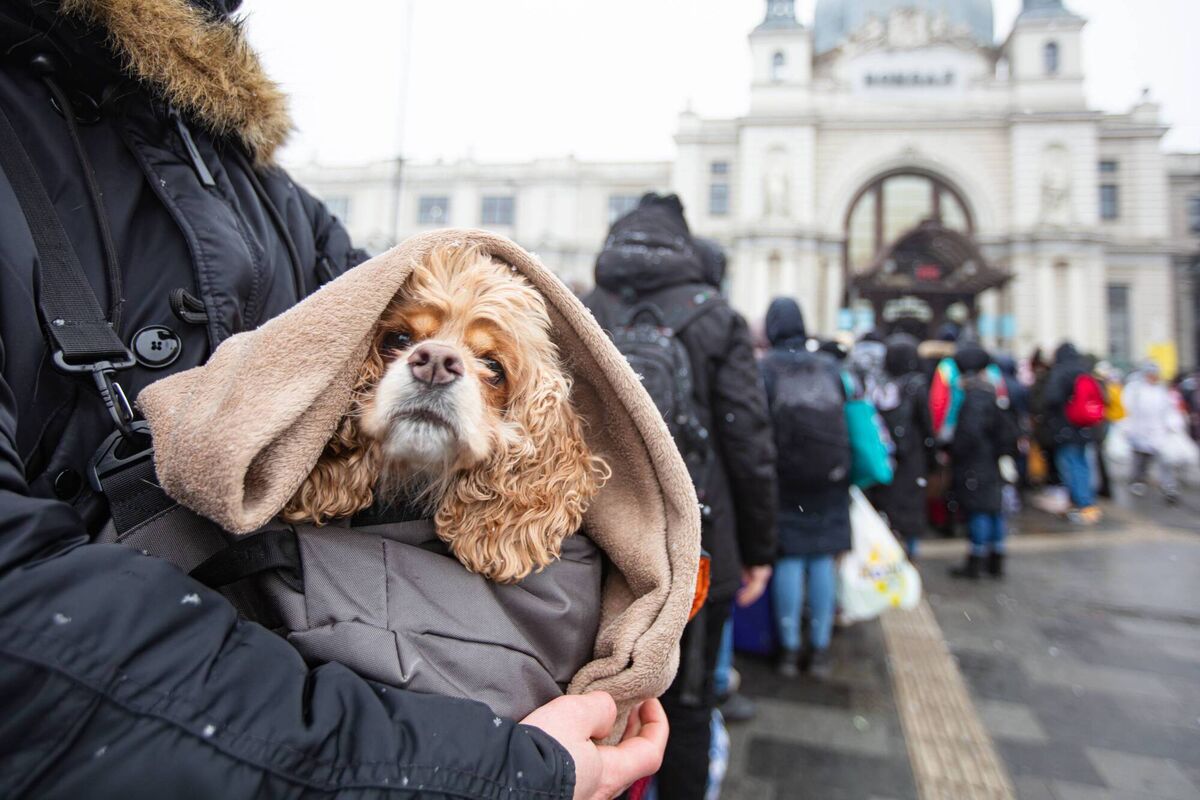
The animals travelling with their owners are the lucky ones: there are also many stories about the animals left behind. Animal sanctuaries are under siege, struggling to find enough food supplies to feed the rescued animals in their care. Volunteers trying to help are under personal threat: one young woman was shot dead last week as she tried to ferry food to her local dog rescue centre. Many animals have just been abandoned: for some refugees, the choice may be between assisting an elderly relative or a much-loved pet. Tough choices have had to be made.
The international community has been flexible and helpful in efforts to help refugees’ pets, with cross-border regulations being temporarily relaxed. Normally, a pet can only travel between European countries when it’s microchipped and vaccinated against rabies, accompanied by a pet passport. In this crisis, pets are being waved through with barely a second glance. The importance of allowing pets and people to stay together has been acknowledged and respected.
There are so many refugees and pets on the move that the individual personal challenges can be lost in the crowd. By chance, one of my Facebook friends is a Ukrainian vet, Tetiana. She had to flee her home with her Dachshund, Basya, and I have been following her saga. She may be one of the luckier ones, but even so, her story is shocking.
I met Tetiana three years ago, at an international veterinary conference. We had a conversation about online veterinary educational resources, and we decided to keep in touch via Facebook. She is a highly skilled veterinary surgeon, and she was working in a busy vet clinic in Kyiv.
In mid-February, a Facebook post showed her in a local cafe, drinking a cappuccino and eating a croissant, talking about the challenge of burnout in the vet profession. She was looking forward to a holiday. Then 10 days later, she found herself in a bomb shelter, sleeping on an inflatable mattress with Basya. Tetiana had a backpack with her essential possessions, and a separate bag with her laptop (it’s new, and she has to pay a loan on it for another year and a half). Her city was under bombardment.
After a couple of nights like this, Tetiana decided to flee, with her elderly mother and Basya. They had to take a twenty-hour journey, on foot and by train, to the border with Romania, and that was just the start. She now has to find a place for two people and a dog to make a new temporary home, somewhere she can work and live until life in Ukraine becomes safe again.

Tetiana is a highly experienced and competent vet, but there are strict rules about the validity of qualifications from different countries. Normally, she would have to study and sit extra exams before being allowed to work in other European countries. Again, much is being done to help people like Tetiana. Refugees are treated as nationals of the Member State in which they have been granted refugee status. If a refugee has a professional qualification awarded in a different country, a decision can be made to recognise this qualification, bypassing the normal rules.
Tetiana does not yet know what her future holds. She speaks good English and has state-of-the-art veterinary skills, and there’s currently a shortage of vets in Ireland and the UK, so she is hoping that she will be able to move here from Romania. There is much to be organised, and meanwhile, she’s making the best of living in a friend’s house in Bucharest, being as productive as she can be by spending time helping out in a local veterinary hospital.
Meanwhile, Basya continues to feel insecure, staying close at all times to Tetiana and her mother. He must be wondering what is going on, but hopefully, the steady companionship of his owners will help him adapt to his new life.
There are tens of thousands of stories about people and their pets like Tetiana and Basya. They could not manage on their own, limited as they are to the possessions that they can carry in their own arms. A number of agencies and charities are trying to help as best they can, with donations of money and food.
These people and animals depend on us. They can’t cope on their own. Today, instead of having a croissant and coffee in your local cafe, please send something to them.
- To help animals in Ukraine, visit https://www.facebook.com/UAnimals.official


CONNECT WITH US TODAY



Be the first to know the latest news and updates