Curious young minds need to explore outside
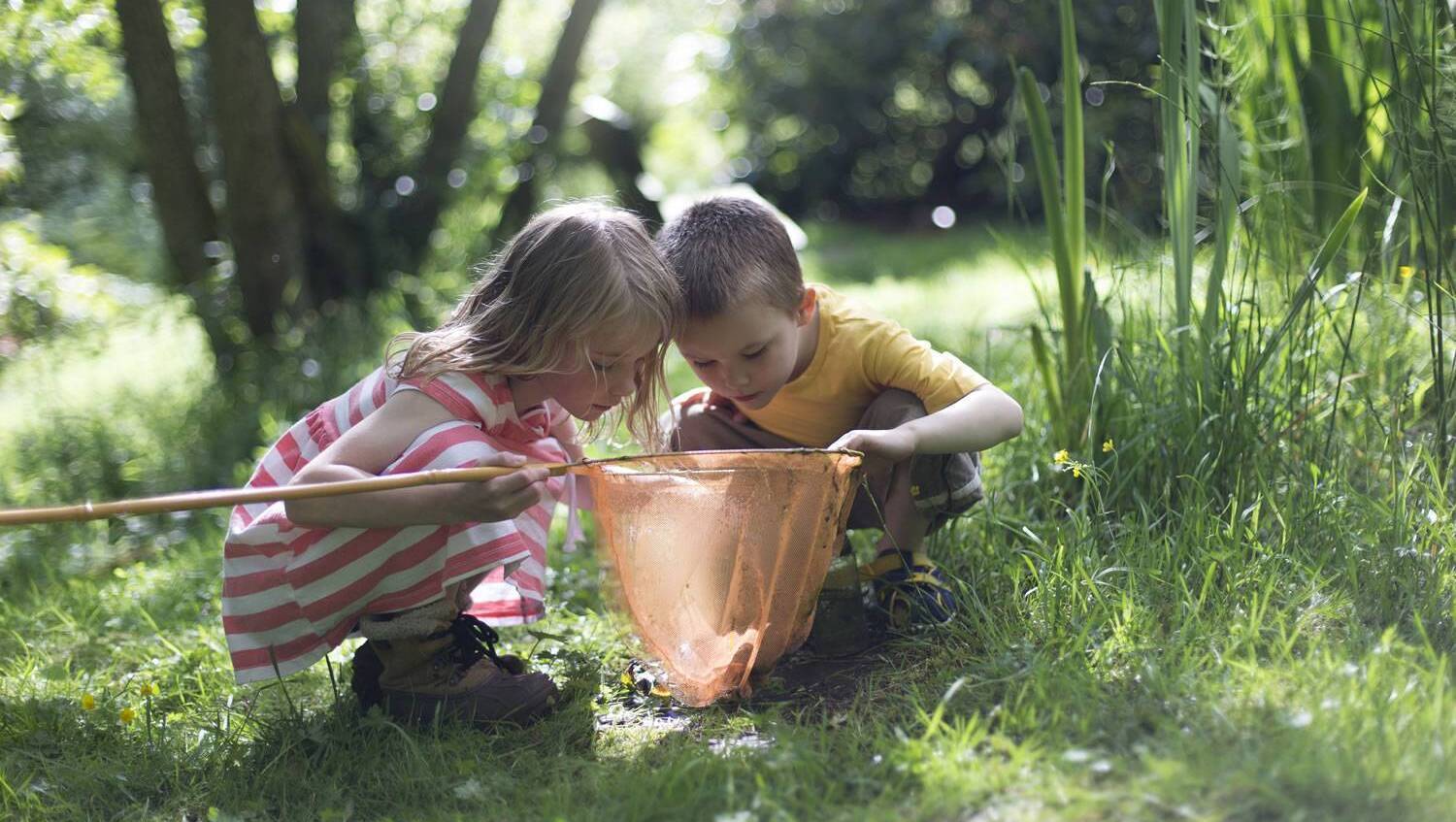
A recent study revealed that many children spend no time outdoors after school and at weekends, yet it is vital for their physical health and mental wellbeing
Picture: iStock 

Picture: iStock 

Normal school and working hours have resumed — it’s back to business as usual. And while you’re mostly glad to return to a more structured routine, you’re really going to miss some things — like the time and opportunity the school holidays gave for outdoor play.

You know the kids are happier when they’ve been out playing in the garden or running around the park. But when’s that going to happen — now that the typical what’s-the-next-thing-on-the-agenda hyper-focus has kicked off?

It is no surprise that a recent British study found more than a third of children don’t play outdoors after school — and one in five don’t even play outside at weekends.

Published in the journal Wellbeing, Space and Society, the study — involving more than 2,500 children aged between seven and 12 — found 34% don’t play outdoors on school days, with 20% not playing outside on weekends either.

Milica Atanackovic is “not at all” surprised by the study findings. As director of learning at Early Childhood Ireland, she says the organisation has for a long time been highlighting the decline in outdoor play.

Milica Atanackovic says outdoor play ‘supports curiosity and exploration’.

“Children’s lives are increasingly structured. Many are certainly having fewer opportunities for free outdoor play. And outdoor play is so important, not just for their physical health but for all aspects of their wellbeing. It supports curiosity and exploration.”

And with children’s increased use of screens often displacing time spent outdoors, Atanackovic points to “an increase in children feeling heightened anxiety, particularly at school age”.

Parents should play outdoors too

Psychotherapist and author Joanna Fortune says time spent playing outdoors and exploring nature helps children to grow and develop in myriad ways.

“It supports physical coordination and lowers stress, leaving children calmer and more focused. It nurtures curiosity and creativity, which are essential life skills.”

Fortune adds that it is “better again”, when parents play outdoors with their children, drawing all the same benefits for themselves as their children do. “Doing this also strengthens and enhances the parent-child relationship.”

Leesa Flanagan, a mum-of-two, worked for 20 years in early years education, and is founder of Many Mindful Ways, which teaches mindfulness to children and adults. “Sadly, the study findings don’t surprise me,” she says. “Children’s lives have become so much busier between homework, after-school activities, and the increase in screen time.”

Leesa Flanagan, founder of Many Mindful Ways

But she urges parents not to feel guilty — life is busy. “Instead, see the findings as an invitation to rethink what outdoor play looks like.”

Flanagan wants parents to remember two things about getting children outdoors: It doesn’t have to be complicated — “You don’t have to climb mountains or walk miles” — and it doesn’t require tons of time. “It doesn’t have to be the entire afternoon — it can be walking around the block or watering the plants together. Maybe watching the sunset or simply stopping to notice a bird, an insect, or the changing colours of the leaves.”

She says being outdoors supports both physical and emotional wellbeing, encourages movement, active play, and exploration, while also offering a sense of calm — and a welcome break from the busyness of everyday life.

“Nature is naturally mindful — it invites us to slow down, notice, and be present. Children are wonderful at this. While adults can be focused on the destination, children remind us to notice the journey — the puddle, the feather, the bird carrying food, the unusual stone, or the tiny bug crossing the path. You don’t have to teach a child to be mindful when they stop to watch a butterfly, listen to birdsong, or splash in a puddle — they’re already completely present in that moment. Perhaps we can take our cue from them — put the phone away, follow their curiosity, and simply explore and wonder together.”

With two daughters aged 23 and 18, Flanagan recalls always being intentional about bringing them out into nature to explore. “I got these opportunities as a child and I wanted to ensure my children did too.”

In particular, she was inspired by her younger daughter who was quite ill and spent time in hospital as a primary school child. “What really stayed with me was how much joy the outdoor hospital playground brought her — being able to step outside, feel the fresh air, play, notice the trees. It really lifted her spirits — and mine.

“It reminded me that nature — being outside — has an ability to restore us, even in challenging circumstances.”

And when children have been in crèche or school all day, nature is a great restorer, she says. “Being in nature allows open-ended play — there’s no right or wrong way to play. This freedom really supports their physical and emotional wellbeing. It gets them moving. They sleep better, their mood is better.”

Children reconnecting with nature

Speaking about Early Childhood Ireland’s Eco-Emotions project — ongoing for the last few years — Atanackovic says its central aim is to support young children to reconnect with nature and with themselves. “What we know and what we see is that children really thrive when they feel connected to nature, to themselves and to the people in their environment.”

Being in nature is powerful, she says — and very much so too when children and parents are there together. “Nature is so important for regulating our emotions and our behaviour — both children’s and adults’. So we can use the outdoors to co-regulate — to calm and soothe us, and to be more mindful.”

If we want children to grow up to care about the environment, we need to give them opportunities to love and experience it, says Atanackovic. “We need to see nature — not as somewhere children visit but as somewhere children belong. And realise they need more than knowledge about nature — they need a relationship with it. When they connect with nature, they connect more deeply with themselves and with those around them.”

To connect children into the simplicity of the world around them, they need to see, hear, smell, feel and touch it, Atanackovic says.

She suggests:

  • Sit and notice together: Sit or stand quietly outdoors with children for a short time. No questions to start, just notice. A bit later say, ‘I can hear the wind’, or ‘I notice the ground feels cold’.

“Stillness helps children feel calm, grounded and emotionally safe.”

Take a slow walk — in a garden, a yard, a park, or on the way somewhere. Let children stop when they want, look closely and stay curious.

“Slowness reduces stress and supports emotional regulation.”

  • Encourage them to discover
    in nature:
    Ask ‘what can you find?’. Something smooth, something cold, something that makes you smile or want to explore or makes you feel calm? What colours can you see, what smells can you smell?

“Even in an outdoor urban setting, invite them to look up for 10 seconds and see what they can see in the sky.”

  • Learn something new together: Wonder aloud about something you notice — ‘I wonder why that leaf is different?’ or ‘I wonder who lives here?’. You don’t need answers, curiosity is enough.

“Learning together builds connection, confidence and a love of discovery.”

  • Care for shared spaces: Involve children in gently caring for outdoor spaces by sweeping, tidying, putting tools away. Focus on the shared task, not the outcome.

“Being involved together builds belonging and pride.”

  • Follow children’s lead outdoors: Notice where children are drawn to — sitting on steps, digging in one spot, looking at stones. Allow time to stay with their interest.

“Following children’s lead supports agency and emotional security.”

Some of Flanagan’s fondest memories are ordinary moments outdoors with her own parents. “We sometimes underestimate how meaningful these experiences can become. If we want children to develop a lifelong connection with nature, the best place to begin is by giving them more opportunities to fall in love with being outdoors.”

More in this section

Cookie Policy Privacy Policy Brand Safety FAQ Help Contact Us Terms and Conditions

© Examiner Echo Group Limited