Sky Matters: Active research into enduring and complex question
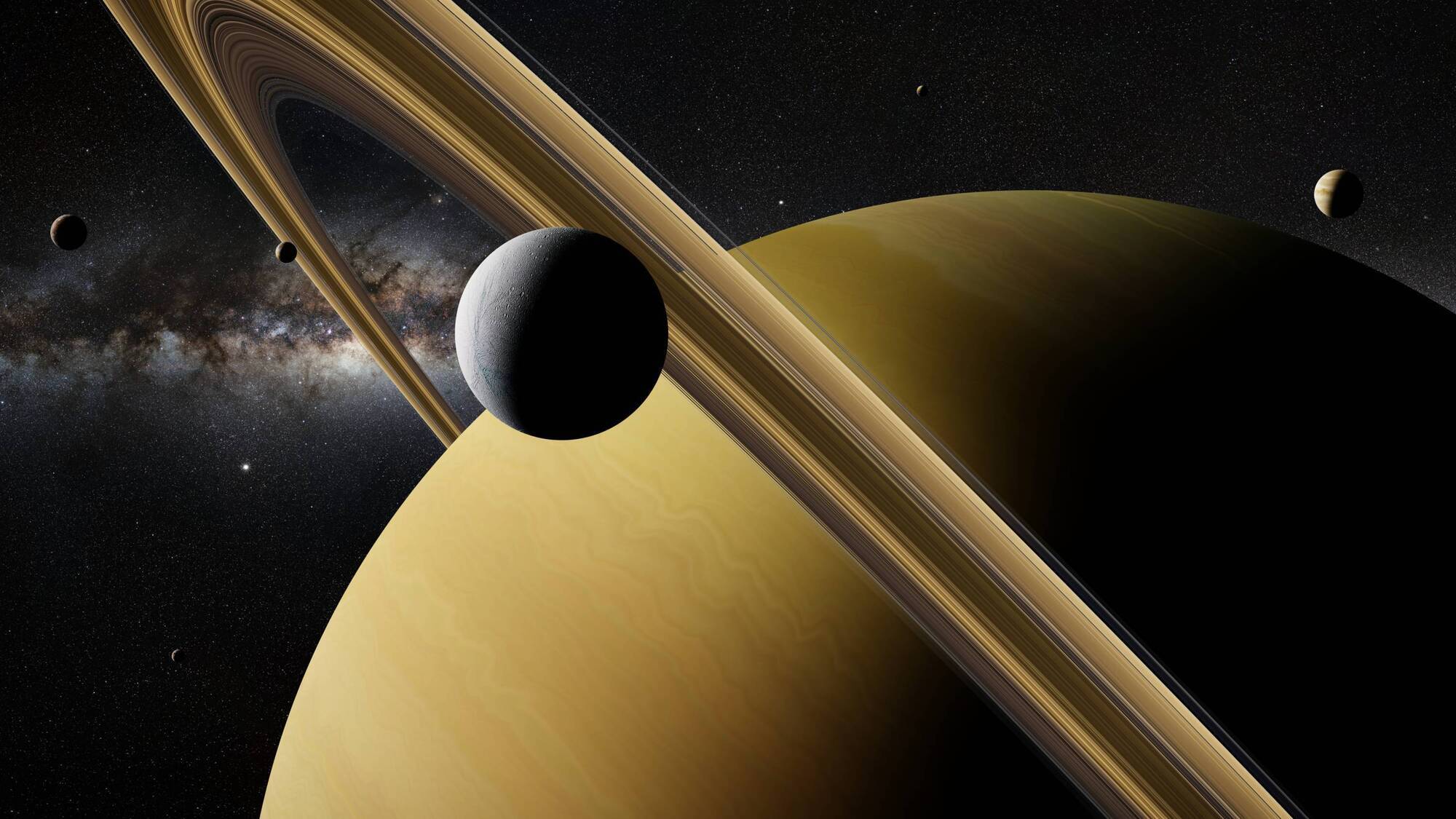
Saturn’s Moon Enceladus has active geysers that throw water vapour out into space from an underground ocean. Picture: iStock
The year 1976 is memorable to those of us of a certain age because it was one of the hottest on record. It was also the year when two identical NASA spacecraft (called Viking 1 and 2) landed on Mars with the primary goal of looking for evidence of life. There was a palpable sense of excitement about hopeful prospects of finally answering one of humanities greatest questions – are we alone?
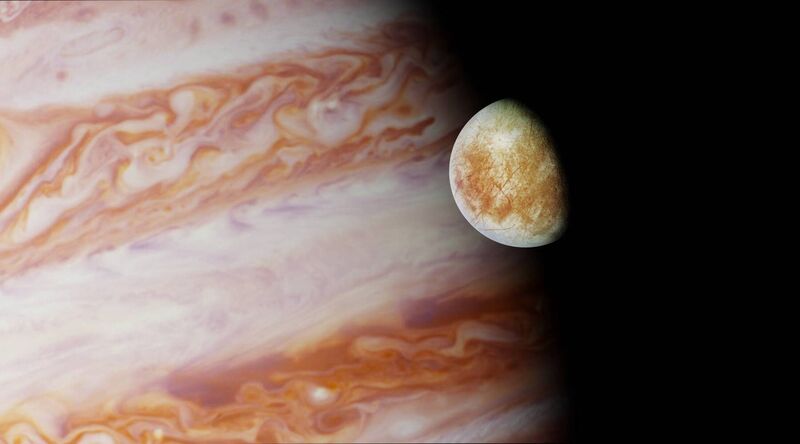
Neither Viking was able to answer that question and in the intervening fifty years the whole question of life in the universe has become so much more complex. In the year following the Viking landers, scientists discovered life in the deep oceans around super-hot thermal vents in the ocean floor, living from energy derived from chemical processes and not sunlight. The realisation that sunlight is not a prerequisite for life to survive challenged established views. So, when the Galileo spacecraft discovered a potentially salty ocean beneath the surface of Jupiter’s moon, Europa, in the 1990’s the idea that we might have been looking in the wrong place for life within our own solar system started to feed into the minds of researchers. Perhaps equally intriguing was the discovery that Saturn’s Moon Enceladus has active geysers throwing water vapour out into space from an underground ocean. Unlike Mars, which is now essentially frozen, Europa and Enceladus are actively being considered as targets for the search for existing life, something almost unimaginable in 1976.
In 1976 only nine planets (or eight, if you discount poor old Pluto) were known. In 1995 the first planet around a star like our Sun was discovered when Michel Mayor and Didier Queloz discovered 51 Pegasi b. By 2026, the number of such exoplanets had risen to 6500, but more importantly was the realisation that the number of planets in the Universe likely outnumbers that of the trillions of stars – a truly staggering statistic. We already see that planets come in a wide range of sizes, temperatures and chemistries. There thus appear to be previously discounted scenarios in which life might take hold. And recently, the idea that there are trillions of planets just wandering around without a parent star has begun to be discussed as a serious possibility. It’s not inconceivable that some of these lonely wanderers have chemical or nuclear reactions that are capable of supporting life, somewhat akin to life in deep ocean vents. There could literally be billions of worlds with liquid water – and perhaps life - which have never seen a sunrise!
There is also the possibility that life has evolved to an extent where it creates “technosignatures”. These could include electromagnetic waves (e.g., unintentionally from TV or radio, or intentionally from powerful lasers where the intent is to signal one’s presence), or pollution in an atmosphere from industry, or lights on the nighttime side of a planet, or even mega-structures that are so vast they can be observed as they blot out the light from distant stars. There is active research covering all of these.
When Galileo turned his telescope skywards towards Jupiter in 1610, he observed four points of light which moved from one night to the next. He hypothesized that these were small objects moving around a larger object. By upending centuries of belief in western cultures that the earth is at the centre of the universe and everything revolves around us, he paid a hefty personal price. His observations effectively relegated Earth’s presumed pre-eminent position in the cosmos. One of those points of light is the aforementioned moon Europa. In a somewhat ironic twist, Galileo had unknowingly discovered another world on which life itself might exist, adding to his previous damning evidence about our place in the cosmos.
On September 8, the Moon and Jupiter will form a close pairing in the morning sky. A pair of binoculars will reveal those four Galilean Moons, including Europa - and an opportunity to spy on a distant, possibly inhabited world. Time will tell.

CONNECT WITH US TODAY



Be the first to know the latest news and updates