Ireland’s 2025 environmental review — and a look ahead to 2026

There has been a notable shift in how nature is discussed. Peatlands, wetlands, hedgerows and rivers are increasingly recognised not as marginal spaces, but as critical infrastructure that are storing carbon, regulating water and supporting biodiversity.
Looking back on Ireland’s environmental record in 2025, it is tempting to frame the year as one of contradiction. Progress and stagnation coexisted; ambition ran ahead of delivery; evidence accumulated faster than action. Yet contradiction is perhaps the wrong word...
What 2025 really offered was clarity. Across climate, water quality, biodiversity and land use, the signals were consistent and increasingly difficult to soften. Ireland knows where its environmental pressures lie. The challenge is no longer diagnosis, but response.
Ireland did not experience a single defining climate disaster in 2025, but that may be precisely the point. Instead, the year was marked by warmer-than-average conditions, longer dry spells punctuated by intense rainfall, and recurring flood impacts in already vulnerable communities. These were not anomalies, but expressions of a changing baseline.
Climate change in Ireland now operates less as a headline-grabbing event and more as a persistent context, which is shaping agriculture, water management, infrastructure planning and ecosystem resilience simultaneously. This slow accumulation of pressure is harder to dramatise, but far more disruptive over time.
Crucially, climate impacts did not arrive in isolation. They interacted with existing environmental stresses, amplifying problems that were already present.
Nowhere is this interaction clearer than in Ireland’s ongoing struggle with water quality. Data from the Environmental Protection Agency continue to show that more than half of Ireland’s rivers, lakes and estuaries fail to meet satisfactory ecological standards.
Nutrient enrichment remains the dominant pressure, with agriculture the primary source.
This reality places Ireland’s long-standing derogation under the EU Nitrates Directive in sharp focus. The derogation, which allows higher stocking rates than those permitted in most Member States, has been justified on the basis of Ireland’s grass-based farming system.
Yet by 2025, the environmental outcomes associated with that system were increasingly difficult to reconcile with the claim of sustainability.
Importantly, this is not a story of blame. Irish farmers have operated within the rules set for them, often engaging seriously with nutrient management and water protection measures. But the evidence suggests that efficiency gains alone cannot offset the pressures associated with scale and intensity.
The derogation debate has therefore become less about compliance, and more about whether Ireland is prepared to confront the limits of its current model.
Biodiversity continued to fare poorly in 2025, a fact reflected in both national assessments and European reporting. Habitats remain fragmented, species in decline, and ecological recovery slow even where pressures are reduced.
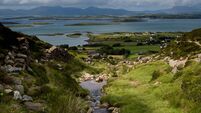
There has, however, been a notable shift in how nature is discussed. Peatlands, wetlands, hedgerows and rivers are increasingly recognised not as marginal spaces, but as critical infrastructure that are storing carbon, regulating water and supporting biodiversity. Large-scale peatland restoration projects expanded in 2025, and while progress remains uneven, the direction of travel is unmistakable.
The challenge lies in translating recognition into consistent, long-term delivery, particularly where land use decisions intersect with livelihoods and local identity.
Ireland’s climate governance framework is now robust by international standards. Carbon budgets, sectoral ceilings and legally binding targets are firmly in place.
The Climate Action Plan continues to evolve, offering a roadmap across energy, transport, buildings and agriculture. Yet projections released in 2025 showed Ireland still off track to meet its 2030 emissions targets without additional measures. This gap does not reflect a lack of planning, but the difficulty of delivering structural change at the pace required.
Transitioning energy systems, reshaping transport patterns and rethinking land use are complex undertakings, socially as much as technically.
What made 2025 distinctive was not the emergence of new environmental problems, but the narrowing space for denial or deferral. The reports were consistent. The data were clear. The consequences increasingly visible.
Ireland’s environmental challenges are not the result of ignorance or indifference. They are the product of difficult trade-offs, incremental decisions and, at times, a reluctance to confront limits head-on.
And yet, 2025 also offered grounds for cautious confidence. Public engagement with environmental issues remains high. Scientific capacity, monitoring networks and policy frameworks are stronger than ever.
Crucially, there is growing recognition that climate action, water protection and biodiversity restoration are not competing agendas, but interconnected ones.
The conversations now unfolding (about farming intensity, peatland futures, water quality and climate responsibility) are more mature, more informed and more honest than they were even a decade ago. That matters.
If progress in 2025 was slower than the science demands, it was not directionless. The path forward is clearer than it has ever been. Whether Ireland chooses to walk it decisively will define not just future reports, but the landscapes, waters and ecosystems that those reports describe.
CLIMATE & SUSTAINABILITY HUB