Anja Murray: Sprat overfishing threatening seabird populations

A puffin's bill, stuffed with a neat row of sand eels to feed rapidly growing pufflings. Picture: Richard-T-Mills
It's holiday time for many, with seaside adventures top of the list for outdoor activities. But we are not the only species to flock to Irish coastlines during the summer months.
As many as three-quarters of a million birds gather at seabird colonies right around the Irish coast every year, mostly located on rugged coastal cliffs or offshore islands.
Kittiwakes, gannets, fulmars, razorbills and guillemots can be seen flying to and from cliff ledges where they nest, now tending to growing chicks and teaching fledglings how to catch fish.
Peering across at these spectacular high-rise colonies is always absorbing, as is watching gannets from the shore as they soar low over inshore waters, scanning beneath the waves for small fish such as sand eels and sprat as well as mackerel, pollack and herring.
Manx Shearwaters can be seen flying low over the waves and diving to catch small fish to feed their young.
These epic migrants spend their lives out on the open ocean, only returning to land to breed each summer. Pairs settle back into their underground burrows each year, loyal to each other and their annual nesting site. With just one chick per pair, childcare is taken in turns. When one of the pair flies far out to sea to feed, they’re gone for four or five days at a time.
The fluffy chicks spend about two months in the burrow, fattening up on a supply of fresh herring and sand eels from their parents. Once they’re big enough to fledge, the parents go back out to sea, leaving the chick alone to fend for itself.
Not only do the young birds succeed in adjusting to life outside the burrow, all on their own, but they manage to find their way from these shores all the way to Argentina and Brazil, more than 8,000 kilometres away. In a few years’ time, chicks born here will return to the very burrow where they themselves started out.
Puffins are another of our beloved seabirds who spend most of their lives out on the North Atlantic, returning to shore each summer to rekindle long-term pair bonds and rear a chick in a burrow. Incredible photos abound of puffins and their comically colourful bills stuffed with a neat row of sand eels to feed rapidly growing pufflings.
Bringing lots of little fish at once means fewer trips ashore, a sensible strategy to minimise the risk of being eaten by something else as they come and go.
About now, in July, pufflings have grown enough to venture outside their burrows and have a look around. Soon they will dive into the sea and be gone from these shores until sexually mature and ready to return here to breed themselves.
But populations of these seabirds are plummeting. Commercial fishing is considered the biggest threat.
Overfishing depletes their food supply, and activities such as bottom trawling damage benthic habitats too, which means that fish spawning grounds are damaged to the extent that populations don’t bounce back easily.
On top of historic and existing pressures, there is now massive concern about sprat fisheries off the coasts of Cork and Kerry.
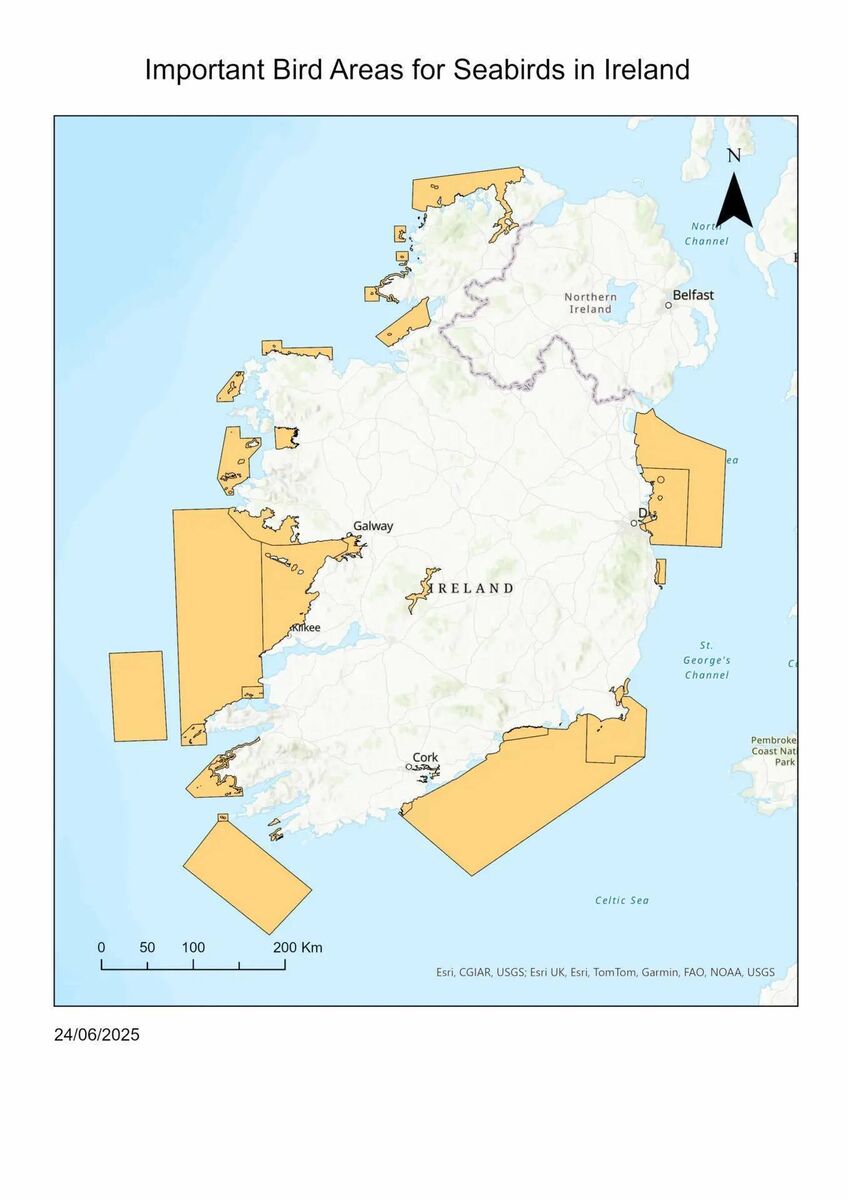
Both sprat and sand eel are plankton-eating fish, meaning that they are a crucial basis for marine food chains. They are a primary food source for Manx Shearwaters, puffins, kittiwakes, razorbills, gannets and Arctic terns, all of which are red or amber listed as birds of conservation concern in Ireland.
The survival and breeding success of puffins and all these other seabirds depends on the abundance of these small, plankton-eating fish. Sand eel and sprat also sustain hake and cod, key fishery species here.
Even some of the largest creatures in the ocean, humpback whales, rely on sprat as they travel through Irish waters each year. These whales have been hunted and persecuted for centuries, the beginnings of a recovery in their population is a beacon of hope for many.
But now, scientists suspect that these great whales, who travel thousands of miles to Irish waters, are now malnourished because sprat is being overfished.
Much of the catch of these small, plankton-eating fish is used to produce feed for the salmon farming industry.
Irish and international conservation organisations, along with inshore fishers, have been calling for proper regulation of the sprat fishing industry for many years.
A move to exclude vessels over 18m from trawling in inshore waters inside the six-mile limit was almost introduced in 2020, in an attempt to limit the damage from sprat fishery and ensure sustainable fisheries for all. The measure was challenged in the courts and overturned. Now the ecological ramifications are being felt throughout these waters.
Minister of state for nature and biodiversity, Cork South West Fianna Fáil TD Christopher O’Sullivan, has in the past been a vocal supporter of marine sustainability.
Communities from Kinsale and Bantry Bay and around to Mizen Head, coordinated under the banner of a ‘Save Our Sprat’ campaign, are pressing for urgent action to halt the further annihilation of inshore sprat. It is widely hoped that action will be taken before trawling for sprat recommences in September.
For strategic, long-term protection and management of marine habitats, Marine Protected Areas (MPAs) are the way to go. When paired with evidence-based strategies to restore habitats, fish and bird populations, MPAs can allow the recovery of many habitats and species, along with the viability of sustainable marine economies.
However, just last week, news of a move within government to dismantle long-awaited MPA legislation has alarmed marine scientists and conservation groups. The Marine Protected Areas Bill has been imminent since 2021.
There were several occasions in which it was announced, then stalled by inexplicable delays. According to Sorley McCaughey of Fair Seas, Taoiseach Micheal Martin specifically committed, in writing, to ensure that the next government will implement the MPA Bill as soon as possible.
Now is crunch time. While politicians wriggle out of commitments to protect the marine environment, populations of treasured seabirds, fish and marine mammals continue to plummet. None of this is acceptable.


CONNECT WITH US TODAY



Be the first to know the latest news and updates