Richard Collins: Is the swallow an African bird coming here to breed, or is it a European one spending its winter holidays in the warmer south?
Does the fact that more ornithologists live in the northern hemisphere make a difference to answering this question?
Richard Collins: Is the swallow an African bird coming here to breed, or is it a European one spending its winter holidays in the warmer south?

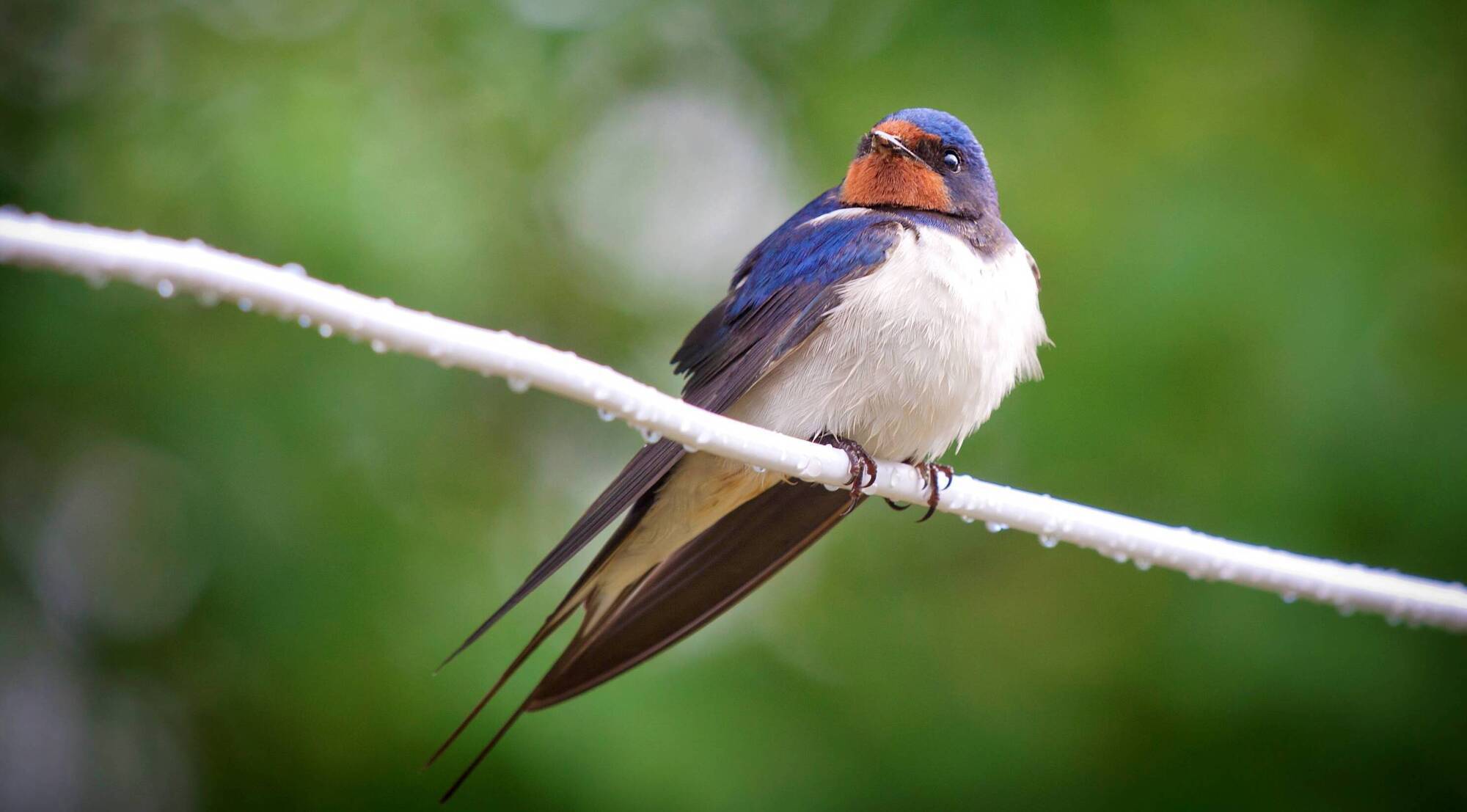
Is the swallow, fundamentally, an African bird which comes here to breed, or is it a European one that spends its winter holidays in the warmer south? This might seems a ridiculous question, but it’s debated by ornithologists, led by the American scientist John Rappole

Be it ever so humble, there is no place like home — Henry Bishop

Home is not just a geographical location. It’s that special place where one belongs and feels most secure; ‘Bás in Eireann’ is the great Irish toast. But, do wild creatures also yearn for home?

Being rooted to a place makes practical sense. Knowing the local ropes offers survival and reproductive advantages. Food, shelter, and places to nest, are easier to find when you know where to look. Knowing who’s who among the neighbours is important and, when coping with troublesome predators and the local cats, ‘the devil you know is better than the devil you don’t’. Not surprisingly, therefore, the swallow, having travelled thousands of kilometres, returns to the same barn year after year. Do those great ocean wanderers, the whales, also have a sense of ‘home’?

But is the swallow, fundamentally, an African bird which comes here to breed, or is it a European one that spends its winter holidays in the warmer south? This might seems a ridiculous question, but it’s debated by ornithologists, led by the American scientist John Rappole. A new terminology has been invented. The ‘Southern home’, or ‘bottom-up’, model considers a bird’s ecology from its African, or South American, perspective, while the ‘Northern home’, or ‘top down’, approach adopts a Eurasian and North American focus.

Supporters of the bottom-up model point out that most ornithologists live in the northern hemisphere. Research, they complain, is too focused on migrants’ northern lifestyles, their sojourns in the south being overlooked as temporary respites.

Less than a quarter of the life of a European Cuckoo is spent in Europe. Picture: Edmund Fellowes/ BTO.org

The so-called ‘European’ cuckoo is a typical example. Its ‘home’, as the name implies, is deemed to be here. But ‘our’ cuckoos only arrive in April and adults depart for Africa in July. Less than a quarter of their lives are spent in Europe. GPS tagging has shown that cuckoos take widely differing routes when migrating. Some skirt the Atlantic coast, others cross the Sahara and Sahel directly. Individuals may be thousands of kilometres apart from each other during these journeys, but they all seem to converge on an area of the Congo, their winter ‘home’.

The ‘European’ swift, likewise, arrives here in May and leaves in August. It doesn’t even stay long enough to grow a new set of flight feathers and won’t moult until it’s at ‘home’ back in Africa.

But the Southern home model doesn’t suit all migration patterns. Our warbler visitors, for example, generally winter in Africa but they don’t breed south of the Sahara. The land area of the northern hemisphere is much more extensive than that of the south so, surely, these migrants’ true ‘home’ is here. Their migration patterns, however, may have developed comparatively recently.

Depictions of animals in ancient African rock art show that the area we call the Sahara was green savanna up to a few millennia ago. With ice covering most of the northern land mass, birds’ migratory journeys would not have been so extensive. As the ice melted, and the Sahara desert developed, the migratory terminals gradually became widely separated. Our warblers come from a broken ‘home’.

So, are ornithologists cultural imperialists?

Bird Migration: A New Understanding by John Rappole

  • Mike Toms. John Rappole, Bird Migration: a New Understanding. Ringing & Migration. 2023

x

More in this section

Revoiced

Newsletter

Sign up to the best reads of the week from irishexaminer.com selected just for you.

Cookie Policy Privacy Policy Brand Safety FAQ Help Contact Us Terms and Conditions

© Examiner Echo Group Limited