DR Congo to open three Ebola treatment centres as rare strain spreads
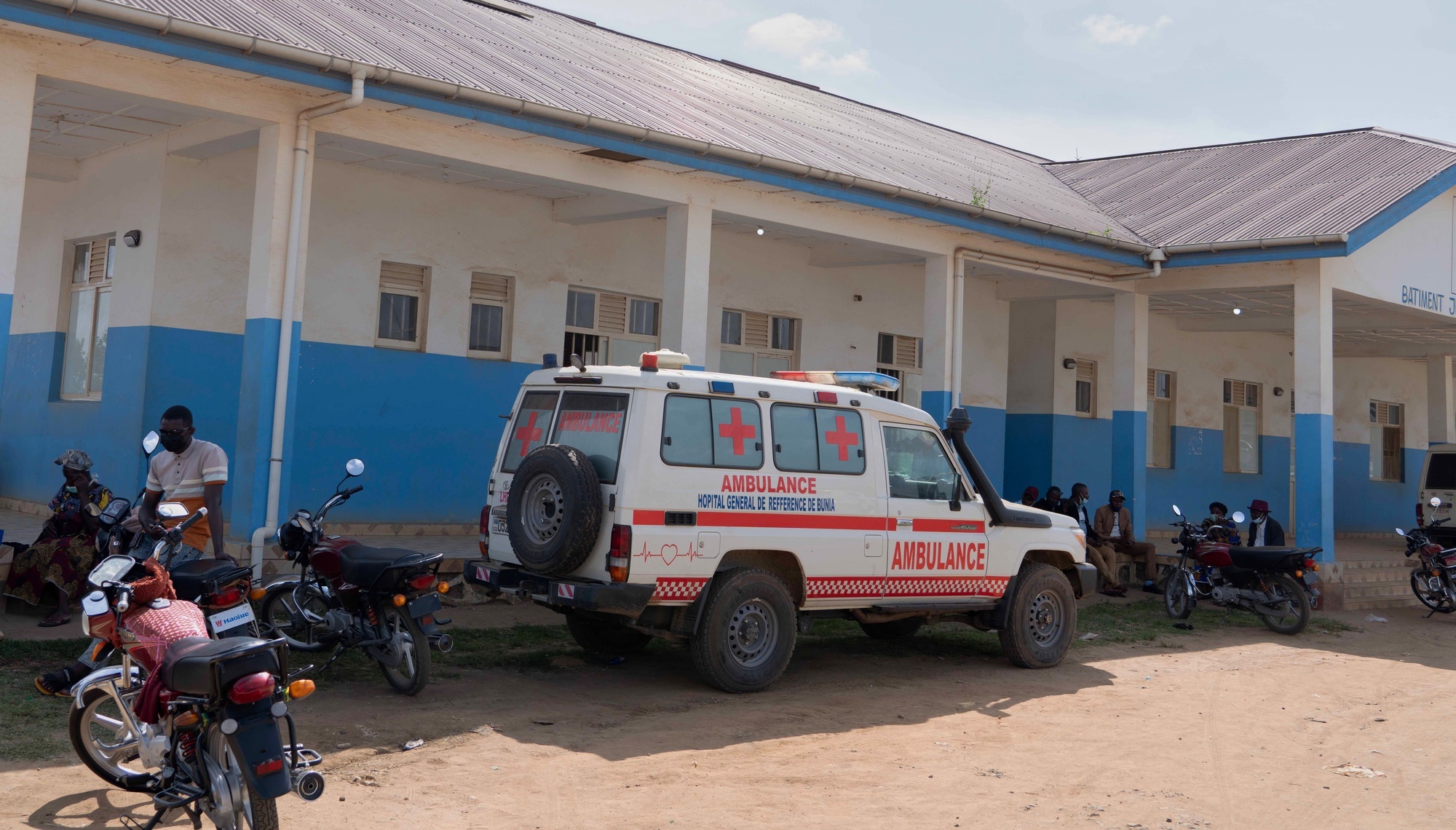
The outbreak is centered in the eastern Ituri province (Dirole Lotsima Dieudonne/AP)
The Democratic Republic of the Congo will open three treatment centres for the Ebola virus in the eastern Ituri province following an outbreak of a variant that has no approved therapeutics or vaccines.
The news came as the World Health Organisation (WHO) has sent a team of experts and supplies to help combat the spread of the disease.
“We know that the hospitals are already under stress because of the patients,” Samuel Roger Kamba, the Congolese health minister, said during a visit to Bunia, Ituri’s capital and largest city, on Sunday.
Read More
“But we are preparing to have treatment centres at all three sites in order to be able to expand our capabilities.”

WHO declared the Ebola disease outbreak a public health emergency of international concern, after more than 300 suspected cases and 88 deaths in Congo and two in neighbouring Uganda.
Although the outbreak is centered in Congo’s Ituri province, cases have been reported in the capital, Kinshasa, and in Goma, the largest city in the country’s east.
The international health organisation warned on Monday that the virus was affecting people in conflict-affected areas in Congo, posing an additional risk to health workers.
CBS News reported on Sunday that at least six Americans had been exposed to the Ebola virus in Congo.
US health officials said on Sunday that the risk to Americans was low, but did not directly answer questions about whether any Americans may have been exposed to the Ebola virus in Africa.

The US centres for disease control and prevention (CDC) issued travel advisories on Friday, urging Americans traveling in Congo and Uganda to avoid people who had symptoms such as fever, muscle pain and rash.
The CDC also said it was “putting in appropriate measures for identifying individuals with any symptoms” at ports of entry.
Ebola is highly contagious and can be contracted through bodily fluids such as vomit, blood, or semen.
The disease it causes is rare, but severe and often fatal.
Health authorities say the current outbreak, first confirmed on Friday, is caused by the Bundibugyo virus, a rare variant of the Ebola disease that has no authorised vaccines or treatments.

Although more than 20 Ebola outbreaks have taken place in Congo and Uganda since 1976, this is only the third time that the Bundibugyo virus has been detected.
The US CDC says the Bundibugyo virus causes fever, headache, muscle pain, weakness, diarrhoea, vomiting, stomach pain, and unexplained bleeding or bruising.
Dr Gabriel Nsakala, a professor of public health who has been involved in past Ebola outbreak responses in Congo, said treatments for viral infections such as Ebola were often directed at symptoms.
He said Congo had extensive experience managing Ebola outbreaks, but that response efforts could be complicated by the unusual strain.
The Bundibugyo virus was first detected in Uganda’s Bundibugyo district during a 2007-2008 outbreak that infected 149 people and killed 37.
The second time was in 2012, in an outbreak in Isiro, Congo, where 57 cases and 29 deaths were reported.

The WHO regional office for Africa wrote on Sunday on X that a team of 35 experts from WHO had arrived in Bunia, along with seven tonnes of emergency medical supplies and equipment.
The Africa centres for disease control and prevention (Africa CDC) said the first cases were reported in Mongwalu health zone, a high-traffic mining area in Ituri.
Ituri is in a remote eastern part of Congo, with poor road networks, and is more than 620 miles (1,000km) from the nation’s capital, Kinshasa.
Eastern Congo has been grappling with a humanitarian crisis even before the new outbreak was confirmed.
The agency said there was also a risk of further spread due to intense population movement and attacks by armed groups that have killed dozens and displaced thousands in parts of Ituri in the past year.
“The outbreak is currently occurring in provinces marred by crisis, including insecurity, presence of armed actors or de facto authorities with large displacement, weak health systems and insufficient availability of services,” the WHO said on Monday.

It added that since January 2025, there had been 44 attacks on healthcare facilities in Congo and 742 incidents affecting humanitarian workers.
The WHO’s emergency declaration is meant to spur donor agencies and countries into action.
By the agency’s standards, it shows the event is serious, there is a risk of international spread and it requires a co-ordinated international response.
Jean Kaseya, director-general of the Africa CDC, told Sky News on Sunday that he was in “panic mode” because of a lack of medicines and vaccines as deaths rose, but that some candidate treatments were anticipated in the coming weeks.
Rwanda closed its land border with Congo on Sunday, the US state department said on social media.

CONNECT WITH US TODAY



Be the first to know the latest news and updates