Sea level rise could cost EU and Britain nearly €872 billion by end of this century
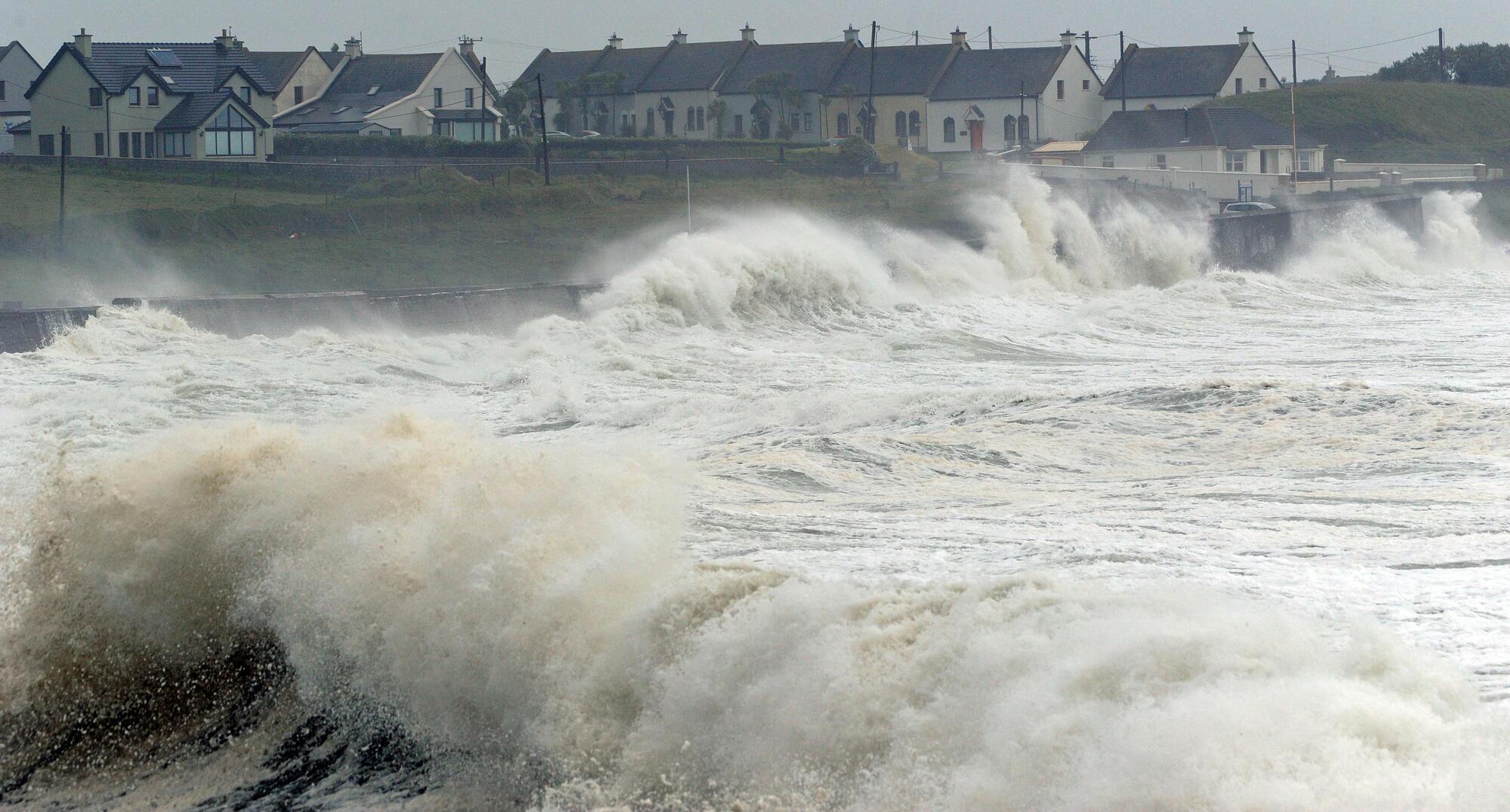
Some coastal regions could face having entire industries relocated. The authors calculated a tiny benefit to inland areas which could see a boost in GDP of 1% from people moving away from the sea, but this was dwarfed by the loss projected in coastal areas. Picture: Denis Minihane
Sea level rise could cost the EU and Britain up to €872 billion by the end of the century, with coastal economies likely to suffer most, a study has found.
Low-lying regions such as Veneto and Emilia-Romagna in Italy and Zachodniopomorskie in Poland could face a devastating 21% loss in GDP.
Other areas projected to see heavy economic losses were around the Baltic Sea, the Belgian coast, western France and Greece.
Modelled by economists from Delft University of Technology, the researchers said they wanted to help quantify the effects of sea level rise. They used what is considered to be the worst-case scenario, where countries continue emitting greenhouse gases at a high rate in the coming decades, leading the Earth’s climate to warm by around 5°C above pre-industrial levels by 2100 and creating about 1.5m of sea level rise.
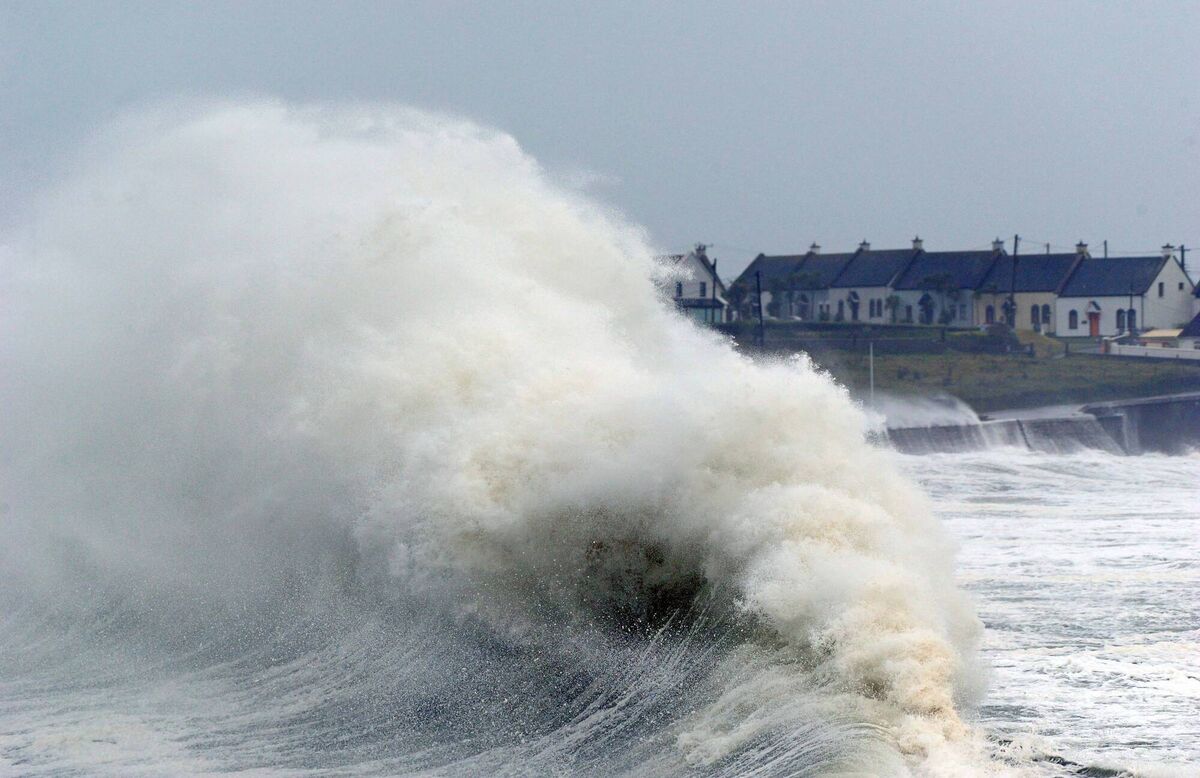
Scientists consider this scenario to be unlikely given that many nations have set net-zero targets and are beginning to switch to renewable energy. Current estimates put the Earth on track for around 3°C of extra warming, which would still be catastrophic. The study authors said they did not take into account the potential effect of tipping points, where Arctic sea ice or the Greenland ice sheets start melting uncontrollably. They also accounted only for sea level rise and not any other climate hazards that could overlap and cause extra economic damage.
Our new study in @SciReports https://t.co/7AhEDYyQEE shows that economic #damages of #climate-induced #SLR are higher than previously estimated. National damages mask the true costs of climate-induced #SLR that could be an order of magnitude higher. https://t.co/pgdnBbANtN pic.twitter.com/g7nOwsrq07
— Tatiana Filatova (@TanjaFilatova) January 19, 2024
Professor Tatiana Filatova, one of the study authors, said: “Understanding which sectors and regions are hit most helps to design tailored private and public adaptation strategies. If we proactively prioritise investments in both economic development of certain industries in specific regions, as well as in local adaptation, it will really help us building climate resilient economies. It also allows exploring regional economic trade-offs of different adaptation policies, including, for example, understanding whether partial or universal retreat makes sense and how to deal with disinvestment of certain industries from certain locations.”
The authors emphasised that their model, which looked at 271 European regions, shows how each area will be affected to a different degree and will require need solutions. While the overall effect is negligible — a 1.26% loss of GDP across Europe — some coastal regions could face having entire industries relocated.
The authors calculated a tiny benefit to inland areas which could see a boost in GDP of 1% from people moving away from the sea, but this was dwarfed by the loss projected in coastal areas.
Professor Chris Hilson, a climate scientist at the University of Reading, said the research misses a climate justice element — that sea level rise could exacerbate existing inequalities as money is spent on defending areas valuable to a nation’s economy but other poorer regions have their population displaced.
He said: “In making cost-benefit analysis-based assessments on where to focus country climate adaptation spending, there is a danger that the money will all be directed at wealthy, high GDP areas. But, as academic scholarship on managed retreat has shown, the risk is that poorer communities will be the ones singled out for relocation inland. In other words, the already marginalised become further marginalised.”

CLIMATE & SUSTAINABILITY HUB
CONNECT WITH US TODAY



Be the first to know the latest news and updates