Islands of Ireland: Fishtrap and kelp industry relics at Illaunacullin, County Cork
Medieval fishermen would have been busy at this West Cork swampland island as fish was a diet staple and this island's layout meant it was handy for catching fish
Islands of Ireland: Fishtrap and kelp industry relics at Illaunacullin, County Cork

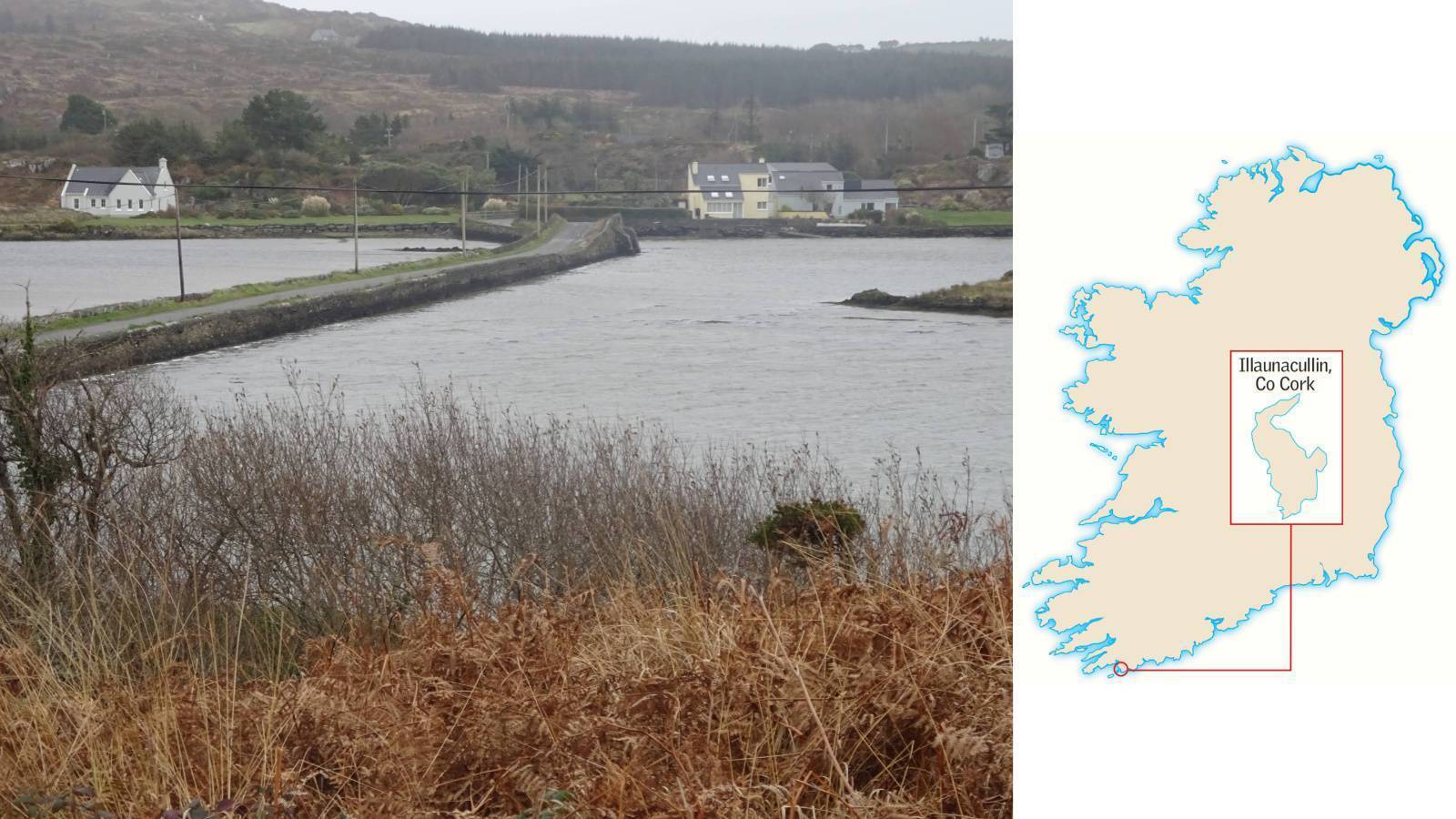
The Causeway from Ringarogy, County Cork, separating Illaunacullin from the estuary of the Ilen. Picture: Dan MacCarthy

For this swampland where there is probably enough mud to fill Croke Park five times over, there is still surprisingly enough of interest to the historian or archaeologist. This area is the estuary of the River Ilen which flows from the hills above Dunmanway through Skibbereen to enter the sea at Baltimore.

The estuary is dominated by the comparatively huge Ringarogy which is connected to the mainland by a causeway. At its eastern edge is the minute Illaunseer, possibly the burial site of the famous medieval architect, the Goban Saor. On the other side of the causeway is Tinker’s Island which has a major prehistoric monument in the shape of a passage tomb.


This is part of Carbery’s Hundred Isles around Roaringwater Bay in West Cork but Thomas Davis, the author of the famous poem, 'The Sack of Baltimore' (from which the phrase was taken), was a little bit given to exaggeration. There are, in truth, in the vicinity of 40 to 50 islands, some submerged at high tide, others mere semi-islets.

Also next to Ringarogy is the heather-covered Illaunacullin, not to be confused with another much more famous island of the same name, aka Garinish Island at Glengarriff. This Illaunacullin has no Martello tower, no Italianate gardens, or avenues of mahogany and gum trees, but its purple heather, alive with bees in the summer, gives it its own majesty.

It does have a monument recorded in the national database on archaeology.ie. It is situated in the narrow channel between the island and the mainland where the main road from Baltimore to Skibbereen runs. More exactly, this is in the townland of Lackaghane which means “a place abounding in flags or flagstones". And tellingly, that is precisely the wording used to describe the fishtrap next to Illaunacullin.

“It comprises two arms of stone (scatter of flagstones and slatey siltstone) that were constructed by vertical insertion of stone flags to form a wall-type structure; both arms formed an arc with 10m gap between them at deepest part of water flow that may have accommodated a basket of wicker. No wooden stakes evident.”

The record goes on to state that the stones are in a state of near collapse. It further suggests the site might have been reused in later times (from about the 18th century onwards) as a kelp grid to accommodate local seaweed industry. It is unable to pinpoint the time the fishtrap was first used but an educated guess suggests around the 13th century. Its orientation is northwest to southeast allowing for an optimum method of catching fish. The narrowness of the channel at this point would have been another advantage for the medieval fishermen.

Studies have shown that the use of medieval coastal fish weirs as a method of providing a staple diet seems to have peaked in the seventh and eighth centuries and “possibly again between the 12th and 14th centuries”.

One of the main areas fish weirs were employed was in the rivers in the southeast of the country: The Suir, the Nore, the Barrow, and the Slaney.

The earliest known fish weir was found in the Fergus Estuary in County Clare (which has several other such examples from later centuries) and dates to the period 442 and 644. The post and wattle fence was 11m in length indicating a relatively sophisticated group. Salmon and eel would have been the principal targets for the medieval fishermen operating in the intertidal zone. And once trapped the fish could be retrieved by nets, spears or gaffs.

“Medieval fisheries were an important source of food, income, wealth and power. Fish weirs provided food for domestic consumption and fish for sale at local markets and fairs. The fish could also have been preserved by smoking, salting or drying,” according to Antiquities of Rural Ireland.

It is probable that other fishweirs are located in the lag but it is a near certainty that they will not be found unless sea levels drop a couple of metres. As we know well, the opposite is the case.

How to get there: Kayak from the causeway at Ringarogy.

Other: archaeology.ie

logainm.ie

Antiquities of Rural Ireland, Muiris Ó Súilleabháin et al, Wordwell

More in this section

Revoiced

Newsletter

Sign up to the best reads of the week from irishexaminer.com selected just for you.

Cookie Policy Privacy Policy Brand Safety FAQ Help Contact Us Terms and Conditions

© Examiner Echo Group Limited