St Declan's Way: Experience scenery, saints and stories in Ardmore
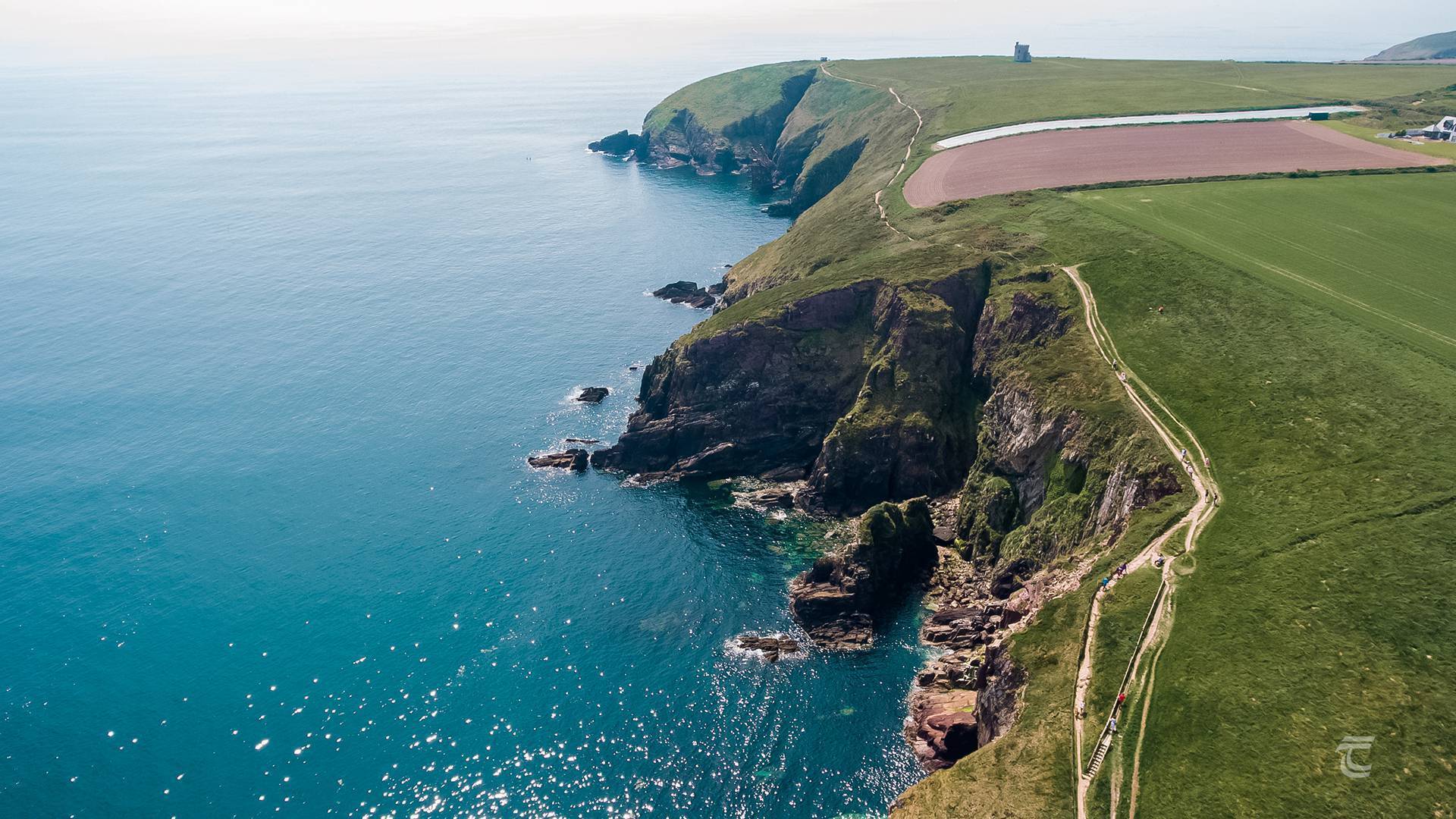
Aerial view of Ardmore Cliff Walk by Tuatha.ie
St Declan of Ardmore is one of the pre-eminent figures in the early Irish Church. Much of what we know of Declan comes from texts written centuries after his life. These texts are hagiographical in nature, and often coloured by their contemporary politics. According to his Life, Declan was one of four saints (along with Ailbe of Emly, Ciarán of Saigir, and Abbán of Moyarney) who preached the Gospel in Munster before Patrick arrived in Ireland. In one story, Declan and Patrick met at Cashel, and this event is commemorated today in a long-distance trail known as St Declan’s Way.
Though the story of Declan preaching Christianity before Patrick has to be taken with a reasonable pinch of salt, we do know that the Déise of Waterford in particular were more likely to have had prolonged contact with Christianity than many of their rival tribes from elsewhere in Ireland. The Déise inhabited parts of west Wales, and would have connected Munster to Christian communities in Roman Britain through trade and movement. That aside, it is important to never take hagiographical writing about early Irish saints at face value. The focused writing on him in the 12th century may be seen as part of the competition between Ardmore and Lismore. This competition was driven over which monastery would be appointed as the episcopal see, gaining power, prestige, and wealth along with the role of bishop. It was a struggle that Lismore eventually won.
Despite this, Declan's monastery at Ardmore has long been a place of significance. Declan became a key devotional figure who inspired pilgrimages for centuries, with large crowds that gathered every year for his feast day on July 24. For those who would find the 100+km Declan's Way a challenge, the comparatively bite-size Ardmore Cliff Walk is a wonderfully elemental experience, that combines stunning scenery and fascinating heritage. The walk begins just past the carpark of the Cliff House Hotel. The first monument you will encounter is the ruins of St Declan’s Church that may date to the late medieval period, (though it is said to be positioned on the site that St Declan retreated to as a hermit near the end of his life).
Next to the church you can also see St. Declan’s Well, with its interesting late-medieval crosses on top. As you walk along the trail, on a clear day the Minehead Lighthouse can be seen in the distance, and also the shipwreck of the Samson, a construction ship that was driven against the cliff in a storm in 1988 (all of the crew survived).
The Ardmore Cliff Walk also gives wonderful opportunities to discover a little of the natural heritage of Ireland’s eastern coast. If you are fortunate you may spot dolphins or basking sharks. Seabirds such as kittiwakes, sand martins, rock pigeons, and choughs may also make an appearance.
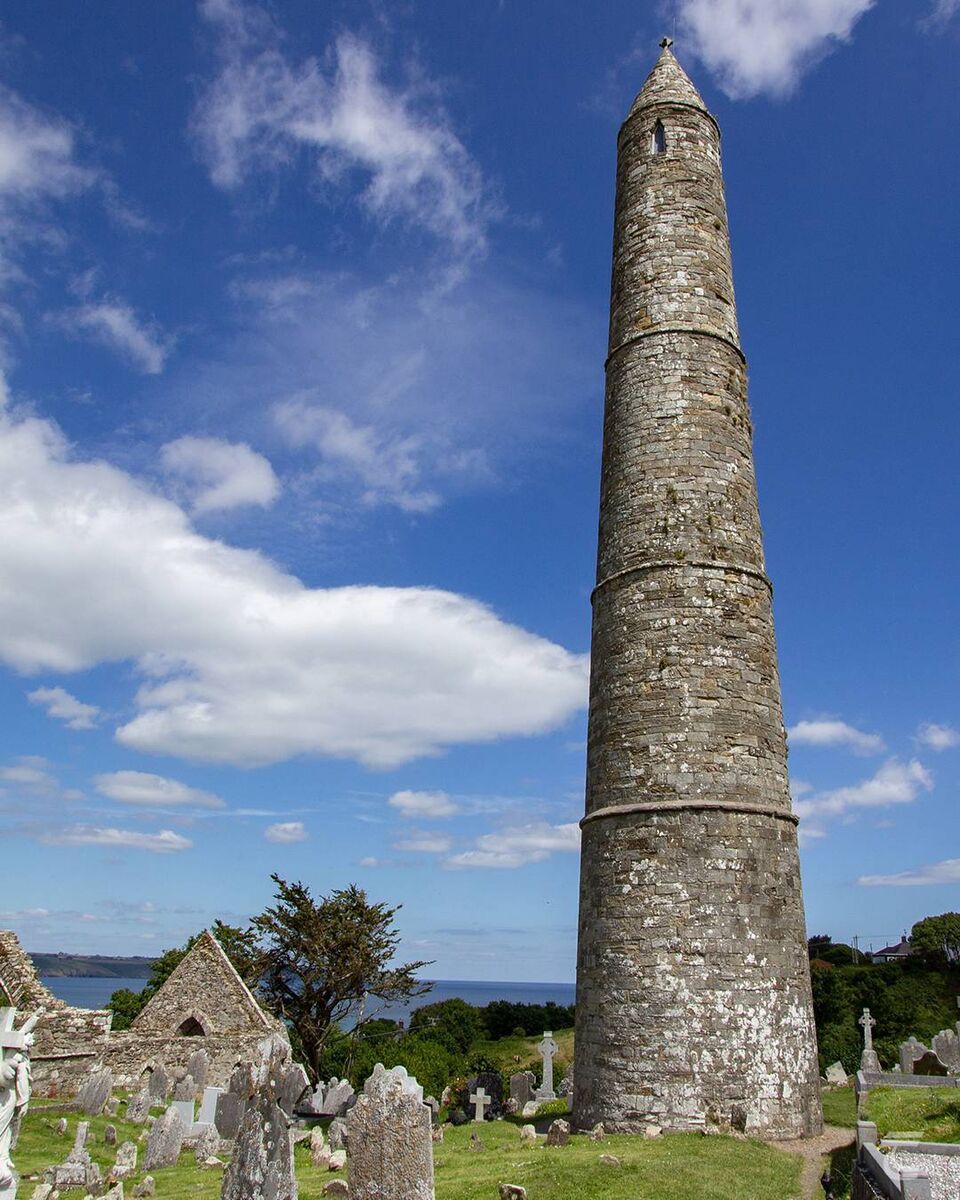
The walk leads all the way to the site of Declan's monastery itself, and with its elevated position it is clear to see why it was named Ard Mór — ‘a great height’. The Ardmore Round Tower can be seen for miles around. It is a little unusual in design, with external ring courses that enhance its tapering effect, making it look a little like an old-fashioned folding telescope. Architecturally, the tower appears to date to around the 12th century.
The earliest structure on the site is the small building called St Declan’s Oratory or St Declan’s House, which may date as early as the 8th century, and reputedly houses the grave of St Declan. It is a tomb-church with projecting antae and noticeably larger stones forming the lower courses of the building. It was restored in the 18th and 19th century. A small cross-inscribed black stone known as the Duivhin Deaglain or Dhubheen Deaglain — the little black stone of Declan — was found here. It was said to have curative properties, but sadly it has long since been lost.
The ruin of the cathedral is the largest structure on site, and it dates to the second half of the 12th century. It consists of a long nave and chancel, separated by a fine chancel arch. It also has a number of typically Hiberno-Romanesque features, such as rounded doorways and windows.
The cathedral was extensively modified in the 17th century, when large buttresses were added and the chancel enlarged. Unusually, a series of early medieval sculpture set within Romanesque arcading can be seen on the western gable end of the cathedral. They depict biblical scenes, like Adam and Eve and the Judgement of Solomon.
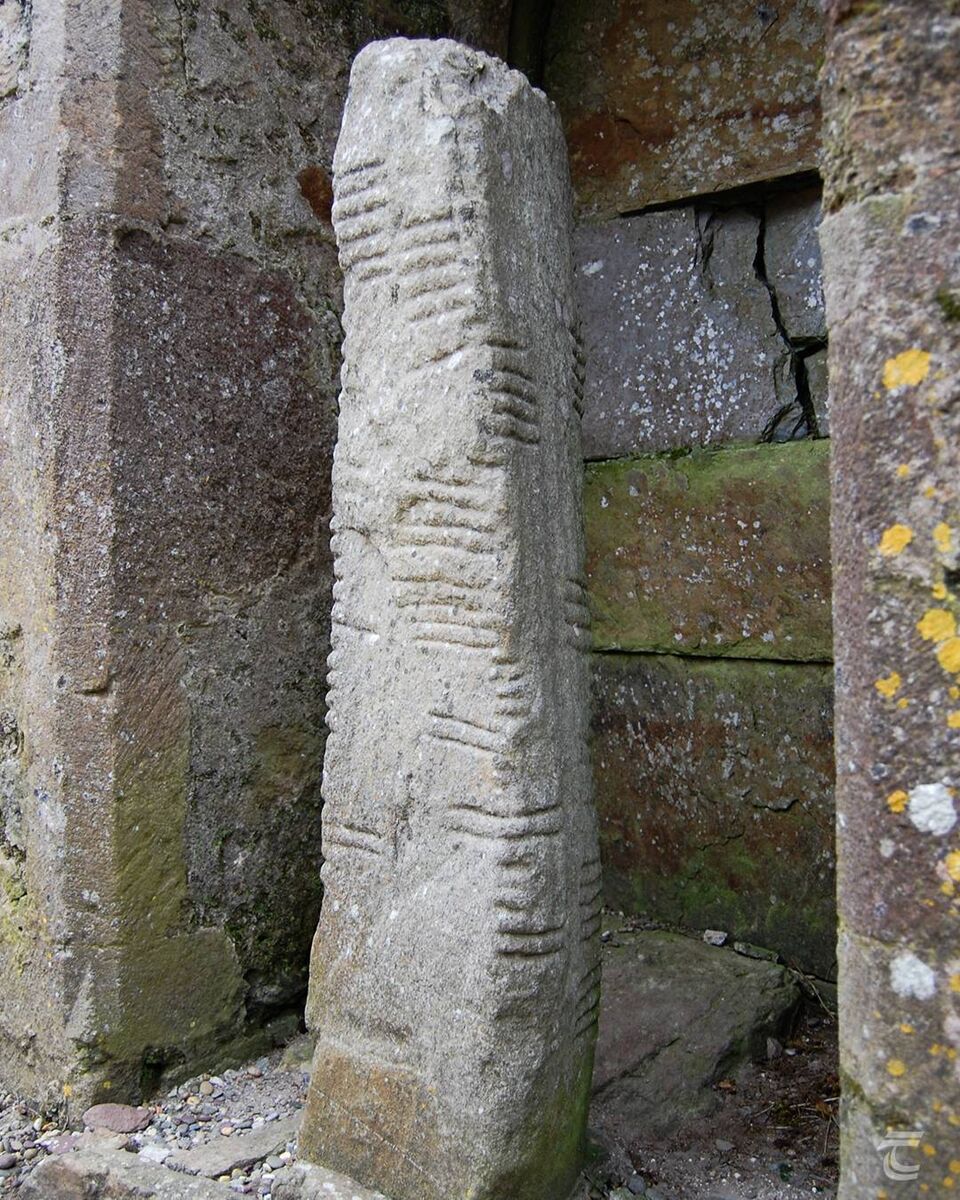
Inside the cathedral, along with medieval graveslabs, you can find three ogham stones which provide more evidence of the earliest phase at Ardmore. An inscription on one of the ogham stones has been translated as:‘the stone of Lugaid, grandson of Nia-Segmon’. The fact that MUCOI NETA-SEGAMONAS ‘descendant of Nia-Segamon’ is also found on other ogham stones nearby may suggest that this was a dynasty controlling the Waterford area in the 5–6th century AD.
With such a wealth of archaeology and scenery, it is well worth following in the footsteps of Declan this summer.
- Neil Jackman is an archaeologist, travel writer, and owner of tuatha.ie — an online membership for people who want to explore more of Ireland’s wonderful heritage

CONNECT WITH US TODAY



Be the first to know the latest news and updates