Islands of Ireland: The tiny speck of an island named for a 'war criminal'
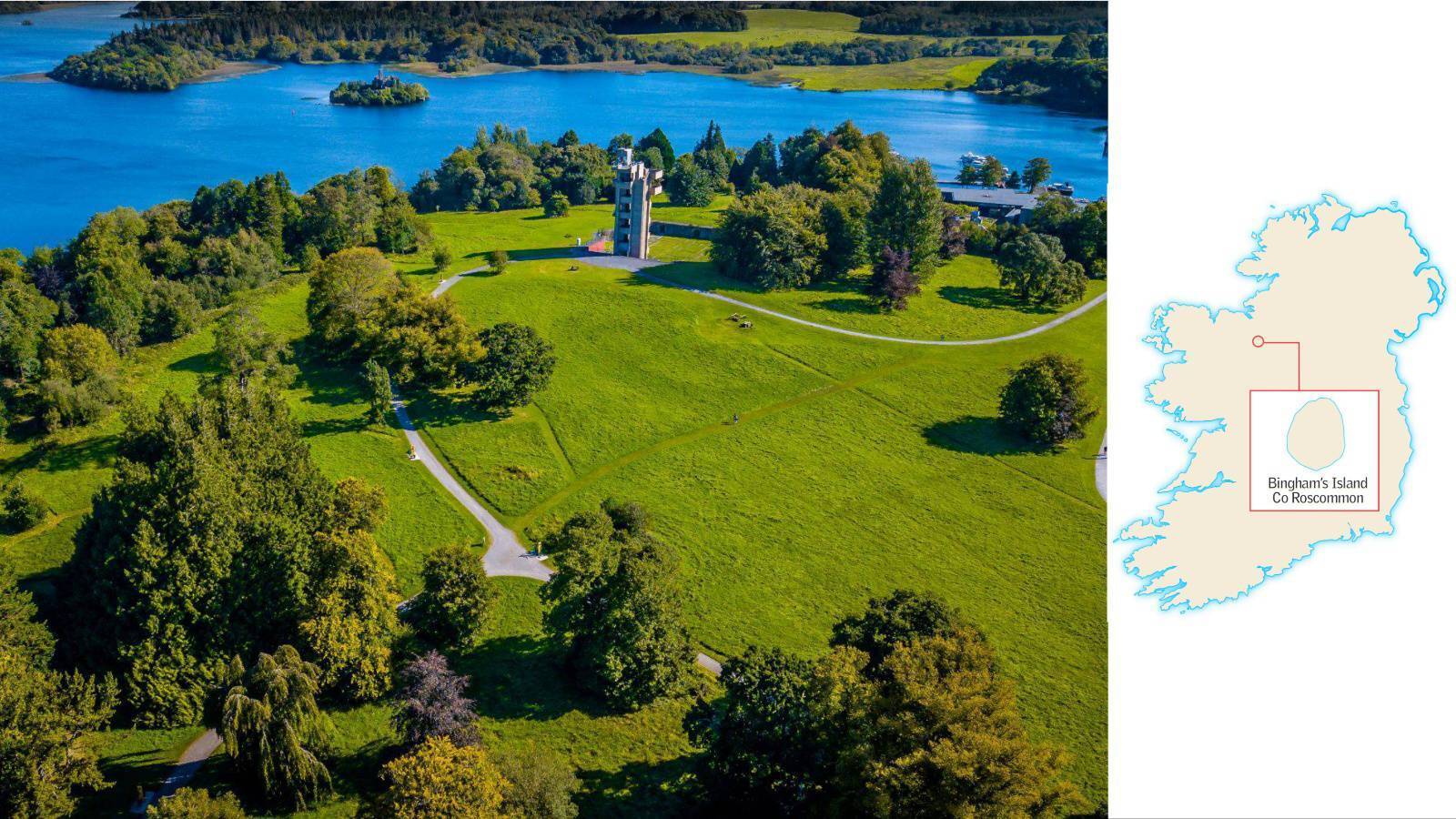
Islands of Ireland: Binghamâs Island in County Roscommon measures three perches (75 square metres)
This tiny speck of an island is the smallest island to appear in this series and considering the diminutive size of a few of them, that is saying something.
Flea Island near Castletownshend, County Cork, has, in old money, 0.7 of an acre; Trummera Big in the Shannon Estuary has zero acres, 19 roods and three perches; Binghamâs Island in County Roscommon comes in at a massive 3 perches or 75sq m.

The Bingham in question was none other than Richard Bingham, governor of Connacht under Elizabeth I. Bingham is synonymous with a savage repression of a rebellion by Gaelic chieftains against his rule and before that for slaughtering more than 1,000 survivors of the Spanish Armada in 1588. An entry on logainm.ie shows the name of the island attributed to Richard as well as his brother, George, who was sheriff of Sligo. The Bingham name is first associated with the island in the Grand Jury County Map of 1837. Prior to that, it was recognised only as a crannĂłg, one of three which are known as the Hag's Leaps on Lough Key. As a crannĂłg, it was more likely than not to have been manmade and could have been constructed more than 4,000 years ago.
Its nearest neighbour is Church Island and the Lough Key overall contains about 30 islands. Others have been joined to the mainland over time as water levels fell. However, it is a curiosity why one of the much larger islands on the lake, such as Trinity Island, Church Island or Castle Island, was not named for Bingham. Thankfully, they were not, and those three fascinating places retained their own individual history and character. It was probably just a tokenistic nod in the direction of vanity that saw the Bingham name rendered in perpetuity.
The Binghamâs association with Lough Key began when it was granted to the Catholic Royalist adventurer, William Taaffe, in 1596 for services to the crown. The Binghams and their henchman, William Taaffe, ruled with an iron fist and hanged their enemies ruthlessly and often without trial in the Elizabethan conquest of Ireland. As a result of their reign of terror in which vendettas against powerful families were legion, several complaints were made against them and a royal commission of investigation was set up to investigate the claims. It found âdamning evidence against both Taaffe and George Bingham, which suggested that they were guilty of theft, extortion, and executing people without trial; Taaffe was further accused of rapeâ.
Richard Bingham was also implicated in the charges but Queen Elizabeth was reluctant to demote a man who had done so much to strengthen the monarchâs hand. All escaped censure. Taaffe went on to serve under George Carew in West Cork and played an important role in the Battle of Kinsale in 1601.
Another description of the nefarious activities depicts Bingham as âutterly cruel and ruthless, Bingham's policy for pacifying the province was naked terror. Hanging, regardless of age, sex, suspicion, innocence or guilt was Bingham's most favoured way of establishing authorityâ. That he was guilty of war crimes is incontestable.

Though thronged with trees, Binghamâs Island has one manmade feature worthy of note. A cage-like structure in the centre of the island looks like a rudimentary apparatus for imprisoning animals or even birds. It looks like it may date to about 50 years ago and its decrepit state indicates it has long been out of use. On a recent visit, an animalâs skull, probably a deerâs, was seen on the island. The animal had probably swum from the shore, got injured, and died of starvation there.
Logainm has a further reference regarding Binghamâs Island attributed to Lord Lorton, the proprietor of the Rockingham estate in the 19th century of which Lough Key and the islands were included: "It is of no importance. Was fix'd for the use of a trigonometrical station.â The last Osi edition of the six inch map has the symbol âELâ adjacent to the island though why it was deemed necessary to supply the island with electricity is a curiosity. If it was in fact connected it would have to have been by means of an underwater cable.
: Kayak from lake shore or for boat tour of the lake. loughkeyboats.com