Did an orca adopt an orphaned pilot whale calf?
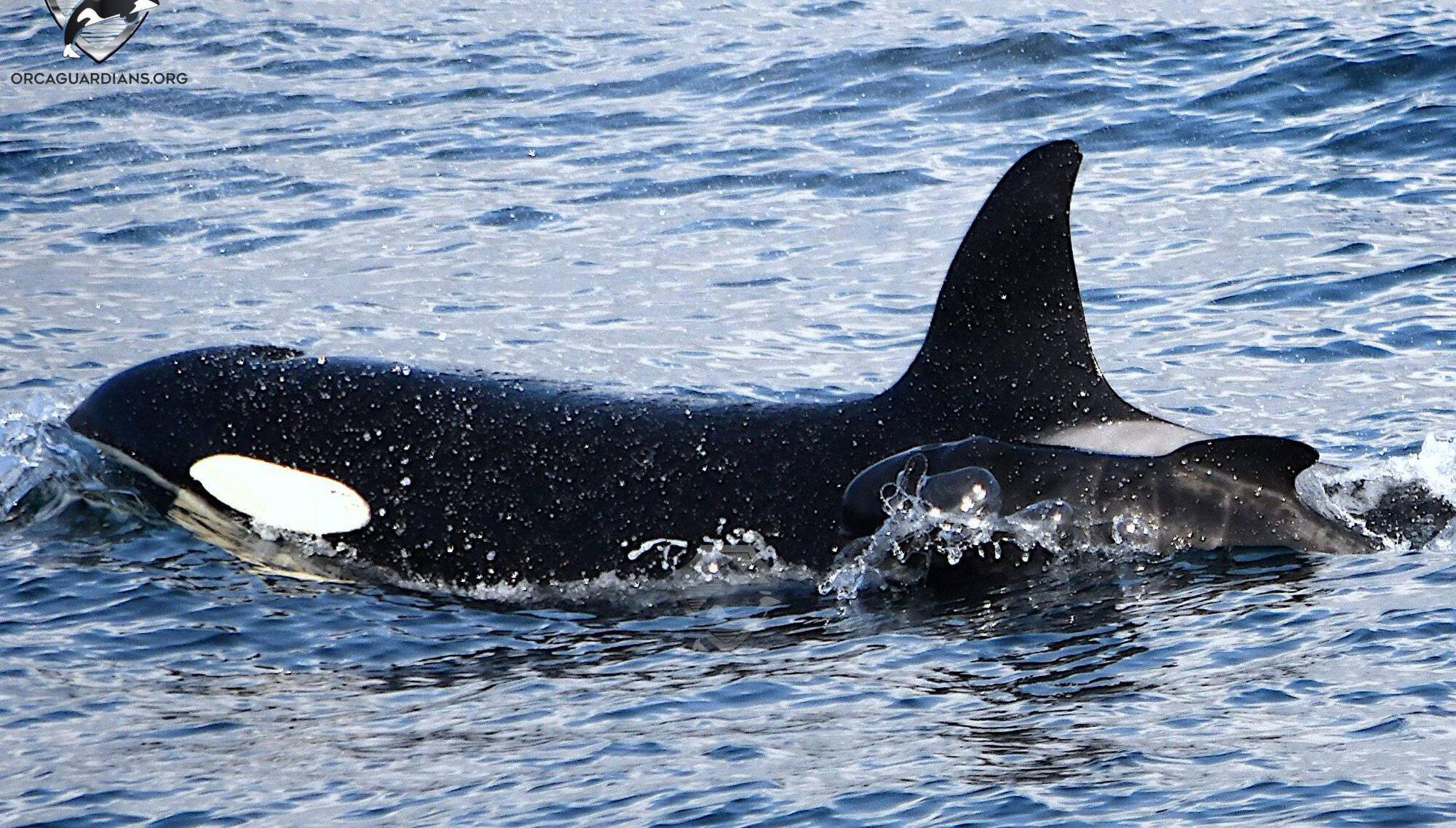
In August 2021, a newborn pilot whale calf swimming in echelon formation with a killer whale female. There were other members of the killer whale female’s pod around, but no other pilot whales. Picture: Marie Mrusczok /OrcaGuardians.org
‘They’re saps — because they risk their lives for strangers’ — Sonny in
On August 12, 2021, whale expert Marie-Therèsé Mrusczok was aboard a tour-boat off the Snaefellsnes Peninsula in western Iceland. An orca with a calf was sighted. The pair seemed unremarkable until closer examination showed that this was no ordinary mother and child: the calf was far too small to be an orca’s, it lacked the characteristic white ‘eye-spot’ and the dorsal fin was sickle-shaped. Mrusczok identified the youngster as a pilot-whale. She, and colleagues, reflect on the sighting in a paper just published.
Orcas are fearsome predators. They kill seals, sea-lions, and the calves of whales much larger than themselves. Had the youngster been abducted to be eaten or was there an alternative, less gruesome, explanation? Could the orca female be rearing a calf of a different species? Adoptions of orphan youngsters have been recorded among other toothed-whale species, but this would be the first-ever case involving an orca.
The demeanour of the pair suggested that this was indeed an adoption. The baby remained very close to the adult’s flank, swimming behind the flipper in what whale-watchers call the ‘drafting’ position. This offers maximum protection to a calf and makes it easier for a baby to keep up with its mother. Like a Tour de France cyclist using the slip-stream of a team-mate to save energy, a youngster can swim more efficiently in the wake of its parent.

All creatures, including ourselves, are programmed to promulgate their genes by breeding only with members of their own species. Even raising the offspring of a neighbour is counter-productive, unless the beneficiary happens to be a close relative. The geneticist, J B S Haldane, famously declared that he would sacrifice his life for two of his brothers (each sharing a quarter of his genes) or eight of his cousins. Nannies make an enormous contribution to human welfare by raising children which are not their blood relatives. From a personal genetic standpoint, however, this is madness. In the orca and pilot-whale case, the female was raising, not just a rival’s calf, but that of another species.
The adult orca had been recorded frequently over a nine-year period. She was not known to have produced a calf during that time, so it seems unlikely that she could provide milk to the adoptee. It’s just possible, however, that she had given birth but had lost her baby, in which case she might still be capable of lactating. The calf appeared emaciated and in poor condition, so it’s unlikely to have received milk. When the adult was seen again the following July, the juvenile was no longer with her.

Although orcas attack pilot whales occasionally, the two species often interact with each other. Also, there are striking similarities between their lifestyles. Both are highly social creatures which travel in ‘schools’. Most extraordinarily, orcas, pilot-whales, and humans are the only mammals known to undergo menopause.
"Long-finned pilot-whale and killer-whale interactions may be more complex than previously thought," the authors conclude.