Donal Hickey: These pollinators 'dress up' like bees for their own protection
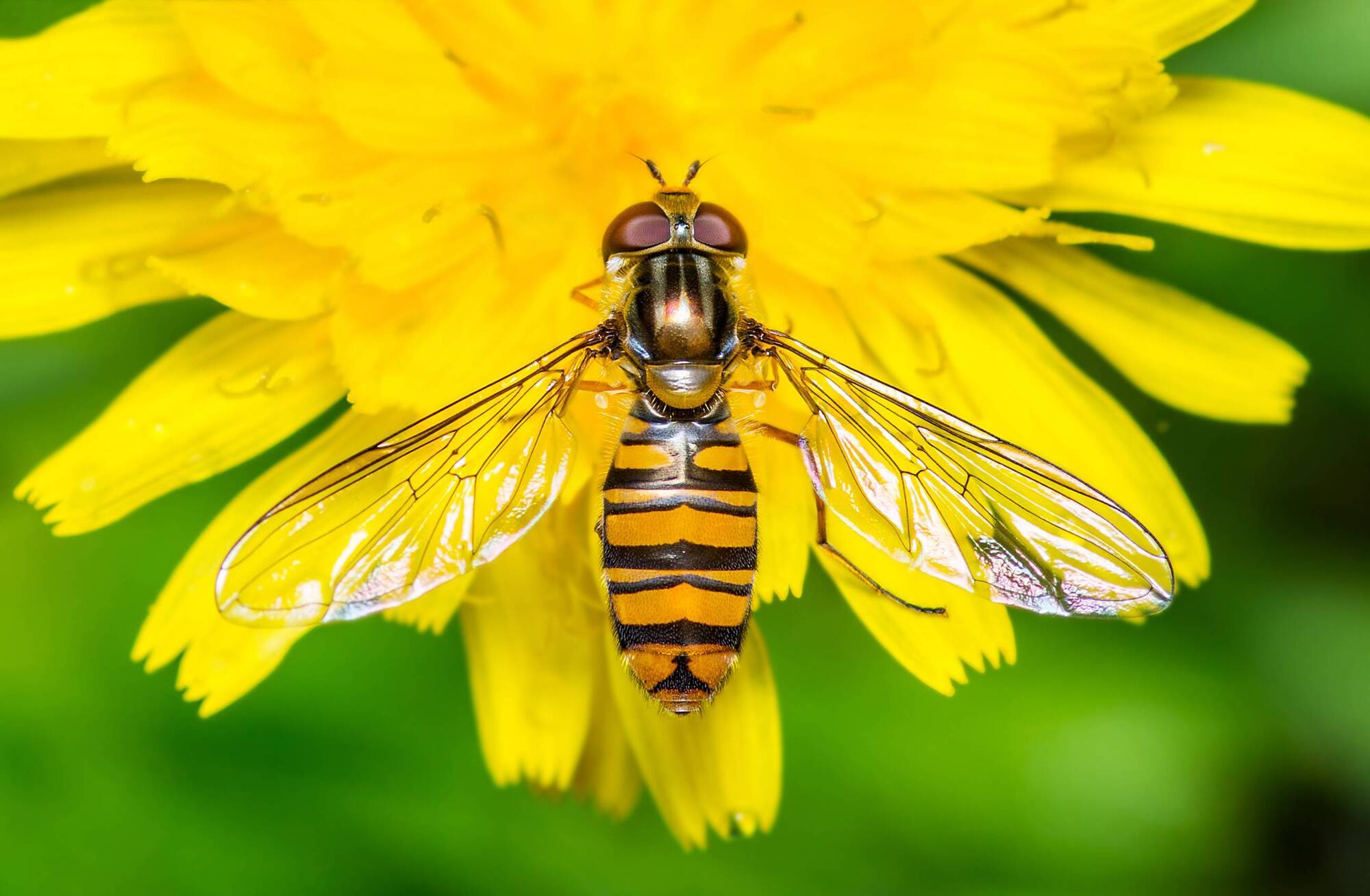
Hoverflies mimic bees and wasps to try deter predators
Next time you’re about to swat a fly, think again. They’re important in many ways, playing a vital role in pollination, which enables plants to reproduce, and getting rid of waste, for example.
Most people rightly regard bumblebees as essential for pollination, but other species also play a critical role. Hoverflies, of which we have 180 species, are more abundant as flower-visitors than might be expected, accounting for more than half of such recorded visits.
The importance of allowing a certain amount of grassland grow wild is being highlighted by Trinity College Dublin (TCD) ecologists who have unearthed vital clues on how we can best support Ireland’s precious pollinators.
Drawing from 10 years of data, collected from 119 sites across the country, they emphasise how vital a range of plants and flowers are for pollinating species. Mind you, typical garden plants (often non-native) and lawns do not come into this category. In fact, managed grasslands generally, including farmland, attract far fewer insects.
TCD Professor of Botany, Jane Stout, says one of the most important conclusions to be drawn from this work is that semi-natural grasslands are essential for pollinator conservation: “This is because they support the most species, including the rarer species that aren’t found in more highly managed grassland types, and a higher proportion of threatened bee species."
What’s concerning the scientists is that most of the country is covered in managed habitats, such as agricultural crops, silage and dairy pastures, as well as urban and suburban gardens, which support less insect species. For that reason, Prof Stout says we need to get a variety of native plants back into these habitats to support pollinators. And it’s something many people can do quite easily.

Separately, Tom Murphy, of Cork Nature Network, also underlines the importance of hoverflies as pollinators alongside bees, butterflies and moths. Furthermore, hoverfly larvae are useful pest controllers, feeding on greenfly for example, and waste managers, with some eating dead organic material. “Say what you like about flies but, without them, we would be up to our ears in waste," he remarks.
Regular gardeners will be familiar with hoverflies drifting around in the same colours as bees or wasps. But they don’t sting, or bite, and are merely mimicking bees and wasps for their own protection. “Predators know not to mess with stinging insects, and so ‘dressing up’ as one is a pretty good strategy for avoiding getting eaten," Tom explains.
There are ongoing campaigns, meanwhile, urging people to allow parts of their lawns to go ‘wild’ and asking farmers to set aside small, uncultivated areas where wildflowers and plants can grow. The results are invariably encouraging.