Juanita Browne: Brighten things up with bulbs for bees
With bulbs, you don’t even need a garden, and can even make a bee-feeding pitstop on a sunny window sill.
If you’re looking for an easy action to take for wildlife at this time of year, why not plant some bulbs that will bloom next spring to feed our hungry bees and butterflies?
Our 101 wild bee species have undergone severe declines since the 1980s and one of the reasons for this is lack of food — because our changing landscapes contain fewer wildflowers.

With more than two million gardens in Ireland, planting the right pollen-rich flowers really could make a difference to the survival of many bee species.
In early spring, queen bumblebees emerge from hibernation and are very hungry for pollen-rich flowers in order to establish their new colony. With bulbs, you don’t even need a garden, and can even make a bee-feeding pitstop on a sunny windowsill.
November is a good month for most spring-flowering bulbs. It’s a really easy thing to do and what’s really nice is that, depending on type, they can be planted in grassy banks, in lawns, or under trees and hedgerows.

But even better, they can also be planted in small containers, pots or window boxes, so no matter how small your garden, or even if you just have a patio or balcony, you can create lovely mini restaurants for bees and other pollinators.
Bulbs will also bring you lovely colour at this time of year, when there are few flowers about, and who wouldn’t enjoy that? I’m no gardener but even I can manage to successfully grow flowers from bulbs!
It’s very important to note that not all bulbs are created equal — as bee food at least.
Unfortunately, the very popular spring flowers we have traditionally planted — the daffodils, tulips, begonias or busy lizzies — are not the best for pollinators. They have been bred for their showy flowers but produce very little pollen and nectar, so they offer virtually no food for pollinating insects.
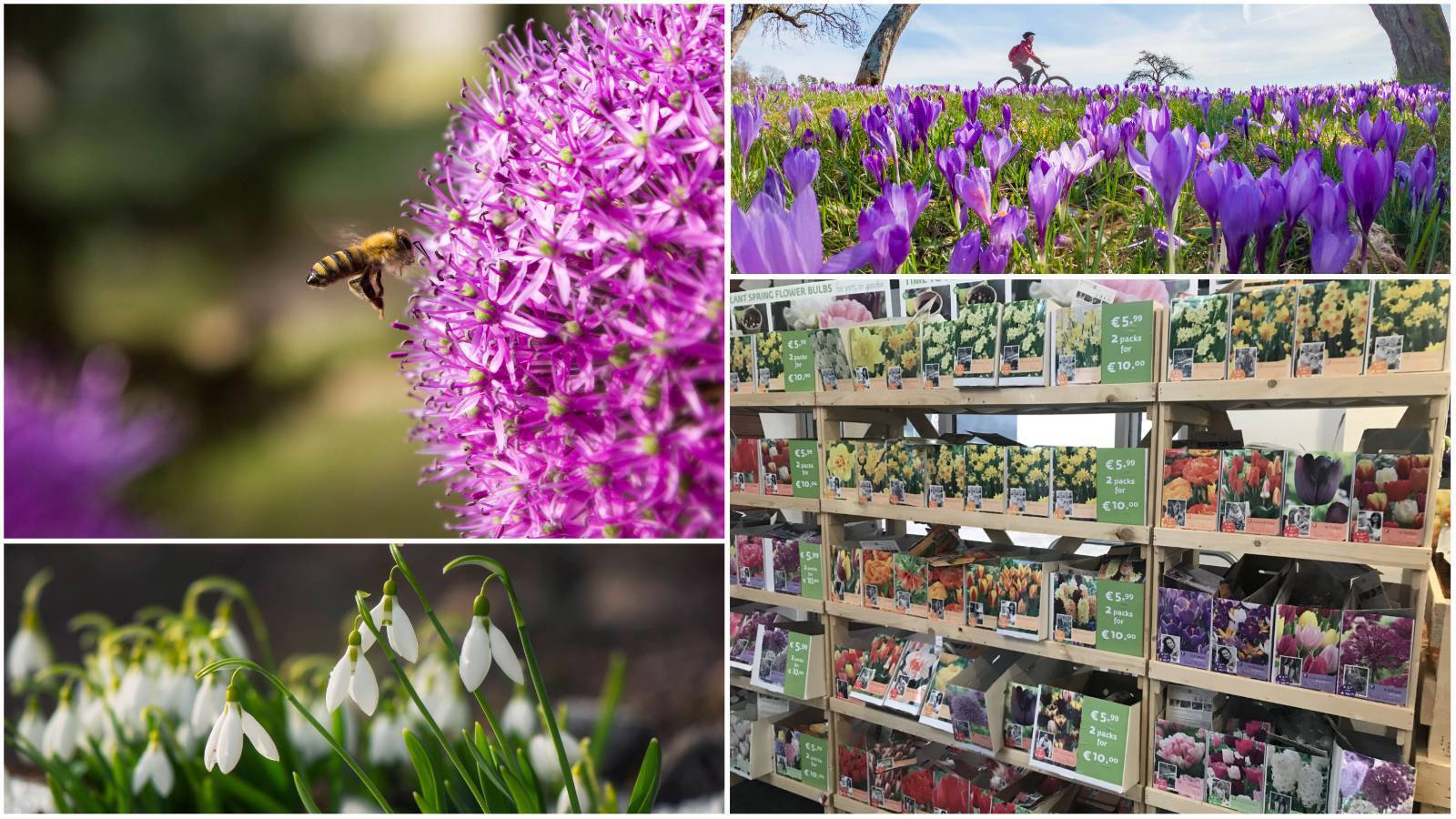
Of course, you don’t have to ‘cancel’ these beloved flowers, but why not add in some bulbs that will actually provide food for bees and butterflies? Examples include: snowdrop, crocus, grape hyacinth, allium, and single flowered dahlia, especially the bishop series.

- Size matters — paying a little extra for fuller bulbs will give you better flowers in the first year. The bigger the bulb, the better the flower.
- Follow the instructions on the bulb packet. A general rule of thumb is that you plant to a depth three times the height of the bulb. This allows it to anchor itself to grow up through the soil.
- It’s very important to plant bulbs the right way up. They are usually pointy at the top and the base is usually flat and has hairy roots showing.
- It’s important to prevent water sitting around the bulb as this can cause rotting. Use a trowel or a specially designed bulb planting tool to remove a plug of soil. Try to push down and twist the bulb as you plant so that the base touches soil and isn’t sitting in an air pocket where water can puddle and rot your newly planted bulb.
- If your garden has visiting squirrels, they might fancy digging up your flower bulbs as a nice winter snack. Try grating a bar of soap and sprinkling a little over the top of the soil. This can help to mask the smell of the bulbs and tastes horrible to an investigating squirrel or less cuddly rodent. If you’re planting in a pot, you could add some chicken wire just under the top layer of soil to keep out hungry wildlife, and the flowers will find their way up through the wire.
- Any container or pot will do, but make sure to leave a few inches below the bulbs for good root growth.
- Make sure to use a container with drainage holes and perhaps add grit at the base to make sure your bulbs don’t get too wet.
- Make a ‘bulb lasagne’. Plant different types of bulbs in layers so they bloom at different times, offering colour for you through the season, and a staggered menu for pollinators too. Taller flowers can be planted in the base layer, followed by layers that will grow into shorter flowers above. YouTube has lots of videos explaining how to plant a bulb lasagne.
- A crocus lawn is also a lovely idea — this might be a strip along the edge of your lawn, around trees, or planted in such a way to create the look of a natural drift of flowers — by throwing the bulbs in handfuls, and then planting them where they fall. Don’t be disheartened if your bulb area looks a little pathetic in its first year. Newly planted bulbs may take a few years to establish themselves and flower freely.
- Of course, you might still want to plant some tulips or daffodils, but please do remember that in terms of value for wildlife, they sort of equate to planting plastic flowers outdoors, so why not mix in some pollen-rich varieties too?
WHAT IS...
Biodiversity
...Read more
For more information on pollinator-friendly plants, see pollinators.ie
- Juanita Browne has written a number of wildlife books, including 'My First Book of Irish Animals' and 'The Great Big Book of Irish Wildlife'