Damien Enright: When the weather is good, West Cork is better than the Mediterranean
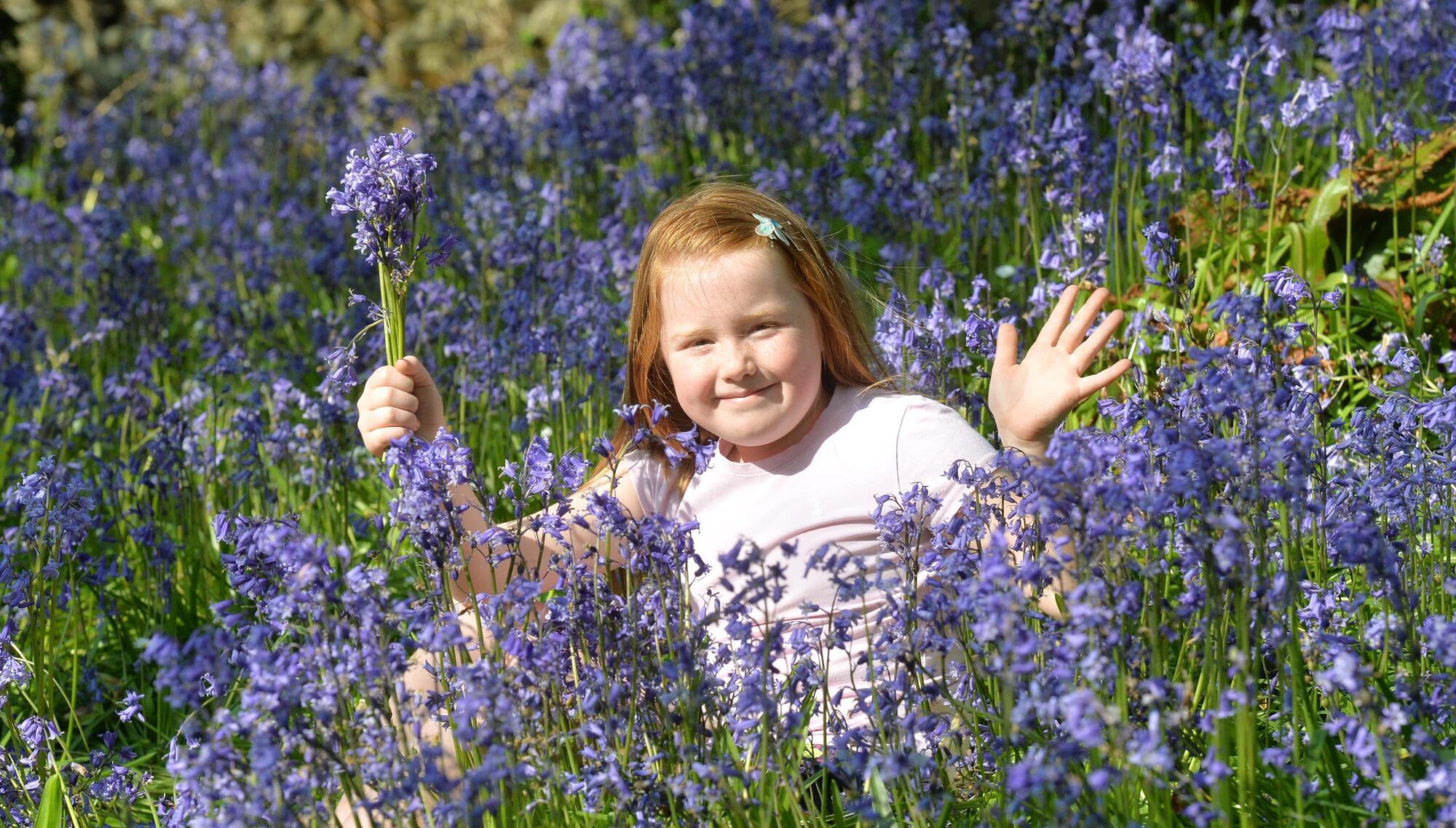
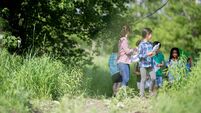
Cliona Ahern, Ballinora, Co. Cork, with some beautiful bluebells at in Skibbereen, Co. Cork. Picture: Denis Minihane.
Last Wednesday, the weather was as good as one could want it. Writing this column on Thursday, I can't say what weather we are experiencing in Munster today, Easter Monday. I hope, for the sake of folk going west from Cork city and the inland towns that the "light rain showers" forecast by Met Eireann will be generously interspersed with long "patches of bright sunlight". When the weather here is good, it can be more pleasant than that of the Mediterranean or, indeed, the Canary Islands.
My wife and I returned from La Gomera, a small island off Tenerife, five days ago. A walk I took in West Cork last Wednesday morning was as enjoyable than any I'd taken over the four months we were on that famously walk-able island.
To see everything I might have expected to be in bloom in Ireland decorating the countryside as usual was, in itself, reassuring. One can't, of course, be complacent –much that was common here in decades past has disappeared. But, as usual, the grassy paths beneath the budding fuchsia hedges were bright with shiny celandines, all the brighter for being couched in beds of dark green leaves.
Similarly, the flowers of stitchwort – splayed white petals with yellow stamens at the centre, the flowerheads small but growing in clumps on the wayside – were an eye-catching, insect-attracting display. Stitchwort, so named because it was a herbal cure for 'stitches', as in the muscular cramps we suffered as children — "Oh, I've got an awful stitch in my side!"
The wayside flowers are at least as interesting for the insects they attract as for themselves. Small wasps, striped and colourful, along with bees, beetles and bugs of many patterns and colours are fascinating to simply look at, beautifully made, wonderfully engineered, as inspiring as the butterflies on banks that catch the sun. Speckled woods, peacocks and red admirals are flying now, all of them territorial. In the garden, speckled woods patrol the same pathways year after year.
In the woods, there are bluebells, native and Spanish, and wood anemones and triquetrous garlic – too much of the latter which, while attractive in season with their white, drooping heads of petals and yellow stamens, look awful when they die off into swathes of decaying yellow leaves and stems that blanket all other plant life and the earth beneath from view.
Such fine spring days in Ireland should be honoured. A walk under a blue sky, by highway or byway, lake, river or sea, does the psyche a power of good. No longer are we drooping Celts, huddled in half-light, steam rising off us as we gather around the damp fire. We are another race.
Some parts of our island are still in the realm of the older gods and goddesses. Out walking the coast, when I cross the last field, climb over the last stone wall and set out across the gorse and the bent grass for the sea, I walk across land unchanged since the Fianna walked it. Indeed, I could almost believe I might meet Oisín, with New Age hair and cloak and sandals, striding the cliffs tops over the blue sea.
Behind me, the last vestiges of man's dominion; before me, none. Not a house, a fence post or a telegraph pole. I don't look back and, in the view ahead, nothing fixes Time. For all I can see to contradict me, I might be the only person in the world, and it might be the dawn, or the evening, of the First Day.
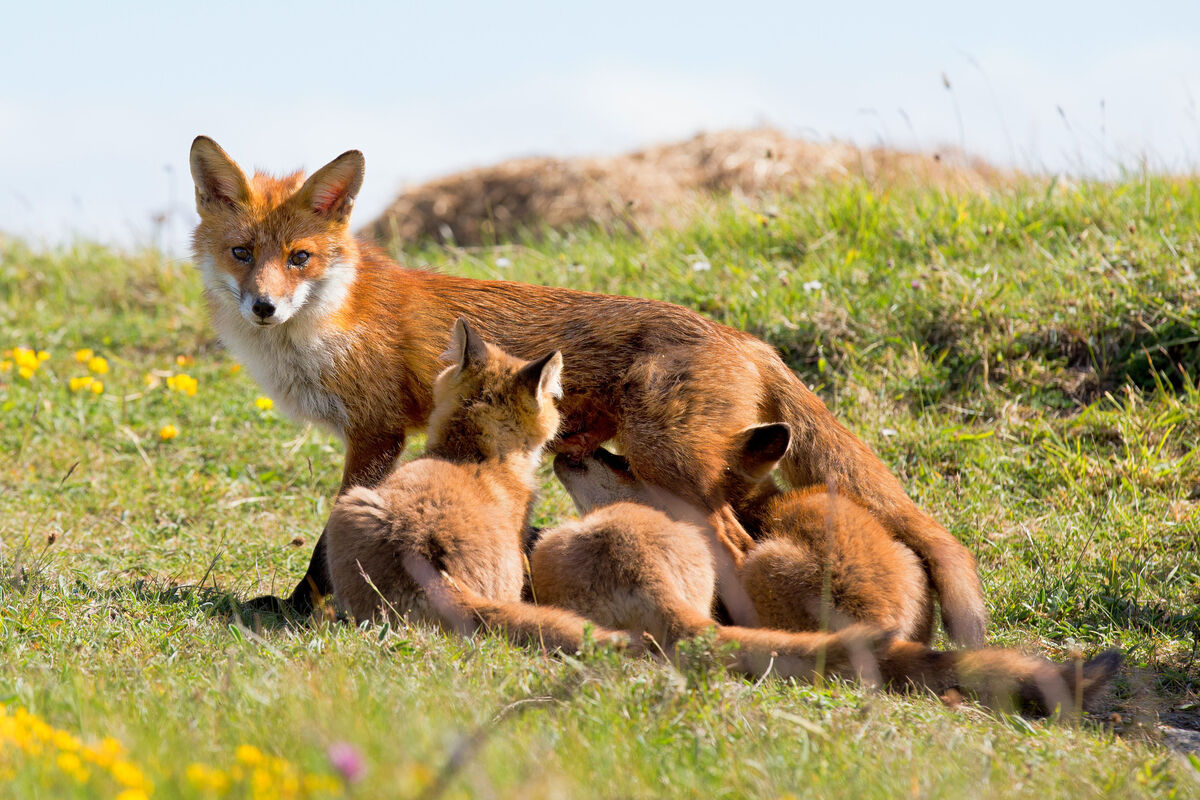
My fellow creatures in this dimension are the animals, the birds, the butterflies – creatures innocent of Time. A fox gets up and lopes away, unhurried. I see him canter through the heather. With animal instinct, he knows he has nothing to fear from me.
Red Admiral butterflies flutter from sun-warmed rock to sun-warmed rock and, on a small loch of water, I see a shining damsel fly, with shimmering wings and body like an enamelled brooch in the sun.
For the birds that nest in their scores on Bird Island – a few hundred metres off shore and within easy viewing distance – days like last Wednesday, with clear blue skies and day-long sun, the heat must come close to being a problem.
I didn't go there last week: the last time I went to view the island, I found the route barred by a heavy, electrified gate, chained shut and entry-proof, with warning notices. The land before it is cliff-top fields. It is a large, roughly flat rock, with no shade. I wrote about it on a visit there on 18th of April years ago.
"Upon its surface, seventy cormorants make their nests. They sit, gleaming black in the sun, or standing above their nests, sometimes in pairs - sometimes a male arrives and there is an intricate dance of arched necks as the female greets him, 'Home is the fisher, home from the sea...'
Black is not the best colour in this heat, and the hens sitting on their sea-weed nests under the day-long sun must swelter. If they went swimming instead, surely the eggs would hatch themselves? But no — they'd cook. The mother bird provides not only warmth in the cold of the night but the correct degree of warmth in the day and, when required, the necessary shade.
Once again, I reflect on how tough wild creatures are. Last year, I witnessed the Bird Island cormorants sitting on their eggs in a raging gale, with sleet driving in off the sea and the Atlantic rearing and roaring around them as night came down. Today, after the twelve hours of sun, they preen in its dying light, black shapes against the golden mirror of the Western Ocean. There is something wonderful, beyond our comprehension, in the very air.

CONNECT WITH US TODAY



Be the first to know the latest news and updates