Juanita Browne: We need to celebrate the recovery of the elusive Irish ‘tree cat’
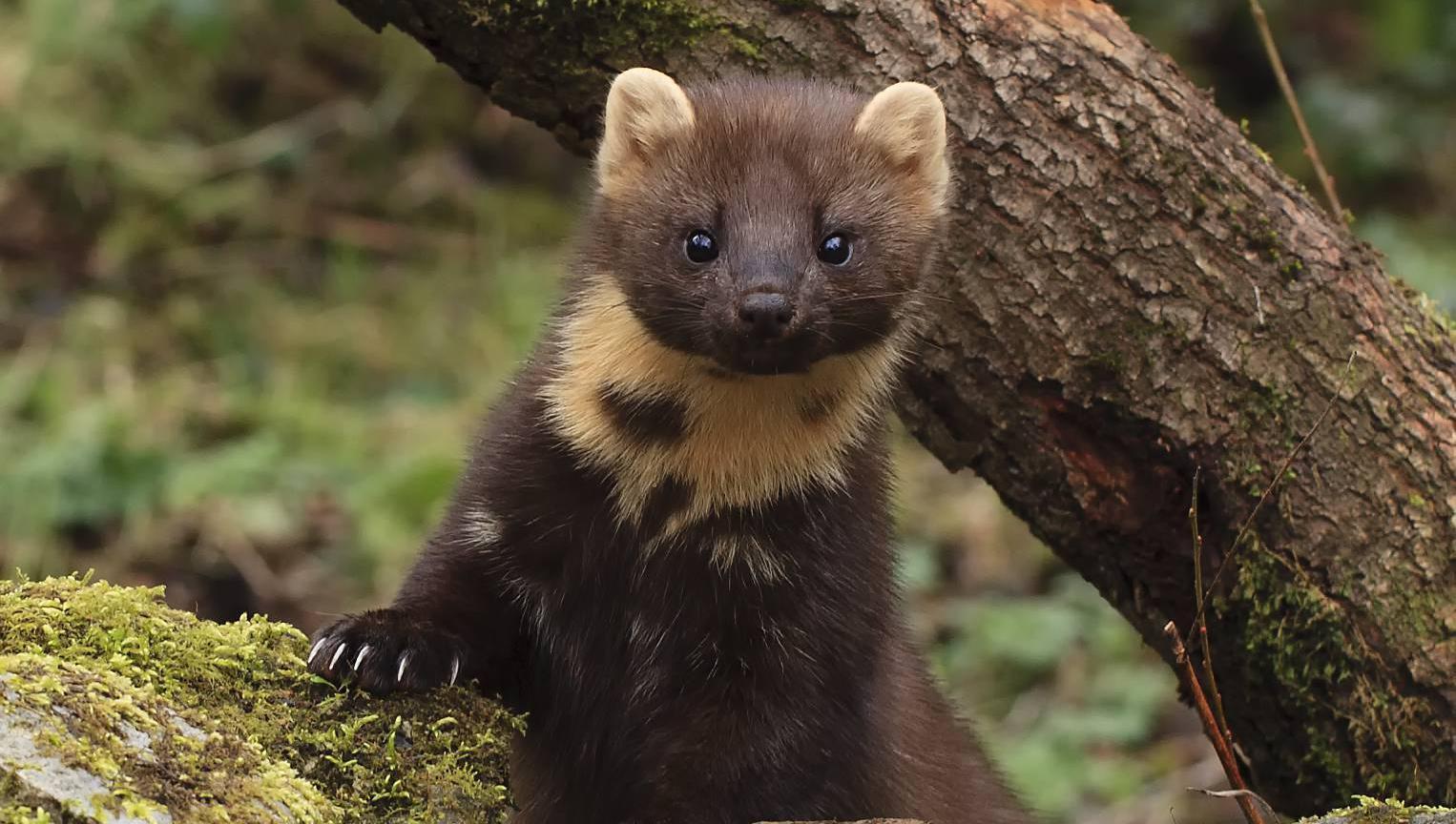
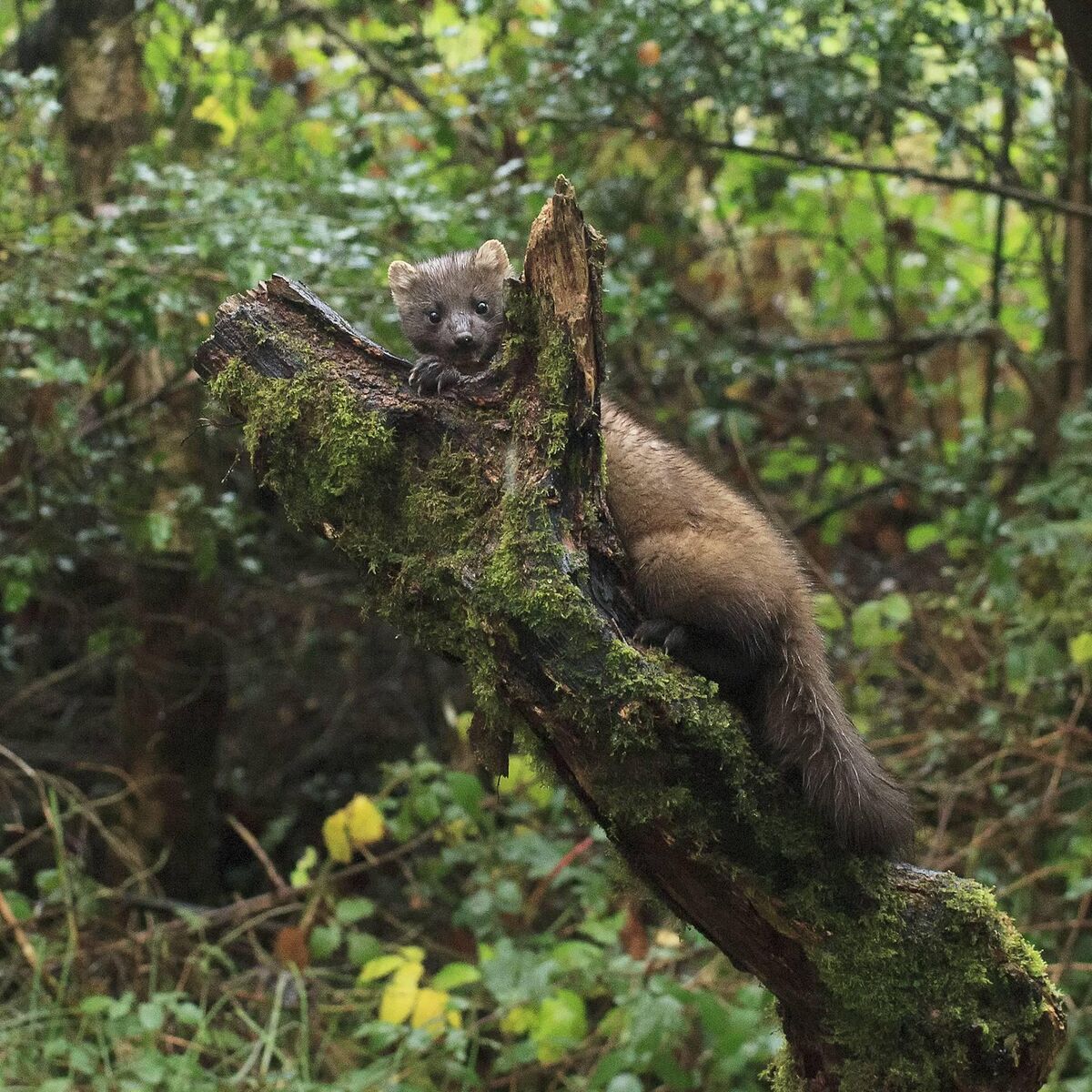
The Pine Marten, Cat Crainn. Picture: Ruth Hanniffy Photography
The third All-Ireland Pine Marten Symposium is due to take place on April 1 and 2 in Abbeyleix, Co. Laois. According to the organiser Ruth Hanniffy, of the Vincent Wildlife Trust: “This symposium will include talks, workshops, a fieldtrip and plenty of opportunity for discussion on the many aspects of Pine Martens in Ireland. We’ll cover the relationship between pine martens and squirrels, managing interactions with householders, den boxes, surveying, rehabilitation, citizen science and even ecotourism.”
Many Irish people know little about the pine marten, a beautiful native mammal, with its thick coat of chocolate brown fur, long fluffy tail, and a cream-coloured ‘bib’ or patch running from its chin to its chest. It is very agile and a great climber, spending a lot of its time in trees, which led to its Irish name, ‘cat crainn’ or ‘tree cat’. It is not, however, a cat, but a mustelid, related to the stoat, otter and badger.
The pine marten once thrived across the island of Ireland, but with the clearance of woodlands and hunting for the fur trade, the species suffered huge declines. By the end of the 20th century, it was confined to parts of western counties, especially the Burren; Killarney National Park; and parts of Meath and Waterford. It is thought that another reason for the severe pine marten decline in Ireland in the second half of the last century was due to the liberal use of strychnine to control foxes - poisoned bait also being eaten by pine marten. Thankfully today, legal protection and reduced persecution have led to the welcome recovery of the pine marten and it is now successfully recolonising much of the country.
One hugely positive impact of the growing pine marten distribution has been the effect on our native Red Squirrel population. Having been squeezed out of many habitats by the larger introduced American grey squirrel, reds are now beginning to reappear in woodlands recolonised by pine marten, while at the same time the greys disappear. This is wonderful news for conservationists and scientists who have long been concerned with the possible extinction of the native red squirrel.
In 1996, I was lucky to spend some time helping a PhD student with her pine marten fieldwork in the Burren. This presented an amazing chance to see these elusive animals up close. It even offered the very rare opportunity to be able to hold a sleeping pine marten (while temporarily anaesthetised for the science bit - of measuring, weighing and radio-tagging each animal) and to see just how beautiful they are.
I never thought I would see a wild pine marten again as they are so elusive, and I definitely never thought I’d see one in Co Kildare where I live, but was shocked and thrilled when one visited our garden a few years back. A flock of rooks and jackdaws squawking and mobbing the animal made me look out the window, only to see it zigzag across the lawn, its long fluffy tail held out behind it, as it tried to escape this angry gang of corvids.
For anyone who wants to find out more about this beautiful and intriguing native predator, why not register for the upcoming Symposium? Day one comprises 15-minute talks on research, conservation and management of the species, and you can attend in-person or online. Day two involves 20-minute talks and demonstrations related to monitoring, conservation and citizen science, followed by a field trip to Abbeyleix Bog. This is an in-person event only.
- Juanita Browne has written a number of wildlife books, including My First Book of Irish Animals and The Great Big Book of Irish Wildlife. Contact the author at IrishWildlifeBooks@gmail.com
CONNECT WITH US TODAY



Be the first to know the latest news and updates