Juanita Browne: Let's help the all-important females of the wildlife world, like queen bees
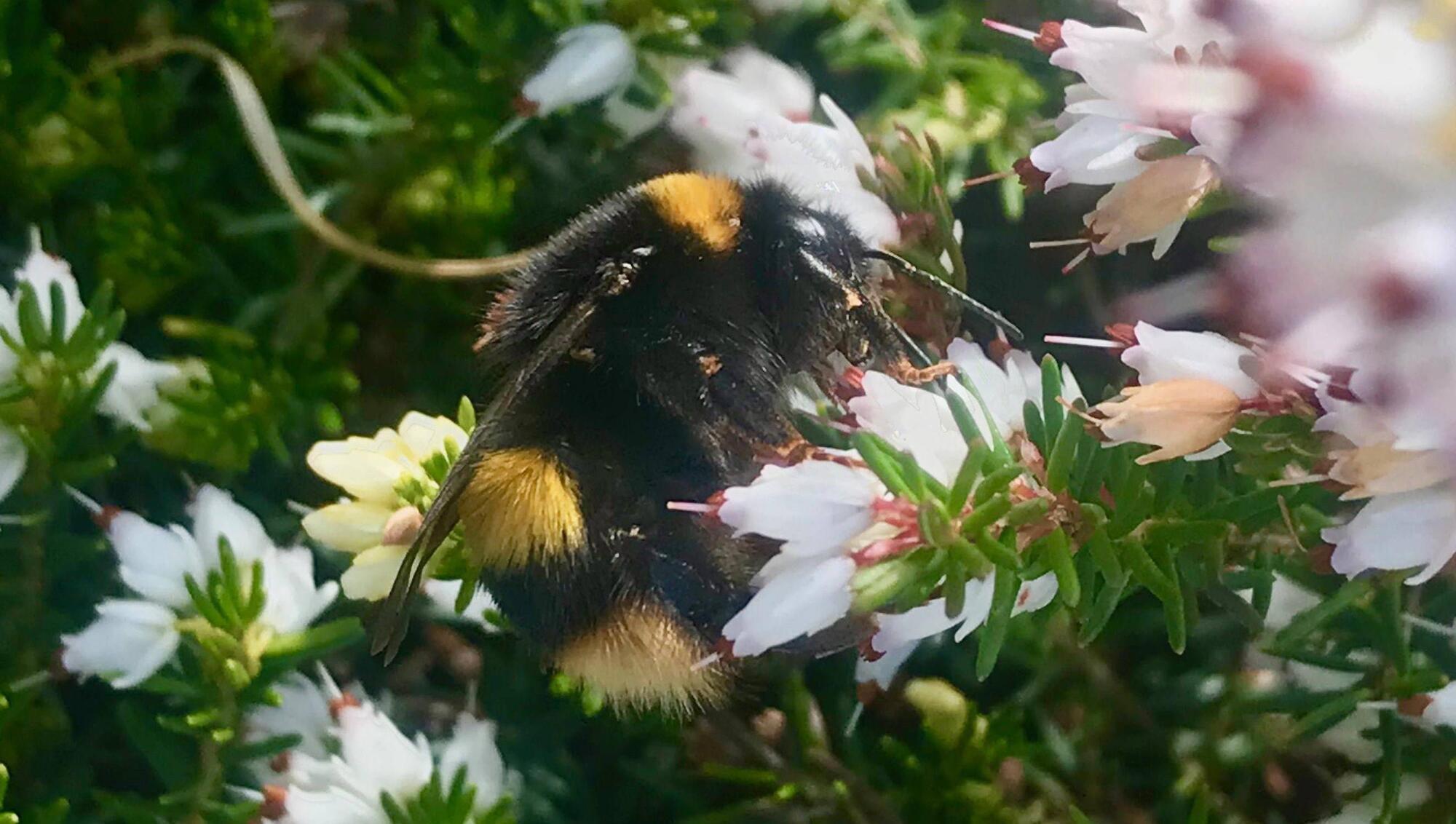
The buff-tailed bumblebee. In Ireland, we have 21 bumblebee species and one-third are at risk of extinction. Check out the All-Ireland Pollinator Plan for ways you can help.
Today, March 8, I watched a large fluffy bumblebee feeding on some heather flowers in my garden.
Bombus terrestris, the buff-tailed bumblebee, is one of the early flying bumblebees you’ll see at this time of the year. I know this is a queen buff-tailed bumblebee by her large size, about 20mm in length, and the fact that her booty is orange/buff-coloured.
Workers and males, which will be flying later in the year, have white tails and vary in size according to their caste or ‘job’ within the colony, from 11mm to 17mm. The larger workers on this spectrum are the ones that leave the nest to fly off looking for pollen to bring back to feed to the baby bees, which are tended to by the smaller worker bumblebees which stay in the nest.
This big queen has been asleep for winter, hibernating for five or six months. It’s hard to believe this tiny creature burrowed into a north-facing bank of soil last October and survived for so long without feeding. She chose north-facing soil so that the winter sun didn’t wake her up too early.
She has woken up as the temperature rises, and the most important thing she has to do now is rebuild her reserves as she has a very big job ahead. Her future progeny relies on her finding enough food to establish a nest.
Now, this number can include teeny flowers on a single stem, but still, that’s a lot of flowers to visit. And if you consider that unless she can find lots of nice wildflowers and flowering hedgerows close to her nest, she may have to expend precious energy flying longer distances between feeding stops.
Her next job will be to house-hunt, to find an underground place to live for her and her family, often in an old mouse burrow. Once she has selected a safe nest site, and moved in, she creates the wax structure in which she’ll lay her eggs.
Before hibernation, she mated with a male and has carried the sperm over winter – a bit like freezing your eggs until the time is right. I watch as she loads pollen into her ‘pollen baskets’, shiny cavities surrounded by specialised hairs on her back legs. Some believe this is what inspired the expression ‘the bee’s knees’ as the pollen sacs were seen to represent concentrated goodness.
Bumblebees don’t make honey like honeybees, so they’re only ever a few days away from starvation. This is why it’s so important that she can regularly find enough pollen-rich flowers close to home.

Early flowers such as blackthorn in our hedgerows, willow, and dandelions are really important to provide enough pollen and nectar for these prospecting queens and their future bumblebee colonies. Unfortunately, some of the spring flowers we plant in our garden, such as daffodils, don’t offer food for pollinators. But there are plenty of good alternatives such as crocus, to choose from.
It starts to rain. Raindrops must seem huge to a bumblebee, as depicted in kids’ movies. Bumblebees avoid flying in the rain, so she whizzes off, hopefully to a safe nest hidden somewhere in the garden.
If all goes to plan, her offspring will be on the wing in early summer, visiting and pollinating lots of flowers, vegetables and fruits. She’s a diligent worker, a real estate expert, a homemaker, and she’s a mother to several hundred offspring.
The All-Ireland Pollinator Plan is an amazing project that offers resources and guides to help make your garden, school, farm or business more bumblebee-friendly. You can go as big as you like – planting a pot for pollinators, planting pollinator-friendly shrubs or trees or managing your whole garden for pollinators.
To find out how you can help our fellow queens, see www.pollinators.ie
- Juanita Browne has written a number of wildlife books, including My First Book of Irish Animals and The Great Big Book of Irish Wildlife. IrishWildlifeBooks@gmail.com


CLIMATE & SUSTAINABILITY HUB
CONNECT WITH US TODAY



Be the first to know the latest news and updates