Why you don’t have to stomach abdominal pain
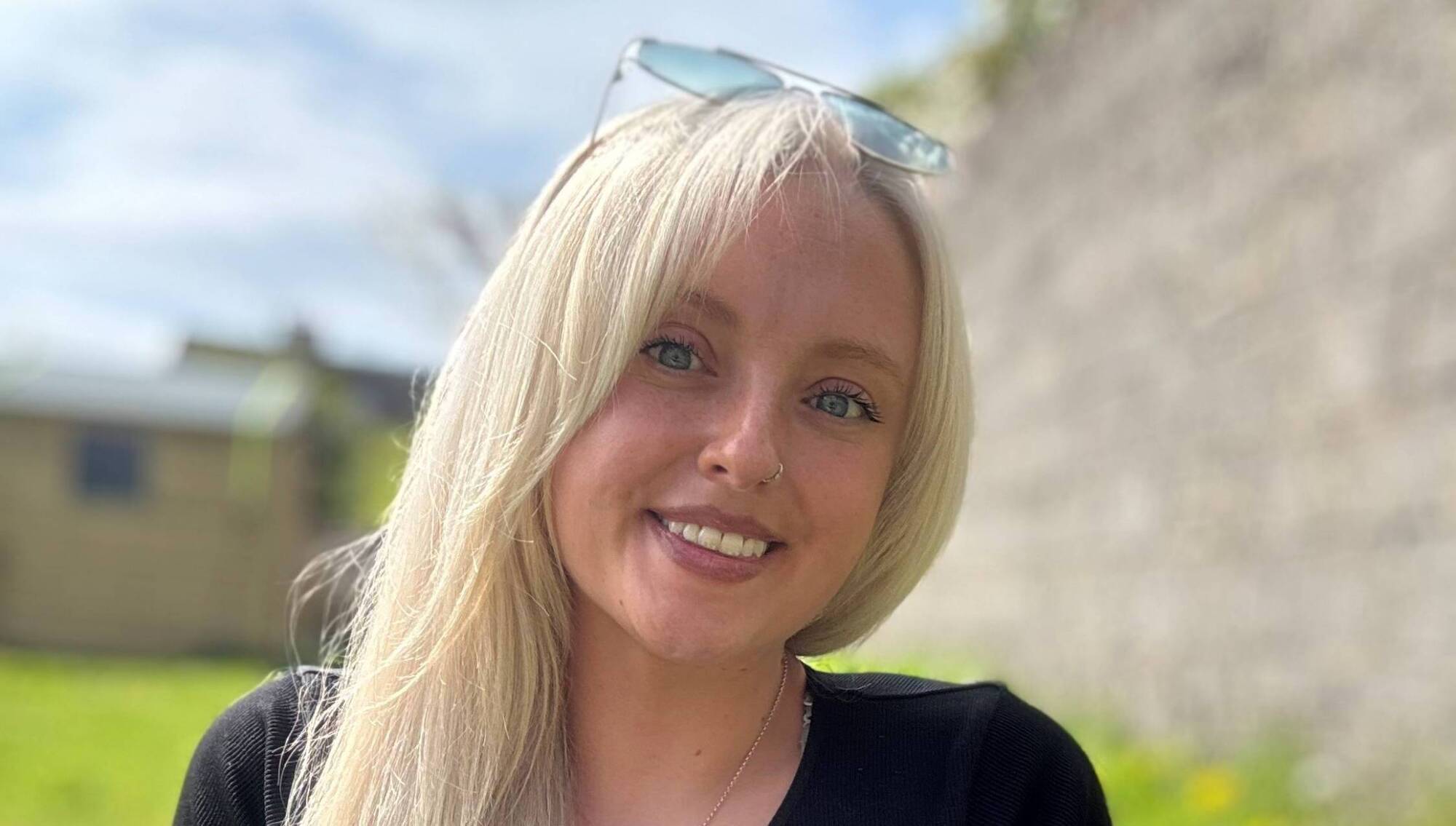
Aishling Condon Healy was diagnosed with ulcerative colitis aged 24, while in college.
In 2022, Aishling Condon Healy was doing a master’s degree in early childhood studies when she got severe abdominal pain. Condon Healy says: “I was experiencing a lot of pain and an unsettled stomach after eating. I was putting it down to food allergies or some kind of intolerances.”
The Galway woman, who was 24 at the time, changed her diet and underwent blood tests to identify rogue foods. During one of those tests, a dietitian asked if there was any Crohn’s or colitis in her family.

“I didn’t know anyone in my family who had Crohn’s or colitis, so I dismissed it. At that time, I had convinced myself that it was a food intolerance, and I just hadn’t pinpointed what the problem food was yet.”
After months of uncertainty and pain, her symptoms escalated to dramatic weight loss and extreme fatigue. She visited her GP, who did blood tests.
The iron in her blood had dropped to a “critically low level” and she was admitted to the emergency department of Galway University Hospital. “I ended up having to get a blood transfusion, and, at that point, the team at the hospital recommended I get a colonoscopy and a gastroscopy, so we could find out what was going on.”
Condon Healy was scared and felt that what was happening to her was “out of my control”.
Following the colonoscopy and gastroscopy, she was diagnosed with ulcerative colitis, or an inflamed colon. The disease falls under the umbrella of inflammatory bowel disease (IBD), says Professor Anthony O’Connor, consultant gastroenterologist with Tallaght University Hospital.
O’Connor says: “Inflammatory bowel disease is a cover-all term. The two most common types of IBD are ulcerative colitis and Crohn’s disease.
“What defines ulcerative colitis is that it only affects the colon, for the most part. Whereas, Crohn’s disease can occur anywhere from the skin around the mouth, all the way through the digestive system, to the skin around the anus.”
Around 40,000 people in Ireland live with IBD, with ulcerative colitis more common than Crohn’s disease.
The diseases within IBD share several common symptoms, including rectal bleeding, anaemia, weight loss, obstructive-type symptoms, and abdominal pain, says O’Connor. With ulcerative colitis, in particular, some of the red flags are “bleeding, anaemia, weight loss, obstructive-type symptoms, and frequent diarrhoea”.
Low iron can be common in people with IBD, says O’Connor, and they may lose blood from an inflamed gut, while the condition also reduces the body’s ability to absorb iron.
On top of that, long-term inflammation interferes with how the body absorbs and uses iron.

Following her diagnosis in June 2023, Condon Healy was prescribed anti-inflammatory medication for her colon.
“That worked wonders for me for the first two months. It was such a big relief.” But then she experienced a “flare-up” of her symptoms and was put on a short course of steroids. For the past year and a half, Condon Healy has been self-injecting a biologic treatment. She admits to being nervous about injecting herself.
“But, like a lot of things, it’s just mind over matter. I was seeing the results and feeling better. So if it means two minutes of a bit of discomfort or a bit of squealing before I have to self-inject, it’s well worth it.”
Biologic treatments are targeted immune therapies made from biological sources, such as antibodies. Their use in treating conditions like Crohn’s and ulcerative colitis has grown in the past few years. While there’s no cure for Crohn’s disease, O’Connor says that “these medications can keep most of our patients in remission for the vast majority of the time”.
Though inflammatory bowel disease is a disease of the gut, “what’s actually malfunctioning is the immune system”, says O’Connor. “For reasons we don’t fully understand, the immune system of someone with IBD identifies the normal bugs that live in the bowel as invaders. It sends out messages to attack these invaders and these ‘bullets’ hit your bowel and cause inflammation. The biologics we use essentially stop the ‘bullets’ and reduce the amount of inflammation, damage, and scarring the gut is subjected to.”
The biologic treatment has made a dramatic difference to Condon Healy. “I’ve had a great year, with very few symptoms. And when I have had symptoms, it’s been very manageable.”
Now 27, Condon Healy completed her master’s degree the same year she was diagnosed. She works as a finance and compliance manager in the early childhood sector. A keen traveller, gym-goer, and sea swimmer, she tried to continue with her hobbies while she wasn’t well, but because of her low energy, going to the gym wasn’t always possible.
Condon Healy says: “I’ve continued to travel and explore, and I have progressed in my career by taking on larger roles. These are things that I’m really proud of, especially given my health challenges. I hope to continue building my confidence and managing my condition and to live life without limitation, as much as possible.”
With her energy returning, she was also been keen to get back to socialising with friends and fully embracing exercise again. “I’d be lying if I said colitis didn’t have a huge impact on my life. It definitely impacted me socially, in the early stages. At my worst, I’ve had to cancel plans, make excuses, and drop out of activities and sports, just to prioritise my energy to get through the day.
“In saying that, I’ve since learned to listen to my body better and I am consistently learning ways to adapt, so that I can continue doing the things that are important to me.”
- For more information on how you can support the It Takes a Village campaign, as part of World IBD Day 2026, see crohnscolitis.ie/ItTakesAVillage