Dr Catherine Conlon: Shift your perspective to embrace the positive 
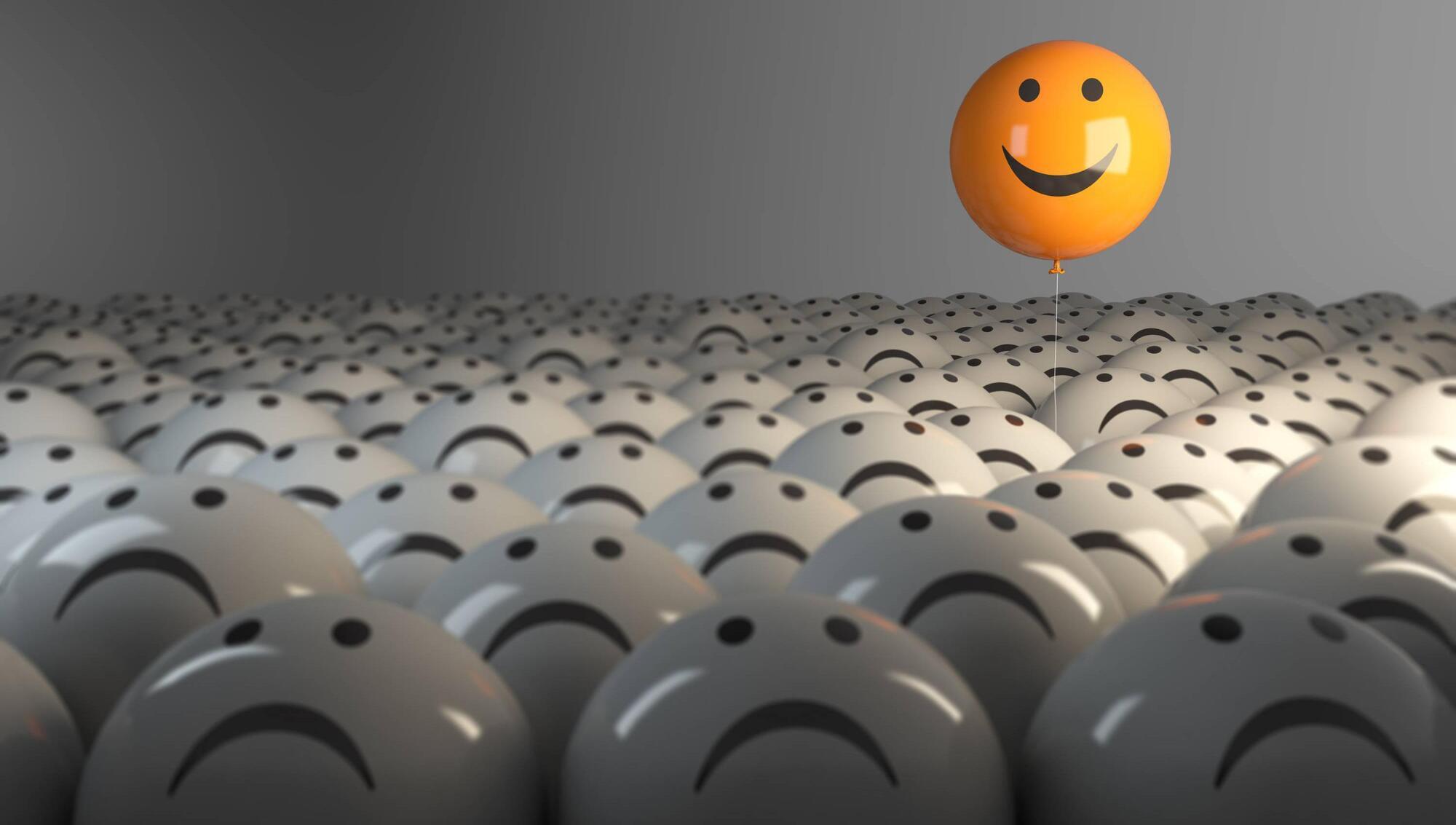
It’s possible to train your brain to be more optimistic, which is linked to a longer, happier and healthier life, writes Dr Catherine Conlon
Dr Catherine Conlon: Shift your perspective to embrace the positive 

Pic: iStock

In the fifth century BC, Greek general Pericles set off on a naval mission during the Peloponnesian War. The sun was eclipsed, and his fleet of 150 ships was cast into darkness. 

While the event threw his crew into panic, Pericles approached the lead steersman, removed his cloak, and held it up around the man’s face, asking him if he was scared of what he saw.

When the man said no, of course not, Pericles rebuked him. So what does it matter, he replied when the cause of the darkness differs?

Fear is debilitating, tiring and often irrational. Pericles understood this and used the power of perspective to defeat it.

In The Obstacle is the Way, best-selling author Ryan Holiday suggests that a shift in perspective can change our entire perspective.

"How we approach, view, and contextualise an obstacle and what we tell ourselves it means determines how daunting and trying it will be to overcome," he writes. 

"And with the wrong perspective, we become consumed and overwhelmed with something actually quite small. So why subject ourselves to that? The right perspective has a way of cutting obstacles – and adversity down to size."

Evidence suggests that a general state of optimism offers many benefits—physically, professionally, and personally.

The Life Orientation Test was developed by psychologists Charles Carver and Michael Scheier to assess individual differences in generalised optimism versus pessimism.

The questionnaire asked participants not about specific events but their general outlook. 

This tool was the foundation of thousands of subsequent studies that link an optimistic outlook with fewer heart problems, reduced diabetes and infertility issues, and improved resilience to stress and pain- including events such as natural disasters and terrorist attacks.

Optimists tend to be higher achievers at school and work, enjoy more job satisfaction, and cope more effectively with major upheavals such as the recent covid pandemic. 

A Journal of Personality and Social Psychology (2007) paper reported that optimists tend to have more enduring and lasting relationships.

Overall, the evidence shows that optimists live longer, happier and healthier lives, while the opposite is the case for people who score low on optimism and high on pessimism in psychological assessments, which at the extreme can be linked to mental health conditions, including depression.

A combined research paper published in the Journal of Positive Psychology (2017) investigated how psychological interventions could improve optimism. 

The researchers found that interventions such as mindfulness and meditation can boost positive expectations about the future, but the effects are transient.

Developing long-term optimism may require a different approach that takes a closer look at a person’s internal perspective of the world around them. 

US psychologist Martin Seligman, known to many as the father of positive psychology, proposes that optimists believe negative consequences occur because of events outside of themselves. 

In contrast, pessimists consider negative consequences as just one more example of their lack of charisma or ability to perform under pressure.

Seligman’s solution is the ABCDE approach, in which you challenge your negative thoughts when they arise.

In his book Learned Optimism, Seligman gives the example of a person who has lost her friend’s expensive earring. 

  • A is for Adversity. 
  • B is for the belief that the friend will be furious. 
  • C is for consequences – feeling sick and stupid. 
  • D is the critical disputation phase – their friend will be disappointed but likely realise it could happen to anyone. 
  • E is for energisation – dusting herself off and moving on.

The Disputation stage is a form of cognitive behavioural therapy that teaches people to break down negative thought processes and behaviour. 

A study in The Handbook of Resilience in Children(2013) reported the role of learned optimism in treating and preventing depression in youth. 

Some evidence suggests that the ABCDE approach is effective in improving optimism in the long term, but for it to be effective, it would need to be practised regularly and routinely to break habits that have become second nature.

Holiday recounts how actor George Clooney spent his first years in Hollywood repeatedly getting rejected at auditions and how hurtful he found that the producers and directors didn’t seem to like him.

Everything changed when he changed his perspective. He realised that casting is an obstacle for producers, who desperately need to find the right person. 

When he started attending auditions with the perspective that he was the answer to their prayers and not the other way around, that was the attitude he projected, and his luck immediately changed.

"The difference between the right and wrong perspective is everything," concludes Holiday.

On a broader front, the ‘optimism gap’ has been widening in recent years. The World Happiness Report 2024 states that optimism for the future is declining, particularly among young people, in areas such as economics, crime, health and the environment.

Optimism in the future is essential because, as with individuals, collective optimism helps to frame the solutions to our collective problems.

We need to be optimistic about the power of optimism – for ourselves and our society.

January is an ideal time to start.

  • Dr Catherine Conlon is a public health doctor

x

More in this section

Lifestyle

Newsletter

The best food, health, entertainment and lifestyle content from the Irish Examiner, direct to your inbox.

Cookie Policy Privacy Policy Brand Safety FAQ Help Contact Us Terms and Conditions

© Examiner Echo Group Limited