How to know if you're getting too much salt in your diet
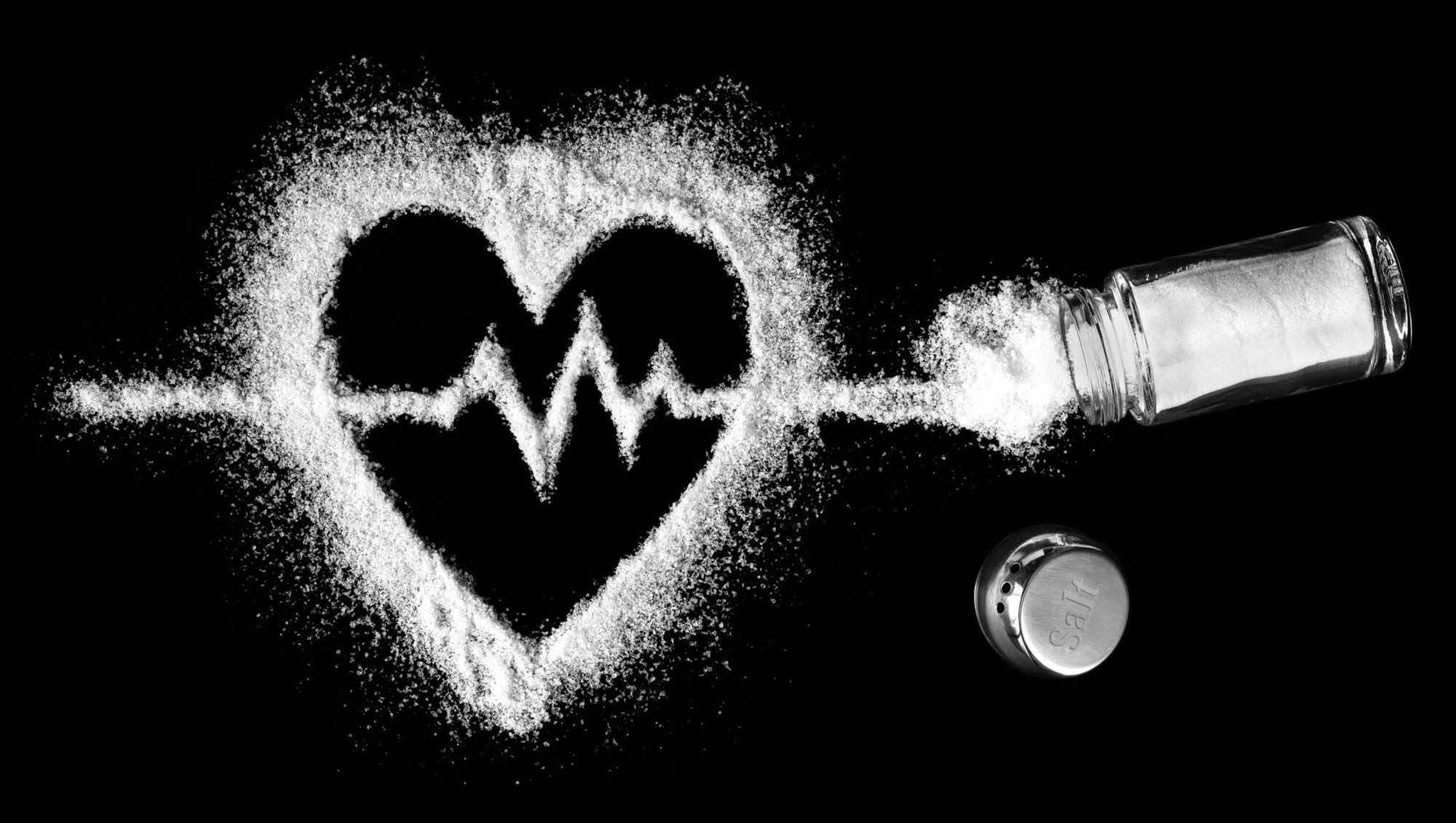
Salt is stocked in almost every household in the country and added liberally to our food, yet this everyday condiment is also one of the leading causes of death worldwide
How to know if you're getting too much salt in your diet

Excess salt is linked to hypertension or high blood pressure — the leading cause of heart attack and stroke worldwide

Archaeological evidence suggests that humans first started using salt to brine, pickle, and preserve food as far back as 6,000BC. We have developed a taste for it in the millennia since then, and now most of us use it liberally at every mealtime to boost the flavour of our food.

A combination of the minerals sodium and chloride, salt’s taste is innately appealing, possibly because our bodies need it to function.


Joana Caldeira Fernandes da Silva is the chief specialist in nutrition at Safefood, the Government body that promotes food safety and healthy eating, and she outlines its role.

“Salt is an essential nutrient that we need to maintain fluid and electrolyte balance and support muscle and nerve function,” she says. “It also helps our kidneys regulate water levels in our bloodstream and supports overall hydration and circulation.” However, according to consultant cardiologist and medical director of the Irish Heart Foundation, Dr Angie Brown, we only need a small amount of it — as little as one to two grams per day. Our health can be adversely affected if we consume too much.

This is because excess salt is linked to hypertension or high blood pressure, the leading cause of heart attack and stroke worldwide.

“Salt acts like a sponge in the body, soaking up and retaining fluid,” says Brown.

“When you eat too much, it pulls water into your blood vessels, increasing the total amount of fluid and your blood pressure. In the short term, signs of fluid retention include bloating and swollen ankles. But in the longer term, high blood pressure damages the walls of blood vessels, narrows them and makes it more likely that fatty deposits will build up. All of this contributes to an increased risk of stroke, heart attack and heart failure.” She points to other health risks associated with a high salt intake, including kidney disease, kidney stones and vascular dementia.

So how much is safe to consume? The World Health Organization advises adults to limit their intake to less than 5g daily.

“Most Irish people consume more than that,” says Brown. “We average at about 10g per day.” Sinéad O’Mahony, a dietitian with the Food Safety Authority of Ireland (FSAI), says high salt intake is likely to be a significant factor in why cardiovascular disease (CVD), a term that covers heart disease, stroke and related conditions and accounts for approximately 25% of all deaths in Ireland.

“There is a substantial body of evidence that suggests high dietary salt intake is an important causal factor in the rise in blood pressure and the development of hypertension,” she says.

But there is cause for hope, as hypertension can be alleviated by cutting back on salt. “High blood pressure is one of the major modifiable causal factors in the development of CVD and evidence shows that relatively modest reductions in salt intake have the potential to produce a significant fall in blood pressure,” says O’Mahony.

International research published last year proved how effective cutting salt could be as a way of reducing blood pressure. It found that people who took medication to control hypertension could considerably lower their blood pressure by halving their salt intake.

Action is needed

Nourhan Barakat is a nutritionist with Action on Salt, a British group of specialists campaigning to reduce salt in processed foods. She believes that the way we eat today makes it all too easy to overdose on salt.

“Up to 80% of the salt we eat is already present in the food we buy if that food is processed, pre-packaged or comes from a restaurant,” she says.

“Key culprits include bread, ready meals, cheese, canned goods and processed meats like bacon and sausages. Food from coffee shops, sandwich bars, and takeaways typically contains more salt than we would add at home. This makes it tricky to reduce our salt intake as salt cannot be removed once it’s been added.” Da Silva agrees.

“Only 10% to 15% of the salt we eat is naturally found in food,” she says.

“We add up to 20% while cooking or at the table and the rest comes from processed food.” Stop to think about your daily diet. Your breakfast cereal may contain salt. So will shop-bought pastries and breads. Ditto the likes of rashers and sausages. If you’re tucking into packet soups, cheese sandwiches or wraps at lunchtime, you’re loading up on salt.

“And then there’s the salt found in foods like soy sauce, ketchup, mayonnaise, stock cubes and readymade sauces as well as in savoury snacks like crisps, popcorn, crackers and nuts,” adds Brown.

In 2003, the FSAI implemented the Salt Reduction Programme to tackle the problem of escalating salt levels in processed foods. This voluntary programme ran until 2013 and involved monitoring 11 categories of processed food identified as contributing to high salt intake in the population. The FSAI took annual samples of these foods and sent them to a laboratory for analysis.

Sinead O'Mahony FSAI Sinead O’Mahony, dietitian with the Food Safety Authority of Ireland.

“The trend was for a steady reduction in salt content,” says O’Mahony. “For example, the salt content of a sample of flaked breakfast cereals reduced by 62% between 2003 and 2015.” The impact of this was seen in a parallel reduction in salt intake in the population. “Based on data collected by the Irish Universities Nutrition Alliance National Adult Nutrition Surveys in 2008 and 2022, it’s estimated that salt intake in the Irish population decreased from 11.6g to 9.5g per day in men and from 8.8g to 7.5g per day in women,” says O’Mahony.

“It still exceeds the guidelines but dietary salt intake is moving in the right direction and some of this can be attributed to food reformulation.” This brings us to the Reformulation Roadmap 2015 to 2025, a partnership between the Department of Health and the FSAI. It aims to build on the achievements of the Salt Reduction Programme, while also reducing the calories, saturated fat and sugar contained in 40 different categories of food.

Its target in relation to salt is to achieve a 10% reduction in the salt content of 25 of these food categories. “That should help us continue to lower dietary salt intake and contribute to reducing the risk of developing high blood pressure and CVD, says O’Mahony, taskforce manager for the project.

Take control of your diet

That’s what’s happening on a government level. But are there steps we can take to cut down on salt individually? The best way to do this, according to Brown, is to prepare most of our meals using whole foods and following a heart-healthy diet such as the Mediterranean diet or adhering to the guidelines of the food pyramid.

“Cut out as much processed food as possible and focus on fresh fruits, vegetables and wholegrains and fresh lean meat, poultry and fish,” she says.

When buying processed foods such as soy sauce, salad dressings or canned or frozen vegetables, she advises reading the label to compare similar products and choosing the one with little to no added salt.

Da Silva also recommends keeping ready meals to a minimum, avoiding salty meats like ham and processed meats like burgers and sausages —and learning to make our own sauces.

“Stock cubes, gravy granules and ready-made sauces can be high in salt,” she says.

“I’d also suggest limiting consumption of packed or tinned soups, instant noodles and snacks like crisps and salted nuts. And to cut back on the amount of salt added in cooking and removing the salt cellar from the table to prevent us from adding extra salt to meals.”

Salt is a natural flavour enhancer. Won’t its absence make our food taste bland?

“You can use alternative seasonings instead,” says da Silva.

“Black pepper, fresh herbs, spices, garlic and lemon juice can all add lots of flavour to food.” Barakat reassures you that you won’t miss salt for long.

“Our taste buds adapt to lower salt levels in as little as two weeks,” she says.

“They become more sensitive and allow us to enjoy the same flavour with less salt.”

It’s easy to cut back on salt when shopping or cooking but what about eating out, when there are no labels to consult? Barakat advises avoiding menu items that contain ingredients such as cheese and processed meats that are typically high in salt.

“Don’t be afraid to ask the waiter for little to no salt to be added to your meal,” she adds.

“Request that sauces and dressings are served on the side as they are often the saltiest part of the meal. And always taste your food before adding extra salt at the table.” Slashing our salt intake, would have positive consequences for blood pressure levels and overall cardiovascular health.

But minimising our salt intake is just one thing we can do to keep our blood pressure in check.

“Increasing physical activity, quitting smoking and embracing a balanced diet can also have a huge impact,” says Brown.

It’s advice we would all do well to take — without a pinch of salt.

How to read food labels

Dr Angie Brown shares her top tips on how to read food labels so that we can opt for foods that are low in salt.

  • Check the ingredients list for words like 'sodium', 'salt' or 'soda'. The closer to the top of the list those words appear, the more salt that food is likely to have.
  • Look at the nutrition label to find the amount of salt. The amount is salt is usually listed per 100g or 100ml of the food. Foods that contain less than 0.3g salt per 100g are low in salt while foods that contain more than 1.5g of salt per 100g are high in salt. Use this information to choose options that are lower in salt.
  • Note your serving size compared to the 100g measure on the nutrition label. If your portion size is double that measure, you’re eating double that amount of salt.
  • Some nutrition labels list sodium instead of salt. To convert sodium to salt, you need to multiply the amount of sodium by 2.5. So, if a foodstuff contains 2g of sodium, it contains 5g of salt.
  • Many packaged products have 'traffic light' nutrition labels, which can make shopping for food a whole lot easier. Red is used for foods that are high in salt. Amber is used for those containing a medium level, while green means that the food is low in salt. “If you are trying to eat less salt, avoid foods with red nutrition labels,” says Brown. “Choose more greens and ambers instead.”
  • Don’t assume that fancy salts are any better than cheaper table salt. According to research carried out by CASH (Consensus Action on Salt and Health) in the UK, sodium chloride accounts for nearly 100% of all rock and sea salts. This means that they are just as damaging to health as any of the more refined salts on the market.

Celebrating 25 years of health and wellbeing

More in this section

Lifestyle

Newsletter

The best food, health, entertainment and lifestyle content from the Irish Examiner, direct to your inbox.

Cookie Policy Privacy Policy Brand Safety FAQ Help Contact Us Terms and Conditions

© Examiner Echo Group Limited