What your favourite colour might say about you
There is strong evidence that colour can set a mood but is there a link between colour preferences and personality type?
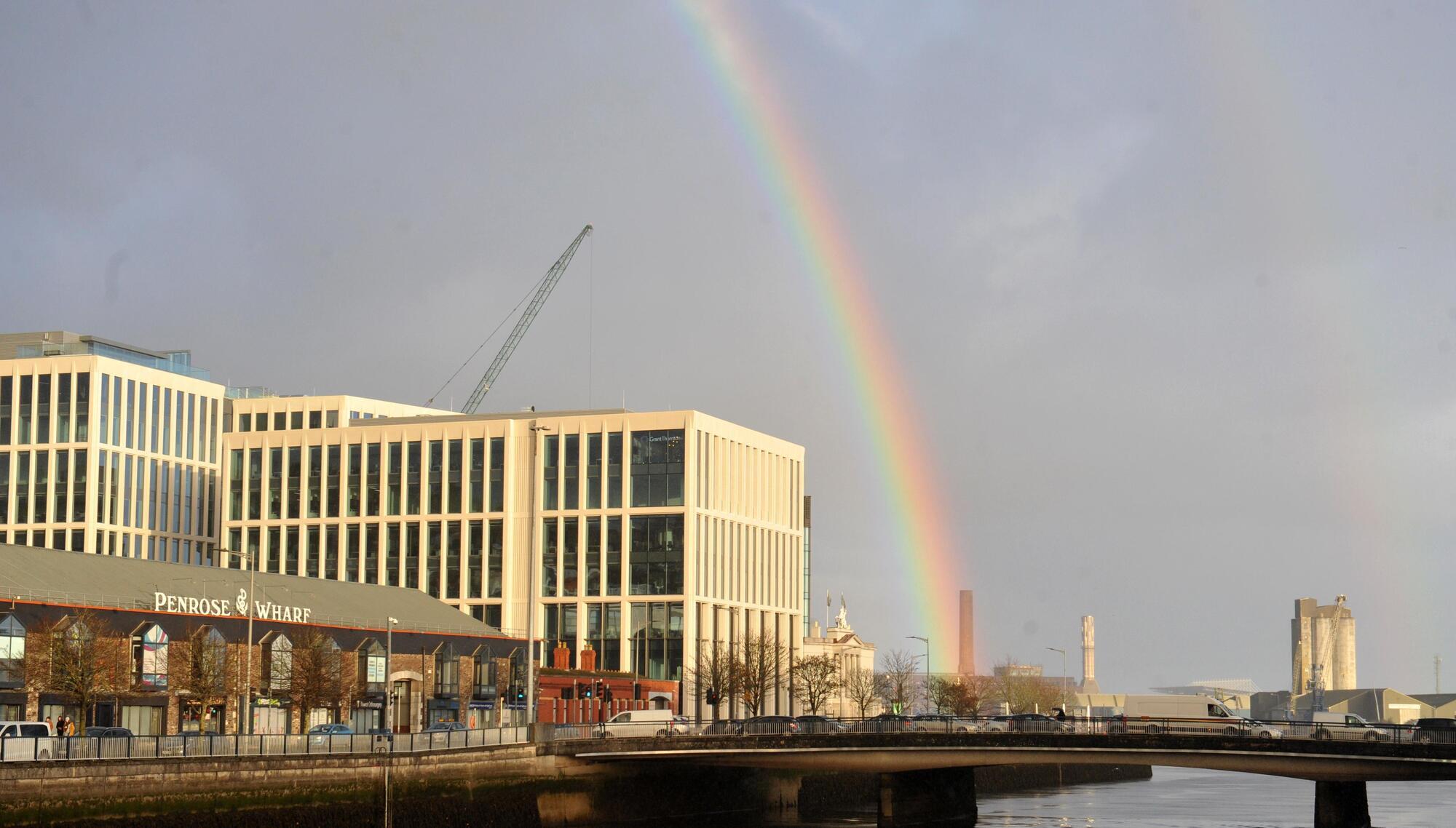
 A rainbow in the sky at Penrose Quay, Cork City after a light shower of rain.

A rainbow in the sky at Penrose Quay, Cork City after a light shower of rain.

I was away from home for a few days when the painter came in to refurbish the house. I phoned my husband to find out how it was going. How did the new colour in the living room look?

"It’s fine," he said "it’s kind of a light jade".

Light jade? It was supposed to magnolia with an almost imperceptible hint of dusky rose.

It was magnolia with a hint of rose.

A lot of factors feed into how people perceive colour, from the biology of our eyes to how the brain processes information, the age of the lens, the colour of the iris, as well as cultural differences in the way we talk about colour.

Although we normally identify seven colour categories: red, orange, yellow, green, blue, indigo and violet; in fact the rainbow of colour is a continuous spectrum where the wavelengths of light vary smoothly between the two ends of the visible range.

In a paper in Annual Review of Visual Science (2022), senior lecturer at the School of Psychology at the University of Sussex, Dr Jenny Boston expands on why people see colour differently.

For most people there are three types of cones or light receptors in the eye that are optimised to detect different wavelengths of light. But sometimes a genetic variation can cause one type of cone to be different or absent altogether, leading to altered colour visions.

Of the three cone types, more is known about two of these — the ones that detect long and medium wavelengths, known as L and M cone types. Each of these has membrane proteins called opsins. These opsins are photosensitive which allows them to change shape when light is received. The genes that code for these opsin proteins have seven sites on the gene that are polymorphic — allowing for variations in DNA combinations. It is this variance in genetic coding that is part of the variance in colour perception, including colour blindness.

Red-green colour deficiency can occur when L or M cones are either missing or non-functional. In milder forms the two cone types may be present but much more similar to each other. So the range of perceived differences in red and green are reduced.

Pic: iStock
Pic: iStock

There is strong evidence that colour can set a mood. Red feels energetic, orange lively, green and blue calm, violet creative, pink comforting and neutral… neutral. But research suggests that it may be the light more than the colour that is impacting our mood.

Chair of colour science and technology at the University of Leeds, Prof Stephen Westland told the New York Times that these effects are based on "light but not vision". When exposed to colour the cells at the back of the retina send signals to the visual cortex in the brain to recognise colour. But they also send messages to the hypothalamus, the part of the brain responsible for regulating the body. Simply seeing a colour, or more particularly the light the colour gives off, can affect a person’s mood, temperature, sleep, heart rate, ability to eat and breathing patterns.

This confirms what had already been discovered decades earlier. A paper in the International Journal of Biosocial Research in 1982 reported the impact of repainting an orange and white classroom in shades of blue and grey and installing grey carpeting in place of the previous orange — all of the students’ blood pressure, respiration rates and pulses dropped; and they all became calmer, after the room makeover.

Of particular interest, the study involved two blind students. Although their eyes were unable to see the physical changes, the hypothalamic area of their brains picked up the changes in wavelengths, so they had the same physical benefits of those with sight.

Colour is a key marketing tool. Companies that want to be associated with dependability (Dell, HP, IBM) often use the colour blue. Companies that want to be fun and exciting use a splash of orange (Fanta, Amazon).

But what do we know about favourite colours and links to key personality traits? Does how you paint your bedroom imply something about your personality?

The evidence would say, probably not a lot.

There is evidence from correlation studies that link colour preferences to personality.

  • A study investigating colour preferences in 374 students in North Dakota, published in the Journal of Psychology (2014) found a preference for the colour red in students who were more hostile.
  • A study on 104 Serbian students found correlation between a preference for dark colours with neuroticism/ anxiety and lighter colours with ‘aggression and activity'.
  • A larger study in the British Medical Journal (1996) confirmed a perception of red, yellow and orange as stimulant, with blue and green as tranquilising.
  • Another study in Frontiers in Psychology (2022) found that when shown a blue background, people showed more willingness to donate to charity that when shown a red background.

While all these studies show correlation, we are still not clear if there is a causal link between colour and personality type. Is ‘staring at a green vista’ the causal factor at play or is it the fact that the ‘vista’ is made up of trees and plants? Or that you associate green with plants or blue with oceans or red with fire?

The answer on this is to beware of pseudoscience, in all its hues.

  • Dr Catherine Conlon is a public health doctor in Cork and former director of human health and nutrition, safefood

More in this section

Lifestyle

Newsletter

Eat better, live well and stay inspired with the Irish Examiner’s food, health, entertainment, travel and lifestyle coverage. Delivered to your inbox every Friday morning.

Cookie Policy Privacy Policy Brand Safety FAQ Help Contact Us Terms and Conditions

© Examiner Echo Group Limited