Workplace Wellbeing: How to sharpen your concentration if you get distracted while working

Fast-changing digital technology means staying on task at work has never been more difficult. But it’s possible to sharpen your concentration by adopting simple strategies, from goal setting to working in 25-minute blocks
Workplace Wellbeing: How to sharpen your concentration if you get distracted while working

Pic: iStock


EMMA LYNCH is a 41-year-old self-employed career and life coach from Ennis who finds working from home distracting.

“My two kids are here,” she says. “So is the washing that needs to be done and the bins that have to go out. Sometimes I really struggle to keep my thoughts on work.”

Deirdre Martin, 42, from Paulstown in Kilkenny, knows the feeling: “As a solo entrepreneur who offers brand and marketing consultation services, I have so much to do that it can be difficult to focus. My teenage kids distract me. Email notifications and social media alerts do too. There have been times when I’ve been so overwhelmed by all these demands on my attention that I’ve had pains in my chest with the stress of it all.”

We live in a world where it’s become the norm to be distracted. So says Dr Gloria Mark, a cognitive psychologist, professor of informatics at the University of California and author of Attention Span: Finding Focus for a Fulfilling Life.

“We carry our smartphones with us at all times, which means that at any moment, we can check our messages and look up information,” she says. “On our computers at work, we can switch windows to get the news or go on social media. The speed at which we can satisfy our whims reinforces distraction as a form of habitual behaviour.”

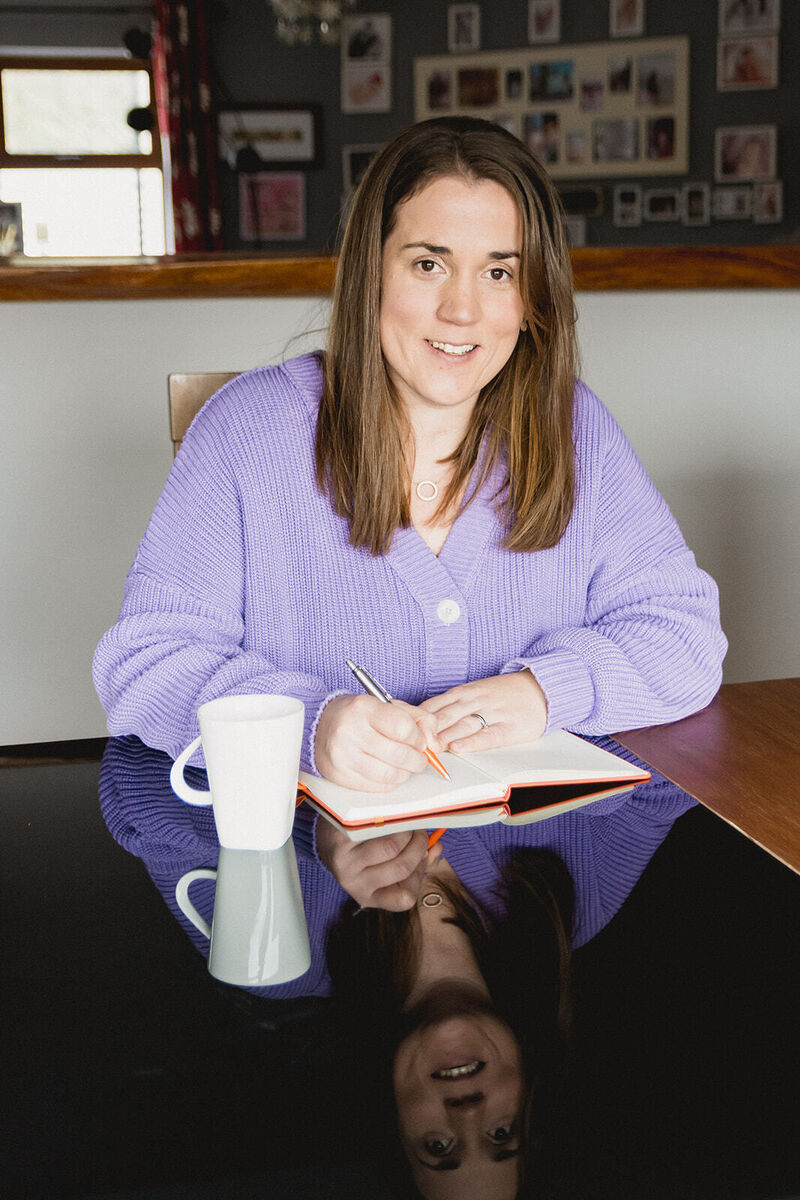
Deirdre Martin taking a break in her busy day.

Dr Eoin Whelan, professor of business analytics and society at the University of Galway, carries out research into the psychology that underlies our interactions with digital media. He agrees that we’re living in a time of peak distraction: “With more leisure time than ever, we seek stimulation more. Added to that are the technology companies for whom distraction is their business model.

“The result is that it’s now common for people to check their phones or look at their emails in the middle of conversations, when they are watching TV or while they are doing a task at work.”

Mark has carried out studies that monitor office workers’ time spent on one activity before switching to another for two decades.

“In 2004, they spent two and a half minutes,” says Mark. “That has since fallen to 47 seconds.”

Mark says this reduction in employees' capacity to concentrate has an obvious impact on their productivity levels and contributes to higher stress levels.

Staying on task is also good for your heart. In a 2016 study, office workers wore heart monitors while software sensors detected how often they switched windows on their computers. The screen switchers had a consistently high heart rate, while those who stayed on task had healthier, more variable rates.

Dr Eoin Whelan says we are not designed to multi-task.

Humans are designed to mono-task

Those who think they can multi-task their way through the working day are mistaken, says Whelan: “There’s no such thing. Humans are designed to mono-task. Sure, there are tasks that come with a low cognitive load that can be combined without a noticeable loss in performance. Things like walking the dog and listening to music. But you can’t have a conversation and email at the same time and if you try, what you’re actually doing is switching back and forth between those two tasks. That’s exhausting and results in a drop in performance.”

Mark gives three reasons for this performance drop. “One is that we make more mistakes when we try to do several things at once.”

Two is the so-called switch cost. “Every time we switch attention, it takes a few moments to reorient our focus onto the new task, making multitasking an ineffective use of time in the long run,” she says.

Three is the stress caused by multitasking, as our blood pressure has been shown to increase when we try to multitask rather than complete tasks sequentially.

So how can we combat the many distractions we encounter on a daily basis?

“It may take practice,” says Whelan. “Start by blocking off 15 minutes at a time, taking a break for a couple of minutes and then doing another 15 minutes of focused work. Building up slowly, you should eventually be able to concentrate for an hour or two at a time.”

He also recommends making it difficult to use your phone: “Put it in another room or put an elastic band around it. This will force you to stop and think about whether or not you really need to use it.”

Mark also endorses a more mindful approach to technology: “Our behaviours are often automatic. We grab our phones or open social media without really thinking about it. But if we ask ourselves why we are doing it, we can become intentional in changing our behaviours. We can tell ourselves that we’ll work for another 30 minutes and then reward ourselves with a few minutes of scrolling. No matter who we are, our cognitive resources are limited. We need breaks to replenish them.”

Our powers of concentration can vary throughout the day and it’s useful to be aware of this, says Mark: “If you know when you’re best able to focus, you can plan to do your most demanding tasks at that time of day.”

Setting goals can keep distraction at bay too. “Attention is goal-oriented,” says Mark. “Keeping our goals in mind helps us to keep on track. Try writing your goals down and keeping them in your field of view.”

Emma Lynch uses the Pomodoro Technique for effective time management.

Strategies to focus

Martin and Lynch have both developed strategies of to improve their focus.

“I read a book called Buy Back Your Time [by Dan Martell] which taught me to categorise tasks into those I can eliminate, automate and delegate,” says Martin. “That inspired me to take on an assistant who now handles my emails so that I don’t get distracted by them anymore.”

She also changed her approach to social media: “I need social media to generate work but it destroys my focus. What I do now is block some time during the week to create content and then hand it over to my assistant to post it for me. I check it in the evenings to respond to comments but other than that, I’m logged off.”

She means this literally. She has downloaded an app for her phone which blocks social media from nine to five.

“If I didn’t have that, I could waste hours doomscrolling,” she says.

Lynch uses a website called www.focusmate.com to practice a focusing technique called body doubling: “It sounds silly but it works for me. I log onto the website and input how long I want to focus. The website then matches me up with another person for that length of time.

“I tell them what I’m going to do. They tell me what they are going to do. We turn each other on mute. We can still see each other at the bottom of our screens and having each other there helps us to get to work.”

Another technique she uses is breaking tasks down into smaller steps. “Sometimes, I put tasks off because they seem too big. Smaller steps are less off-putting.”

She also swears by the Pomodoro technique: “This is where you focus on a task for 25 minutes and then take a break for five. You do that three times and then take a longer 15-minute break.

“You’ll be surprised how much you get done and I’ve found that you can even put on a load of washing or fill the dishwasher in that five-minute break.”

More in this section

Lifestyle

Newsletter

The best food, health, entertainment and lifestyle content from the Irish Examiner, direct to your inbox.

Cookie Policy Privacy Policy Brand Safety FAQ Help Contact Us Terms and Conditions

© Examiner Echo Group Limited