Natural Health: What can I use to treat my daughter's eczema flare-ups?
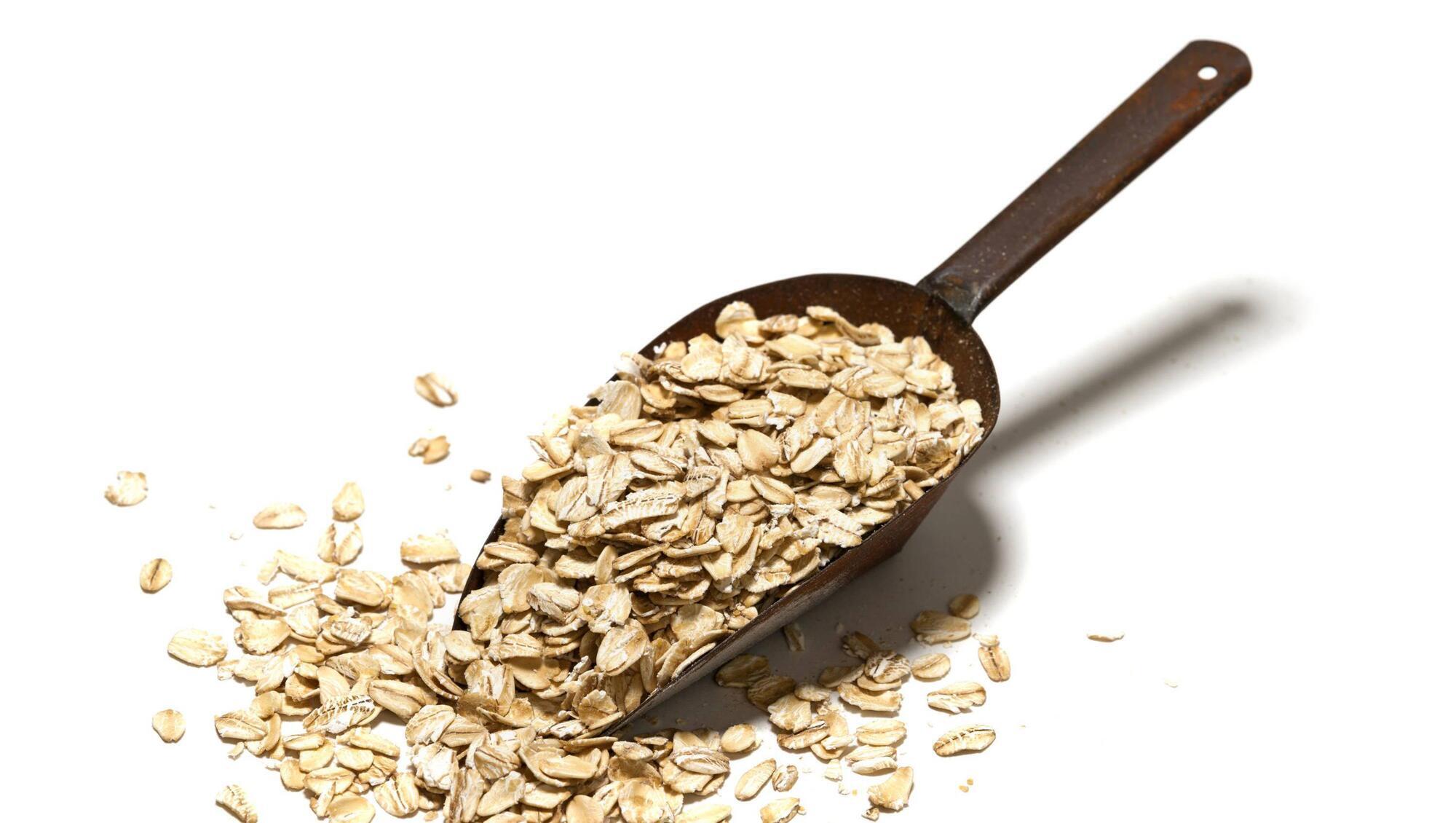
Rolled oats in metal scoop isolated on white.
Younger skin is very delicate and can be prone to irritation and sensitivity, making a condition like eczema particularly challenging to manage. It can also be upsetting as a parent to see your child go through such distress while trying to find a solution.
An oatmeal bath is a popular natural remedy for children with eczema. Colloidal oatmeal, which has been blended into a fine powder that dissolves in water, is even better. However, regular oatmeal also works well.
Colloidal oatmeal is so finely processed that the particles remain suspended in water. This blend is much finer than what you achieve from grinding or blending oats at home.
Oatmeal is soothing and nourishing for the skin, addressing inflammation and itching almost instantly.
If you are using whole or home-ground oats, they are best placed in a cotton sock or muslin bag (you can use a handkerchief with a hair elastic in a pinch). The oatmeal-infused water (colloidal or regular) can also be put into a spray bottle to spritz affected areas if a bath is not an option. Of course, anyone with an allergy to oats should avoid this remedy.
Calendula is another herbal remedy that can help topically and internally. You can use a pre-made calendula preparation ointment, cream, or salve to soothe the skin or make an infusion and then apply it topically as a spray or poultice in much the same way as the oatmeal water.
Calendula officinalis (not to be confused with marigold) is a soothing skincare ingredient with antibacterial, antifungal, and anti-inflammatory properties. Topical application of calendula cream or balm can help keep the cracking and bleeding skin clear of infection. It also reduces redness and promotes the growth of new tissue.
Raw honey is a somewhat unusual remedy for eczema that tends to crack and bleed. Its antimicrobial properties can help prevent infections and promote healing while relieving stinging or itching patches. Apply a thin layer, then cover it with sterile gauze and a bandage if necessary.
Cracked nipples will undoubtedly put a strain on your breastfeeding experience. Painful and cracked nipples are a common issue faced by breastfeeding mothers, and several solutions are worth investigating.
You may have already consulted with a lactation specialist, but if not, it is worth booking a session with one even though your breastfeeding is established. Proper latch technique is essential to prevent nipple trauma.
Cracked nipples may be exacerbated by tongue tie in infants, so it is a good idea to identify or rule this out as an issue. Tongue tie occurs when the frenulum beneath the tongue is too tight, inhibiting proper latching during feeding. In some cases, a frenotomy is recommended, so it is essential to consult with a paediatrician.
In the meantime, you can express breast milk and apply it to your nipples to assist healing. Breast milk has antibacterial properties, which is why it helps to soothe and heal. It is also helpful to allow your nipples to air dry after breastfeeding to prevent moisture build-up, as dampness may contribute to nipple soreness and cracking.
Calendula balm or ointment is another topical solution that is safe for healing nipple trauma. As mentioned earlier, calendula is an effective anti-inflammatory with powerful wound-healing properties.
Try not to use antibacterial soaps or alcohol-based products on the nipples, as they can exacerbate the problem.
- If you have a question for Megan Sheppard, please email it to feelgood@examiner.ie
- NOTE: The information contained in this column is not a substitute for medical advice. Always consult a doctor.


CONNECT WITH US TODAY



Be the first to know the latest news and updates