Why we eat too much: How to tackle our toxic food environment
Dr Andrew Jenkinson wants us to know that food acts like a drug in the body. And that depending on what kind of food it is, it can be a toxic drug or a cleansing one.
A bariatric surgeon, Jenkinson is part of an expert team developing advances in gastrointestinal surgery at University College Hospital in Bloomsbury, central London. He has just published .
His view on the damaging effect of our modern diet is supported by the world’s largest review of ultra-processed food (UPF), published this week in the BMJ.
The findings suggest UPF is linked to 32 damaging effects on health from a greater risk of heart disease, cancer, type 2 diabetes, poor mental health and early death.
For food to be a life-enhancing, health-giving force in your body, Jenkinson advocates fresh vegetables, particularly leafy green and brightly-coloured ones.
He loves pulses and beans – “a fantastic source of healthy high-protein calories” — and grains like buckwheat or quinoa. He says berries are the best fruits — full of phytochemicals and low in fructose sugar.
Natural yoghurts and cottage cheeses — high in protein, calcium and B vitamins — are “great to start your day with”.
He likes canned fish — tuna, salmon, sardines, mackerel (in tomato, not oil) — because it is nutrient-dense, especially with omega-3. And instead of vegetable oils, go for extra virgin olive oil, butter, coconut butter and clarified butter (ghee).

The kinds of foods that negatively impact our health, Jenkinson says, abound in the “so-called Western diet, which originated in the US and has been exported around the world”.
This diet comprises processed food (factory-made with lots of added artificial flavourings/colourings/preservatives), fast food (takeaway food containing high levels of refined carbs and cooked in vegetable oils), sweet carbonated drinks and fruit juices, and sweet (sugar) and savoury (vegetable oils) snacks.
“[It’s a] diet that comprises very high levels of sugar, fructose and vegetable oils — all factors that can cause obesity.”
When it comes to changing our eating habits for the better, for health, for life, Jenkinson urges people to focus on their identity, who they want to be – for example, a person who wants to eat healthy, natural foods – rather than the goal or what they want to achieve, for example, losing two stone.
“Identity-driven habits are less reliant on willpower, more enjoyable and more sustainable,” he says.
He believes knowledge of our toxic food environment — and of how our mind and body react to unhealthy foods — can promote a new healthy outlook and understanding.
“Once you grasp what food does to your body and how vulnerable our human brains are, it’s almost like your brain is rewired — you think differently. And it becomes not about ‘giving up something’ but just ‘I don’t want that anymore’.
"You have a natural aversion to these harmful foods, and a real liking for fresh foods.”
When Jenkinson describes the negative impact ultra-processed foods have on the body, he uses words like ‘fat’ and ‘weight set-point’.
But the point of his explanation is to show just how these foods throw the body’s weight-control mechanism out of whack, putting us on the road to overweight and obesity and all its related health complications.
“If I treated you with insulin, you’d put weight on. So if you consume a diet that increases insulin – too much sugar, too many foods containing refined carbohydrates and too much vegetable oil – it acts like a proxy drug and increases weight.”
Jenkinson says the problem with too-high insulin is that it confuses the body’s natural, inbuilt weight-control system.
Explaining that the master controller of our weight is a hormone called leptin – which comes from fat – Jenkinson says: “The more fat someone has, the higher the leptin level in the blood. Leptin is supposed to stop people getting too fat or too thin – the amount in the blood acts as a signal to the weight-control part of the brain, the hypothalamus.”
So, if everything is working normally, he explains, your hypothalamus will sense the increased leptin in your blood — the increased weight you’ve put on – and it will respond by making you feel fuller so your appetite decreases.
You naturally eat less, you lose the weight you put on and your leptin level returns to normal. But insulin throws a scupper in the works — it blocks the leptin signal from getting through.
This brings Jenkinson to “a big misconception” among the public: that eating healthily — and thereby keeping to a healthy weight — is all about calories. In fact, it is not, he says.
“You want to lose weight. You go on a diet, cut calories, and go to the gym. But your brain doesn’t want you to lose weight – and your brain always wins the war.
He explains just how the brain goes on the defensive in this war. A big player in the whole dynamic is what he calls your ‘weight set-point’.
“Everybody has their own individual weight set-point – the weight that your brain wants you to be. If you’re lucky, your weight set-point is in the normal range.”
The problem arises, he says, if your weight set point is in the overweight or obese category.
“Then every effort to force your weight down by simple calorie restriction and exercise will ultimately fail — because your brain will fight against the weight-loss of dieting. It wants to keep your weight at its set point because it thinks this is safer for you.”
So how will your brain fight the war and get its way?
“It will make your internal dimmer switch – your metabolism – go down, so you lose less energy. And your appetite hormone, ghrelin, will increase significantly, signalling to the hypothalamus to cause a voracious appetite and food-seeking behaviour.”
What decides our weight set-point? Jenkinson says genetics plays a big role — “probably accounting for about 70% of where a person’s set-point will be”.
If your weight set-point is high (in the obese category), this is likely caused by a combination of your genes with the food environment you are exposed to.
“We know that obesity rates are very high in countries that consume the Western diet.”
Other factors that affect our weight set-point include stress because it increases insulin and appetite; previous dieting because it signals to the brain to store extra energy (fat) in case of future dieting; and sleep – if sleep hormone melatonin is deficient, often because of modern lights and “24-hour illuminated cities”, it can lead to increases in stress hormone cortisol and in insulin.
What also works against us is that ultra-processed foods — much more so than natural foods — are like designer foods for giving us feelings of pleasure, or as Jenkinson says: a dopamine hit.
“In particular, sugary and processed foods that have a sugar/oil combination cause significant feelings of pleasure. This leads to reward-seeking and eventually habit-formation.”
Jenkinson says we don’t realise that most of our decisions are actually habits.
“Our vulnerable human brain is attracted to sweet, high-calorie, brightly-coloured foods. And when we’re on a diet these feelings of wanting high-calorie food intensify.”
Sugar, refined carbohydrates and vegetable oils – these make up the bulk of processed foods and they make us quite unwell, says Jenkinson.
“Aside from blocking our weight-control signals, they cause inflammation and a lot of Western inflammatory disease.”
He says the additives used in ultra-processed food – to make it taste and look good, and to prolong shelf life – are often not foods at all.
“They have individually been linked to numerous conditions that have become more prevalent in the developed world over the last 30-40 years, including neurological conditions such as ADD and Alzheimer’s.
"They can increase risk of cancer (in animal tests) and contribute to inflammatory and autoimmune diseases including asthma and arthritis.”
Jenkinson says the link between individual food additives and these conditions is well known.
“Government food safety agencies justify not banning them from food because they’re deemed acceptable in low doses. However, we’re consuming multiple and diverse types of additives within each ultra-processed food item. The effect of mixing them is unknown because it is not tested.”
Rather than the food pyramid, Jenkinson supports the Brazilian Nova system which avoids ultra-processed foods, as well as snacking between meals and makes time for wholesome foods. It also encourages learning to cook if you can’t already.
“Imagine there was a drug that would unblock your metabolism, improve the amount of energy you expend, cause weight loss, decrease inflammation, cure you of inflammatory illnesses and make you live longer, wouldn’t you take that drug?” Jenkinson asks.
That drug, he says, is natural unprocessed food.
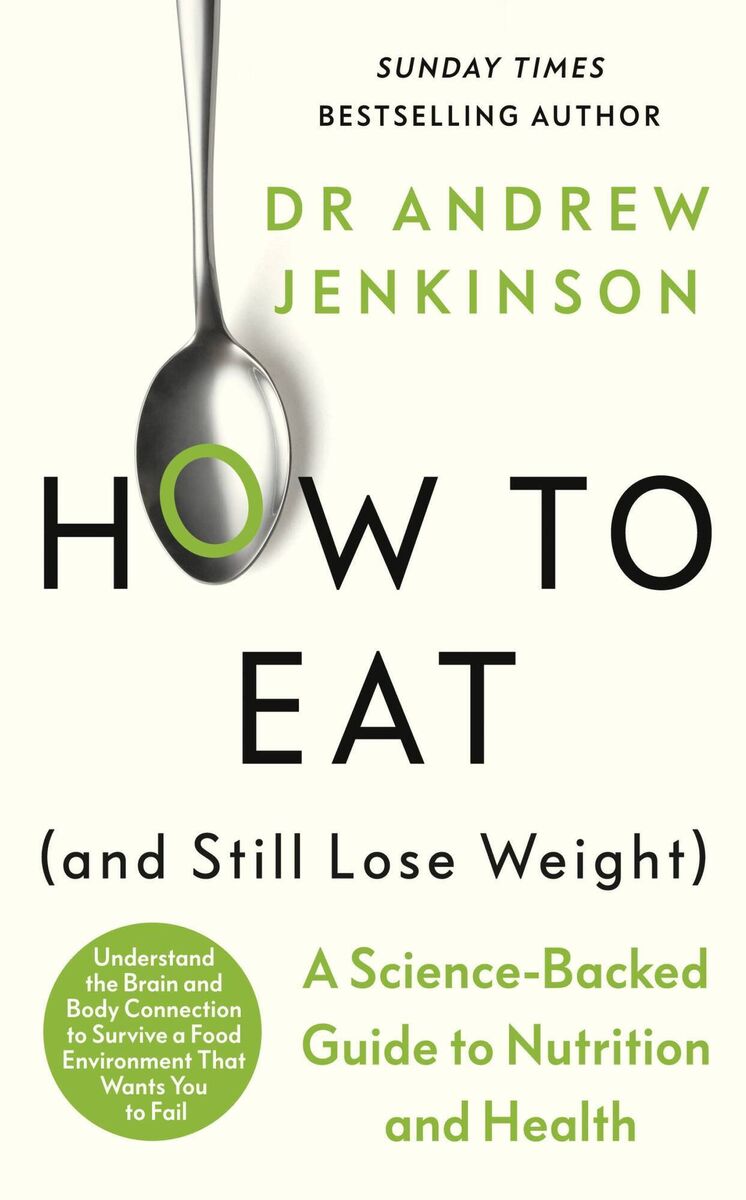
- How To Eat (and Still Lose Weight), A Science-Backed Guide to Nutrition and Health, Dr Andrew Jenkinson, €26.60

Ozempic (active drug: semaglutide) has 1.4bn views on TikTok, and has been hailed a miracle weight-loss drug by Hollywood culture.
Dr Andrew Jenkinson has 20 to 30 patients on the drug.
“I prescribe it to switch off their appetite. [But] when you stop the drug, the weight comes back. So I use it as a tool, an opportunity [while the patient is taking semaglutide] to re-set the way they think about food.
"I try to change their whole way of eating so what they’re eating is really healthy.”
Alex Miras professor of endocrinology at Ulster University, says Ozempic is not licensed for obesity in Ireland, but for diabetes only. However, the European Medicines Agency — responsible for approving and regulating medicines across all EU member states (including Ireland) — has approved semaglutide for obesity.
At the outset a diabetes drug, word soon spread that semaglutide was causing substantial weight loss.
“This was big news because since 2011 the only drug we’ve been able to use for obesity in the UK and Ireland is Orlistat — a difficult medicine to take because of its side-effects, [while] weight loss is very moderate,” says Miras.
“And then suddenly we have something [semaglutide/Ozempic] very safe, very tolerable, not cost-prohibitive, and causing substantial weight loss. This is why it has become so popular.”

Isabelle Fagan, CORU-registered dietician with Orla Walsh Nutrition, says semaglutide has favourable short-term effects on aspects of control of eating (for example, hunger or fullness, food cravings and mood).
“Studies show that participants taking semaglutide injections, combined with lifestyle changes, lose an average of 15% of their original weight over one year, compared to a two per cent loss in [those] not taking the drug.”
It is not a cosmetic drug, warns Miras, who has been involved in international trials looking at the drug’s efficacy in diabetes sufferers with previous history of heart attack and stroke.
“It reduced the risk of having a heart attack or stroke by 20%.”
He highlights its important role for people suffering from obesity and obesity-related complications, for those with pre-diabetes, or who have fatty liver disease or osteoarthritis, so as to reduce symptoms.
“It shouldn’t be used by people who don’t have the disease of obesity, who [just] want to get slimmer for the beach, or who want to look good at a wedding.”

Fagan emphasises that semaglutide is prescribed as an adjunct therapy to intensive behavioural change, reduced-calorie diet and increased physical activity.
“It’s not a miracle drug that works wonders without you making any effort or lifestyle changes. [And] research has shown most participants taking semaglutide will regain two-thirds of the weight after stopping use.”
She says trials investigating semaglutide involve people who are overweight or obese (BMI greater than 27 with at least one pre-existing weight-related condition or those with a BMI of 30 or above).
“So we don’t have research to support its use [in people with healthy BMI].”
She also cautions that appetite reduction and side effects might be significant enough that people forget to eat or avoid meals, “leading to deficiencies in important nutrients”.
“A doctor who understands obesity. Patients should be followed up and should receive additional multi-disciplinary support from a dietitian, health coach, psychologist if necessary,” says Miras, who confirms there can be transient side-effects initially — nausea, diarrhoea, constipation.
The worst side effects are inflammation of the gall bladder and pancreas.
“These are very rare, about three people in every 1,000.”
CONNECT WITH US TODAY



Be the first to know the latest news and updates