The Anti-Cancer Cookbook: Recipes to help reduce your cancer risk
Normal body weight, a healthy diet, and physical activity can prevent up to 40% of cancer cases. The co-authors of The Anti-Cancer Cookbook, talk to Colette Sheridan about the steps you need to take to stay well
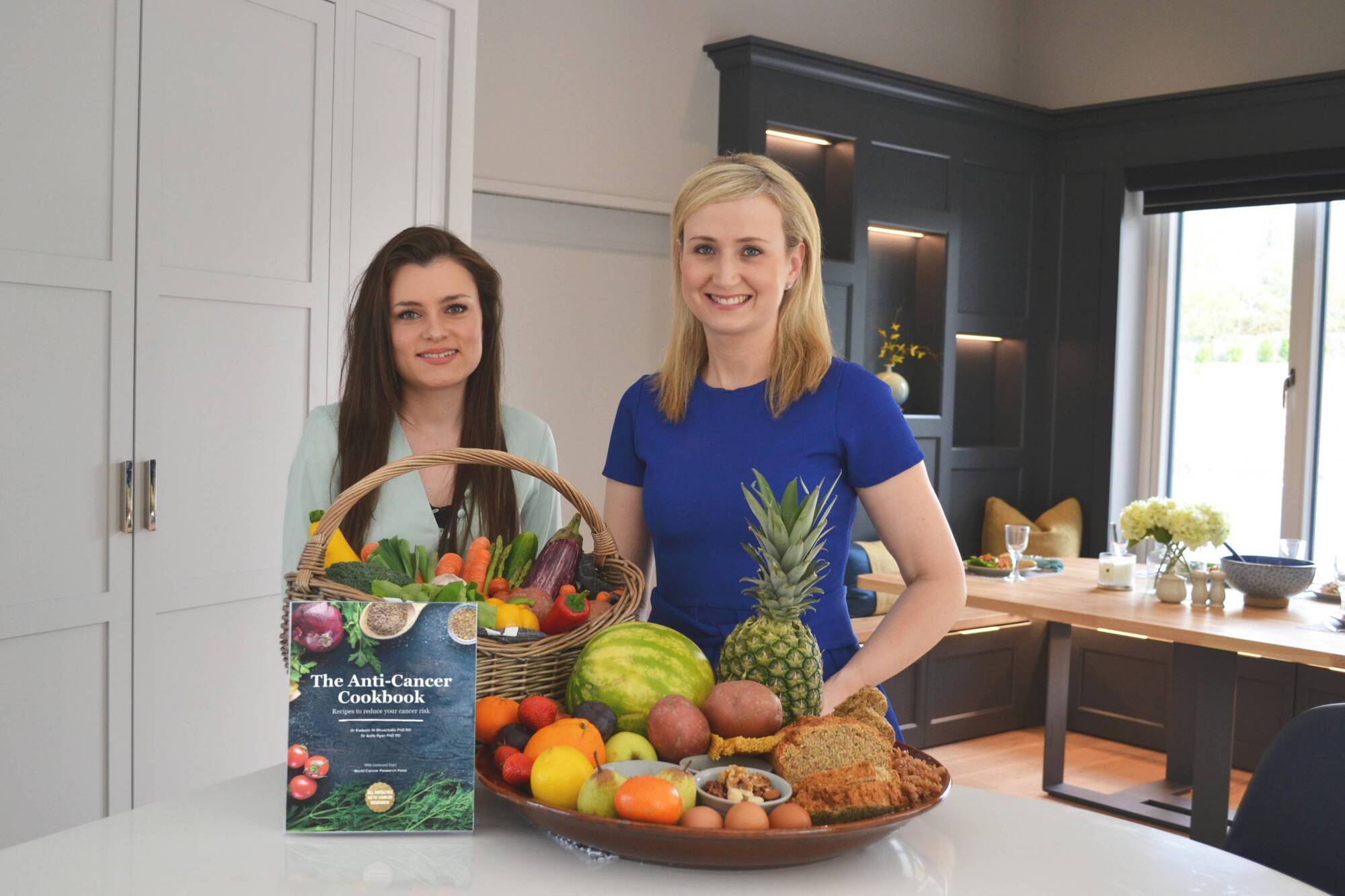
UCC dieticians Dr Aoife Ryan and Dr Éadaoin Ní Bhuachalla authors of the Anti-Caner Cookbook. 
UCC dieticians Dr Aoife Ryan and Dr Éadaoin Ní Bhuachalla authors of the Anti-Caner Cookbook. 

DR Aoife Ryan, co-author of The Anti-Cancer Cook Book, says, “One of the greatest misconceptions about cancer is that it’s genetic and there’s nothing you can do about it.”

The book contains healthy recipes by the former Olympian, Derval O’Rourke, GAA legend, Dr Con Murphy, dietitians, nutritionists, and cancer experts, as well as endorsements from chef Neven Maguire and oncologist Professor John Crown. The book’s recipes are suitable for all the family and as well as reducing the risk of cancer can also reduce the risk of diabetes and heart disease.

Dr Ryan, a senior lecturer in nutrition and dietetics at University College Cork, says people put “way too much emphasis on genetics. But very few people are aware that obesity can lead to 12 different cancers, including some of the most common ones, like colorectal cancer and breast cancer.”

According to the World Cancer Research Fund (WCRF), 40% of cancers are preventable with a healthy body weight, a healthy diet, and physical activity.

As Maguire says in the book: “Since losing my mum to cancer and becoming a dad to my beautiful twins, I have a new appreciation of health and nutrition. It is so important to recognise that eating well really helps our overall wellbeing, our mental health, and can help prevent cancer.”

Ireland’s biggest killer

Cancer is the primary cause of death in Ireland and the second cause globally. The Anti-Cancer Cook Book “is about trying to get people to maintain a healthy weight”, says Dr Ryan.

Reduced food-portion size is recommended. Every now and then, a particular food, like blueberries, is cited in the media as a super-food. But Dr Ryan says there is no such thing as a super-food. Instead, she emphasises eating fruit and vegetables (at least five portions a day) and decreasing high-calorie intake, as contained in sugar-sweetened drinks.

“It’s all about upping the fibre content to increase satiety. Bulk up meals with fresh, plant-based foods. Fruit and vegetables are fantastic sources of fibre,” Dr Ryan says.

“Half of your plate should be salad or vegetables. Wholegrain also has high fibre. In the book, the pasta and rice that we use are brown wholegrain. Potatoes with their skin on are also recommended,” she says.

What if you don’t like ‘greens’? “There are some recipes in the book that are not heavy on vegetables,” Dr Ryan says. “For example, there’s a chicken risotto with a small bit of courgette and mushrooms chopped up. You can vary the vegetables according to what you like and dislike. You don’t have to be buying kale or fancy vegetables.”

Supplements not a diet substitute

Are supplements an option instead of certain foods? The WCRF recommends that dietary supplements not be taken for cancer prevention. Instead, it recommends that nutritional needs be met through diet alone. However, supplements can be useful when somebody is ill or has a poor diet.

Dr Ryan and her co-author, Dr Éadaoin Ní Bhuachalla, are “trying to get back to the basis of what healthy eating is”.

The bookshops are full of blood-type diets, metabolic diets, keto diets, and super-food diets. “It’s all nonsense,” says Dr Ryan. “There’s normal food in our book, such as spaghetti bolognese, lasagne, risotto, and chicken goujons and wedges (home-made). Instead of preparing the recipes like a traditionally-trained chef would, using lots of butter, cream, and sauces, we reduced the fat right down. There’s nothing magical about it.

“We just upped the fibre content and used cheese in limited amounts. We use healthy oils, like rapeseed oil or olive oil.”

Is a vegetarian diet the most desirable?

Dr Ní Bhuachalla, a senior dietitian at the HSE, working in primary care, says that some studies show that a vegetarian diet “has a reduced risk of cancer. But there’s no link between fish and poultry and cancer. Those foods are healthy sources of protein, vitamins, and minerals and healthy fat. They have a role to play in a healthy diet.”

Processed meats to be avoided

Is there any food type that Dr Ní Bhuachalla would avoid? “You’d be looking at processed meat, like sausages, rashers, salami, ham. The processing these foods go through alter their composition and we know they can have an increased cancer risk.”

What about red meat? “Red meat, like beef or lamb, that is unprocessed, in moderate amounts, can be part of a healthy diet. They should be eaten no more than three times a week, no more than 500 grams.”

Alcohol can increase the risk of breast, mouth, throat, neck, and oesophagus cancer. “We’re not telling people not to drink alcohol,” says Dr Ryan. “The evidence suggests that less is better.”

Asked if she would cut fatty chips, Dr Ryan says: “There’s nothing wrong with eating a takeaway every so often. There’s nothing wrong with having a bag of chips occasionally. It’s not going to give you cancer. No one food is going to give you cancer. But what can increase your risk is weight gain. If you start gaining weight as you get older, particularly if you deposit weight on your belly, that is very dangerous for diabetes, for your heart, and for cancer.

“It’s not about eating any one particular food. It’s about trying not to gain weight and staying active. That’s your best shot in reducing your risk of cancer, along with not smoking.”

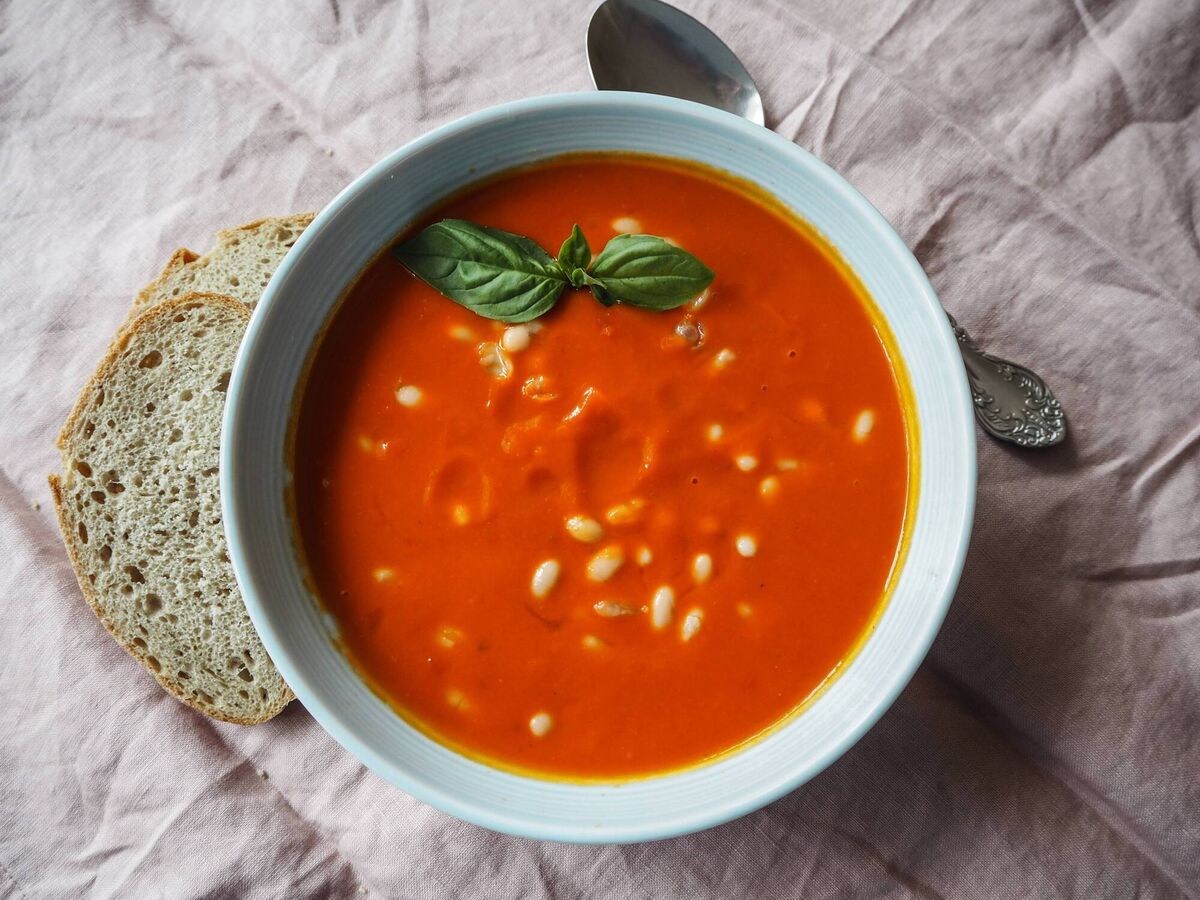
Derval O'Rourke's tomato and cannellini bean soup

Tomato and Cannellini Bean Soup

Serves: 5 (1.6l) 

Prep time: 5 mins 

Cooking time: 30 mins 

Ingredients:

  • 1 onion, finely chopped 
  • 600g/3 cups fresh whole tomatoes, quartered 
  • 1⁄2 red chilli, finely chopped 
  • 1 x 400g/14oz tin chopped tomatoes 
  • 500ml/2 cups vegetable stock 
  • Handful basil leaves 
  • 400g/14oz tin cannellini beans, drained and rinsed 

Method:

1. Heat the olive oil in a large pan over a medium heat. Add the onion and cook for about 5 minutes, until softened.

2. Stir in the fresh tomatoes and chilli. Cover and cook for 10 minutes, stirring occasionally.

3. Add the tinned tomatoes and stock to the pan and stir well. Bring to the boil, then cover and simmer for 20 minutes, stirring occasionally.

4. Take the pan off the heat and puree the soup with a hand blender until smooth.

5. Add the beans and basil and heat through.

Nutritional Information - amount per serving:

94 kcals 

2g fat 

16g carbohydrate 

4g protein 

5g fibre 
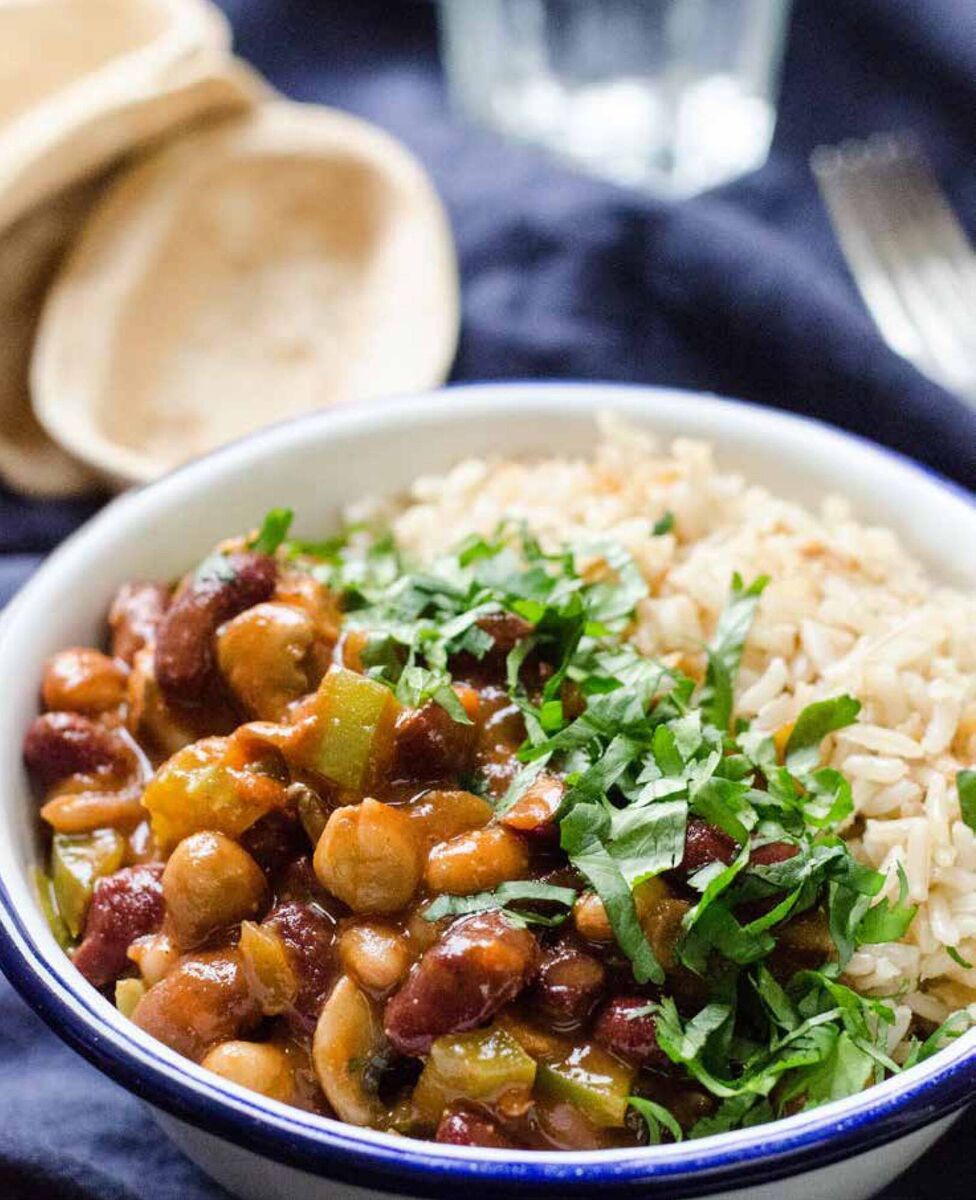
Bean chilli 

Bean Chilli 
Bean Chilli 

Serves: 8 

Ingredients: 

  • 1 tbsp. olive or rapeseed oil 
  • 2 onions, peeled and chopped 
  • 4 cloves garlic, peeled and crushed 
  • 1 large red pepper, diced 
  • 1 large green pepper, diced 
  • 200g/21⁄2 cups mushrooms, washed and sliced 
  • 2 small carrots, diced 
  • 2 sticks celery, diced 
  • 1 tsp. chilli powder (reduce or increase to taste) or use finely chopped fresh chilli 
  • 1 tsp. cumin 
  • 1 tsp. ground coriander 
  • 2 x 400g/14oz tins chopped tomatoes 
  • 1 tin kidney beans, drained 
  • 1 tin baked beans in tomato sauce 
  • 100g/2/3 cup frozen sweetcorn 
  • 1 tin chickpeas, drained 
  • 4 tbsp. tomato puree 
  • Chopped coriander to serve 
  • Serve with a portion of brown rice (70g/1/3 cup per person) or a baked potato.

Method: 

1. Heat the oil in a large pan or wok. Add all the prepared vegetables and spices and sauté for 10 minutes until the vegetables are soft.

2. Add the remaining ingredients, stir to mix well. Cover and leave to simmer for 20 minutes.

3. Sprinkle with chopped coriander and serve with brown rice.

4. Note: This dish freezes well. You can vary the beans used depending on what you have in your cupboard, e.g. cannellini beans/butter beans.

Nutritional information - amount per serving 

375 kcals 

5g fat 

1g saturated fat 

66g carbohydrate 

15g protein 

13g fibre 
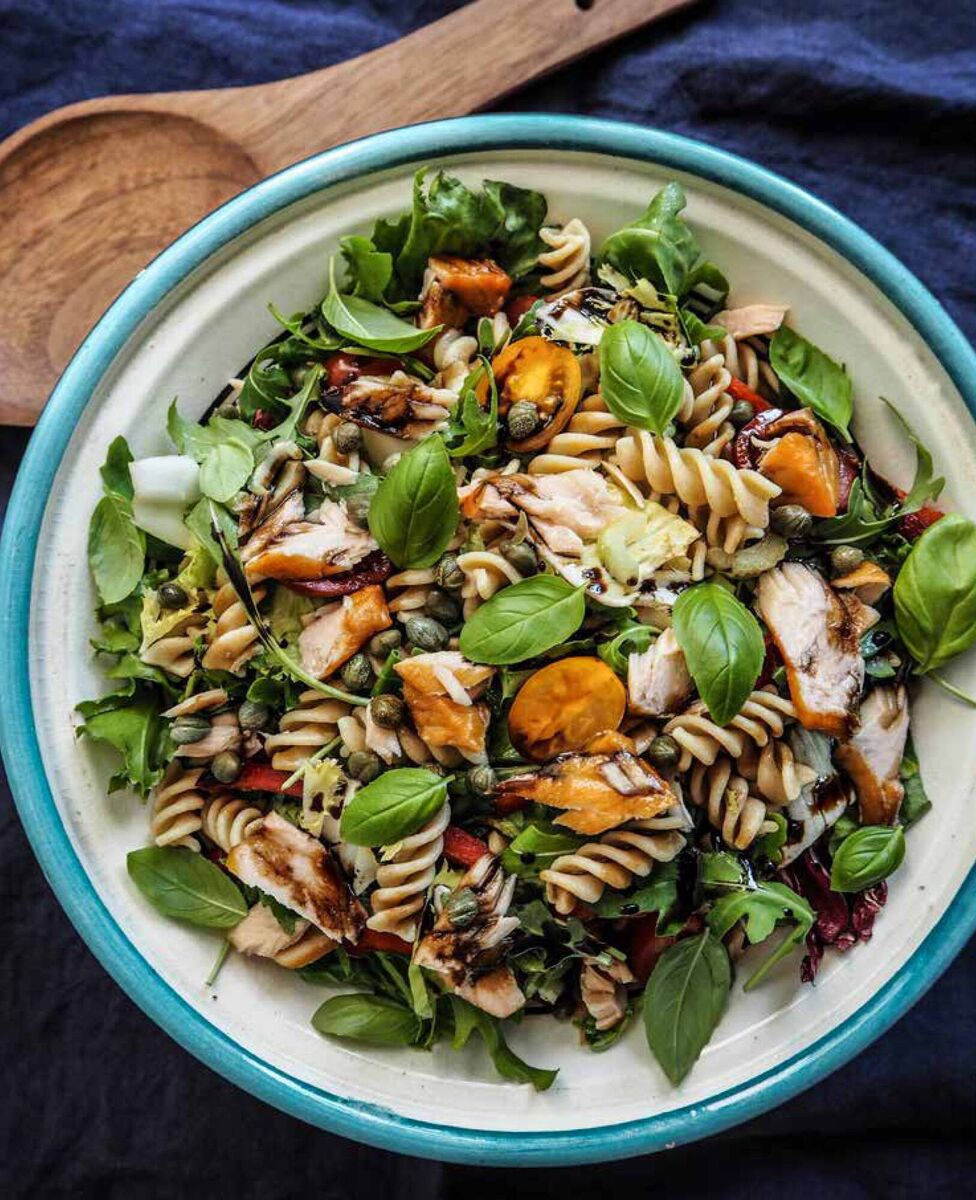
Salmon and pasta salad 

Salmon and Pasta Salad

Serves: 4 

Prep time: 20 mins 

Ingredients:

  • 160g/11⁄2 cups (raw) wholegrain pasta 
  • 225g/8oz tinned salmon, drained 
  • 1 tbsp. capers, drained 
  • 1 pepper, sliced 
  • 1 stick celery, sliced 
  • 250g/11⁄4 cups cherry tomatoes, halved 
  • 100g/31⁄2oz rocket leaves 
  • 100g/31⁄2oz mixed lettuce 
  • Handful of basil leaves 
  • 3 tbsp. extra virgin olive oil 
  • 5 tbsp. balsamic vinegar 

Method 

1. Cook the pasta according to the instructions on the packet, drain and rinse with cold water.

2. Add the remaining prepared ingredients to the pasta.

3. Toss the salad and decorate with fresh basil leaves.

Nutritional Information - amount per serving 

340kcals

14g fat 

2g saturated fat 

32g carbohydrate 

21g protein 

7g fibre

  • The Anti-Cancer Cookbook is published by Atrium, €25. All royalties go to Breakthrough Cancer Research.

More in this section

Lifestyle

Newsletter

Eat better, live well and stay inspired with the Irish Examiner’s food, health, entertainment, travel and lifestyle coverage. Delivered to your inbox every Friday morning.

Cookie Policy Privacy Policy Brand Safety FAQ Help Contact Us Terms and Conditions

© Examiner Echo Group Limited