The "look" of the season is a thing of the past
IN THE ’50s, when Seventh Avenue was full of manufacturers and rather timid in its ideas, a well-known editor used to march into showrooms and say, “Show me the lemons!”
She meant the styles that buyers had deemed too unusual but which, for that reason, she thought, held appeal.
She could be assured that no one else — or, no other magazine — would have those rejected styles. They were different.
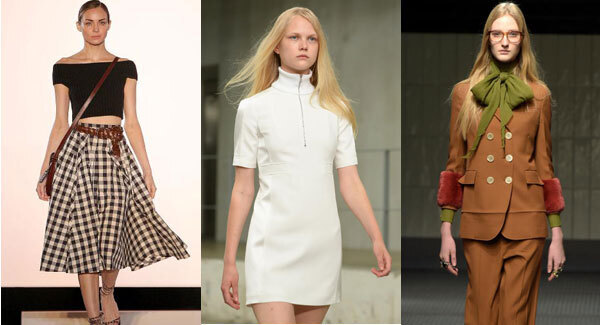
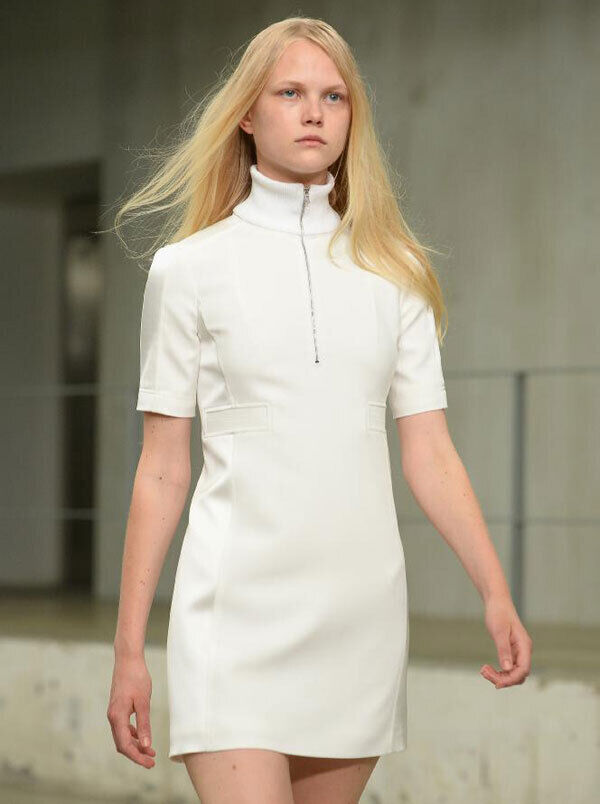
For me, the top lemon of the spring collections is Raf Simons’s white cotton smock dresses for Dior.
At the time of the shows I heard people say, “Those are hideous” — drawing out the word to make it clear they thought Simons had lost his mind by showing a high-collared dress that looked like a Victorian gent’s sleeping costume.
But I adored it. Squeeze me a lemon! I could imagine someone, not necessarily me, wearing the strange cotton sack with beautiful gold sandals instead of the dark boots that Simons used.
I mention this because we live in a supermarket of choices, not just in what we wear but also in the kinds of food we eat, the music we listen to and the decorating styles we might choose for our homes.
There is no single trend that demands our attention, much less our allegiance. According to the theory of lemons, anything could be selected and prized for its very individuality and we wouldn’t look out of step.
Of course, throughout the 20th century, the way women dressed was governed by trends — from the hobble skirt of the 1910s, a Paris invention that spread to small cities and was ultimately sold by Sears, to Dior’s radical New Look of 1947, to the ’60s miniskirt. But for lots of reasons, mostly to do with economics and, inevitably, the internet, the industry has moved away from that model.
The last big trend that I can recall, one that started on the runway and exploded among mainstream manufacturers, was the hospital-green cargo pants that Nicolas Ghesquière made for Balenciaga.
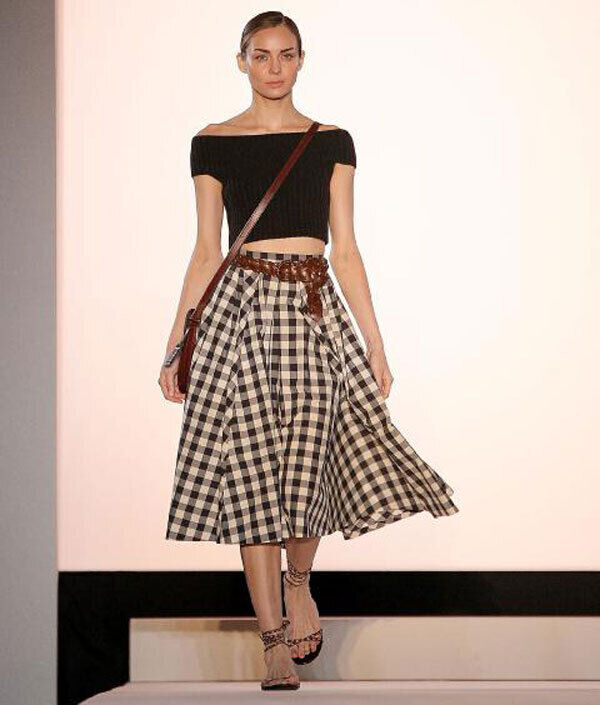
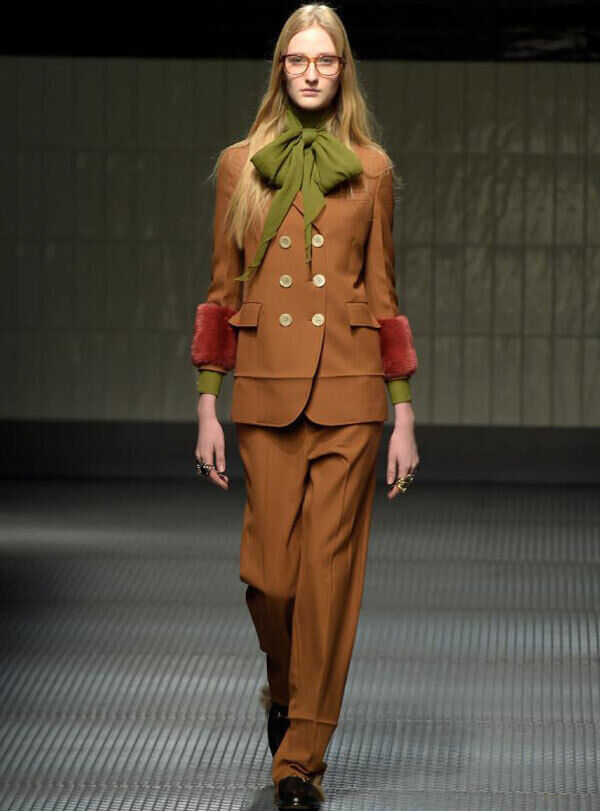
That was more than a decade ago. Now, to look at the spring collections is to see broad categories based on distinct, vintage styles — the full-skirted ’50s dresses at Bottega Veneta and Michael Kors, among others; the ’60s mini-shifts and glossy surfaces shown at Carven, Louis Vuitton and Giambattista Valli’s younger line, Giamba; and the unbelievable amount of ’70s funk and colour in shows like Gucci, Etro and Derek Lam. I could go on. The fashions of every decade since World War II are represented in the new spring collections.
That may sound like more revivalism — but the ability to find styles that actually suit one’s body and personality is cause for celebration, offering women so many more forms of self-expression.
In the past, trends allowed every part of the fashion business to get a piece of the action. This might have been great for business, but less so for the consumer.
Now, though, every brand, and every media outlet, is focused on creating its own universe, ostensibly for the people who want its products or to buy into a point of view.
As popular as fashion is today, running on a mixture of media platforms, the information is usually too diffuse. That’s why branding is so dominant; it helps establish corporate identities — boundaries, really — but branding also functions as a filter for many consumers.
Fashion magazines also play an entirely different role than they did 20 or 30 years ago, when they could advise readers about whether or not pants were appropriate for the office.
Almost no one cares about that sort of thing today. More often than not, the influence-makers are young people who promote their daily outfits on Instagram, accumulating “likes” that are essentially data points for designer brands.
It’s not unusual for some style gurus to rack up 25,000 or more “likes” for an outfit. Do they move merchandise? No doubt, but they don’t necessarily spur a mass following.
Luxury fashion is also partly to blame for the disappearance of trends. Indeed, the mania for exclusivity has evolved to an extreme, and very weird, point. During the red-carpet chatter at the recent Golden Globes I heard several actresses say their dresses were “custom” — as in, “It’s custom Narciso Rodriguez,” meaning no one else will ever have one.
People have always sought to differentiate themselves, but you can also see how this desire to be special has limited the influence of high fashion designers.
It may even be an old-fashioned ambition, to judge from the way designers like Ghesquière, now at Louis Vuitton, smartly focus on styles that are younger and also not overly complicated or pretentious.
Although the term “trendy” suggests speed and thoughtless consumption, the heyday of trends occurred, paradoxically, in eras when people had time to absorb change. A hemline remained in place for years, whereas today every length is on offer.
In a funny way, I think we’re moving toward a more relaxed attitude about many things. We tune out the haters and the screechy TV dress pundits, and we tune out clothes that seem punishing or artificial to us.
That said, we are more tolerant of the girl whose outfit and manner is intentionally gawky or who, in her wildest dreams, wants to look like an exploding Comme des Garçons flower.
If anything, we probably need more individual expressions of style, even if they are a minimalist whisper. A couple of years ago, Simons created an eclectic Dior collection around the notion of freedom, with styles loosely inspired by a variety of global influences.
You may ask: Aren’t we already free to pick and choose? But Simons was really addressing fashion insiders. Because, while we may live in a post-trenduniverse, there is still consensus among editors and buyers about what is cool or chic in a given season.
In a way, insiders cling to the notion of clearly defined themes more than anyone else; that’s why you see the same styles repeated in stores. Simons was simply arguing for more open-mindedness, more oddball gems in the mix.
So I celebrate the trendlessness of fashion even as my head reels from all the choices and I sometimes feel a stranger among the competing style tribes, a latter-day Margaret Mead sizing up a flock of hippie suede or some Bardot-flirty gingham.
CONNECT WITH US TODAY



Be the first to know the latest news and updates