Size triple zero the new double zero
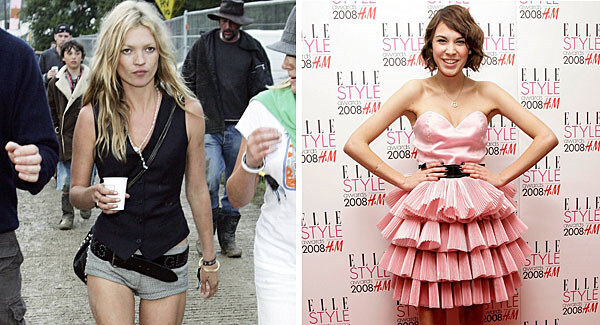
IN A recent article for the Telegraph, Hannah Betts’ recalled the summer of 2006 when a worrying new trend started to emerge amongst celebrities and socialites — that of the size double zero.
Photo after photo of increasingly emaciated women appeared on the pages of gossip magazines, the opinion editorials in the broadsheet newspapers became more and more incensed and a young vulnerable model got caught in the crossfire and died of malnutrition. She was still getting booked for jobs mere days before her death, despite her skeletal body.

Demands were made of the fashion industry to start taking responsibility for their role in perpetuating the ‘skinny ideal’, and amid amounting recrimination from the public, the Council of Fashion Designers of America created the CFDA Health Initiative in 2007 to discuss the possibility of imposing restrictions against the use of models whose weight became unhealthily low.
Has it worked? Twenty years ago, fashion models weighed only 8% less than the average woman. Today, they weigh 22% less. Grazia magazine reported last month that size double zero is no longer the holy grail for women wishing to emulate their favourite celebrity, that in 2014 it’s all about the ‘triple zero’. To give you some context, that equates to a 23 inch waist — the equivalent of the waistband on a six to eight year old girl’s skirt.
I presume I’m meant to be shocked by those statistics. I’m sure there are many of you reading this article who will be. I’m just wondering why people are getting so irate about it now. I worked for a fashion magazine in New York three years ago and regularly reviewed the models’ ‘comp cards’. (Similar to a business card, but gives their vital statistics and measurements.) It was extremely rare to see any model with a waist measurement above 24inches — and this includes all the so called ‘curvy’ Victoria Secret’s girls — and most of these women were almost six feet tall. Even Kate Moss, the original ‘waif’ and poster child for ‘anorexia chic’, has a 26 inch waist.
When you’re in that environment those body sizes become normalised to you, so much so that when I suffered from a relapse of anorexia, most of my colleagues praised my body, asking me for diet tips. A few years afterwards when I confessed that I had been struggling with the disorder, many of them seemed surprised, so immersed in a world that fetishises extreme thinness they couldn’t recognise that my weight had fallen dangerously low.
I was one of the lucky ones — I recovered. I had to make sacrifices in order to do so; I left New York, I stopped reading fashion magazines, I limited my exposure to movies and TV shows with extremely thin actresses in them. Yet, even now, with all the work I’ve put in to maintaining my physical and mental well-being, there is a little part of me that wants to take out a measuring tape and wrap it around my waist — see how far I have come from those magic 23 inches.
I resist, of course. I know that way is where madness lies. Yet there are many young women who see an article such as that one, or one entitled ‘What The Stars Really Weigh’ and they latch on to these as a quantifiable external entity with which to compare themselves.
And as much as we would like to blame the fashion magazines, it’s time for the consumer to accept responsibility as well. When I asked fashion editors in New York why the industry continued to use underweight models, their answer was always unanimous. Fashion is a business, they would tell me. Like all businesses, it exists to make a profit. Whenever the magazine used a heavier model or celebrity for the cover, sales dropped. So the magazine gives the consumer what they appear to want, and returns to using ‘regular sized’ models.
Have we become so accustomed to seeing a certain representation of female beauty that anything that deviates from that repels us?
While we wring our hands at photos of skinny women on Instagram, worrying about their affect on young women, none of us ever seem to consider the impact the vilification of the overweight, might have on those same young women.
I know that when I was hospitalised with anorexia, a huge fear amongst the patients was that if we followed our weight restoration plans we would become fat, and if we were fat we would be disgusting; if we were fat we would be unlovable.
In her wonderful novel Americanah, Chimamanda Ngozi Adichie explores the notion of what it means to be fat in Western culture. Fat is no longer a descriptive word in our culture, it is a rebuke, it is an insult, it is a judgement upon that person, their lives, their choices. It might seem like harmless fun as we skim through magazine photos with red circles drawn around muffin tops, or read yet another article about a celebrity ‘pouring her curves’ into a tight dress. What’s the harm in bitching to our friends about that ‘huge’ woman passing us in the street — she’ll never know.
Even if our comments are positive, like discussing how flat Kate Middleton’s stomach is after giving birth, we are still contributing to a culture where the female body is public property and free to be objectified; a culture where the margins of what an ‘acceptable’ body looks like are becoming more and more restrictive.
It doesn’t take long for the average woman to progress from judging a celebrity’s body to judging her own, something that I’ve examined in my own novel, Only Ever Yours.
A recent study showed that 90% of all British women have dieted at some stage in their lives . Leslie Sim, the clinical director of the eating disorder’s unit at the Mayo Clinic finds this extremely worrying, saying “The No 1 risk for developing an eating disorder is dieting. I’ve never seen an eating disorder that didn’t begin with a conscientious effort to diet.”
While Bodywhys says statistics specific to Ireland are limited, they estimate ‘up to 200,000 people in Ireland may be affected by eating disorders. An estimated 400 new cases emerge each year, representing 80 deaths annually.’
It feels like women are constantly being shamed. We’re shamed for being too fat, too thin, too tall, too short, too old, for having body hair, for enjoying sex, for being too pretty (clearly stupid) or for being ugly and failing at our one purpose in life, to attract a man.
Maybe we’re supposed to think that shame is a good thing, that shame will motivate us to work harder, to do better, to be better. But shame doesn’t encourage us to change. It paralyses us. Shame keeps us in our place, unable to move. What could we women do if we didn’t listen to society telling us to be ashamed of our bodies? What could we achieve if we devoted less time to dieting and more time to loving ourselves? It’s time for us to take up more space in the world, not less.