Book review: A glorious read both literary and page-turning with corkscrew twists
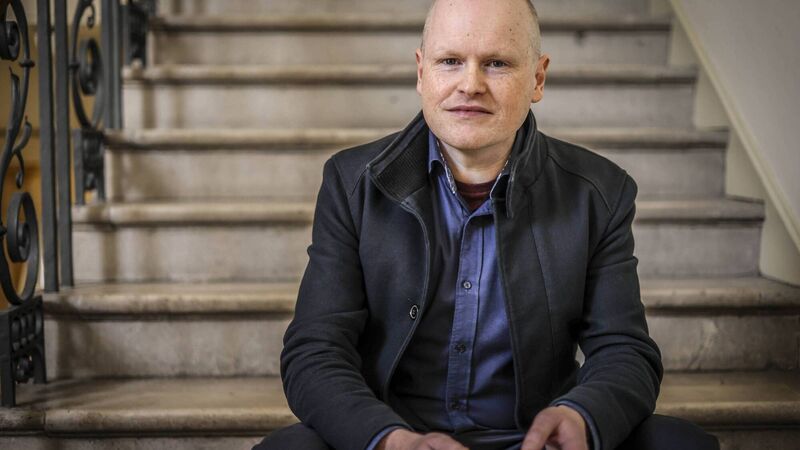
Andrew Hughes: 'I was in trepidation stepping into this new genre, but I’m pleased with the character of Lister. I like his moral ambiguity.' File picture: Chris Bellew
- Emma, Disappeared
- Andrew Hughes
- Hachette Books Ireland, €16.99/ Kindle, €9.49
Back in April 2023, Andrew Hughes was on tenterhooks. His fifth book and first contemporary crime novel was out with publishers, and he cared desperately that it should succeed. This mattered, because his third historical crime novel had recently failed to find a publisher.
“If wasn’t accepted, that would mean two books in a row that didn’t hit,” he tells me as we chat.
He was still waiting to hear back from his agent, Paul Feldstein when he got some wonderful news. His second novel, , had been chosen for One Dublin, One Book for 2023 — a huge deal.
“Everything changed,” he says, talking of the many events he was booked for, all that month. “It was wonderful the way the Dublin and Wexford libraries got behind the book and pushed it. It became the most borrowed book of 2023.
“And it was an incredibly enjoyable month which brought me into the writing world. And it made me appreciate all that is done for writers and books. Along with Arts Council grants, the support is huge for writers, and that’s very welcome.”
Meanwhile, was picked up and has just been published to rave reviews.
And that’s no surprise. Because it’s a simply glorious read both literary and page-turning and has a wonderfully enigmatic first-person narrator in James Lister.
Chapter one sees James on the bus into work. Looking out of the window, he’s examining the many posters showing Emma Harte, the entrepreneurial graduate who recently vanished into thin air.
Why, he wonders, does nobody else seem to notice them?
He’s then distracted by a woman, who, sitting beside him, opens her laptop which reveals her name — Libby Miller. Secretly googling her, he follows her on Twitter and likes a recent tweet of hers, starting a social media conversation.
A photographic archivist at the National Library of Ireland, James Lister lives alone in Drumcondra. He frequents the same pubs as his creator, who also sat next to a woman on the bus to work whose name came up on her laptop. But there, the author swears, the resemblance ends.
“I suppose it’s a case of writing what you know,” says Hughes, “Also, I have found my archives career has sent me to some interesting places. There are run-of-the-mill jobs, but I have been to big country houses — three years ago, I was in Tullynally Castle, and I’ve been in RTÉ surveying television archives. As an interesting career, it struck me as a good one for the protagonist. I thought, why not?”
Similarly, knowing Drumcondra so well, it made sense to set the book there, near the Botanic Gardens, and other locations the is familiar with.
Hughes’s first book — a social history of Fitzwilliam Square called — was published by Liffey Press in 2011. Just as he was wondering whether to continue writing history, or veer into fiction, he learned his publisher’s brother, John Givens, was teaching a historical fiction workshop at the Irish Writer’s Centre, and Hughes decided to give it a go.
“The idea for my first novel, , came out of the research for ,” says Hughes. “I was ready to go. My fiction career started there, and the group has continued to meet since.”
It hasn’t been too difficult to switch to contemporary fiction.
“I was so comfortable in the 19th century, but it didn’t feel like a shift. You are still telling a story but it’s happening now.”
What about the difficulties for crime writers with modern technology like cameras, phones, and social media to consider?
“The thing is to work out how you can exploit these things for plot points,” he says. “After all, people get away with murder all the time. It was a case of working out how these things work, and what is possible with modern forensics.”
Very active on social media, James allies himself with students, who, searching for Emma, focus on the dangers to women. By sounding sincere, he manages to manipulate various situations while portraying himself in a flattering light.
“On social media everyone has a chance to curate their own life and identity — and to curate what they say and how they say it. It’s perfect for Lister. He can say and do all the right things when he knows that what he thinks, and his reaction to events won’t be acceptable to the people he associates with.”
He is a conundrum. Kind and thoughtful towards Libby — who has become his girlfriend — understanding and loving towards his niece Lolo, there is something not quite right about him.
Why is he so engrossed with Emma’s disappearance? What does he know, and is he culpable?
“Is he evil? Is he a victim of circumstance? Can a good person be swept up in this situation, and have to wriggle out of it, or are they a psychopath?”
It’s up to the reader to make up their own minds, as the truth is gradually revealed. It’s a clever plot, with corkscrew twists, yet one that feels plausible. How did Hughes come up with the idea?
“When you’re on social media, every once in a while, a missing person photo will pop up. And six years ago, an Icelandic man went missing in Drumcondra.
He doesn’t plot in advance: “I tend to write chronologically and tend not to have a plot laid out in my head. I find it as I go, which leads to a lot of coming back a bit and trying something else.”
Hughes has built up a rich cast of characters, giving us a full sense of James’s life and environs.
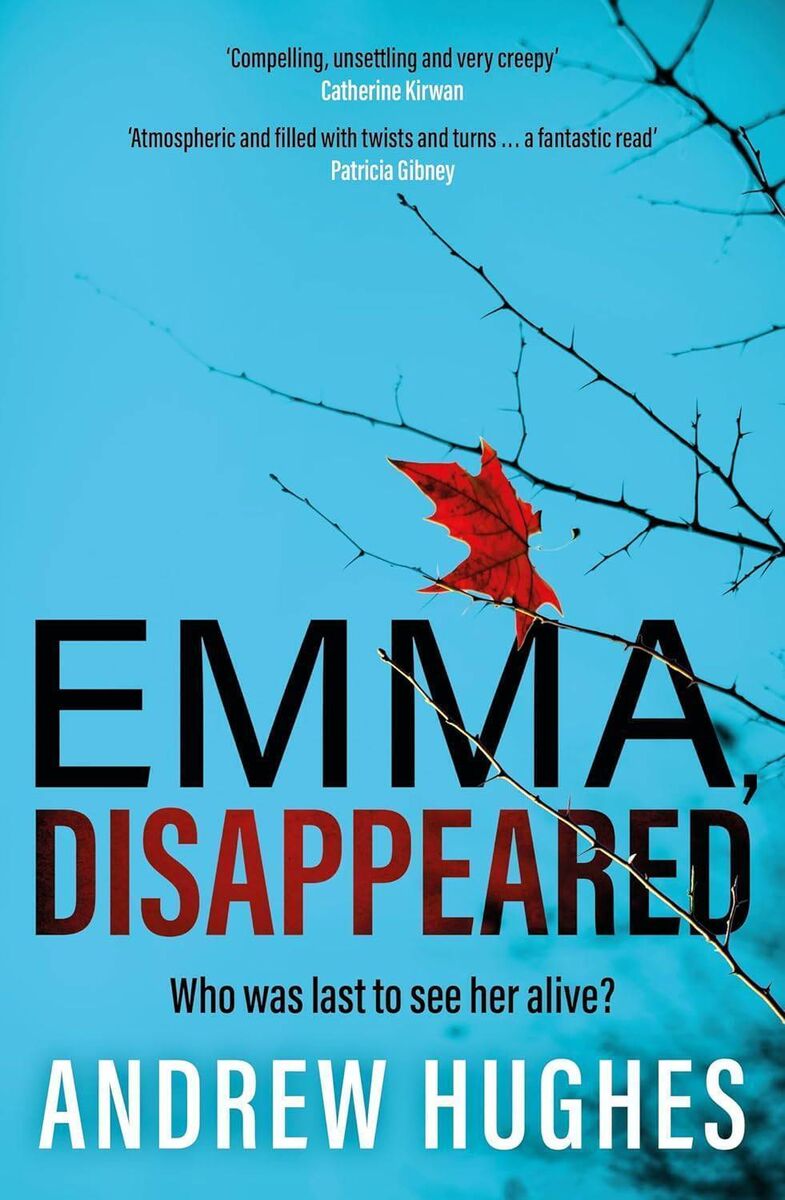
He says his characters always come to him fully formed, which might account for the fact they are all many dimensional. At a family lunch attended by Libby, it becomes clear James is not the only one hiding secrets. His brother Colin’s recent deception comes to light, and as his ‘alibi’, James’s carefully built façade also starts to fall apart.
“That dinner from hell,” Hughes laughs. “It’s there that all the pressures that have been building up start to crumble.”
Through the clever mystery, Hughes is examining modern feminism and the dangers women face.
“I was thinking of how much women give away on social media and how they have to trust someone they meet there.”
Is that the main message? “I think it is. When you write you are hoping that you are getting these messages across because they make the book richer. And you hope people are going to understand it.”
The book Hughes would most like to have written, is .
“I’ve just finished reading it,” he says. “I hugely enjoyed how the character was created and that sense that Ripley is completely amoral and awful, but you just can’t help rooting for him.”
For all that, he’s happy with .
“I was in trepidation stepping into this new genre, but I’m pleased with the character of Lister. I like his moral ambiguity; I like the way he constricts the persona he shows the world, and I like his world of Dublin.”


CONNECT WITH US TODAY



Be the first to know the latest news and updates