Sarah Purser: Dungarvan's champion of the visual arts world
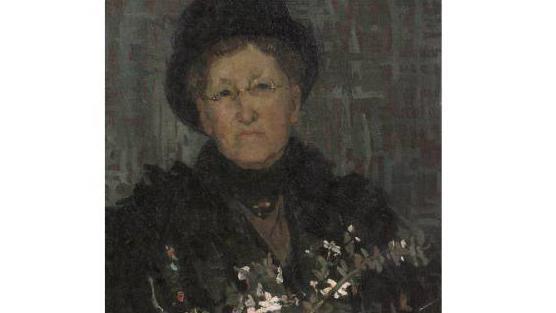
Sarah Purser, seen here in a portrait by Mary Swanzy, was raised in Abbeyside, Dungarvan.
Hugh Lane Gallery. Donated by the Friends of the National Collections of Ireland, 1944. © The Estate of Mary Swanzy.
Sarah Purser is one of most intriguing figures of the Irish art world, a celebrated portrait painter and entrepreneur whose greatest achievement may have been her promotion of Irish stained glass in the early 20th century.
Purser had a long association with Co Waterford. Born to Benjamin Purser and Ann Mallet in Dun Laoghaire in March 1848, she was the eighth of 11 children. The family moved to Dungarvan in her early childhood, eventually settling in a house called The Hermitage in Abbeyside. The Pursers were well-to-do Protestants. Benjamin Purser was involved in flour milling and a brewery business, and saw to it that his children were well-educated. In Sarah Purser’s case, this extended to dispatching her to a private school, Institution Evangélique de Montmirail, in Switzerland for two years from 1861.
Purser was 25 when her father’s milling business collapsed in 1873. She moved to Dublin, where she attended painting classes at the Metropolitan School of Art and began showing her work at the Royal Hibernian Academy’s annual selected exhibition.
Always ambitious, Purser moved to Paris in 1878 to study for a year at the prestigious Académie Julian. “Even then, she was committed to becoming a professional artist,” says Logan Sisley, senior curator, Collections and Research at the Hugh Lane Gallery in Dublin. “After training at the Académie, she became a very accomplished painter.”
Purser enjoyed painting landscape and figurative subjects, but on her return to Dublin, she thought it prudent to pursue a career as a portraitist. A 1888 commission from the Viceroy of Ireland, Charles Vane-Tempest-Stewart, to produce portraits of his three children led to scores of further commissions from wealthy patrons. She became one of the most fashionable portrait artists of her day, and would later remark that she “went through the British aristocracy like a rash.”
Purser was one of the small number of Irish artists of her generation who made a comfortable living from her painting. This was all more remarkable for a female artist in a largely male milieu. She invested her earnings wisely, buying shares in the Guinness brewing company, and securing her financial security for the rest of her long life.
She took a keen interest in promoting other Irish artists, and in 1901 she organised an exhibition of work by her contemporaries, Nathaniel Hone and John Butler Yeats. “She felt frustrated that they had been so neglected, and paid for the exhibition and catalogue,” says Sisley. “And then, when the art dealer Hugh Lane saw the exhibition, it inspired him to begin campaigning for a Gallery of Modern Art in Dublin.”
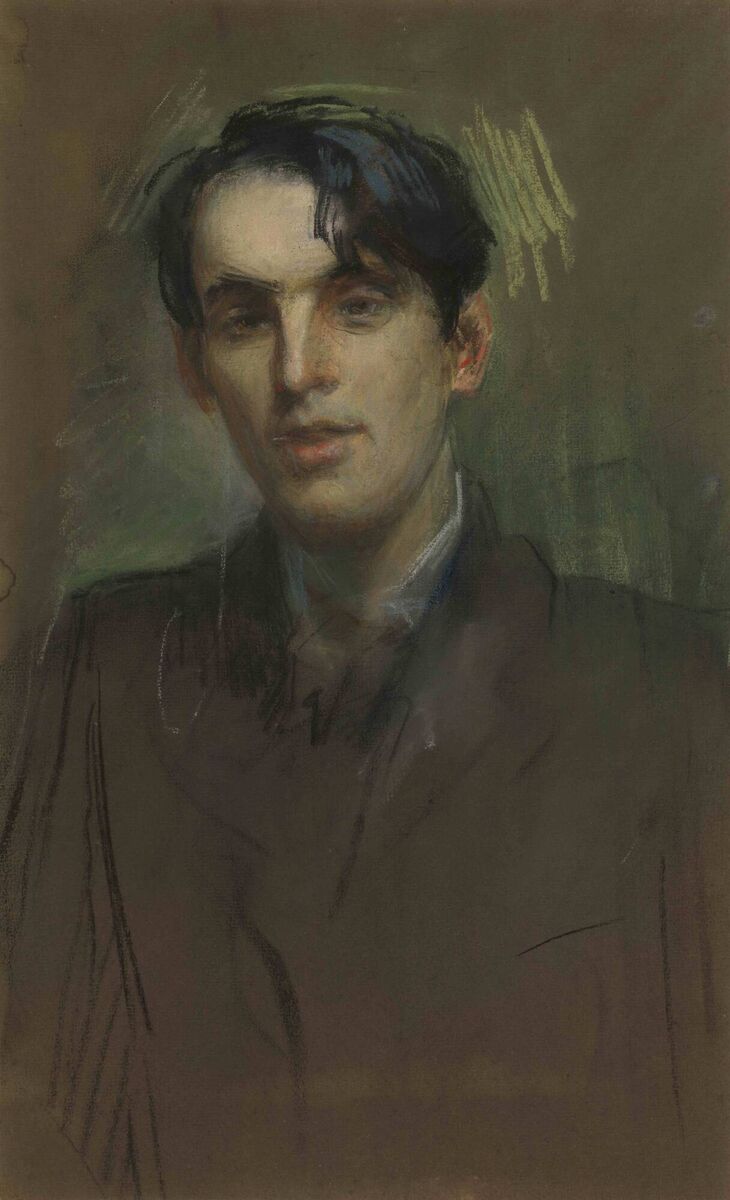
Purser supported Lane’s efforts, and after his death on the Lusitania in 1915, she helped persuade the Irish government to house the Hugh Lane Municipal Gallery at Charlemont House in Parnell Square.
In 1903, Purser established and financed An Túr Gloine (The Tower of Glass), a pioneering stained glass cooperative at 24 Upper Pembroke. “It was at the height of the Celtic Revival,” says Marie Lynch, Curator of the Centre for the Study of Irish Art at the National Gallery of Ireland. “At a time when most stained glass was being imported from England, Purser saw an opportunity to promote Irish stained glass and train Irish artists to produce it.”
Purser directed An Túr Gloine, and employed Alfred Ernest Child as its technical manager. Child, born in London in 1875, had trained under Christopher Whall, a leading figure in the English stained glass revival. In Dublin, he divided his time between An Túr Gloine and the Metropolitan School of Art, where his students included Harry Clarke, Catherine O’Brien and Evie Hone.
“Purser and Child abided by the principles of the Arts and Crafts movement,” says Lynch, “encouraging each of the artists to develop their own style.”
Purser herself designed and helped manufacture a number of stained glass windows, including the St Brendan window at St Brendan’s Cathedral at Loughrea, Co Galway in 1904. But as the cooperative took on more workers, such as Ethel Rhind and Wilhelmina Geddes, she concentrated more on managing the studio.
“Purser was happy to use her own reputation as a painter to publicise An Túr Gloine,” says Lynch. “She had international contacts, who she encouraged to commission stained glass for churches and private collections. There were orders from North America and New Zealand, and even from a Chinese millionaire in Singapore.”
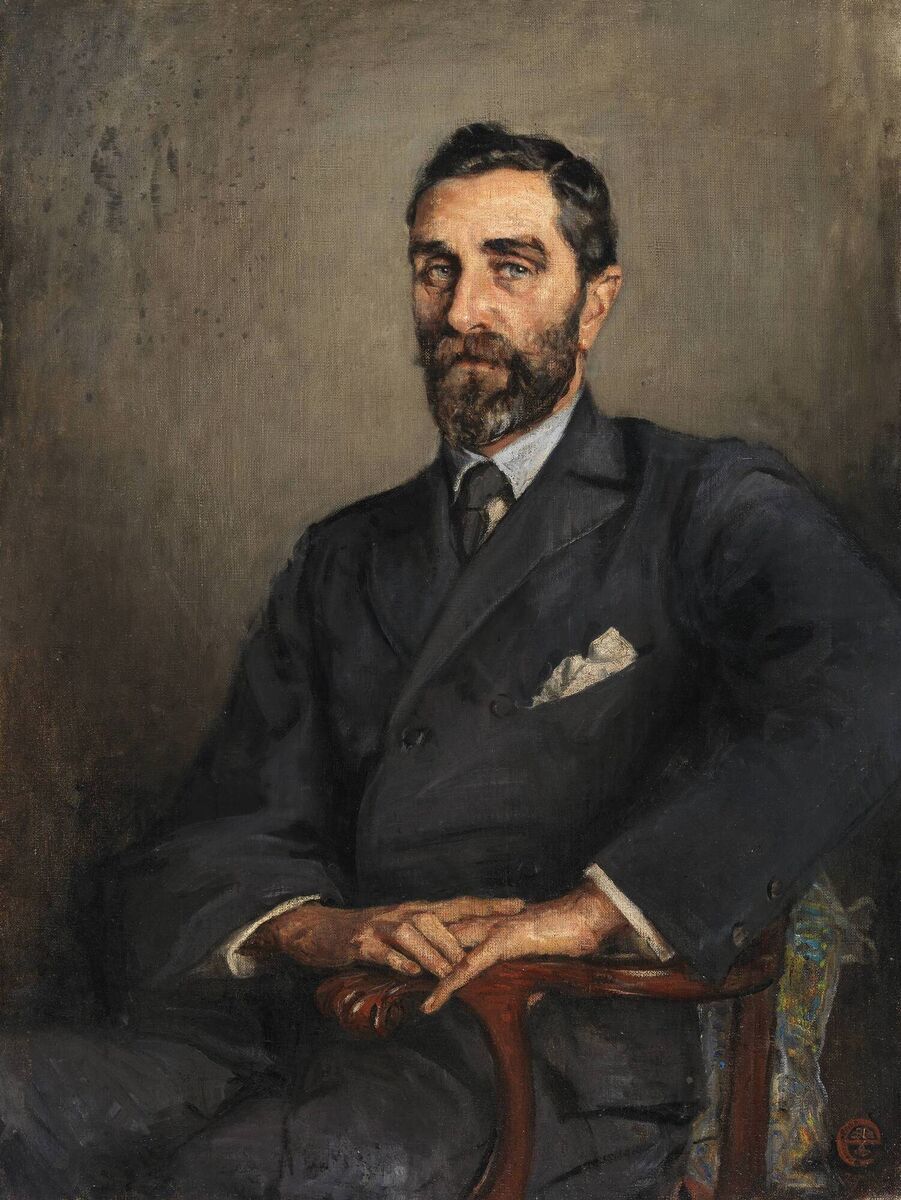
In 1909, Purser rented a Georgian mansion named Mespil House on Mespil Road, where she famously hosted her Second Tuesdays, a salon on the second Tuesday of every month, at which artists, collectors, business people and politicians mingled freely.
“Purser was not particularly radical herself,” says Sisley. “But she was certainly friends with radical political figures, such as Maud Gonne. And she promoted artists who were a lot more radical than she was, such as Mainie Jellett and Mary Swanzy.”
Purser was seen as a key figure in cultural circles, and in 1914 she was appointed to the board of governors and directors of the National Gallery of Ireland. She became one of the most active members of the board, helping smooth the National Gallery’s transition from an institution of the British Empire to one of the newly founded Irish state.
Purser continued to show at the RHA, and in 1923, the academy hosted what was, remarkably, her only solo exhibition. She was then aged 75. That same year, exactly 100 years after its foundation, the RHA made her its first female associate member, and in 1924 she became the first woman to achieve full RHA status. Around that time, she founded Friends of the National Collections of Ireland, helping to secure work by important Irish artists for the nation.
Purser continued painting into her later years. Her last figure portrait, which she completed in two hours in 1935, was modelled on Kathleen Behan, mother of the author Brendan Behan, whom she regarded as her favourite model. She continued running An Túr Gloine until 1940, when she was 92.
On August 7 1943, Purser died aged 93 of a stroke at Mespil House. One, possibly apocryphal, account has it that the stroke was brought on by her disappointment with the artist Seán O’Sullivan’s design of a postage stamp commemorating her friend Douglas Hyde, on the 50th anniversary of the Gaelic League. She is buried alongside her brothers John and Louis, both professors at Trinity College Dublin, at Mount Jerome Cemetery in Dublin. Her epitaph reads: 'Fortis et strenua' (Strong and vigorous).
In Dungarvan, Purser was commemorated with a four-day programme of events organised by the local Museum Society in September 1991. One of her paintings, Trees on the River Dodder, hangs in the Waterford County Museum.
In recent years, she has been the subject of two major exhibitions in Dublin. The first was Sarah Purser: Private Worlds at the National Gallery of Ireland in 2023, which included her 1881 painting Le Petit Déjeuner and two portraits of Kathleen Behan, along with a portrait of Purser by Louise Breslau, an artist she befriended in Paris.
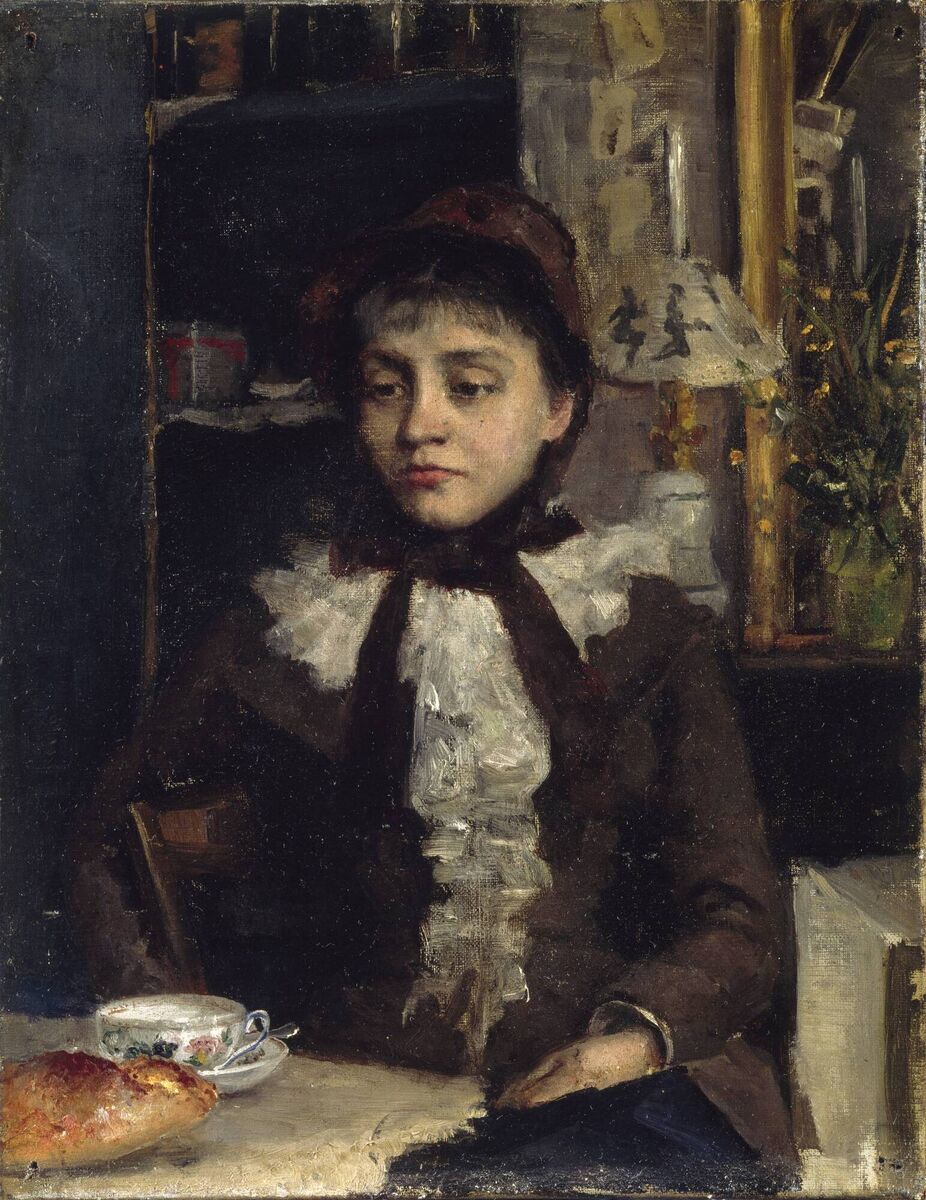
The second was More Power to You: Sarah Purser – A Force for Irish Art at the Hugh Lane Gallery in 2024, which included her portraits of Maud Gonne, WB Yeats and the first president of Sinn Féin, Edward Martyn. She also featured prominently in the exhibition An Túr Gloine: Artists and the Collective at the National Gallery in 2024.
Although these exhibitions have done much to revive interest in Purser’s achievements, Sisley believes there is more of her story to be uncovered. “A broader picture of her work could certainly be investigated,” he says. “She remains best known as a portrait artist, but she also painted landscapes, for instance.”
Lynch agrees. “Apart from the work she did to commission,” she says, “Purser painted more personal, intimate portraits of her friends. And her legacy is so much more than her work as a painter. She was a huge presence. She founded An Túr Gloine, and helped raise the profiles of so many other Irish artists.”