Tom Dunne: Gomez were fun on stage. Ireland loved them unconditionally
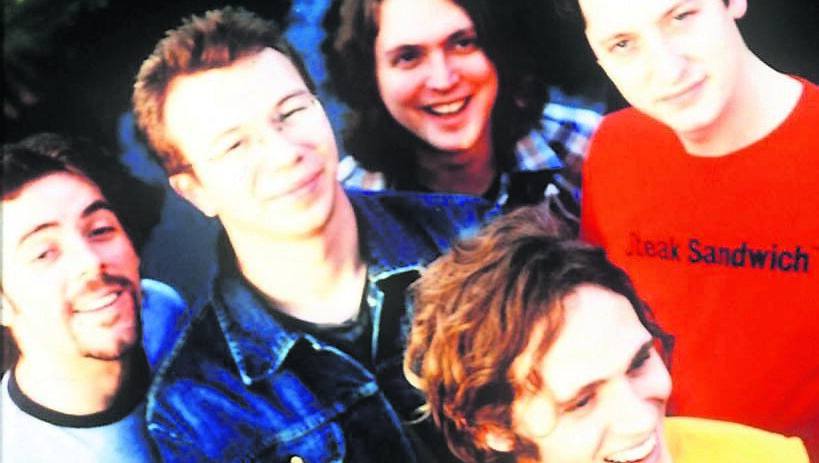

My memory of 1998 is that Gomez won the Mercury Prize as I was actually interviewing them. Their Olympia gig was celebratory mayhem. Ireland loved them unconditionally.
They were fun on stage, unself-consciously swapping instruments and vocal mics (they have three singers).
By the third time I interviewed them — a Planet Rock Special — they were already playing Slane. It was August 28, 1998. It was the Slane of Robbie Williams, Stereophonics, Placebo, Happy Mondays, and David Gray.
We talked on a hillside, the sunlight beating down on us. America beckoned. Gomez could do no wrong.
Tom Gray and drummer Olly Peacock were almost next-door neighbours; they lived one door apart in Stockport.
Augmented by Ian Ball, Paul Blackburn, and Ben Ottewell, they played their first gig, in Leeds, in 1996.
Expecting a friend called Gomez, they left a sign at the door saying, "Gomez in here" to let him know where to go. The name stuck.
Their first demo tape led to a bidding war. They elected to let the A&R men come north to them, rather than travel to London.
The A&R men did just that. Except Madonna, who wanted to fly them to the US. In 1997, they signed to Hut Records.
The Gomez story is almost the story of the music industry itself. In 1997, Hut was in its pomp. Set up by Virgin as its cool indie offshoot, it had licensed Smashing Pumpkins and signed The Verve and David Gray. It was known as the home of quality acts with attitude.
Hut allowed Gomez to self-produce their debut, , something which is almost unknown for new bands. The studio engineer was Ken Nelson, who would go on to garner fame, fortune, and awards by producing Badly Drawn Boy, Snow Patrol, Ray Lamontagne, and Coldplay.
At this remove, it might seem incredible that defeated The Verve’s and Massive Attack’s — and albums from Pulp, Catatonia, Robbie Williams, and Cornershop — to win the Mercury Prize, but, at the time, it really wasn’t. , , and were ubiquitous and life-affirming in equal measure.
By 2004, however, Hut, like all labels, was in trouble. By 2006, when Gomez were releasing albums on ATO in the US, success was more immediately guaranteed by getting your songs onto television shows like . In one episode of the medical drama, a doctor actually sings one of their songs.
Gomez were averaging about 200 gigs a year, mostly in the US.
That might seem like living the dream, but Tom Gray’s dreams were starting to lie elsewhere.
He had become a dad. Fatherhood and being in a touring band are not easy things to balance. The heart said home.
This is the point at which Tom’s story gets really interesting. Because Tom Gray is not like many other musicians. He is as interested in politics as he is in music. He would describe himself as a “unicorn” in this regard. I would tend to agree.
Gray had joined the Labour Party when he was only 15, a year before he joined Gomez, and had been volunteering at their headquarters. He studied politics at Leeds, where his tutor thought him an exceptional student with a career ahead of him in politics or political journalism. It all looked good until Madonna sent a plane for him.
When the pandemic struck in 2020, he realised that not only would musicians be stuck at home unable to gig, but they would also be most likely sitting at a keyboard. The opportunity to galvanise them in to action was a once-in-a-lifetime.
The subsequent Twitter campaign #BrokenRecord is a textbook example of what can be achieved through organisation and political know-how.
These are not qualities we see together often in music, but they are invaluable.
Because no matter how good your music is, it still comes down to getting paid for it, and that, sadly, is more difficult than ever.