Hector hits South America and 'beautiful' Bolivia steals his heart
Broadcaster Hector Ó hEochagáin hasn’t been to the Amazon since 2002. This time he mixes the light with the dark on his travels on the Rio Negro.
Hector Ó hEochagáin in Bolivia , Hola Hector – Ó Bogota go Buenos Aires, TG4

Hector Ó hEochagáin in Bolivia , Hola Hector – Ó Bogota go Buenos Aires, TG4

The last time Hector Ó hEochagáin was in the Amazon was in 2002. Everything there happens on the river. 

Ó hEochagáin and his film crew were on the Rio Negro, a tributary of the Amazon, which is the largest river in the world. The river is like a sea. It’s so vast the sides of it remain out of view. Instead of a school bus, indigenous, tribal children arrive to class by a little yellow school boat.

“The Amazon jungle tells you when to sleep, when to wake up. At 7 o’clock in the evening, everything stops, the noise of the jungle stops. At 4 o’clock in the morning, a cacophony of insects and birds start again, getting you up and about. I saw butterflies the size of my two hands,” says Ó hEochagáin, crossing his wrists and aping the flight of a butterfly.

“As I’m walking through the jungle with a tribe, a butterfly would land on a plant beside me. I’d stop, and this huge, brown butterfly would be resting there. I’d know he’s looking at me, trying to communicate with me, saying, ‘You’re not from around here.’ 

"Suddenly, he’d open his wings, and they’d be luminous pinks and purples. I’d be going, ‘Bloody hell! Look at the colour. Look at the design on his wings!’ Everything I saw in the Amazon was like something from an Avatar movie.”

Ó hEochagáin has revisited South America for the first time in almost a quarter of a century for his latest, exhilarating TG4 travel series. Entitled Hola Hector — Ó Bogota go Buenos Aires, Ó hEochagáin gets up to all kinds of capers over seven episodes, including initiation into the Church of Maradona and riding with gauchos in Argentina.

Interestingly, it’s Bolivia that steals a piece of his heart, suggesting in his narration that it’s the most diverse country he’s visited during his life on the road.

In Copacabana, Ó hEochagáin joins other motorists to get his jeep blessed in a city car park, part of a traditional ceremony carried out by a local priest, sprinkling alcohol on his wheels for good measure. He takes in the jaw-dropping sight of a network of cable cars that hover over La Paz, which ferry commuters around the city. In a series highlight, he visits a conservation reserve festooned with jaguars.

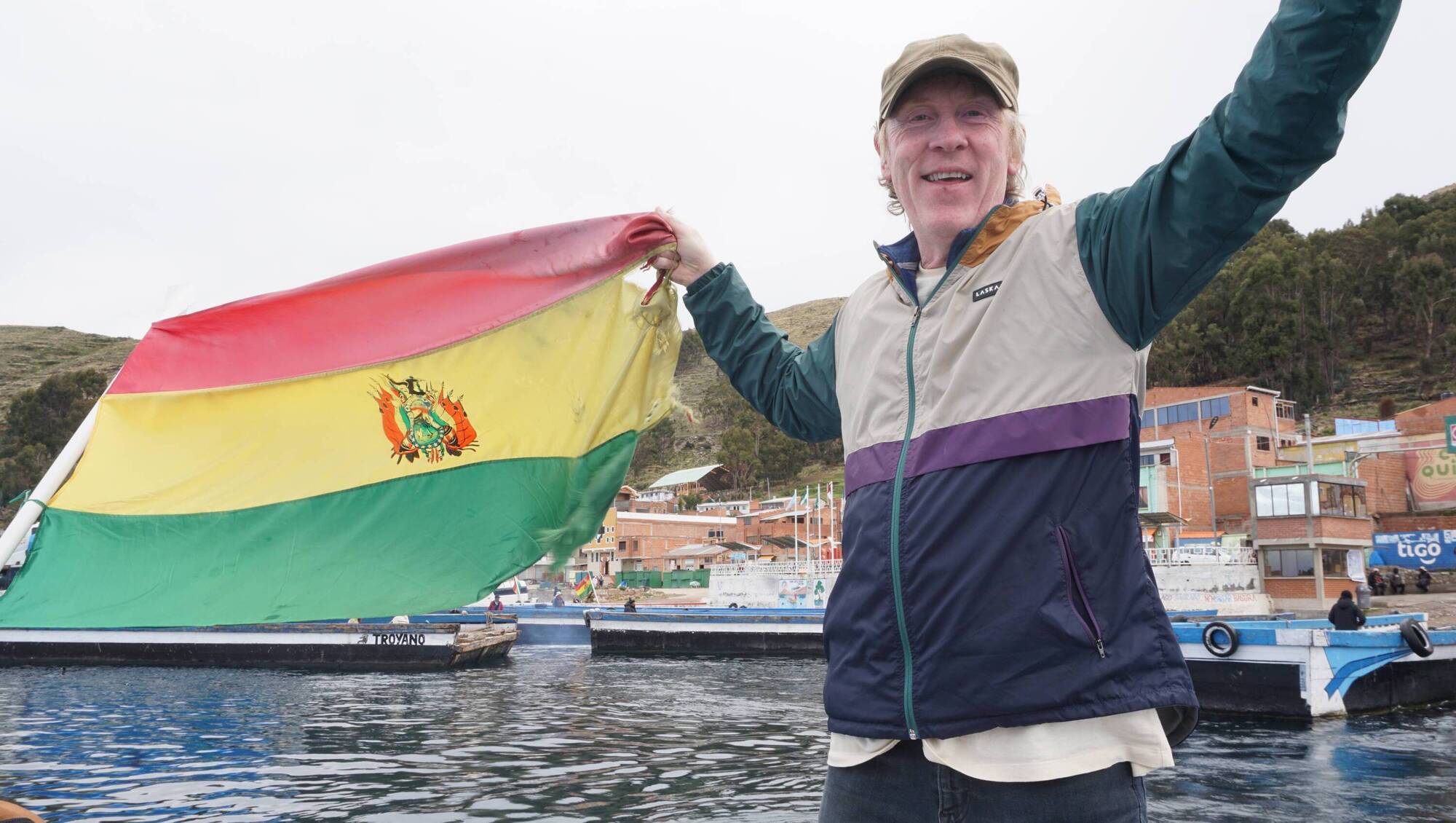
“We saw two different worlds in Bolivia,” says Ó hEochagáin, “you’ve got the super high Andes and this beautiful thin air, and this incredible indigenous world.”

“La Paz is mad. It’s built into the side of a mountain like you’re on Mount Everest. It’s sprawling. Then we flew down to the southern, tropical plains. I didn’t even know they existed in Bolivia, where we were in Swampland. It was Amazonian-like. A complete change of environment. I didn’t expect to get those rich, beautiful plains, getting back into the heat and lush tropical jungle.

Bolivia is an incredible country. It doesn’t get the love Brazil gets in tourists or the love Colombia or Argentina gets. 

"When you get to Lake Titicaca — where you’re at 4,000 meters altitude — and you’re up on the mountains, with the hills around you and you’re looking down, it’s postcard stuff every single view. It looks like an ancient world, a forgotten world. It’s a beautiful country.”

Ó hEochagáin mixes the light with the dark on his travels. South America is known for its barrios and favelas, the organically built shanty towns that grow up around the continent’s big cities. Conversely, as they are often chiselled into mountainsides, they invariably possess the best views on offer over a city’s skyscape. He takes a moto taxi up to La Honda, the only way to access the infamous barrio in Colombia’s city of Medellin, to visit a girls’ boxing club where Katie Taylor is an inspiration for prepubescent girls, many of them victims of paedophilia.

One of the most incredible stories Ó hEochagáin covers, which took six months of background research to organise, involved hunting down one of Brazil’s most promising Olympic prospects.

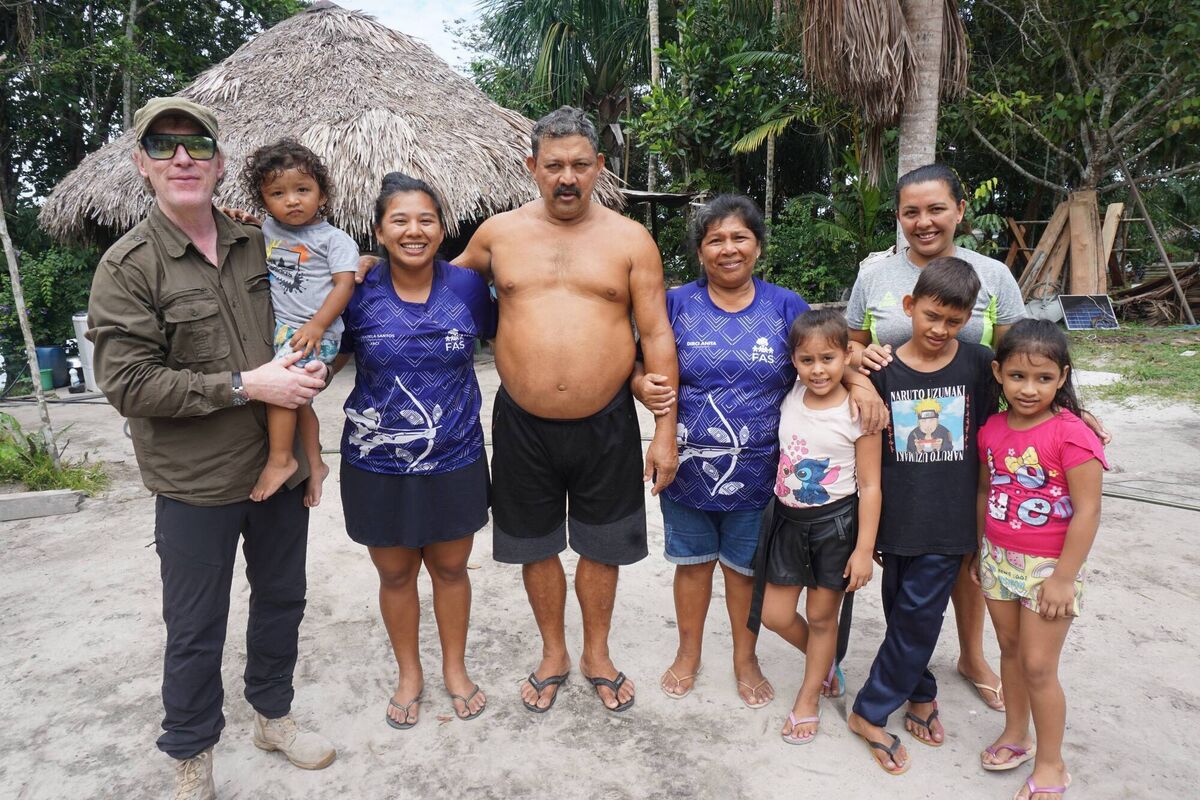
Hector Ó hEochagáin, left, with archer Graziela Santos and her family in Amazonia. , Hola Hector – Ó Bogota go Buenos Aires, TG4

“There was one girl I wanted to meet in a tribe in the Amazon — Graziela Paulino dos Santos,” he says. 

“I found her village. It took us two days to get to it on the river. She’s a native Amazonian Indian. Her dad taught her how to hunt in the jungle when she was six years of age. She became very good with a bow and arrow. When she went to her local school, she became the Amazonian archery champion.

“Now she’s become the number one archer in all of Brazil. She’s about to represent Brazil at the Olympics. She’s going to be the first Amazonian lady to get a gold medal. Outside the back of their hut in the village, she’s got this amazing place where she practices with all her high-tech archery stuff.

“She was so proud of introducing me to our mother and our aunties. They were all in T-shirts of her. The father had just caught piranha. When we finished filming, we had roasted piranha for lunch by the riverside. Then as we pulled away in our boat, she waved goodbye from this little village, with all her nephews and nieces, in the middle of the Amazon. These are the reasons I want to do these documentaries – to show folk these people and places.”

  • Hola Hector — Ó Bogota go Buenos Aires starts broadcasting on TG4, 9.30pm, Thursday, November 5 (with repeats Sundays at 10pm)

Meeting a “Society of the Snow” Survivor

During Hector Ó hEochagáin’s episode on Uruguay, he tracked down Gustavo Zerbino, who was on board the infamous Airforce Flight 571, which crashed into the Andes in 1972. The small, chartered plane, which was carrying 45 passengers on board, was flying to Chile for a rugby match. Zerbino was a survivor from the ordeal, a story told in Society of the Snow, a recent Oscar-nominated film.

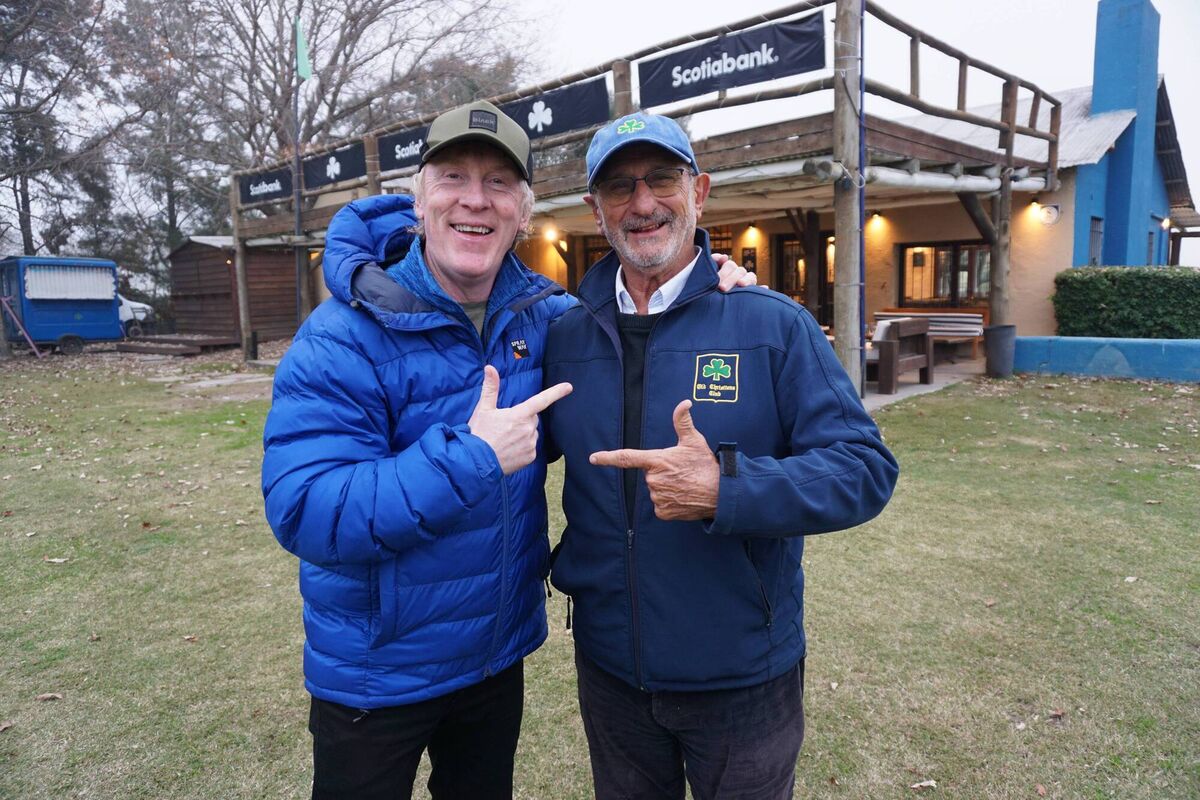
Hector Ó hEochagáin with Gustavo Zerbino, the survivor of Uruguayan rugby team plane crash. , Hola Hector – Ó Bogota go Buenos Aires, TG4

“I met Gustavo, who's the man in the film that picked up all the earrings and watches [from dead bodies] and brought them back to their relatives, knocking on their doors, to give them back their little memories of their sons,” says Ó hEochagáin. “He was an 18-year-old medical student. In the film, he was the lad that made the shades to stop them from getting blindness from the sun.

“He’s 73 years of age. We had a beer in his local rugby club, Old Christians. It was an honour to sit with this man, to hear his stories, having lost so many friends. He spoke so brilliantly. I was blown away.

“It was one of the most memorable interviews we've ever done, just to meet such a gregarious, positive man who had such a life experience, the last man who left that plane crash, almost 90 days after they crash-landed in the Andes. We’ve had these watershed moments on all these trips over the years. That was one because he was such a beautiful man.” 

 Hector’s 3 favourite travel books 

  • Gregory David Roberts’ Shantaram – a book about the seedy, underbelly world of Mumbai
  •  Bill Bryson’s A Walk in the Woods – funny and deep in Mother Nature
  •  Patrick Süskind’s Perfume – a book that smells of Paris

More in this section

Scene & Heard

Newsletter

From music and film to books and visual art, explore the best of culture in Munster and beyond. Selected by our Arts Editor and delivered weekly.

Cookie Policy Privacy Policy Brand Safety FAQ Help Contact Us Terms and Conditions

© Examiner Echo Group Limited