'A danceable solution to teenage revolution': The heart of Roxy Music is still beating
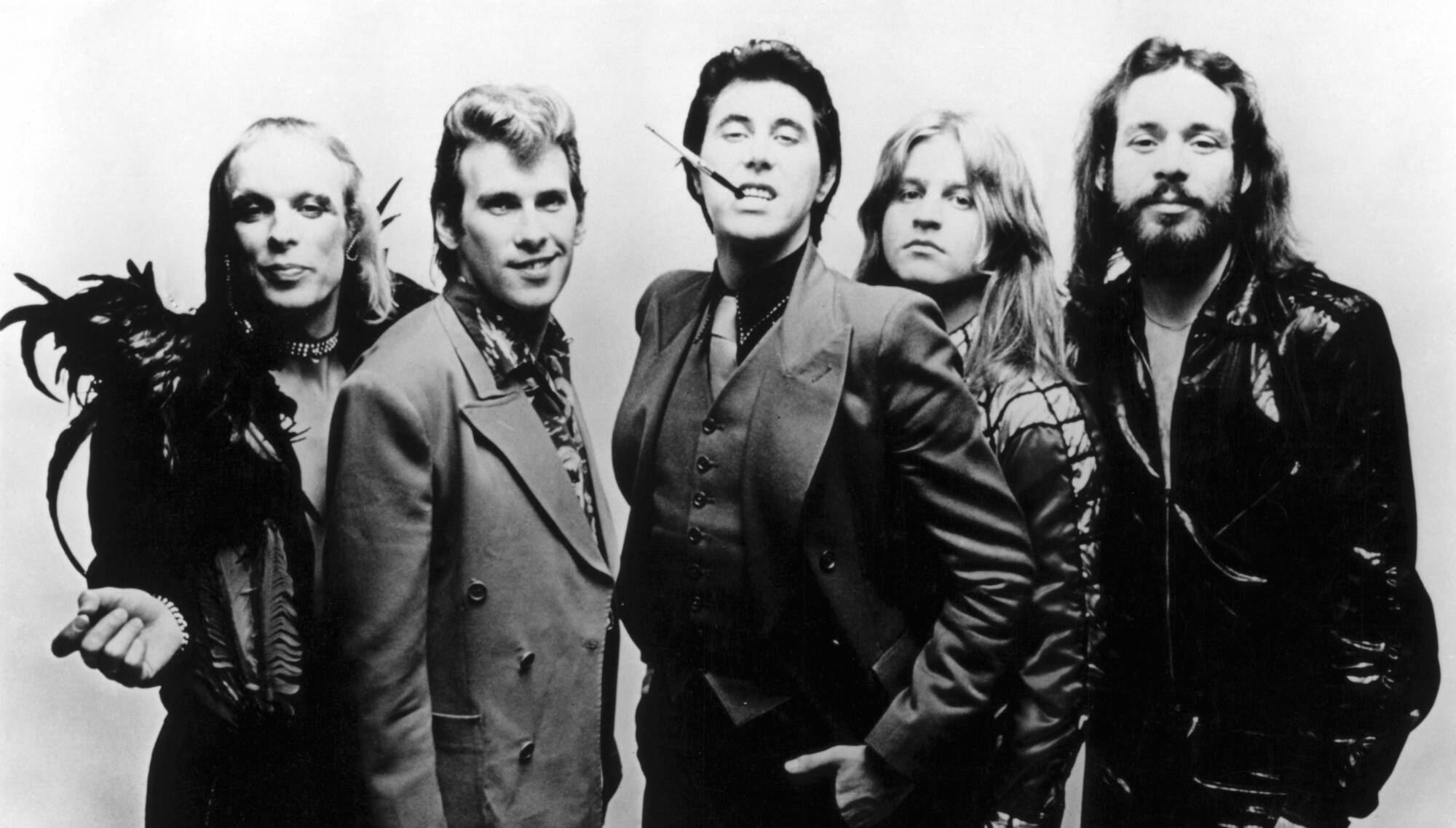
Roxy Music in 1973: from left, Brian Eno, Andy Mackay, Bryan Ferry, Paul Thompson, Phil Manzanera Picture: Claude Van Heye
Roxy Music guitarist Phil Manzanera is 75, but still carries something of the glam-rock persona of the early ’70s — the fly-eye sunglasses and long, wavy brown hair are gone, but the attitude remains.
Many first heard his guitar sound live on during the jagged solo of . In the summer of 1972, he sounded like no other player, amplifying a strange other world. But was it glam rock?
“I remember talking to Bowie about this,” says Manzanera. “He said, ‘The thing is, Phil, there was high glam and low glam. We were high glam, those other guys were low glam.’ With Roxy, it always alluded to the Hollywood of the 1930s and 1940s, and the rock ’n’ roll glamour of Elvis in the gold lamé suit. We had dropped the glam thing by [the band’s first post-Brian Eno album, released in November 1973].”
Manzanera is in the West London studio where, in 2011, Roxy attempted to recapture something of their early chemistry, when members of the band reconvened with Eno and producer Chris Thomas to record new material. There was more than an album’s worth of tracks, but the songs were canned. “I’ve got some footage, but nothing came of it,” Manzanera says.
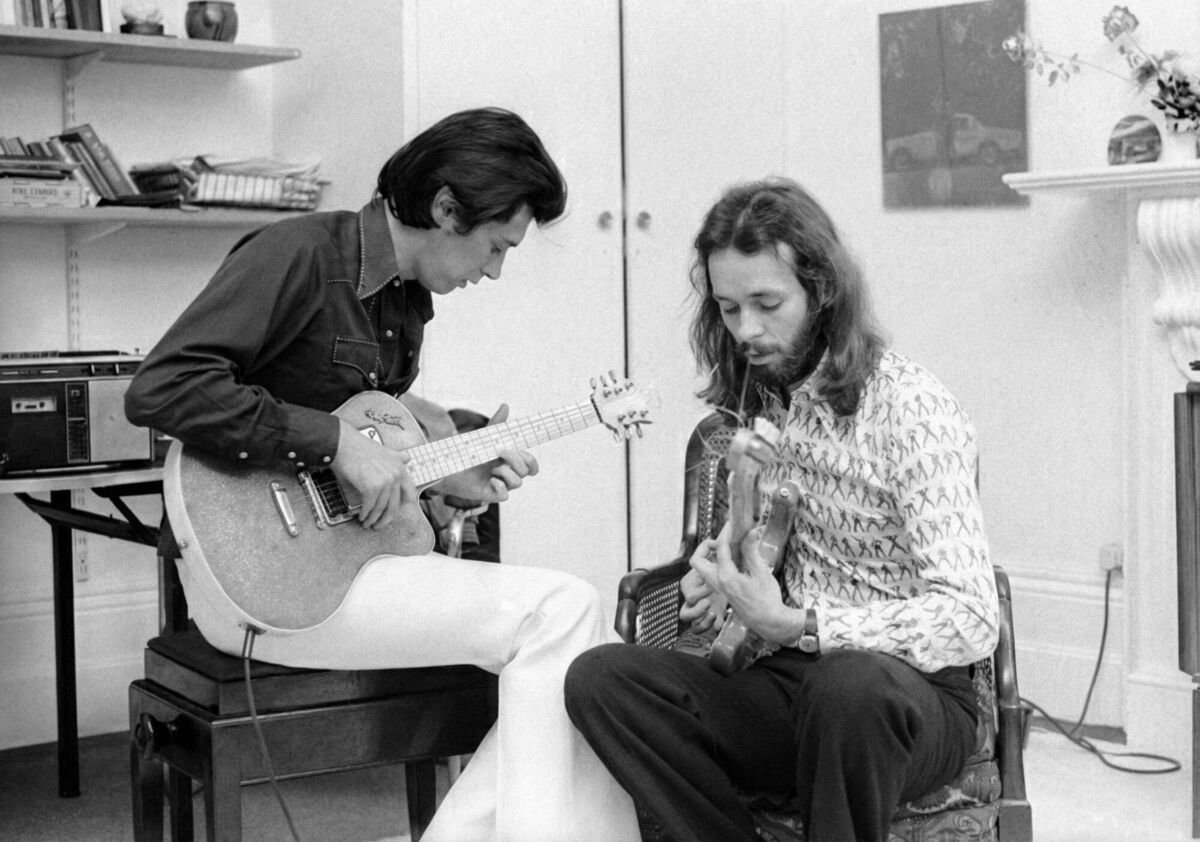
Four decades earlier, singer Bryan Ferry had jumped into his Renault 4 and retreated to a cottage in the Derbyshire Dales. There was an urgency to write for what he described as an “intelligent audience”. These early demos from 1971, some also recorded at his London flat, are about to be released for the first time, on a deluxe edition of For Your Pleasure.
“Beyond the production, it’s my favourite Roxy record, because of the sheer quality of the writing,” says Manzanera. “Bryan [Ferry] wrote some absolutely magnificent tunes for that record, classic Roxy tracks like , , and .
"You have poppy elements right alongside systems-music experimentation, like . It was a perfect, beautifully produced summation of that very first iteration of the band. It brought together a whole load of diverse elements at the exact moment we needed to deliver the goods.”
On , Roxy Music moved away from the elegant art-pop of towards something more unsettling and hypnotic. Released in March 1973, was the last Roxy Music album to feature Eno, who had become something of a figurehead.
The flamboyant Eno fascinated fans and critics, while tapping in to the zeitgeist. Bowie was extending the Ziggy world with ; Iggy and the Stooges released the Bowie-produced ; Alice Cooper delivered ; and Lou Reed explored a bleak, orchestral world on the haunting .
Eno was also developing his first solo album, , recorded in 1973 and released the following year. “We had the incredible luck of having Chris Thomas as our producer, who taught us an enormous amount,” says Manzanera. “Chris had worked directly with George Martin and the Beatles. He learned from George Martin, and we learned from him.”
The newly unveiled demo, originally titled , captures the band’s early chemistry on a homemade tape that brought Roxy to the attention of the music press. The vocal harmonies, featuring Andy Mackay and Eno, sound as captivating as ever. Manzanera’s recollection of the band’s working methods would help provide a template for the rest of their career.
“On the first one-and-a-half records, by the time I joined, those had been worked through with all sorts of people who were in Roxy before me, in demo situations over a period of a year or something like that. But then, from the second side of onwards, the method of working became pretty much where Bryan would come in with two, three, or four chords and say: ‘I’ve got these four chords. Let’s sort of just play.’
“Everybody contributes something to it, and then we would record literally a track with all the solos and stuff like that. Then, Bryan would go off and try and write a topline to it. That method of working really continued to the end of [1982].”
For all their carefully cultivated artifice, Roxy were not without a sense of lightness. Manzanera debunks the assumed tensions around the recording of . “Actually, funny enough, there was a lot of humour in the early Roxy years, even when Eno was there. There was a lot of laughter and fun, and banter. It wasn’t like po-faced people sort of talking about high art or anything like that, especially with Bryan and Eno after a few drinks.”
Eno would later coin the term ‘scenius’ to describe the collective creativity of a music scene, an idea that offers some understanding of the world from which Roxy Music and Bowie emerged. Manzanera remembers when their paths first crossed, at the Croydon Greyhound, where Roxy supported Bowie and the Spiders from Mars in June 1972.
“He was obviously bemused that Roxy came after him, after trying for so many years in the sort of conventional pop ruse; this bunch of guys just appear to come out of nowhere, fully formed, with a whole load of art baggage, if you like, musical baggage. and the first Roxy album came out on the same day, and then, about a week later, we were supporting him at the Croydon Greyhound pub. I knew about it, but I hadn’t seen the conceptual Bowie.”
Manzanera got to the pub early as the band had just finished doing their soundcheck. “I walked in the door, and Bowie and the Spiders were all sat on these chairs to the left-hand side, all dressed in their Ziggy Stardust outfits. I thought, ‘Blimey, they actually wear this all the time; they live it.’”
Bowie would later find a different musical landscape through his work with Eno, particularly on . Manzanera suggests the methodology Ferry developed on side two of was adopted for by way of Eno. “Eno took that method, really, to Bowie, tell you the truth, right? And from the start of him working with Bowie, Bowie started doing a similar kind of thing.
“Whereas, before, you tended to feel that he actually sat down and wrote songs in a proper way. Ultimately, if you start out like Roxy, let’s do interesting, differing music in an attractive fashion.”
Bowie, until he started working with Eno, was writing conventional pop-rock songs with his unique talent for melody and words, Manzanera says. “But the musical context up until was pretty standard. The musical world he lived in was completely different from the world we created for Bryan Ferry to exist in. Once you do something with Eno, you get a more diverse musical backdrop to put his voice in to.”
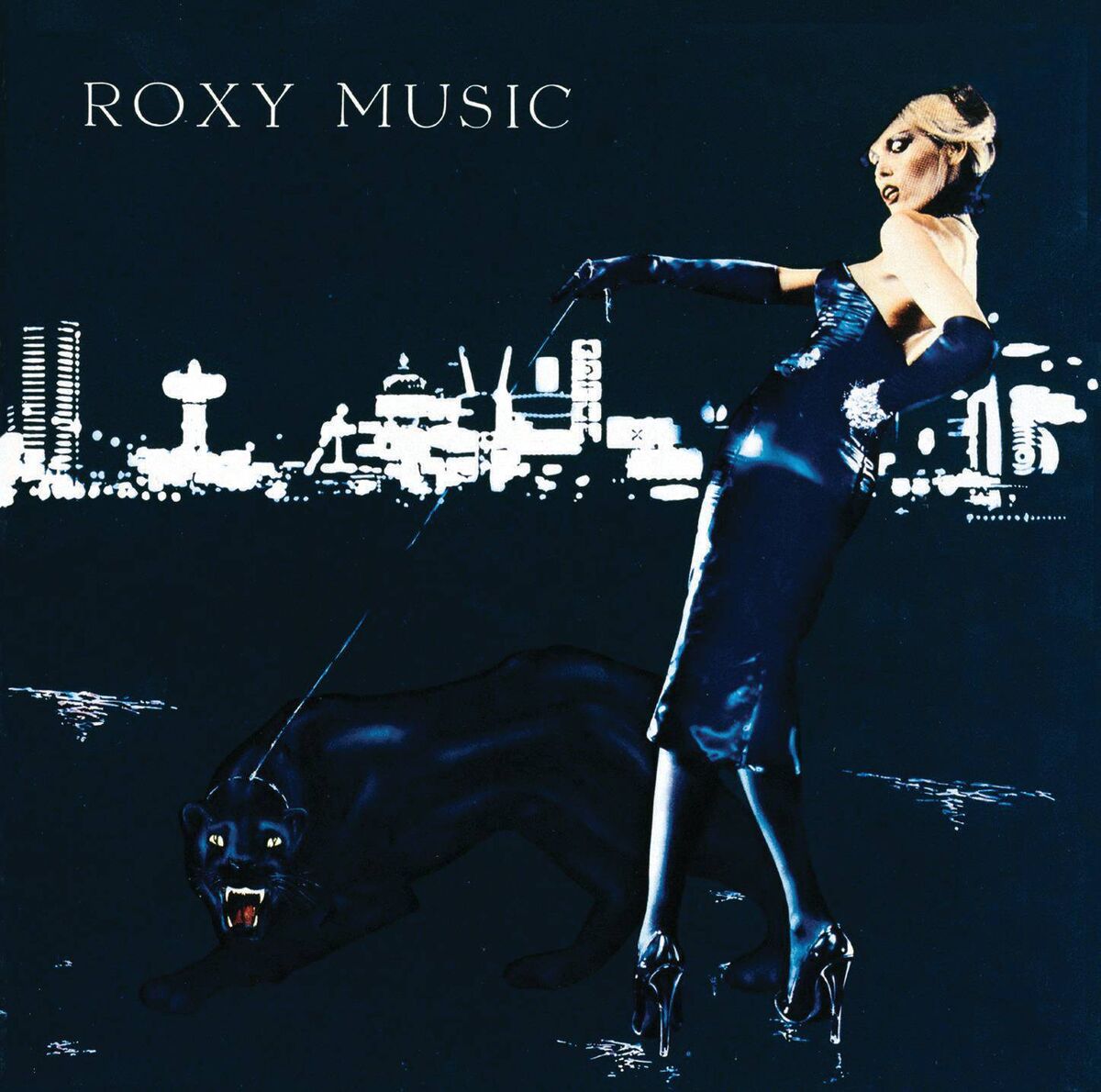
Roxy Music’s visual world was as distinctive as its sound. The cover of the band’s 1972 debut featured model Kari-Ann Muller in a high-fashion pose, while took the imagery in to darker territory. Amanda Lear, dressed in skin-tight black leather and holding a panther on a leash while standing in killer heels, occupies a nocturnal cityscape that suggests a still from a film. Photographed by Karl Stoecker, with art direction by Nicholas de Ville and styling by Antony Price, the sleeve was every bit as carefully composed as the songs themselves.
“That’s all to do with Antony Price. When Bryan met Antony, he was already dealing with certain models, like Amanda Lear and Jerry Hall [who would later appear on the cover of ].
“He brought all that to the Roxy iconography, with extra direction from Bryan and Nick de Ville, who was Bryan’s friend.”
Visually and aurally, the album was a success. Though best-known track wasn’t released as a single in the UK, still made it to No 4 on a chart that featured Led Zeppelin’s at No 1, and Pink Floyd’s at No 6. Esteemed company, and well deserved.
- is reissued in deluxe editions on November 6