Book reviews: Socio-political effects of 100 years of radio in Ireland
Rosemary Day's 'On the Air' and Clíona Ní Anluain's 'Sounding Ireland' approach Irish radio with differing emphases and contrasting aims
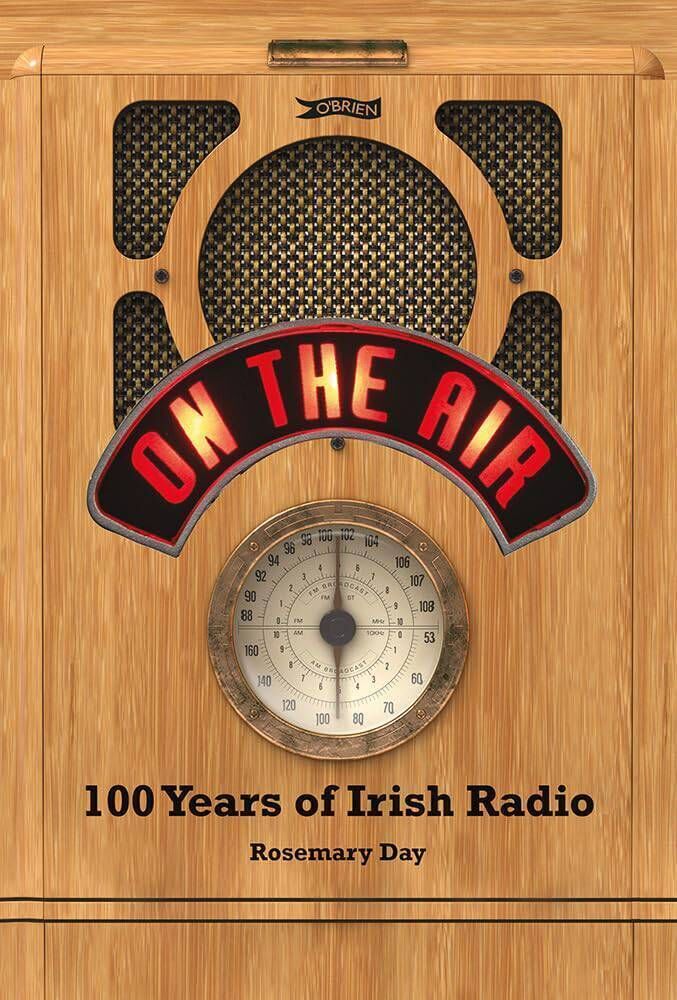
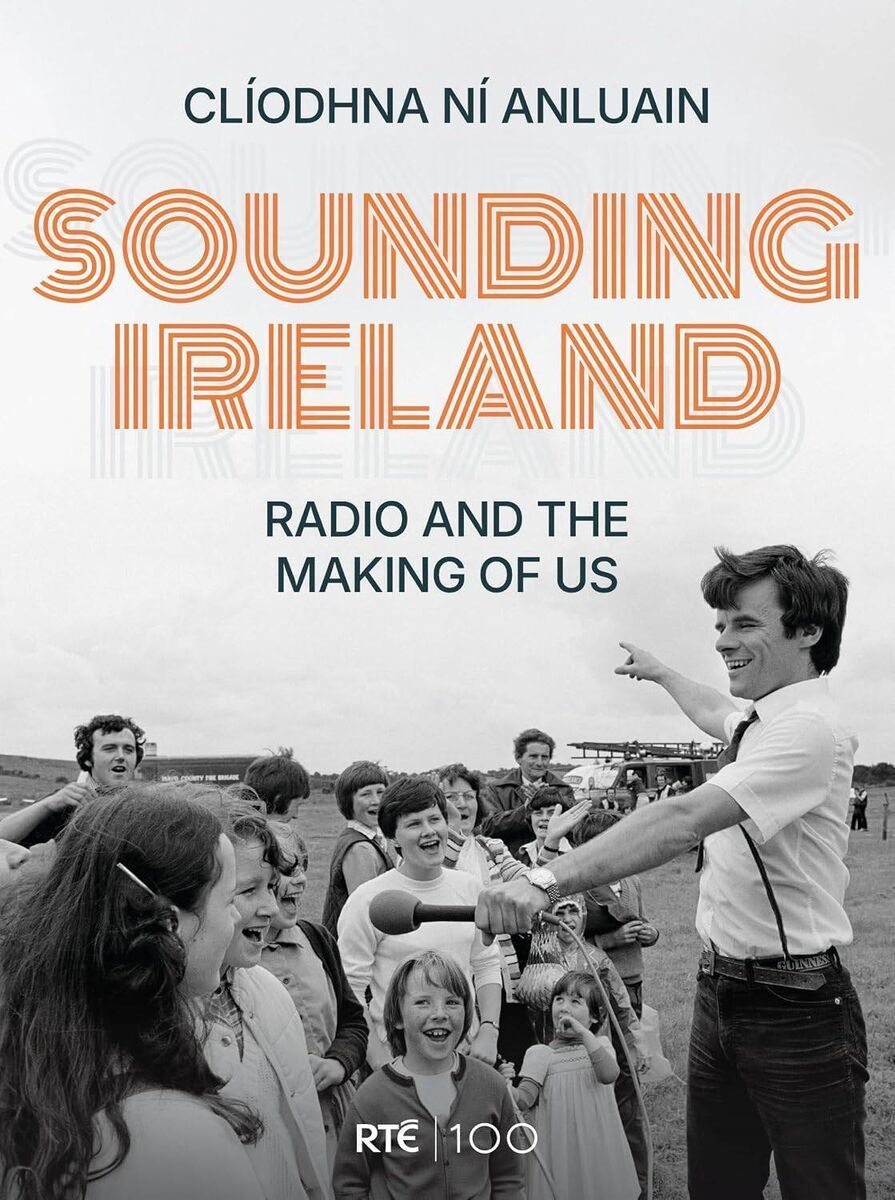
Clíona Ní Anluain solely concentrates on RTÉ radio in 'Sounding Ireland: Radio and the Making of Us'; her book is published as part of the state broadcaster’s 'RTÉ 100' anniversary celebrations.

Clíona Ní Anluain solely concentrates on RTÉ radio in 'Sounding Ireland: Radio and the Making of Us'; her book is published as part of the state broadcaster’s 'RTÉ 100' anniversary celebrations.

  • On the Air: 100 Years of Irish Radio
  • Rosemary Day
  • O’Brien Press, €24.99
  • Sounding Ireland: Radio and the Making of Us
  • Clíona Ní Anluain
  • New Island, €26.95

If there has been a muted air surrounding the centenary of the founding of 2RN, the forerunner of RTÉ Radio, it is perhaps understandable. 

For all the ubiquity of radio over the past 100 years, it’s also an ephemeral, even intangible medium — something authors Rosemary Day and Clíona Ní Anluain both acknowledge — lacking the easily identified and readily recoverable highlights of its visual broadcast cousin television.

So it’s perhaps unsurprising that these two books approach Irish radio with differing emphases and contrasting aims. 

Day’s volume is the more wide-ranging, framing the development of medium across the country in a socio-political context. 

Ní Anluain, meanwhile, solely concentrates on RTÉ radio; her book is published as part of the state broadcaster’s “RTÉ 100” anniversary celebrations. 

Accordingly, both overviews have their strengths, though neither tells the full story.

Mixing grassroots history, technical detail, and anecdotal recollection to tell the story of Irish radio at institutional and personal levels, Day is admirably ambitious in her scope. 

She captures the political and technological challenges faced by 2RN when it commenced broadcasting on New Year’s Day in 1926.

Seamus Clandillon, the director of the new station (later renamed Radio Éireann) had to contend with a febrile political atmosphere, with the newly independent Free State’s government concerned about the influence of BBC broadcasts from across the water and over the border.

There were also infrastructural problems, from a lack of wireless receivers and complaints about the licence fee (plus ça change), as well as the difficulties of fulfilling an impossibly wide brief — from the revival of the Irish language to the fostering of native culture — with only primitive technology and limited airtime.

Day recounts how the new station’s hybrid funding model of licence fees and advertising revenues was a source of tension from day one, resulting in still-familiar conflicts between public service obligations and commercial demands.

For example, Day chronicles how so-called “sponsored” programmes weren’t officially considered part of Radio Éireann’s self-consciously highbrow output, despite the popularity of these commercially-produced entertainment shows.

She also highlights the restrictive conventions that hampered the station, not least the patronising patriarchal bent that pigeonholed women both as listeners and broadcasters; the word “pregnant” wasn’t used on air until the 1960s.

Of course, the story of Irish radio goes beyond RTÉ. Day, who teaches media and communication studies at Mary Immaculate College in Limerick, comprehensively covers the often-overlapping growth of pirate stations and community radio.

The story of how the pirate radio explosion of 1970s led to the founding of 2FM and the establishment of the independent commercial broadcasting sector is well-known, but Day digs deeper, recounting how unlicensed stations even operated back in the 1930s.

She also delves into the often-overlooked sphere of regional radio, outlining how the sector has built its popularity by focusing on local issues, not least sport; she cites the late Radio Kerry commentator Weeshie Fogarty as an exemplar of broadcasters forging bonds with their communities.

There are some odd lacunae, however. Newstalk — a national fixture for 20 years — warrants the same space as Radio Luimní, an idiosyncratic pirate station in Limerick. 

Similarly, the Ryan Tubridy secret payments controversy, which sent RTÉ Radio 1 into a tailspin in 2023, is recounted in fleeting fashion.

Day commendably favours chatty accessibility over academic jargon, notwithstanding her frequent if generalised references to post-colonial cultural inferiority, though her prose can be clunky.

She describes the famed commentator Michael O’Hehir as “literally a legend in his own lifetime”, using not one but two ‘L-words’ that should be avoided if at all possible. (Hint — it’s not “lifetime”.)

In contrast, Ní Anluain’s survey is elegantly written, conjuring up vivid personal anecdotes that evoke the indefinable power of radio. 

But her book’s narrow focus on RTÉ and its antecedents limits her narrative. 

Moreover, given it’s an authorised history of the state service, contentious pronouncements are at a premium, though some gentle criticisms do seep through the author’s wryly observant style.

Ní Anluain, an RTÉ producer who has worked on radio shows such as Sunday Miscellany, shares some of Day’s concerns. (Both writers arrange chapters thematically rather than chronologically.) 

She outlines the obstacles historically faced by women in the industry — the arrival of Marian Finucane’s programme Women Today in 1979 is highlighted as a watershed — while examining how the Irish language has been treated by the national broadcaster. 

The brief existence of Irish-speaking pirate station Saor Raidió Chonemara in 1970 is characterised as “nine days that would change the face of broadcasting in Ireland”, leading to the establishment of Raidió na Gaeltachta two years later.

 However, while Ní Anluain rightly devotes attention to those presenters with an uncanny ability to tap into the public mood, such as Gay Byrne and Gerry Ryan, the long descriptions of programmes from years past can veer from the exhaustive into the wearying. 

(Full disclosure: Ní Anluain covers the radio work of my father, Seamus Heaney. My most vivid memory of his stint at RTÉ in the 1970s, however, is his ill-tempered exchange with a security guard who wouldn’t allow our Volkswagen Beetle onto the Montrose campus.)

Then again, these fond recaps are perhaps inevitable in a generously illustrated volume that serves as both official record and commemorative edition. (Fans of old RTÉ Guide covers are in for a treat.)

That the Tubridy controversy goes unmentioned is similarly unsurprising. 

But it’s frustrating, as Ní Anluain can be eloquently insightful on how Irish radio and society have evolved together; she calls the medium “the new confessional”, pointing to memorably revelatory interviews by Leo Varadkar and Nuala O’Faolain.

If there’s a key difference between these two thoroughly researched works, it’s that Day laments the missed opportunities missed of radio in the republic — for instance, not being used in schools to teach the Irish language — while Ní Anluain stresses the achievements, lauding Radio Éireann’s Thomas Davis Lectures as “a university on the air”.

But while neither book fully captures the sweep and appeal of this most influential yet evanescent medium, both writers provide an absorbing education on its history here.

BOOKS & MORE

Check out our Books Hub where you will find the latest news, reviews, features, opinions and analysis on all things books from the Irish Examiner's team of specialist writers, columnists and contributors.


More in this section

Scene & Heard

Newsletter

From music and film to books and visual art, explore the best of culture in Munster and beyond. Selected by our Arts Editor and delivered weekly.

Cookie Policy Privacy Policy Brand Safety FAQ Help Contact Us Terms and Conditions

© Examiner Echo Group Limited