Chasing Millions: Christopher Eccleston aims for fun in comedy about the Northern Bank robbery

Christopher Eccleston in a scene from Chasing Millions, inspired by the Northern Bank robbery in Belfast in 2004.
Over a decades-long career he has become one of film and TV’s most successful and respected actors, shining in roles like and
But Christopher Eccleston has told how he was considering “giving up” after struggling to get acting work in his first three years after drama school. To make a living, he was working as a crew member in a Manchester theatre, and was considering working behind the scenes as a career.
“I was on the point of giving up,” he recalls. “I was working at the Royal Exchange on the crew - I was thinking about going into crewing. In those days to work you had to have an Equity card, but to get an Equity card you had to work. It was a catch 22.”
It was a theatre role that gave him a long-awaited breakthrough, and put him on the radar of an established acting agent. “An agent saw me, and then within a year of being with that agent, I got a lead in a feature film. It was completely surreal.”
Over the course of the following years, he says, he went from being the least successful in his acting year to the most successful.
The film, - based on a controversial real-life 1950s murder trial - marked a turning point. “That gave me a name, a platform in the career, and then it was meeting a writer called Jimmy McGovern [ ], who I worked with consistently over a period of time - the greatest writer I've ever worked with.”
Having worked in Ireland on a number of occasions, Eccleston returns to these shores for The comedy-drama heist film inspired by the Northern Bank robbery sees him play veteran Northern Irish detective Crayford, who locks horns with ambitious young Australian Police officer Diana (Madeleine Madden) as they investigate the biggest bank job in Irish or British history. The audacious robbery — in which £26 million was stolen — took place just days before Christmas in 2004, six years into Northern Ireland’s delicate peace process.

Eccleston was drawn to the film by the prospect of working with director and writer Stephen Burke, who previously brought us the Northern Ireland-set prison-break drama, “I knew Stephen — you look at the previous work, for instance, and I thought, okay, if this guy's going to do comedy, it's going to be nuanced. It's going to be three dimensional. He can obviously work with performance, calibrate performance and actors when they need to go to the shadow side, to the dark side. Also, I was confident in my own abilities. Along with Samuel Beckett, my vision of existence and life is tragicomic.”
Eccleston was interested in working on a story coming out of Northern Ireland that had humour and levity, as well as being about a very human story. “We've had a great deal of the other stuff so that appealed to me. It's not a tone that I'm particularly associated with, and it's something that I enjoy doing, comedy. I've always loved duos, screwball comedies - one of my touchstones for the film was the brilliant 48 Hours, with Nick Nolte and Eddie Murphy.”
Eccleston nails a northern accent as the disillusioned and ageing detective who is on the case, and has to join forces with the younger Australian investigator as the case takes increasingly bizarre turns. He recalls a line describing him in the script — “on the fault line of retirement” — that he leaned into.
“He's of absolutely no use to his ex wife, to the police force, to Northern Ireland. He's tragicomic as we all are — well, I certainly am — and set in his ways. But essentially, there's a real humanity to him, which Madeleine's character whittles out. He's very disillusioned with everything — I mean, just endlessly comic. I liked him very much.”
was filmed primarily on location in Dundalk, with interior studio work also carried out in Dublin. Eccleston has filmed here before on several occasions and relished the chance to return. “There's a real shared sense of humour which I think is essential when you're making creative work,” says the actor from Salford of working in Ireland.
Does the north of England man feel a cultural shorthand when it comes to working here? “Yeah. I mean, if you come from Salford or Manchester, you've got a connection, or Liverpool, and it's there very much on my dad's side. It's in the DNA. I can let my guard down. I'm very comfortable in that artistic, creative environment in Ireland.”
Eccleston grew up in a working-class family, the son of a mother who attended the Dublin screening with him, and a late father who was a forklift driver. He has long advocated for people from his own background being given the opportunities of working in film, TV, and the arts. He feels that’s become a bigger challenge than ever as supports like student grants become less accessible.
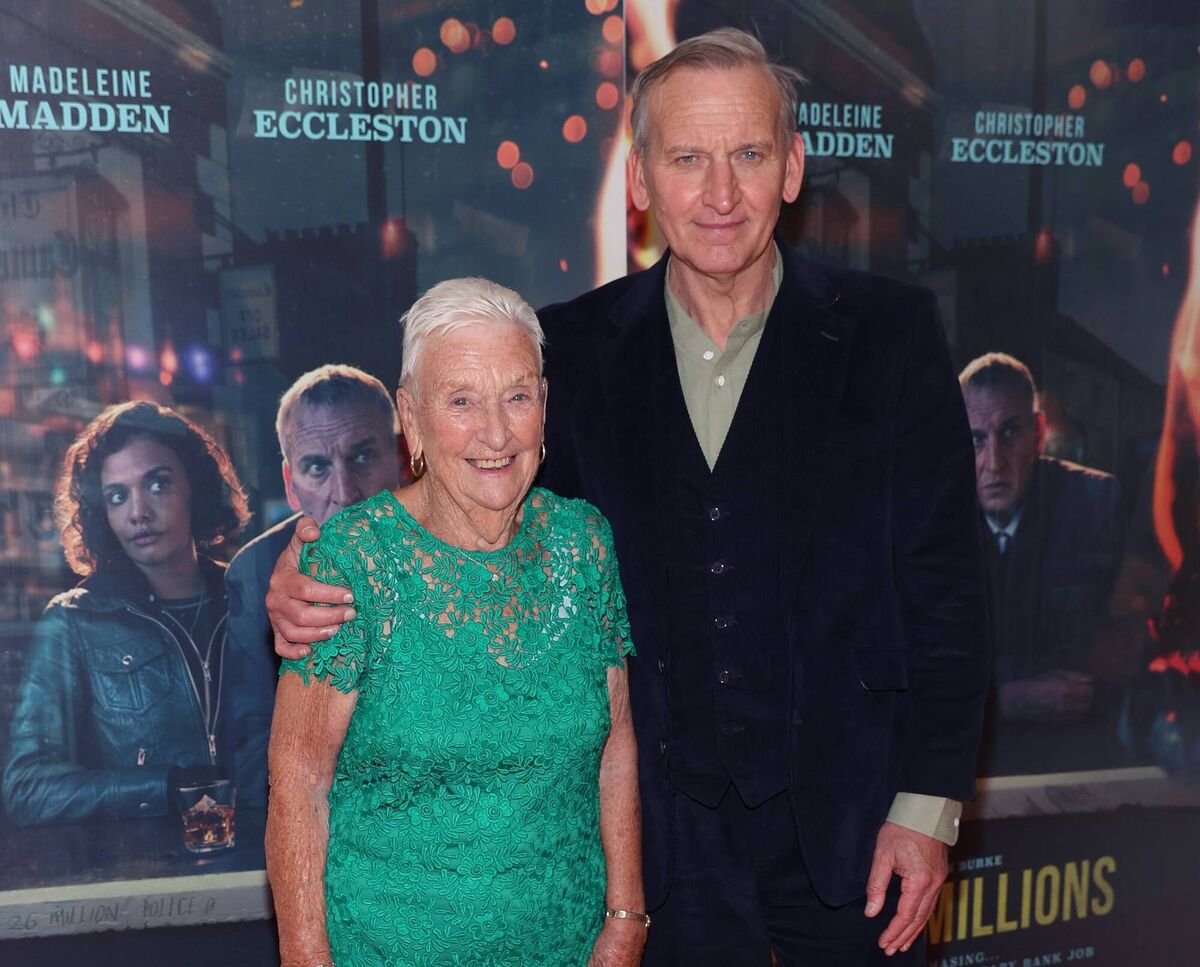
“It’s become far more difficult than it was,” he says. “Social mobility within every sphere, but particularly in the arts, is devastated. There's no way that the boy I was at 19 would leave Salford with a discretionary grant, not a mandatory one, from Salford Council. I didn't have any academic qualifications, but I'd secured a place in a drama school. I got a place, and Salford gave me a discretionary grant, and my parents did the rest. There's no way that would happen now — so actors from my background, we're not coming through.”
You get the sense that he still vividly recalls the breakthrough roles that helped lay the foundations of his own successful career. Along with Let Him Have It, he cites Peter Flannery-penned as well as Jimmy McGovern-written (“the most important piece of work I’ve ever done”). Smash hit TV detective series and with Michael Winterbottom were also projects he’s proud of.
“ was significant. Elizabeth was significant in terms of moving me into America. I've been very fortunate with my career, but I've made my luck in that I've always gone for the best writers because it doesn't matter how poor an actor you are. If you get a good script, you'll look good.
“But it doesn't work the other way round,” laughs the straight-talking actor of trying to elevate a script that doesn’t quite sing. “You can't polish turds and put glitter on them.”
- Chasing Millions is now in cinemas